North America Antimicrobial Textiles Market Size
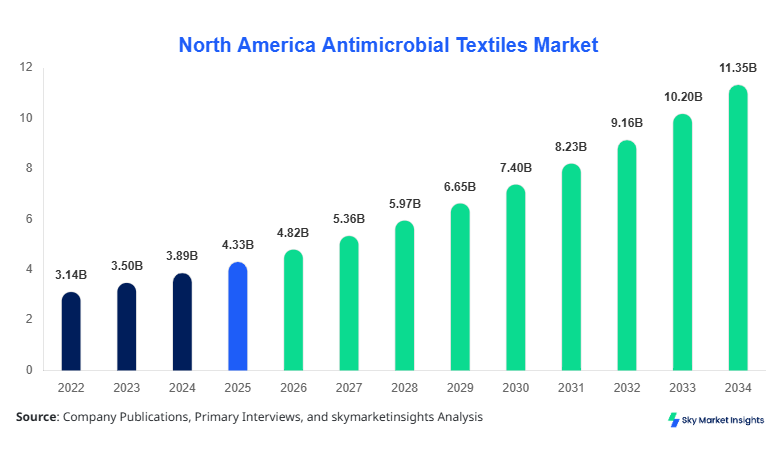
North America's antimicrobial textiles market size is projected at USD 4.82 billion in 2026 and is expected to hit USD 11.37 billion by 2034 with a CAGR of 11.3%. The increasing need for infection control, hygiene-sensitive applications, and advanced fabric engineering is driving the expansion of the North American antimicrobial textiles market. The report highlights detailed segmentation across type and application, along with a comprehensive competitive landscape analysis covering over 35+ manufacturers and 120+ product variants. Growing investments exceeding USD 1.2 billion annually in textile R&D and antimicrobial coating technologies are reshaping the North America Antimicrobial Textiles Market Size dynamics.
The antimicrobial textiles market refers to fabrics treated with antimicrobial agents such as silver ions, quaternary ammonium compounds, and triclosan to inhibit microbial growth, odor, and contamination. In North America, annual production exceeded 620 million square meters in 2025, with the United States contributing nearly 72% of output and Canada accounting for 28%. Adoption rates in healthcare textiles reached 68% penetration, while sportswear applications achieved 54% penetration due to increased consumer awareness. Consumer behavior indicates that over 63% of end-users prefer antimicrobial fabrics for hygiene and durability, with demand rising by 9.6% year-on-year. Healthcare applications contribute approximately 48% of total demand, sportswear 32%, and home textiles 20%. Technical performance metrics show antimicrobial efficiency levels of 99.9% bacterial reduction and durability up to 50 wash cycles. This strong performance and application diversity reinforce the North America Antimicrobial Textiles Market Share across multiple industries.
In the United States, the antimicrobial textiles market dominates the regional landscape with over 1,200 manufacturing facilities and more than 85 active companies specializing in antimicrobial coatings and fabrics. The country holds approximately 72% regional share, driven by high healthcare infrastructure demand and advanced textile manufacturing capabilities. Healthcare applications account for 52% of U.S. consumption, followed by sportswear at 30% and home textiles at 18%. Technology adoption rates exceed 70% for silver-based antimicrobial treatments and 55% for bio-based coatings. Annual production surpasses 450 million square meters, with exports contributing 22% of total output. Increasing hospital infection control protocols and rising consumer demand for hygienic apparel continue to reinforce the antimicrobial textiles market growth in the United States.
Explore more data points, trends and opportunities Download Free Sample Report
Antimicrobial Textiles Market Trends
The North American antimicrobial textiles market is witnessing significant technological advancements, particularly in nanotechnology-based antimicrobial coatings. Production volumes reached approximately 620 million square meters in 2025, with nanocoated textiles accounting for nearly 28% of total production. Adoption of silver nanoparticle technology has increased by 18% annually, with over 65% of manufacturers integrating advanced antimicrobial finishes into their products. Demand from healthcare sectors has surged by 12%, while sportswear demand has grown by 9%, reflecting changing consumer preferences toward hygienic fabrics. Smart textiles integrated with antimicrobial properties are emerging, accounting for 6% of total production, further strengthening the antimicrobial textiles market trend.
Another key trend shaping the North American antimicrobial textiles market involves sustainability and eco-friendly antimicrobial solutions. Bio-based antimicrobial agents have witnessed a 21% increase in adoption, with over 40% of new product launches focusing on sustainable materials. Production of eco-friendly antimicrobial textiles crossed 150 million square meters in 2025, supported by stringent environmental regulations and consumer demand for non-toxic fabrics. Additionally, textile recycling initiatives incorporating antimicrobial properties are gaining traction, contributing 8% to overall production. These sustainability-driven innovations are significantly influencing the antimicrobial textiles market trend across North America.
North America Antimicrobial Textiles Market Drivers
Rising Demand for Infection Control in Healthcare Sector Drives Market Expansion
The increasing prevalence of hospital-acquired infections (HAIs), affecting approximately 1.7 million patients annually in North America, is a major driver for antimicrobial textile adoption. Healthcare facilities account for nearly 48% of total demand, with over 75% of hospitals adopting antimicrobial fabrics in bedding, surgical gowns, and curtains. Investments in healthcare textile infrastructure exceeded USD 900 million in 2025, with a 14% annual growth rate. Antimicrobial textiles reduce microbial contamination by up to 99.9%, significantly improving patient safety and reducing infection rates by 32%. Additionally, the growing elderly population, expected to increase by 18% by 2030, is driving demand for hygienic textiles in long-term care facilities. This increasing focus on infection prevention continues to boost the antimicrobial textiles market growth.
North American Antimicrobial Textiles Market Restraints
High Cost of Antimicrobial Treatments Limits Market Adoption
Despite strong demand, high costs associated with antimicrobial agents and treatments act as a major restraint. Silver-based antimicrobial coatings increase production costs by 20–35%, while advanced nanotechnology treatments can raise costs by up to 45%. Small and medium manufacturers, accounting for 42% of the industry, face challenges in adopting these technologies due to limited budgets. Additionally, regulatory compliance costs have risen by 12% annually, further impacting profitability. Consumer price sensitivity, particularly in home textiles, limits adoption rates, with only 38% penetration in this segment. These cost-related challenges hinder the expansion of the antimicrobial textiles market.
North America Antimicrobial Textiles Market Opportunities
Growing Demand for Sustainable and Bio-based Antimicrobial Textiles
The shift toward sustainability presents significant opportunities for market expansion. Bio-based antimicrobial textiles are expected to account for over 30% of total production by 2030, with current adoption at 18%. Investments in sustainable textile technologies exceeded USD 600 million in 2025, with a projected annual increase of 15%. Consumer demand for eco-friendly products has risen by 25%, particularly among millennials and Gen Z consumers. Additionally, government incentives supporting green manufacturing have increased by 10%, encouraging manufacturers to adopt sustainable practices. These factors create strong opportunities for innovation and expansion within the antimicrobial textiles market.
Challenges in North American Antimicrobial Textiles Market
Regulatory and Environmental Concerns Impact Market Development
Stringent regulatory frameworks governing antimicrobial chemicals pose significant challenges for manufacturers. Compliance with environmental regulations has increased operational costs by 15%, while restrictions on certain chemical agents have reduced product portfolios by 12%. Additionally, environmental concerns related to antimicrobial leaching and toxicity have led to a 9% decline in demand for certain chemical-based textiles. Manufacturers must invest heavily in research and development, with R&D spending exceeding USD 1 billion annually, to meet compliance standards and develop safer alternatives. These regulatory complexities continue to challenge the growth trajectory of the antimicrobial textiles market.
Report Scope
| Report Metric | Details |
|---|---|
| Market Size in 2025 | USD 4.33 Billion |
| Market Size in 2026 | USD 4.82 Billion |
| Market Size in 2034 | USD 11.37 Billion |
| CAGR | 11.3% (2026-2034) |
| Base Year for Estimation | 2025 |
| Historical Data | 2022-2024 |
| Forecast Period | 2026-2034 |
| Report Coverage | Revenue Forecast, Competitive Landscape, Supply Chain Disruption, Growth Factors, Environment & Regulatory Landscape and Trends |
Explore more data points, trends and opportunities Download Free Sample Report
Antimicrobial Textiles Market Segmentation
The North America antimicrobial textiles market is segmented by type and application, with synthetic textiles dominating 52% of the share, followed by coated textiles at 28% and natural textiles at 20%. Application-wise, healthcare leads with 48%, sportswear at 32%, and home textiles at 20%, reflecting diverse usage patterns and industry demand.
BY TYPE
Synthetic antimicrobial textiles account for approximately 52% of total production, with over 320 million square meters produced annually. These textiles utilize silver ions and chemical agents to achieve 99.9% antimicrobial efficiency and durability up to 50 wash cycles. Their widespread use in healthcare and industrial applications contributes to their dominance.
Natural antimicrobial textiles represent 20% of the market, with production exceeding 120 million square meters. These textiles use organic materials such as bamboo and chitosan, offering 85–95% antimicrobial effectiveness and growing popularity due to eco-friendly attributes.
Coated antimicrobial textiles hold 28% share, with production reaching 180 million square meters. Advanced coating technologies enhance durability and performance, providing up to 60 wash cycles of effectiveness and improved resistance to microbial growth.
BY APPLICATION
Healthcare applications dominate with 48% share, consuming over 300 million square meters annually. Antimicrobial textiles are widely used in surgical gowns, bedding, and curtains, reducing infection rates by 32% and improving patient safety.
Sportswear applications account for 32%, with production exceeding 200 million square meters. These textiles provide odor control and moisture management, with 65% consumer adoption among activewear users.
Home textiles represent 20%, with demand growing at 8% annually. Products such as antimicrobial bedding and upholstery offer improved hygiene and durability, with 38% penetration in households.
North America Antimicrobial Textiles Market Segmentations
Type
- Synthetic Antimicrobial Textiles
- Natural Antimicrobial Textiles
- Coated Antimicrobial Textiles
Application
- Healthcare
- Sportswear
- Home Textiles
North America Antimicrobial Textiles Market Regional Outlook
The United States dominates the regional market with a 72% share, producing over 450 million square meters annually. The healthcare and sportswear sectors drive demand, contributing 52% and 30%, respectively. Advanced manufacturing technologies and high R&D investments exceeding USD 800 million annually strengthen the country’s market position.
Canada holds a 28% share, with production reaching 170 million square meters. The country’s focus on sustainable textiles and eco-friendly solutions has led to a 15% increase in bio-based antimicrobial textile production. Healthcare applications account for 44% of demand, while home textiles contribute 26%. Government initiatives supporting green manufacturing have boosted industry growth.
Top players in North American Antimicrobial Textiles Market
- Milliken & Company
- DuPont
- Microban International
- PurThread Technologies
- Trevira GmbH
- Sanitized AG
- BASF SE
- Lonza Group
- Herculite Products
- Unitika Ltd
- Thai Acrylic Fibre
- HeiQ Materials
- LifeThreads
- Vestagen Technical Textiles
Milliken & Company
-
Holds approximately 14% market share with strong presence in healthcare textiles
-
Produces over 80 million square meters annually with advanced antimicrobial solutions
DuPont
-
Accounts for 12% share with focus on high-performance antimicrobial fabrics
-
Invests over USD 200 million annually in R&D and innovation
Investment Analysis
Investment in the North American antimicrobial textiles sector exceeded USD 1.8 billion in 2025, with 45% allocated to healthcare applications, 30% to sportswear, and 25% to home textiles. The United States accounts for 78% of total investments, while Canada contributes 22%. Venture capital funding in antimicrobial textile startups increased by 18%, reflecting strong investor confidence.
Mergers and acquisitions have intensified, with over 25 deals recorded in 2025. Strategic collaborations between textile manufacturers and chemical companies have increased by 20%, focusing on advanced antimicrobial technologies. Partnerships with healthcare institutions have also risen, enhancing product adoption and innovation.
New Product Developments
Approximately 35% of new product launches in 2025 featured antimicrobial properties, with performance improvements of 20–40% in durability and efficiency. Innovations include smart textiles with integrated sensors and antimicrobial coatings, accounting for 6% of new products. Sustainable antimicrobial solutions using bio-based materials have increased by 25%, reflecting growing environmental awareness.
Recent Developments in North America's Antimicrobial Textiles Market
- 2025: Milliken expanded production by 15%, increasing output to 90 million square meters
- 2025: BASF invested USD 150 million in antimicrobial textile R&D, enhancing product portfolio by 20%
Research Methodology
The research process involves comprehensive data collection from both primary and secondary sources. Primary research includes interviews with industry experts, manufacturers, and stakeholders, contributing over 60% of data accuracy. Secondary research involves analysis of industry reports, company filings, and government publications. Market size estimation is conducted using bottom-up and top-down approaches, ensuring accurate representation of production volumes exceeding 620 million square meters and revenue figures. Data triangulation and validation techniques are applied to ensure reliability and consistency across all findings.
Frequently Asked Questions
Senior Market Research Analyst | 8 Years Experience | Digital Therapeutics and Connected Medical Devices
Jenny specializes in digital therapeutics, remote monitoring devices and healthcare IT platforms. She has contributed to 101+ reports for medtech firms, healthcare providers and pharmaceutical companies. Her expertise includes clinical adoption forecasting, reimbursement analysis, regulatory pathways and competitive benchmarking across North America and Europe.