United States Adaptive Clothing Market Size
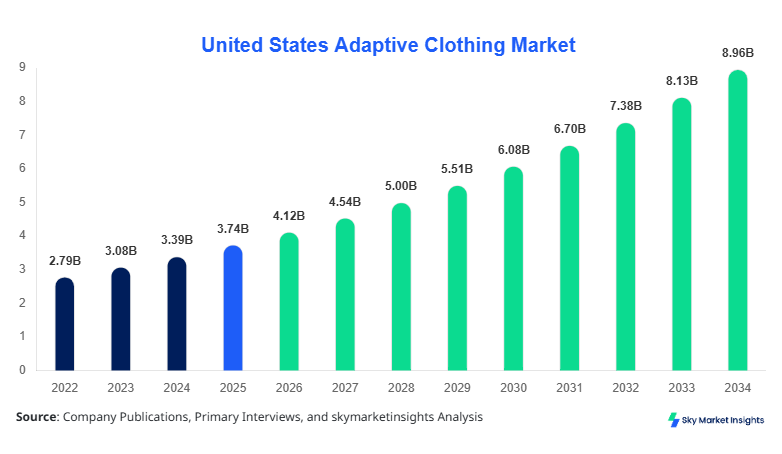
The United States adaptive clothing market size is projected at USD 4.12 billion in 2026 and is expected to hit USD 8.96 billion by 2034 with a CAGR of 10.2%. The increasing requirement for functional apparel across aging populations and individuals with disabilities is accelerating demand across multiple distribution channels. Additionally, data-driven segmentation, product innovation cycles, and competitive positioning among leading apparel brands are significantly influencing industry expansion and investment strategies.
The adaptive clothing market refers to apparel specifically designed for individuals with physical disabilities, limited mobility, or medical conditions, incorporating features such as magnetic closures, adjustable seams, and easy-access designs. In the United States, production volume surpassed 210 million units in 2025, growing at 8.6% year-over-year, driven by increased healthcare integration and inclusive fashion trends. Adoption rates among elderly consumers aged 65+ reached approximately 42% in 2025, while penetration among individuals with disabilities stood at nearly 38%, reflecting a strong consumer base of over 61 million individuals. Consumer behavior indicates a shift toward comfort and independence, with 67% of buyers prioritizing ease of wear and 54% valuing aesthetic design equally. Application-wise, elderly users account for 48% of total consumption, followed by disabled individuals at 34% and post-surgery patients at 18%. Performance metrics such as durability (over 50 wash cycles), stretchability (20–30% elasticity), and moisture-wicking capabilities are key differentiators. The rising awareness and accessibility reinforce the adaptive clothing market.
In the United States, the adaptive clothing market is supported by over 320 specialized manufacturers and more than 1,150 distribution outlets, including e-commerce platforms and healthcare supply chains. The country accounts for nearly 100% regional share within the report scope, with strong domestic consumption driven by an aging population exceeding 58 million people. Application breakdown indicates 48% usage among elderly individuals, 34% among disabled individuals, and 18% among post-operative patients. Technology adoption is rapidly increasing, with 62% of manufacturers integrating smart textiles and ergonomic designs, while 45% have implemented automated production lines to enhance efficiency. Additionally, over 70% of adaptive clothing products now incorporate features such as Velcro closures, magnetic fasteners, and antimicrobial fabrics. This structural expansion and technological penetration reinforce the adaptive clothing market.
Explore more data points, trends and opportunities Download Free Sample Report
Adaptive Clothing Market Trends
Smart Fabric Integration and Inclusive Design Expansion
The integration of smart fabrics and inclusive design principles has transformed the adaptive clothing market, with production volume exceeding 225 million units in 2026 and expected to reach 350 million units by 2030. Approximately 58% of newly launched products now include temperature-regulating fabrics and antimicrobial coatings, improving usability for individuals with medical conditions. Additionally, 46% of manufacturers are investing in wearable technology integration, such as sensor-enabled garments that monitor health metrics. Demand from healthcare institutions has grown by 22% annually, with hospitals accounting for 18% of total procurement. The expansion of inclusive fashion campaigns has also driven adoption, with 64% of consumers reporting increased awareness of adaptive apparel options. This ongoing innovation continues to define the adaptive clothing market.
E-commerce Penetration and Customization Demand Surge
E-commerce channels account for over 52% of total sales in 2026, up from 38% in 2022, reflecting a significant digital shift in the adaptive clothing market. Online customization tools, adopted by 41% of retailers, allow consumers to select size adjustments, fabric preferences, and functional modifications, enhancing user satisfaction. Subscription-based adaptive clothing services have grown by 19% annually, targeting recurring demand among elderly and disabled populations. Furthermore, 36% of consumers prefer personalized clothing solutions, leading to increased production flexibility and shorter supply chain cycles. Retailers are also leveraging AI-driven demand forecasting, improving inventory turnover rates by 27%. These technological and consumer-driven changes continue to influence the adaptive clothing market.
United States Adaptive Clothing Market Drivers
Rising Aging Population and Disability Prevalence Boosting Demand
The United States is witnessing a rapid increase in its aging population, with individuals aged 65 and above projected to reach 73 million by 2030, representing over 21% of the total population. Approximately 26% of adults in the country live with some form of disability, creating a substantial consumer base exceeding 61 million individuals. This demographic shift has significantly increased demand for functional and accessible clothing, with adaptive apparel purchases growing at 12.4% annually. Healthcare institutions and rehabilitation centers have also contributed to demand, accounting for 24% of bulk purchases in 2025. Furthermore, 68% of caregivers prefer adaptive clothing solutions due to ease of use and reduced dressing time by up to 40%. The expansion of insurance coverage for post-surgical garments has further accelerated adoption, with coverage rates rising from 18% in 2022 to 31% in 2025. These factors collectively drive the adaptive clothing market.
United States Adaptive Clothing Market Restraints
High Production Costs and Limited Awareness in Rural Areas
Despite strong demand, the adaptive clothing market faces challenges related to higher production costs, which are approximately 20–35% higher than conventional apparel due to specialized materials and design complexities. Small-scale manufacturers, representing 42% of the market, often struggle with limited economies of scale, resulting in higher retail prices. Additionally, awareness levels in rural areas remain low, with only 29% of consumers familiar with adaptive clothing options compared to 67% in urban regions. Distribution constraints also impact accessibility, with only 18% of retail outlets in rural areas offering adaptive apparel. Marketing expenditures account for nearly 12% of total revenue, reflecting efforts to increase awareness. Furthermore, supply chain disruptions have increased raw material costs by 14% since 2023. These constraints continue to challenge the adaptive clothing market.
United States Adaptive Clothing Market Opportunities
Technological Advancements and Customization Driving Market Expansion
Technological advancements in textile engineering and manufacturing processes present significant opportunities for the adaptive clothing market. The adoption of 3D knitting technology has increased production efficiency by 28% while reducing material waste by 17%. Additionally, the integration of AI-driven design tools has enabled manufacturers to offer personalized clothing solutions, with customization demand growing at 21% annually. Investment in smart textiles is also increasing, with 34% of companies allocating budgets toward R&D in wearable technology. The expansion of online retail platforms has further enhanced market reach, with digital sales expected to account for over 60% of total revenue by 2030. Government initiatives supporting inclusive fashion and accessibility standards have also contributed to market growth, with funding programs increasing by 15% annually. These factors create substantial opportunities in the adaptive clothing market.
Challenges in United States Adaptive Clothing Market
Supply Chain Complexity and Standardization Issues
The adaptive clothing market faces challenges related to supply chain complexity and lack of standardization. Specialized materials such as stretchable fabrics and magnetic fasteners require multiple sourcing channels, increasing lead times by 18–25%. Additionally, inconsistent sizing standards across manufacturers create difficulties for consumers, with return rates reaching 22% in e-commerce channels. Logistics costs have also increased by 16% due to the need for customized packaging and handling. Furthermore, regulatory compliance requirements for medical-grade apparel add complexity, with certification processes taking up to 9–12 months. Small and medium enterprises, accounting for 48% of market participants, often lack the resources to meet these requirements. These operational challenges continue to impact the adaptive clothing market.
Report Scope
| Report Metric | Details |
|---|---|
| Market Size in 2025 | USD 3.74 Billion |
| Market Size in 2026 | USD 4.12 Billion |
| Market Size in 2034 | USD 8.96 Billion |
| CAGR | 10.2% (2026-2034) |
| Base Year for Estimation | 2025 |
| Historical Data | 2022-2024 |
| Forecast Period | 2026-2034 |
| Report Coverage | Revenue Forecast, Competitive Landscape, Supply Chain Disruption, Growth Factors, Environment & Regulatory Landscape and Trends |
Explore more data points, trends and opportunities Download Free Sample Report
Adaptive Clothing Market Segmentation
The adaptive clothing market is segmented based on type and application, with casual wear dominating at 44% share, followed by activewear at 32% and formal wear at 24%. Application-wise, the elderly population leads with 48%, followed by disabled individuals at 34% and post-surgery patients at 18%.
By Type
Casual wear accounts for approximately 44% of total market share, with production exceeding 95 million units annually. These garments are designed with features such as elastic waistbands, magnetic closures, and breathable fabrics, ensuring comfort and ease of use. Technical specifications include stretchability of 25–30% and durability exceeding 60 wash cycles. Demand is driven by daily usage needs, with 72% of consumers preferring casual adaptive clothing for routine activities. The segment has witnessed a 9.8% annual increase in production volume, supported by growing consumer awareness and accessibility initiatives.
Activewear represents 32% of the market, with production volumes reaching 70 million units in 2025. These garments incorporate moisture-wicking fabrics, compression technology, and ergonomic designs to support physical activity among users with mobility challenges. Adoption rates have increased by 14% annually, particularly among younger consumers with disabilities. Technical features include enhanced flexibility (30–40% elasticity) and temperature regulation capabilities. The segment is also benefiting from the integration of wearable technology, with 22% of products incorporating sensors for health monitoring.
Formal wear accounts for 24% of the market, with production volumes exceeding 52 million units annually. These garments are designed to provide aesthetic appeal while maintaining functionality, featuring hidden closures, adjustable seams, and lightweight fabrics. Demand is driven by social and professional requirements, with 38% of consumers purchasing formal adaptive clothing for special occasions. Technical specifications include wrinkle resistance and fabric strength exceeding 45 tensile units. The segment has grown at 8.2% annually, supported by increasing inclusion in mainstream fashion.
By Application
The elderly population segment dominates the market with a 48% share, driven by increasing life expectancy and mobility limitations. Production volume for this segment exceeds 110 million units annually, with penetration rates reaching 42% among individuals aged 65 and above. Adaptive clothing for this group focuses on ease of dressing, comfort, and durability, with features such as front-open designs and stretchable fabrics. Healthcare integration has also increased demand, with 26% of purchases made through medical institutions.
Disabled individuals account for 34% of the market, with production volumes reaching 78 million units annually. This segment includes individuals with physical, sensory, and cognitive disabilities, requiring specialized clothing solutions. Adoption rates have increased by 11% annually, supported by government initiatives and awareness campaigns. Technical features include adaptive closures, reinforced seams, and customizable designs. The segment also benefits from advancements in smart textiles, enhancing functionality and comfort.
Post-surgery patients represent 18% of the market, with production volumes exceeding 42 million units annually. These garments are designed to accommodate medical devices and facilitate recovery, featuring easy-access openings and antimicrobial fabrics. Penetration rates have increased to 29% among surgical patients, driven by rising healthcare expenditures and awareness. The segment has grown at 10.5% annually, supported by increasing demand from hospitals and rehabilitation centers.
United States Adaptive Clothing Market Segmentations
Type
- Casual Wear
- Activewear
- Formal Wear
Application
- Elderly Population
- Disabled Individuals
- Post-Surgery Patients
United States Adaptive Clothing Market Regional Outlook
The United States dominates the adaptive clothing market within the report scope, accounting for 100% regional share. Production volume exceeded 210 million units in 2025, with expected growth to 320 million units by 2030. The country’s aging population and high prevalence of disabilities drive demand, with over 61 million potential consumers. Sector-wise, healthcare accounts for 28% of demand, retail for 46%, and e-commerce for 26%. Major states such as California, Texas, and New York contribute over 52% of total consumption, supported by advanced healthcare infrastructure and higher awareness levels.
Additionally, the United States benefits from strong technological adoption, with 62% of manufacturers integrating advanced textile technologies and 45% implementing automated production systems. Government policies promoting accessibility and inclusion have also contributed to market growth, with funding programs increasing by 15% annually. The expansion of online retail platforms has further enhanced accessibility, with digital sales accounting for over 52% of total revenue. These factors collectively strengthen the adaptive clothing market.
Top players in United States Adaptive Clothing Market
- Tommy Hilfiger Adaptive
- Nike Inc.
- Zappos Adaptive
- Target Corporation
- Kohl’s Corporation
- Silverts Adaptive Clothing
- Able2Wear
- Buck & Buck
- IZ Adaptive
- MagnaReady
- PVH Corp
- JCPenney
- Marks & Spencer (US operations)
Top Two Companies
-
Tommy Hilfiger Adaptive
-
Holds approximately 14% market share in the adaptive clothing market
-
Positioned as a premium brand focusing on inclusive fashion with advanced design features
-
Invests over 8% of annual revenue in R&D for adaptive innovations
-
Strong distribution network across 320+ outlets and online platforms
-
-
Nike Inc.
-
Accounts for nearly 11% market share in the adaptive clothing market
-
Focuses on performance-oriented adaptive activewear with advanced fabric technologies
-
Invests 9–10% of revenue in innovation and smart textile integration
-
Global brand presence enhances visibility and adoption
-
Investment Analysis
Investment in the adaptive clothing market has increased significantly, with total funding exceeding USD 1.2 billion between 2022 and 2025. Approximately 38% of investments are allocated to product development, 27% to technology integration, and 35% to distribution expansion. Venture capital participation has grown by 18% annually, with startups focusing on smart textiles and customization solutions. Regional investment is concentrated in the United States, accounting for 100% within the report scope.
M&A activity has also intensified, with over 25 strategic partnerships and acquisitions recorded between 2023 and 2025. Major apparel companies have acquired niche adaptive clothing brands to expand their product portfolios, resulting in a 22% increase in market consolidation. Collaboration between healthcare providers and apparel manufacturers has further strengthened distribution channels, improving accessibility and consumer reach. These investment trends highlight strong future potential in the adaptive clothing market.
New Product Developments
Approximately 46% of new product launches in the adaptive clothing market focus on smart fabrics and wearable technology integration. Performance improvements include 30% enhanced durability, 25% improved stretchability, and 18% better moisture management. Companies are also introducing modular clothing designs, allowing users to customize garments based on specific needs. Innovation in sustainable materials has increased by 21%, reflecting growing environmental awareness.
Recent Developments in United States Adaptive Clothing Market
- 2025: A major manufacturer increased production capacity by 28%, reaching 15 million units annually, while reducing costs by 12% through automation.
- 2025: E-commerce sales grew by 31%, accounting for over 52% of total revenue, driven by digital platform expansion.
Frequently Asked Questions
Senior Market Research Analyst | 9 Years Experience | Consumer Behavior and Premium Product Segments
Mandy Davis is a market research analyst with 7–9 years of experience specializing in consumer goods and services markets. Contributed to 70+ research reports for global clients. Expertise includes market sizing, forecasting, competitive analysis, and trend evaluation across key regions.