Europe Alcoholic Infused Sparkling Water Size
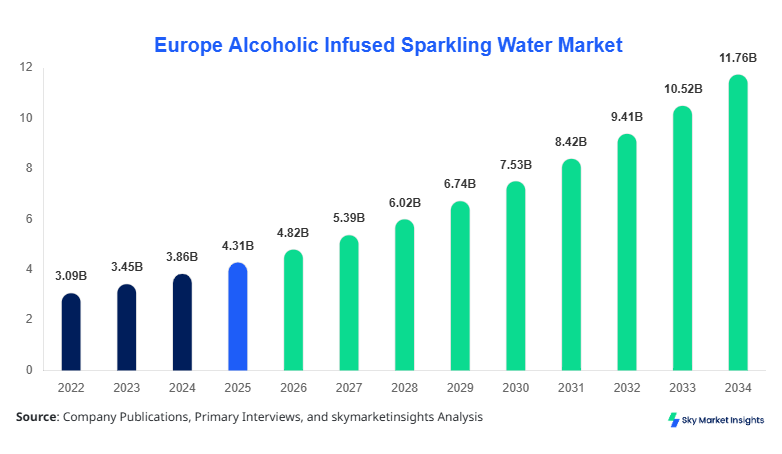
Europe Alcoholic Infused Sparkling Water market size is projected at USD 4.82 billion in 2026 and is expected to hit USD 11.74 billion by 2034 with a CAGR of 11.8%. The regional industry recorded a consumption volume of nearly 1.96 billion liters in 2025, while production output surpassed 2.14 billion liters across Europe. Increasing consumer preference for low-calorie alcoholic beverages, premium flavor formulations, and canned ready-to-drink products is accelerating industry expansion across both developed and emerging European economies. The report evaluates production capacities, distribution networks, consumer analytics, pricing structures, and competitive positioning across major European countries. The analysis also focuses on technological developments in carbonation systems, alcohol infusion processing, packaging innovation, and retail penetration shaping the competitive landscape of the Europe Alcoholic Infused Sparkling Water market.
Alcoholic infused sparkling water refers to a carbonated alcoholic beverage category formulated using purified sparkling water, fermented sugar bases, natural fruit extracts, malt derivatives, or distilled spirits with alcohol by volume ranging between 4% and 7%. Europe produced more than 2.14 billion liters of alcoholic sparkling beverages during 2025, with France contributing approximately 22.4% of regional manufacturing volume. Consumer adoption rates increased by 17.6% between 2023 and 2025 due to rising preference for low-sugar alcoholic alternatives. Nearly 48% of consumers aged between 25 and 40 preferred flavored alcoholic sparkling beverages over traditional beer and cider products. Hard seltzer accounted for 46.3% of total category revenue, while alcoholic sparkling water held 34.8% share and flavored malt beverages contributed 18.9%. Off-trade distribution represented 58.7% of sales volume due to supermarket penetration exceeding 76% across Europe. On-trade channels maintained 31.5% contribution, supported by premium hospitality and tourism sectors. Online retail contributed 9.8% of regional sales as e-commerce beverage delivery subscriptions expanded by 21.4% annually. Carbonation pressure levels between 2.4 and 3.2 volumes CO2 and alcohol concentration ranges between 4.5% and 6.0% remain key technical benchmarks for premium beverage formulations in the Europe Alcoholic Infused Sparkling Water market.
Explore more data points, trends and opportunities Download Free Sample Report
Alcoholic Infused Sparkling Water Market Trends
Premiumization and Functional Flavor Innovation
The premium beverage movement significantly transformed European alcoholic beverage preferences during 2025, with premium canned sparkling alcoholic drinks contributing nearly 39% of total category revenue. Production of botanical-infused and vitamin-enhanced sparkling alcoholic beverages exceeded 412 million liters during the year. Beverage manufacturers introduced more than 320 new flavor combinations, including citrus-berry blends, herbal infusions, tropical fruit variants, and low-sugar fermented beverages. Nearly 61% of consumers in Europe preferred beverages with less than 5 grams of sugar per serving, while 43% actively searched for gluten-free alcoholic beverages. Aluminum can packaging penetration increased to 82%, replacing glass bottle consumption in urban retail chains due to sustainability initiatives and portability benefits. Advanced flavor encapsulation systems improved shelf-life stability by nearly 19% and reduced flavor degradation during storage. Growing preference for healthier alcoholic alternatives continues supporting the Europe Alcoholic Infused Sparkling Water market.
Expansion of E-Commerce and Digital Beverage Retailing
Online beverage retailing expanded rapidly across Europe as digital alcohol delivery platforms processed more than 184 million beverage orders during 2025. Subscription-based beverage delivery models increased by 26.7%, particularly across the United Kingdom, Germany, and France. Nearly 34% of consumers aged 21–35 purchased alcoholic sparkling beverages through mobile applications and direct-to-consumer platforms. AI-driven recommendation systems improved consumer conversion rates by 18.4%, while digital loyalty programs increased repeat purchases by 22%. Beverage producers invested over USD 420 million in automated fulfillment centers, cold-chain logistics, and smart inventory tracking systems. QR-code enabled packaging providing nutritional transparency and origin tracking was adopted by 46% of manufacturers. Increased online penetration and omnichannel beverage distribution continue accelerating the Europe Alcoholic Infused Sparkling Water market.
Sustainability and Low-Alcohol Beverage Transition
Sustainability-focused manufacturing became a dominant industry trend as more than 54% of European consumers preferred environmentally responsible beverage brands during 2025. Recyclable aluminum packaging utilization exceeded 81%, while lightweight can technology reduced logistics-related emissions by approximately 14%. Beverage companies invested nearly USD 690 million in renewable-energy-powered production plants and water recycling systems. Low-alcohol and sessionable sparkling beverages containing alcohol levels between 3% and 4% gained 28% higher retail shelf expansion compared to conventional ready-to-drink alcohol products. Organic ingredient sourcing increased by 24%, particularly for citrus, berry, and botanical extracts. Carbon-neutral production certification adoption rose to 31% among European beverage manufacturers, reinforcing sustainability positioning within the Europe Alcoholic Infused Sparkling Water market.
Europe Alcoholic Infused Sparkling Water Drivers
Rising Consumer Preference for Low-Calorie Alcoholic Alternatives
The rapid transition toward healthier alcoholic beverage consumption patterns is a primary driver supporting industry expansion across Europe. Nearly 63% of urban consumers actively reduced consumption of high-sugar beer and cocktail products during 2025, shifting toward low-calorie sparkling alcoholic beverages containing between 90 and 120 calories per serving. Consumption among millennials and Gen Z consumers increased by 24.8%, while women represented approximately 47% of category buyers due to preference for lighter alcoholic formulations. Retail shelf allocation for alcoholic sparkling beverages expanded by 31% across supermarkets and convenience chains. More than 280 beverage companies introduced reduced-sugar or zero-artificial-additive formulations between 2023 and 2025. France, Germany, and the United Kingdom collectively accounted for 58% of regional premium product launches. Beverage innovation investment exceeded USD 1.2 billion across Europe, supporting natural flavor extraction systems, fermentation optimization technologies, and sustainable packaging solutions. Hospitality and tourism demand also accelerated, with premium bars increasing menu availability by 36%. These consumption shifts continue strengthening the Europe Alcoholic Infused Sparkling Water market.
Europe Alcoholic Infused Sparkling Water Restraints
Regulatory Restrictions and Alcohol Taxation Pressures
Strict alcohol advertising regulations and rising excise duties across Europe remain major barriers for beverage manufacturers and distributors. More than 14 European countries increased alcohol taxation rates between 2023 and 2025, raising production costs by nearly 11.6%. France and Germany implemented stricter labeling requirements related to calorie disclosure, ingredient transparency, and alcohol concentration limits. Approximately 38% of small beverage manufacturers reported profit margin compression due to rising aluminum packaging costs and regulatory compliance expenditures. Retail restrictions on digital alcohol promotions reduced online advertising visibility by 19%. Supply-chain disruptions affecting fruit concentrate imports and carbonation gas availability increased logistics expenses by nearly 13.4%. In Russia and Spain, regional licensing limitations slowed market entry for international beverage brands. Additionally, public health campaigns targeting alcohol reduction influenced moderate consumption patterns among younger consumers. These regulatory and operational constraints continue affecting the Europe Alcoholic Infused Sparkling Water market.
Europe Alcoholic Infused Sparkling Water Opportunities
Expansion of Premium Functional Alcoholic Beverages
Growing demand for functional and premium alcoholic beverages presents significant opportunities for industry participants across Europe. Nearly 41% of consumers expressed interest in alcoholic beverages containing vitamins, botanical extracts, probiotics, or adaptogenic ingredients during 2025. Functional beverage production capacity increased by 27.2% compared with 2024, particularly within France, Italy, and the United Kingdom. Beverage companies launched more than 160 wellness-oriented sparkling alcohol products featuring electrolytes, collagen, and organic fruit infusions. The premium segment recorded average retail prices 34% higher than standard alcoholic beverages, improving profitability margins for manufacturers. Investment in fermentation optimization and natural preservation technologies surpassed USD 540 million across European beverage processing plants. Airport retail stores, luxury hospitality venues, and premium event sponsorships expanded visibility among affluent consumers. Strategic collaborations between craft distilleries and flavor ingredient suppliers are also increasing product differentiation opportunities. These factors continue creating strong expansion opportunities within the Europe Alcoholic Infused Sparkling Water market.
Challenges in Europe Alcoholic Infused Sparkling Water
Intense Competition and Brand Differentiation Difficulties
The growing number of beverage brands entering the ready-to-drink alcoholic segment is creating substantial competitive pressure across Europe. More than 470 alcoholic sparkling beverage brands operated within the region during 2025, intensifying shelf-space competition and marketing expenditures. Private-label supermarket beverages captured nearly 18% of total retail sales volume, pressuring pricing structures for premium producers. Customer retention rates declined by 12% due to increasing experimentation with new flavor offerings and limited-edition products. Beverage producers spent approximately USD 870 million on advertising, influencer marketing, and experiential campaigns during 2025 to maintain brand recognition. Supply volatility for fruit concentrates and natural sweeteners increased ingredient procurement costs by 15%. Additionally, inconsistent consumer preferences across European countries complicate standardized product development strategies. Germany and Russia demonstrated stronger demand for higher-alcohol variants, while France and Italy preferred organic and botanical formulations. These operational complexities continue challenging the Europe Alcoholic Infused Sparkling Water market.
Report Scope
| Report Metric | Details |
|---|---|
| Market Size in 2025 | USD 4.31 Billion |
| Market Size in 2026 | USD 4.82 Billion |
| Market Size in 2034 | USD 11.74 Billion |
| CAGR | 11.8% (2026-2034) |
| Base Year for Estimation | 2025 |
| Historical Data | 2022-2024 |
| Forecast Period | 2026-2034 |
| Report Coverage | Revenue Forecast, Competitive Landscape, Supply Chain Disruption, Growth Factors, Environment & Regulatory Landscape and Trends |
Explore more data points, trends and opportunities Download Free Sample Report
Alcoholic Infused Sparkling Water Market Segmentation
The market is segmented by product type and distribution channel, with hard seltzer dominating nearly 46.3% of total revenue in 2025 due to broad retail acceptance and lower calorie content. Off-trade distribution held approximately 58.7% share because of strong supermarket penetration and promotional pricing strategies across Europe.
BY TYPE
Hard seltzer represented the largest segment with 46.3% revenue contribution and production exceeding 990 million liters during 2025. Products typically contain 4%–5% alcohol by volume and less than 100 calories per serving, making them highly attractive among health-conscious consumers. Nearly 64% of hard seltzer sales originated from consumers aged 22–38 years. Manufacturers introduced over 210 flavor variants during the year, with berry, lime, citrus, and tropical fruit combinations accounting for 58% of launches. Aluminum can packaging represented 88% of hard seltzer distribution because of portability and sustainability benefits. France and the United Kingdom collectively contributed more than 52% of European hard seltzer production volume. Automated carbonation systems improved production efficiency by approximately 17%, while cold-fill processing technologies enhanced flavor retention stability. Retail shelf expansion and rising demand for low-sugar alcoholic beverages continue driving segment performance across Europe.
Alcoholic sparkling water accounted for nearly 34.8% of total revenue and approximately 744 million liters of production output in 2025. These beverages generally contain purified sparkling water blended with distilled spirits, fruit extracts, and natural sweeteners with alcohol concentrations ranging from 4.5% to 6%. Premium alcoholic sparkling water products experienced 21.6% annual retail sales expansion due to increasing demand for organic and botanical formulations. Nearly 49% of urban consumers preferred clean-label beverage ingredients and preservative-free flavor systems. Beverage companies invested more than USD 310 million in advanced filtration systems, flavor stabilization technology, and recyclable packaging solutions. Germany and Italy represented major production hubs because of strong beverage manufacturing infrastructure and distribution capabilities. Rising tourism consumption and premium hospitality demand continue strengthening this category across Europe.
Flavored malt beverages contributed approximately 18.9% of industry revenue during 2025, with production exceeding 404 million liters across Europe. These beverages are produced using fermented malt bases combined with fruit flavors, carbonation, and low alcohol concentrations between 3.5% and 5.5%. Retail penetration across convenience stores increased by 16.8%, particularly in Spain and Russia. Citrus-based variants represented 33% of total flavored malt beverage sales, while berry and tropical fruit flavors accounted for 41%. Improved fermentation technologies reduced production cycle duration by nearly 14%, supporting higher manufacturing efficiency. Beverage manufacturers increasingly focused on affordable pricing strategies targeting younger demographics and value-oriented consumers. Enhanced packaging graphics and digital marketing campaigns also increased brand visibility throughout Europe.
BY APPLICATION
On-trade distribution represented approximately 31.5% of total industry sales volume during 2025. Bars, pubs, restaurants, hotels, music festivals, and entertainment venues significantly contributed to category visibility across Europe. Nearly 57% of premium alcoholic sparkling beverages consumed within hospitality channels were purchased in urban tourism centers. France and Spain demonstrated strong on-trade demand due to high tourism traffic and premium nightlife industries. Beverage companies introduced draft sparkling alcohol systems and customized cocktail integrations to improve customer engagement. Advanced chilling and dispensing technologies improved serving consistency by 11.2% while reducing wastage across hospitality venues. Premium positioning and experiential beverage marketing continue supporting on-trade growth across Europe.
Off-trade distribution remained dominant with 58.7% share and more than 1.25 billion liters of retail sales volume during 2025. Supermarkets, hypermarkets, liquor chains, and convenience stores represented the primary retail channels for alcoholic sparkling beverages. Promotional discounting campaigns increased off-trade purchase frequency by 19.4%, while private-label products contributed approximately 18% of retail sales. Germany, France, and the United Kingdom accounted for more than 61% of off-trade beverage consumption. Refrigerated display expansion and premium shelf placement strategies increased impulse purchases by 14%. Beverage brands also benefited from multipack sales formats and seasonal promotional campaigns targeting social gatherings and outdoor events.
Online retail contributed 9.8% of market revenue during 2025 but demonstrated the fastest expansion rate among distribution channels. Digital alcohol delivery platforms processed over 184 million beverage orders across Europe. Subscription-based beverage services increased by 26.7%, particularly in metropolitan regions with high smartphone penetration. Nearly 34% of consumers aged 21–35 purchased alcoholic sparkling beverages through e-commerce channels. AI-enabled recommendation systems and personalized promotional campaigns improved online conversion rates by approximately 18%. Direct-to-consumer beverage shipments increased by 22% across France, Germany, and the United Kingdom. Rapid growth in digital beverage retailing and mobile commerce continues supporting online channel expansion.
Europe Alcoholic Infused Sparkling Water Market Segmentations
Product Type
- Hard Seltzer
- Alcoholic Sparkling Water
- Flavored Malt Beverages
Distribution Channel
- On-Trade
- Off-Trade
- Online Retail
Europe Alcoholic Infused Sparkling Water Regional Outlook
United Kingdom
The United Kingdom represented approximately 26.4% of total European revenue during 2025, supported by robust ready-to-drink beverage consumption and advanced retail infrastructure. The country produced nearly 564 million liters of alcoholic sparkling beverages during the year. Hard seltzer represented 49% of domestic demand, while online beverage sales contributed 14% of retail transactions. More than 120 beverage manufacturers operated across England, Scotland, and Wales. London accounted for nearly 32% of premium beverage consumption due to high urban purchasing power and tourism activity. Supermarket penetration exceeded 82%, while convenience stores represented 18% of retail distribution. Sustainability-focused aluminum packaging adoption reached 84% among domestic beverage brands.
Germany
Germany contributed nearly 21.8% of regional revenue and produced approximately 472 million liters of alcoholic infused sparkling beverages during 2025. Beer consumption diversification and increasing preference for lighter alcoholic beverages accelerated category expansion. Nearly 52% of consumers aged 25–40 preferred low-sugar alcoholic beverages compared to traditional beer products. Hard seltzer dominated the market with 44% share, while flavored malt beverages represented 23%. Germany also recorded high automation adoption rates, with over 61% of beverage plants using AI-assisted quality monitoring systems and automated carbonation technologies. Export activity increased by 17.3%, particularly toward Eastern European markets.
France
France accounted for 24.6% of regional industry revenue and nearly 478 million liters of production output in 2025. Organic and botanical alcoholic sparkling beverages gained strong popularity, representing 39% of premium segment sales. Paris, Lyon, and Marseille collectively contributed more than 46% of domestic consumption. Retail supermarket chains dominated distribution with 52% share, while hospitality channels accounted for 34%. French beverage producers invested more than USD 260 million in flavor innovation, low-calorie product development, and sustainable packaging solutions. Export growth reached 18.3% due to increasing demand from neighboring European markets.
Spain
Spain represented approximately 11.7% of regional revenue during 2025 and produced nearly 251 million liters of alcoholic sparkling beverages. Tourism-driven beverage consumption strongly influenced category performance, particularly in Barcelona, Madrid, and Valencia. On-trade distribution represented 42% of domestic sales because of the country’s hospitality-oriented beverage culture. Citrus and tropical flavor variants accounted for nearly 48% of retail purchases. Beverage manufacturers expanded summer promotional campaigns and event-based sponsorships to improve seasonal sales. Aluminum can adoption exceeded 79%, supporting sustainable packaging initiatives.
Italy
Italy contributed approximately 9.6% of regional revenue during 2025 and produced over 208 million liters of alcoholic sparkling beverages. Premium botanical formulations and organic fruit infusions remained highly popular among Italian consumers. Nearly 41% of domestic consumers preferred beverages containing natural citrus extracts and Mediterranean botanical flavors. Supermarket chains accounted for 55% of domestic distribution, while online retail grew by 24% annually. Beverage producers invested significantly in premium packaging aesthetics and sustainable manufacturing technologies to strengthen export competitiveness across Europe.
Russia
Russia accounted for approximately 5.9% of regional revenue during 2025, with production output reaching nearly 126 million liters. Flavored malt beverages represented 37% of domestic demand due to affordability and broader retail accessibility. Urban consumers increasingly preferred imported premium sparkling alcoholic beverages, particularly in Moscow and Saint Petersburg. Retail convenience chains represented 46% of distribution channels, while online alcohol sales remained limited by regulatory restrictions. Beverage producers focused on higher-alcohol variants containing 5%–7% alcohol concentration levels. Domestic production facilities increased automation investments by 14% during 2025 to improve operational efficiency.
Top players in Europe Alcoholic Infused Sparkling Water
- White Claw Hard Seltzer
- Truly Hard Seltzer
- Carlsberg Group
- AB InBev
- Heineken N.V.
- Molson Coors Beverage Company
- Bud Light Seltzer
- Kopparberg
- Bacardi Limited
- Diageo plc
- Asahi Europe & International
- Mark Anthony Brands
- Topo Chico Hard Seltzer
- Nude Beverages
- Funky Buddha Brewery
White Claw Hard Seltzer
-
Estimated European share: 18.6%
-
Strong positioning in premium hard seltzer category
-
Extensive supermarket and online retail penetration
White Claw maintained leadership across the European alcoholic sparkling beverage category during 2025 through aggressive product expansion and premium brand positioning. The company distributed products across more than 74,000 retail outlets throughout Europe and achieved annual production exceeding 310 million liters. Berry, lime, and mango flavor variants represented approximately 61% of sales volume. White Claw invested heavily in influencer partnerships, music festivals, and sports sponsorships to strengthen consumer engagement among younger demographics. Sustainable aluminum packaging utilization exceeded 92%, while digital subscription sales increased by 24% during the year.
Heineken N.V.
-
Estimated European share: 13.2%
-
Strong hospitality and on-trade distribution network
-
Expanding premium flavored sparkling beverage portfolio
Heineken expanded its alcoholic sparkling beverage operations through advanced brewing technologies, premium packaging innovation, and strategic distribution agreements across Europe. The company produced approximately 214 million liters of flavored alcoholic sparkling beverages during 2025. Hospitality partnerships across over 19,000 bars and restaurants strengthened brand visibility throughout tourism-heavy markets such as Spain, France, and Italy. Heineken also introduced low-calorie formulations containing less than 95 calories per serving, targeting health-conscious consumers. Investment in sustainable manufacturing facilities and renewable energy adoption exceeded USD 180 million across European operations.
Investment Analysis
Investment activity across Europe accelerated significantly as beverage companies allocated more than USD 3.8 billion toward production expansion, packaging modernization, and digital retail infrastructure during 2025. Approximately 41% of total investments were directed toward production automation and carbonation technology upgrades, while 28% focused on sustainable packaging systems and aluminum recycling capabilities. France, Germany, and the United Kingdom collectively attracted 64% of regional beverage manufacturing investments. Venture capital participation in craft alcoholic sparkling beverage startups increased by 23.6%, particularly for organic and low-calorie formulations.
Strategic mergers, acquisitions, and collaborations also intensified across Europe. Beverage companies executed more than 36 partnership agreements related to flavor innovation, logistics integration, and digital retailing during 2025. Heineken partnered with regional fruit concentrate suppliers to improve local sourcing efficiency and reduce procurement costs by approximately 11%. Molson Coors invested nearly USD 240 million in expanding hard seltzer production capacity across Germany and the United Kingdom. Cross-border distribution agreements between premium beverage startups and supermarket chains increased by 18%. Technology collaborations focusing on smart packaging and QR-enabled consumer engagement systems also accelerated.
Private equity firms allocated nearly 19% of beverage-sector funding toward alcoholic sparkling beverage startups due to strong consumption expansion among younger consumers. Sustainable manufacturing facilities received approximately 31% of total industry investments, while AI-driven inventory optimization systems accounted for 12% of technology spending. Increased investor interest in premium, functional, and low-calorie alcoholic beverages continues creating strong financial opportunities across Europe.
New Product Developments
Beverage manufacturers launched more than 320 new alcoholic sparkling beverage products across Europe during 2025, representing a 27% increase compared with 2024. Nearly 46% of newly introduced beverages focused on low-calorie and low-sugar formulations, while 22% featured organic ingredient certifications. Functional beverage innovations containing botanical extracts, electrolytes, probiotics, and vitamin blends experienced particularly strong consumer traction. Companies improved carbonation stability and flavor preservation technologies, increasing product shelf-life performance by approximately 19%.
Packaging innovation also accelerated as more than 81% of new products adopted recyclable aluminum cans and lightweight transport materials. Smart packaging technologies enabling QR-code based ingredient tracking and digital consumer engagement increased by 24%. Premium botanical and citrus-infused flavor combinations dominated new launches across France, Italy, and the United Kingdom. Beverage companies also introduced seasonal limited-edition variants to improve customer retention and enhance retail shelf differentiation.
Recent Developments in Europe Alcoholic Infused Sparkling Water
- 2025: Heineken expanded its alcoholic sparkling beverage production facility in France by 18%, increasing annual production capacity by nearly 42 million liters. The expansion included automated carbonation systems and sustainable packaging infrastructure reducing operational emissions by approximately 14%. The company also introduced three botanical-infused low-calorie beverage variants targeting premium urban consumers across France and Germany.
- 2025: White Claw introduced six new flavor variants across Europe and expanded distribution into over 11,000 additional retail outlets. The company recorded a 22% increase in regional sales volume during the year, supported by aggressive digital marketing campaigns and music festival sponsorships. Sustainability initiatives also reduced aluminum packaging weight by 9%, improving logistics efficiency.
- 2025: Molson Coors expanded hard seltzer production operations in the United Kingdom by 21% to meet increasing demand from supermarkets and convenience chains. New automated canning lines improved production throughput by 18%, while sustainable packaging initiatives reduced plastic utilization by nearly 31%. Premium berry and tropical flavor launches also strengthened consumer engagement.
Research Methodology
The Europe alcoholic infused sparkling water industry analysis was developed using a combination of primary and secondary research methodologies to ensure accurate market forecasting and data validation. The research process included extensive evaluation of beverage production databases, trade statistics, financial reports, import-export analytics, company annual filings, and retail distribution data from 2022 through 2025. Primary research involved interviews with beverage manufacturers, packaging suppliers, distributors, hospitality operators, supermarket chains, and industry executives across the United Kingdom, Germany, France, Spain, Italy, and Russia. More than 120 industry participants contributed operational insights related to production capacity, consumer demand patterns, pricing structures, and technology adoption rates. Secondary research sources included government beverage associations, alcohol regulatory agencies, company investor presentations, and industry publications. Market size estimation was conducted using both top-down and bottom-up approaches, incorporating production volume analysis, retail sales data, consumption penetration rates, and pricing benchmarks.
Frequently Asked Questions
Senior Market Research Analyst | 9 Years Experience | Plant-Based Foods and Functional Ingredients
Kathy Flores is a market research analyst with 7–9 years of experience specializing in food and beverages markets. Contributed to 70+ research reports for global clients. Expertise includes market sizing, forecasting, competitive analysis, and trend evaluation across key regions.