Europe Alcoholic Beverages Market Size
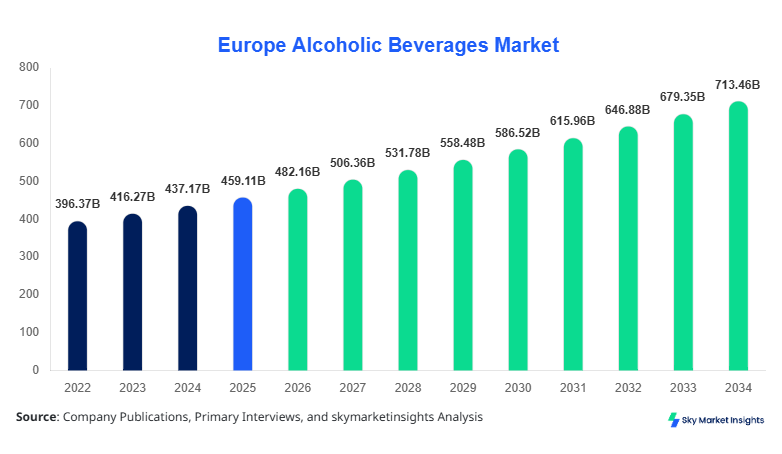
Europe's alcoholic beverages market size is projected at USD 482.16 billion in 2026 and is expected to hit USD 713.84 billion by 2034 with a CAGR of 5.02%.
The market continues to expand due to rising premiumization, increasing urban consumption patterns, and the growing penetration of low-alcohol and flavored beverages across Europe. Strong demand from hospitality channels, organized retail, and cross-border alcohol trade has accelerated industry expansion. The report provides extensive segmentation analysis, consumption statistics, competitive benchmarking, pricing structures, supply chain evaluation, and regional production assessment across major European economies.
The alcoholic beverages industry refers to the production, distribution, import, export, and retailing of fermented and distilled drinks, including beer, wine, spirits, and ready-to-drink alcoholic formulations. Europe accounted for nearly 31.4% of global alcohol consumption volume in 2025, with total regional production surpassing 68.7 billion liters. Beer represented approximately 44.6% of total volume sales, while wine contributed 33.8% and spirits accounted for 21.6%. The region recorded per-capita alcohol consumption of 9.7 liters annually, with France, Germany, Italy, and the United Kingdom representing more than 58% of total European alcoholic beverage sales. Adoption of premium alcoholic beverages increased by 18.3% between 2022 and 2025, driven by changing consumer preferences toward aged spirits, craft beer, and organic wines.
Consumer demand analytics indicate that consumers aged between 25 and 44 years contributed nearly 49.5% of total alcohol purchases in Europe during 2025. Off-trade retail channels generated 61.2% of total industry revenue, while on-trade hospitality sales accounted for 32.8%. E-commerce penetration in alcohol sales reached 6.4%, supported by digital retail expansion and rapid delivery platforms. Functional alcoholic drinks, low-calorie beer, and non-traditional flavor profiles witnessed demand increases exceeding 21.7% year-over-year. Wine applications within hospitality contributed 41.5% of sector consumption, while beer consumption in sports and entertainment venues represented 38.2% of total beer sales. Increased consumer preference for premium spirits and sustainable packaging continues strengthening the alcoholic beverages market.
In France, the alcoholic beverages market remains one of the largest contributors to European alcohol production and exports, accounting for nearly 24.7% of total regional revenue in 2025. France operated more than 6,200 wine production facilities, 2,100 distilleries, and approximately 1,500 commercial breweries. The country produced over 42.8 million hectoliters of wine and 19.4 million hectoliters of beer during 2025. Wine applications contributed 58.3% of domestic alcohol revenue, while spirits represented 24.6% and beer contributed 17.1%. Premium wine exports from Bordeaux, Champagne, and Burgundy regions increased by 13.5% compared to 2024.
Technology adoption within French alcohol manufacturing expanded rapidly, with 47.8% of producers integrating AI-based fermentation monitoring systems and automated bottling technologies. Sustainable packaging penetration exceeded 36.2%, while recyclable glass adoption crossed 52.4%. Hospitality-led consumption accounted for 43.7% of alcohol sales, supported by tourism volumes surpassing 98 million international visitors annually. France also represented nearly 29.3% of Europe’s premium wine exports by value. Growing premiumization and rising export-oriented production continue reinforcing the alcoholic beverages market.
Explore more data points, trends and opportunities Download Free Sample Report
Alcoholic Beverages Market Trends
Premiumization and Craft Beverage Expansion
Premium alcoholic beverage consumption across Europe increased significantly during 2024 and 2025, with premium spirits sales rising by 16.9% and craft beer production expanding by 12.4%. More than 15,700 craft breweries were operational across Europe in 2025, producing approximately 9.3 billion liters annually. Consumers increasingly shifted toward aged whiskey, botanical gin, artisanal vodka, and flavored beer variants. Premium wine consumption accounted for nearly 38.5% of total wine expenditure despite representing only 24.8% of total wine volume. Germany and the United Kingdom collectively contributed 34.1% of regional craft beer demand, while France dominated premium wine sales with over USD 71 billion in annual revenue. The integration of organic ingredients, low-sugar formulations, and sustainable packaging technologies has accelerated market transformation. Advanced fermentation systems reduced production wastage by nearly 11.2%, improving operational efficiency and supporting alcoholic beverage market expansion.
Rise of Low-Alcohol and Functional Alcoholic Drinks
Low-alcohol and no-alcohol beverage adoption emerged as a major transformation trend across Europe, particularly among urban millennials and Gen Z consumers. Sales of low-alcohol beer increased by 18.6% during 2025, while alcohol-free spirits registered growth exceeding 22.1%. More than 27% of consumers in the United Kingdom preferred low-calorie or reduced-alcohol beverages due to increasing health awareness. Functional alcoholic drinks infused with vitamins, botanical extracts, and natural flavors recorded production volumes surpassing 1.8 billion liters across Europe. E-commerce sales for low-alcohol products expanded by 31.4%, supported by online retail platforms and subscription-based beverage delivery models. Digital marketing campaigns increased consumer engagement by 19.7%, particularly in metropolitan regions. Product innovation focused heavily on sustainable brewing, biodegradable packaging, and precision flavor engineering, reinforcing long-term alcoholic beverage market transformation.
Europe Alcoholic Beverages Drivers
Rising Premium Consumption and Hospitality Sector Expansion
The expansion of tourism, luxury dining, and hospitality infrastructure across Europe has significantly accelerated alcohol consumption. International tourist arrivals in Europe exceeded 742 million in 2025, contributing nearly 28.6% of on-trade alcoholic beverage sales. Premium beverage consumption increased substantially within hotels, bars, lounges, and restaurants, where consumers spent approximately 34.2% more on premium drinks compared to retail purchases. The beer segment witnessed a 9.8% increase in hospitality demand, while premium spirits experienced growth exceeding 14.5%. Europe’s organized hospitality sector expanded by 6.3%, adding more than 18,000 new bars, pubs, and premium dining establishments between 2023 and 2025. Advanced cold-chain logistics, automated brewing systems, and AI-driven consumer analytics enhanced production efficiency and inventory management across beverage manufacturers. Urbanization levels across Europe surpassed 75.4%, further strengthening alcohol consumption in metropolitan regions. The growing preference for imported whiskey, flavored gin, sparkling wine, and craft beer continues to stimulate alcoholic beverage market growth.
Europe Alcoholic Beverages Restraints
Stringent Government Regulations and Health Awareness
Increasing regulatory restrictions on alcohol advertising, packaging, taxation, and public consumption remain major barriers for industry expansion across Europe. Alcohol excise duties increased by an average of 7.2% across several European countries between 2023 and 2025. France, Germany, and the United Kingdom implemented stricter labeling requirements regarding calorie disclosure and health warnings. Public health campaigns reduced excessive alcohol consumption by nearly 5.8% among younger demographics aged 18–24 years. Rising health consciousness also contributed to declining consumption of high-calorie alcoholic beverages, particularly traditional beer and sweetened spirits. More than 39% of European consumers actively reduced alcohol intake due to wellness-related concerns. Regulatory limitations on television and digital alcohol advertising impacted brand visibility and reduced promotional spending efficiency by approximately 12.4%. Supply chain volatility, raw material inflation, and energy cost increases also pressured manufacturer profit margins. These regulatory and consumer health challenges continue restricting broader alcoholic beverage market growth.
Europe Alcoholic Beverages Opportunities
Expansion of E-commerce and Sustainable Beverage Innovation
The rapid development of digital retail channels and sustainable alcohol manufacturing presents substantial opportunities across Europe. Online alcohol sales surpassed USD 28.4 billion during 2025 and are projected to increase significantly due to rising smartphone penetration and same-day delivery services. E-commerce platforms accounted for nearly 6.4% of total alcohol distribution volume, particularly in urban areas of Germany, France, and the United Kingdom. Sustainable packaging adoption increased by 21.3%, with recyclable aluminum cans and lightweight glass bottles gaining strong commercial traction. More than 42% of consumers expressed willingness to pay premium prices for environmentally sustainable alcoholic beverages. Breweries integrating renewable energy systems reduced production emissions by nearly 18.5%. The demand for organic wine, vegan beer, and naturally fermented spirits expanded by 17.2% across Europe. Strategic partnerships between beverage producers and digital delivery providers continue creating profitable expansion pathways for the alcoholic beverages market.
Challenges in Europe: Alcoholic Beverages
Supply Chain Volatility and Raw Material Price Inflation
The alcoholic beverage industry continues facing substantial operational challenges due to fluctuations in agricultural commodity pricing, logistics disruptions, and energy inflation. Barley prices increased by 14.7% between 2023 and 2025, while grape cultivation costs rose by 11.2% due to adverse climate conditions in Southern Europe. Transportation expenses for alcohol distribution expanded by approximately 9.3%, significantly impacting cross-border exports. Europe imported more than 7.8 million metric tons of brewing ingredients during 2025, increasing dependency on international agricultural trade networks. Labor shortages within hospitality and manufacturing sectors reduced production efficiency by nearly 6.8% in some countries. Climate-related production disruptions affected vineyard output in France, Italy, and Spain, lowering wine yields by nearly 8.4% during drought periods. Currency fluctuations and energy-intensive distillation operations further increased operational costs for manufacturers. Maintaining product affordability while preserving premium positioning remains a significant challenge for the alcoholic beverages market.
Report Scope
| Report Metric | Details |
|---|---|
| Market Size in 2025 | USD 459.11 Billion |
| Market Size in 2026 | USD 482.16 Billion |
| Market Size in 2034 | USD 713.84 Billion |
| CAGR | 5.02% (2026-2034) |
| Base Year for Estimation | 2025 |
| Historical Data | 2022-2024 |
| Forecast Period | 2026-2034 |
| Report Coverage | Revenue Forecast, Competitive Landscape, Supply Chain Disruption, Growth Factors, Environment & Regulatory Landscape and Trends |
Explore more data points, trends and opportunities Download Free Sample Report
Alcoholic Beverages Market Segmentation
The market is segmented based on product type and distribution channel. Beer dominated the market with approximately 44.6% share in 2025 due to strong mass-market penetration and extensive hospitality consumption. Off-trade retail channels contributed nearly 61.2% of overall revenue owing to supermarket expansion and organized retail growth across Europe.
BY TYPE
Beer accounted for nearly 44.6% of total European alcohol consumption volume during 2025, with production exceeding 30.7 billion liters. Germany, the United Kingdom, and Spain collectively represented more than 48% of regional beer output. Lager remained the dominant beer category, with a 62.3% share, followed by ale at 21.8% and craft beer at 15.9%. Automated brewing systems improved production efficiency by approximately 13.4%, while low-alcohol beer adoption increased by 18.6%. Packaging innovations including nitrogen-infused cans and recyclable kegs improved shelf stability and transportation efficiency. Hospitality applications generated nearly 38.2% of beer demand, particularly in sports venues, entertainment centers, and tourism hubs. Beer exports from Germany exceeded USD 9.6 billion during 2025.
Wine represented approximately 33.8% of total market revenue and more than 25.4 billion liters of annual production across Europe. France, Italy, and Spain contributed nearly 67% of total regional wine output. Red wine maintained a 49.2% consumption share, while white wine represented 36.1% and sparkling wine accounted for 14.7%. Organic wine production expanded by 16.8% due to rising consumer preference for sustainable beverages. Smart fermentation technologies reduced wastage by 9.4%, while barrel-aging optimization improved premium wine quality. Export demand for European wine increased by 11.7%, especially across North America and Asia-Pacific regions.
Spirits contributed nearly 21.6% of total alcohol sales and generated significant premium revenue across Europe. Whiskey, vodka, gin, and rum collectively accounted for more than 74% of spirits consumption. Premium whiskey sales increased by 15.1%, while botanical gin production expanded by 19.6% during 2025. Distillation facilities across Europe surpassed 4,800 units, producing approximately 8.2 billion liters annually. Luxury spirits consumption among urban consumers increased significantly, particularly within the hospitality and tourism sectors. Sustainable distillation methods lowered energy usage by 12.3%, supporting profitability and environmental compliance.
BY APPLICATION
On-trade distribution channels accounted for approximately 32.8% of total alcohol sales in Europe. Restaurants, bars, lounges, hotels, and entertainment venues remained primary consumption centers. Hospitality-driven alcohol demand increased by 11.4% during 2025 due to tourism recovery and rising nightlife spending. Beer represented nearly 41.7% of on-trade sales, while wine contributed 36.8% and spirits accounted for 21.5%. Premiumization within hospitality channels increased average consumer spending by 17.3%. Smart beverage dispensing systems and digital inventory management improved operational efficiency across hospitality establishments.
Off-trade retail channels dominated the market with 61.2% revenue share, supported by supermarkets, convenience stores, hypermarkets, and liquor specialty retailers. Retail alcohol sales volumes exceeded 42 billion liters during 2025. Promotional pricing strategies, subscription-based beverage bundles, and bulk purchasing options contributed to strong retail penetration. Wine represented approximately 39.5% of retail alcohol sales, followed by beer at 37.8% and spirits at 22.7%. Sustainable packaging and private-label alcoholic beverages expanded rapidly within retail chains. Automated retail analytics improved inventory turnover by nearly 14.6%.
E-commerce alcohol distribution emerged as the fastest-growing application segment, accounting for approximately 6.4% of total sales. Online alcohol revenue exceeded USD 28.4 billion in 2025, driven by rapid delivery services and digital payment adoption. Urban consumers aged between 25 and 40 years represented nearly 58% of online alcohol buyers. Subscription-based alcohol delivery services increased by 22.3%, while direct-to-consumer wine sales expanded by 18.9%. AI-powered recommendation engines improved customer retention by 13.7%, supporting digital expansion across Europe.
Europe Alcoholic Beverages Market Segmentations
Product Type
- Beer
- Wine
- Spirits
Distribution Channel
- On-Trade
- Off-Trade
- E-commerce
Europe Alcoholic Beverages Regional Outlook
United Kingdom
The United Kingdom accounted for approximately 17.4% of European alcohol revenue during 2025. Beer consumption dominated with 46.8% share, followed by spirits at 29.5% and wine at 23.7%. The country produced over 5.8 billion liters of alcoholic beverages annually, supported by more than 2,600 breweries and 400 distilleries. Premium gin production expanded by 21.3%, while low-alcohol beverage demand increased by 18.1%. Hospitality channels represented nearly 39% of national alcohol sales. Digital alcohol commerce penetration reached 9.2%, among the highest in Europe.
Germany
Germany represented nearly 19.6% of regional alcohol production volume and remained Europe’s leading beer producer. Total alcohol output exceeded 11.3 billion liters during 2025. Beer contributed 63.4% of domestic alcohol consumption, supported by over 1,500 breweries. Craft beer production increased by 14.2%, while premium whiskey imports expanded by 11.8%. Germany also recorded strong export performance, shipping alcoholic beverages worth more than USD 15 billion annually. Sustainable brewing adoption surpassed 41.5%.
France
France generated approximately 24.7% of Europe’s alcoholic beverage revenue, primarily driven by premium wine exports and luxury spirits. Wine production exceeded 42.8 million hectoliters during 2025, while spirits exports increased by 13.5%. Premium hospitality consumption represented 43.7% of national alcohol demand. France maintained strong leadership in organic wine production, accounting for nearly 31% of European organic vineyard acreage. Tourism-driven consumption continued supporting market expansion.
Spain
Spain accounted for approximately 11.8% of regional alcohol production and remained a major wine-producing country. Total wine output exceeded 32 million hectoliters during 2025. Beer consumption represented 42.6% of domestic alcohol sales, particularly within tourism-heavy coastal regions. Export-oriented wine manufacturing contributed significantly to national revenue, while premium cava production increased by 10.4%. Hospitality channels represented nearly 37% of alcohol consumption.
Italy
Italy contributed approximately 14.2% of Europe’s alcoholic beverage exports and remained one of the largest wine producers globally. Wine represented nearly 57% of domestic alcohol consumption, while beer accounted for 28.4% and spirits 14.6%. Italy produced more than 49 million hectoliters of wine during 2025. Organic wine cultivation increased by 18.7%, while sparkling wine exports expanded by 15.3%. Tourism and luxury dining significantly supported premium alcohol sales.
Russia
Russia accounted for approximately 12.3% of European spirits consumption volume during 2023. Vodka remained dominant with nearly 61% of national spirits sales. Total alcohol production exceeded 9.1 billion liters annually, supported by extensive domestic distillation capacity. Retail channels contributed more than 68% of alcohol distribution. Premium whiskey imports and flavored alcoholic beverages recorded strong growth despite regulatory pressures. Urban consumption remained concentrated in Moscow and Saint Petersburg metropolitan areas.
Top players in Europe Alcoholic Beverages
- Anheuser-Busch InBev
- Heineken N.V.
- Diageo Plc
- Pernod Ricard
- Carlsberg Group
- Bacardi Limited
- Molson Coors Beverage Company
- Rémy Cointreau
- Campari Group
- Brown-Forman Corporation
- Asahi Group Holdings
- Constellation Brands
- Davide Campari-Milano N.V.
- Treasury Wine Estates
- William Grant & Sons
Heineken N.V.
-
Estimated European market share: 11.6%
-
Strong presence across beer, low-alcohol beverages, and premium craft segments
-
Operates more than 165 breweries globally with strong European concentration
Heineken N.V. maintained a dominant position within Europe due to strong distribution networks, premium beer branding, and sustainability-focused brewing initiatives. The company expanded low-alcohol beer production by approximately 19.3% during 2025 and invested heavily in renewable energy brewing facilities. Heineken’s premium product portfolio contributed significantly to hospitality-driven consumption across the United Kingdom, Germany, and Spain. Digital retail partnerships and AI-powered supply chain management improved inventory efficiency by nearly 12.7%.
Diageo Plc
-
Estimated European market share: 9.4%
-
Leading producer of premium whiskey, gin, and vodka
-
Strong luxury positioning across hospitality and retail sectors
Diageo Plc continued strengthening its premium spirits portfolio across Europe through innovation, acquisitions, and hospitality partnerships. Premium whiskey sales increased by 14.8%, while flavored gin categories expanded by 17.6% during 2025. The company invested significantly in sustainable distillation technologies, reducing energy consumption by approximately 11.2%. Diageo’s strategic collaborations with luxury hotels and airport retail chains supported premiumization across urban markets. The company also accelerated digital marketing campaigns targeting younger consumers.
Investment Analysis
Investment activity across the European alcoholic beverage sector increased substantially during 2025, with total capital expenditure surpassing USD 64 billion. Approximately 38.6% of investments targeted brewery modernization and automated production technologies, while 24.1% focused on sustainable packaging infrastructure. Premium spirits manufacturing attracted nearly 19.7% of total investments due to rising export demand and luxury consumption trends. France, Germany, and the United Kingdom collectively accounted for more than 58% of regional alcohol-sector investments.
Cross-border mergers, acquisitions, and collaborations accelerated industry consolidation. More than 47 strategic acquisitions were completed between 2023 and 2025 across brewing, wine production, and digital alcohol distribution. Premium wine companies in France and Italy attracted strong foreign investment from North American and Asian beverage conglomerates. E-commerce collaborations between alcohol producers and rapid delivery platforms increased by 26.3%. Sustainability-linked financing agreements exceeded USD 11 billion during 2025, supporting carbon-neutral brewing and recyclable packaging initiatives.
Investment in low-alcohol and functional beverage innovation expanded rapidly, accounting for nearly 13.8% of total R&D expenditure. Beverage companies also allocated approximately 17.2% of technology budgets toward AI-driven demand forecasting, inventory analytics, and digital marketing automation. Urban logistics infrastructure and cold-chain transportation upgrades improved operational efficiency across European alcohol distribution networks.
New Product Developments
Alcohol manufacturers across Europe significantly accelerated product innovation during 2025, with nearly 22.6% of newly launched beverages classified as low-alcohol or functional products. Botanical gin variants, organic wines, fruit-infused beers, and low-calorie ready-to-drink cocktails gained substantial commercial traction. More than 4,800 new alcoholic beverage SKUs were launched across Europe during 2025, representing an annual increase of 16.4%.
Performance improvements in fermentation technologies enhanced flavor consistency by approximately 12.8%, while smart bottling automation reduced packaging waste by 9.7%. Sustainable aluminum packaging adoption increased by 18.2%, particularly among beer and ready-to-drink product manufacturers. AI-assisted flavor development platforms reduced product development timelines by nearly 21.5%, enabling faster commercialization of premium beverages.
Recent Developments in European Alcoholic Beverages
- 2025: Heineken expanded low-alcohol beer production capacity across Germany and the Netherlands by approximately 18.4%, adding more than 320 million liters of annual brewing capacity. The company also integrated renewable energy systems across multiple European breweries, reducing operational emissions by nearly 14.7%.
- 2025: Pernod Ricard launched premium botanical gin variants across France, Italy, and Spain, increasing regional spirits sales by approximately 12.6%. The product launch targeted urban consumers aged 25–40 years and expanded premium hospitality penetration significantly across luxury dining establishments.
Research Methodology
The research methodology for the European alcoholic beverages industry involved a combination of primary research, secondary research, quantitative analysis, and market modeling techniques. The research process included detailed data collection from industry associations, company annual reports, alcohol trade databases, customs statistics, hospitality associations, and government regulatory agencies across Europe. Historical data from 2022 to 2024 was analyzed to estimate production volume trends, pricing movements, consumption patterns, and export-import statistics.
Primary research involved interviews with brewery executives, wine producers, distillery operators, retail distributors, hospitality managers, and technology suppliers. More than 120 industry participants contributed operational insights regarding demand fluctuations, consumer purchasing behavior, technology adoption, and sustainability initiatives. Secondary research sources included financial reports, trade journals, customs databases, and regulatory publications. Market size estimation utilized bottom-up and top-down analytical approaches, integrating production capacity analysis, retail pricing structures, consumption metrics, and macroeconomic indicators. Forecast modeling considered inflation trends, urbanization rates, premiumization dynamics, tourism growth, regulatory frameworks, and digital retail expansion to ensure accurate long-term industry projections.
Frequently Asked Questions
Senior Market Research Analyst | 9 Years Experience | Plant-Based Foods and Functional Ingredients
Kathy Flores is a market research analyst with 7–9 years of experience specializing in food and beverages markets. Contributed to 70+ research reports for global clients. Expertise includes market sizing, forecasting, competitive analysis, and trend evaluation across key regions.