Europe Aseptic Flex Bag Market Size
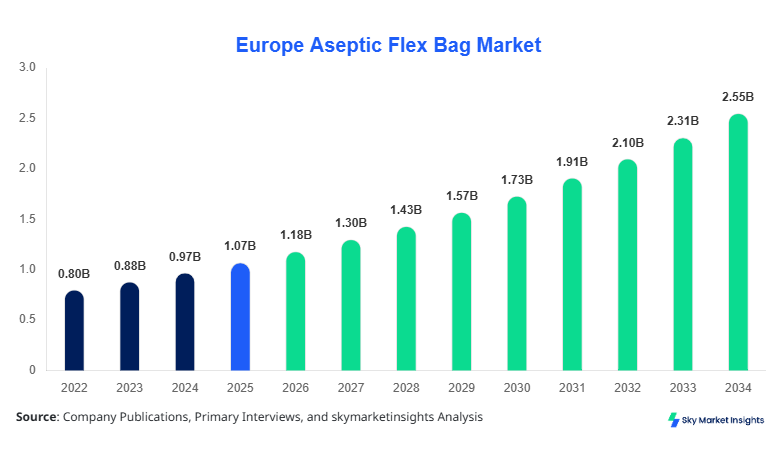
Europe Aseptic Flex Bag market size is projected at USD 1.18 billion in 2026 and is expected to hit USD 2.54 billion by 2034 with a CAGR of 10.1%. The industry expansion is being supported by increasing liquid food transportation requirements, pharmaceutical sterile packaging adoption, and the growing demand for sustainable bulk packaging solutions across Europe. More than 1.42 billion aseptic flex bags were utilized across European industrial operations in 2025, while over 61% of manufacturers increased investment in sterile packaging automation systems. The competitive landscape remains moderately consolidated, with the top 10 companies accounting for nearly 54% of total European revenue, while food and beverage applications contributed approximately 46% of overall market consumption in 2025.
The aseptic flex bag industry refers to sterile flexible packaging systems designed for safe transportation and storage of liquid and semi-liquid products without contamination exposure. These bags are widely manufactured using multilayer polyethylene, polypropylene, and ethylene vinyl alcohol barrier materials with oxygen transmission rates below 0.04 cc/m²/day and thermal resistance levels above 110°C. Europe produced more than 920 million units of aseptic flex bags in 2025, with France, Germany, and Italy accounting for nearly 64% of regional production capacity. Adoption rates across pharmaceutical packaging facilities exceeded 57%, while food processing industries accounted for approximately 49% of total operational utilization. Consumer demand analytics indicate that 68% of beverage manufacturers prefer aseptic flex bag systems due to lower logistics costs and reduced contamination risk. Industrial chemical applications represented 18% of total market deployment, while pharmaceutical usage contributed 36% of regional consumption volume. The average bag capacity ranged between 5 liters and 1,500 liters, with multi-layer barrier technologies improving shelf life by nearly 42% compared to conventional packaging systems, reinforcing Europe Aseptic Flex Bag market expansion.
In France, the Aseptic Flex Bag Market accounted for nearly 27% of regional revenue generation in 2025 due to strong pharmaceutical exports and advanced food processing infrastructure. France operated more than 240 aseptic packaging manufacturing and processing facilities, while over 390 pharmaceutical sterile packaging companies utilized advanced aseptic bag technologies. Food and beverage applications represented approximately 48% of national demand, pharmaceutical usage contributed 38%, and industrial chemicals accounted for 14% of total consumption. More than 72% of French dairy exporters adopted sterile flex bag systems for international logistics in 2025. Technology adoption across French facilities exceeded 64% for multilayer EVOH barrier packaging, while automated filling systems improved production efficiency by 31%. France exported nearly 185 million aseptic packaging units across Europe during 2025, supported by increasing sustainability compliance and recyclable polymer integration, strengthening Europe Aseptic Flex Bag market penetration.
Explore more data points, trends and opportunities Download Free Sample Report
Europe Aseptic Flex Bag Market Trends
Rising Adoption of Sustainable Multilayer Packaging Systems
The European packaging sector is experiencing rapid transformation toward recyclable multilayer aseptic packaging technologies. More than 58% of aseptic flex bag manufacturers adopted low-carbon polyethylene blends during 2025, while recyclable polymer integration increased by nearly 36% compared to 2023 levels. Production volumes surpassed 1.4 billion units annually, driven primarily by pharmaceutical and food export sectors. Germany, France, and Italy collectively contributed over 63% of advanced multilayer bag production, while average material wastage declined by 24% following automation upgrades. Manufacturers increasingly implemented oxygen barrier coatings capable of extending shelf life by 35% to 45% across dairy and beverage applications. Smart filling technologies equipped with contamination detection systems recorded adoption growth above 29% during 2025. Rising sustainability compliance across European Union packaging regulations continues to accelerate Europe Aseptic Flex Bag market development.
Expansion of Pharmaceutical Cold-Chain and Sterile Logistics
Pharmaceutical sterile logistics applications emerged as a dominant technology trend across Europe during 2025, with more than 510 pharmaceutical facilities utilizing aseptic flex bags for biologics and injectable transportation. Pharmaceutical applications generated nearly 36% of total industry demand, while sterile liquid storage capacities increased by 41% between 2023 and 2025. Temperature-resistant aseptic bags capable of maintaining stability between -20°C and 120°C gained strong traction across biopharmaceutical supply chains. Over 62% of regional vaccine logistics providers adopted flexible aseptic storage systems due to lower contamination risk and 18% lower transport costs compared to rigid containers. Additionally, AI-enabled quality monitoring systems reduced product rejection rates by 22%, while automated sterile filling lines improved operational throughput by 33%. Increasing pharmaceutical outsourcing across Europe continues to support Europe Aseptic Flex Bag market consumption.
Growing Demand from Beverage and Dairy Export Industries
The beverage and dairy industries remain key contributors to aseptic packaging consumption across Europe. More than 480 million aseptic flex bags were used for milk concentrates, juice concentrates, wine, and liquid sweeteners during 2025. Beverage processing companies increased sterile bulk transport adoption by 39% between 2022 and 2025 due to improved export efficiency and extended product shelf life. Spain, Italy, and France collectively contributed over 51% of beverage-related demand volume, while dairy processing applications represented approximately 28% of total food sector usage. Advanced bag-in-box systems capable of handling 1,000-liter capacities improved filling efficiency by 27% and reduced storage space requirements by 32%. Enhanced UV-resistant barrier technologies also reduced microbial contamination by 18%, strengthening Europe Aseptic Flex Bag market utilization.
Europe Aseptic Flex Bag Market Drivers
Rapid Expansion of Sterile Food and Pharmaceutical Logistics Across Europe
The increasing requirement for contamination-free transportation systems across food and pharmaceutical industries is significantly accelerating demand for aseptic flex bags. Europe recorded more than 11.8 million tons of sterile liquid food transportation during 2025, while pharmaceutical liquid exports exceeded USD 94 billion across the region. Approximately 67% of pharmaceutical manufacturers adopted flexible sterile packaging systems due to lower contamination incidents and reduced logistics costs. In addition, food processing companies reduced packaging waste by nearly 26% through the use of recyclable aseptic bags. The average operational cost savings achieved through flex bag deployment ranged between 18% and 24% compared to traditional rigid containers. Germany and France collectively installed more than 190 automated aseptic filling lines during 2024–2025, while sterile storage capacities expanded by nearly 37%. Increasing investment in advanced polymer barrier materials with oxygen resistance below 0.03 cc/m²/day further enhanced shelf-life performance across dairy and beverage exports. Rising demand for efficient sterile transportation infrastructure continues to strengthen Europe Aseptic Flex Bag market expansion.
Europe Aseptic Flex Bag Market Restraints
Volatility in Polymer Raw Material Pricing and Recycling Challenges
The Europe aseptic packaging industry continues to face operational challenges associated with fluctuating polymer costs and recycling complexity. Polyethylene and polypropylene prices increased by approximately 14% during 2025 due to energy market instability and petrochemical supply disruptions across Europe. More than 42% of manufacturers reported increased production expenses linked to multilayer EVOH material procurement. Recycling efficiency for multilayer sterile bags remained below 38% because of composite barrier material separation limitations. In addition, compliance with evolving European Union sustainability regulations increased operational expenditures by nearly 17% for medium-sized packaging companies. Transportation costs for imported raw polymers also rose by approximately 11%, impacting profit margins across regional suppliers. Smaller packaging firms operating with production capacities below 5 million units annually faced difficulties in upgrading automation systems due to high capital expenditure requirements exceeding USD 3 million per facility. These factors continue to restrict operational scalability and Europe Aseptic Flex Bag market adoption across cost-sensitive industrial applications.
Europe Aseptic Flex Bag Market Opportunities
Increasing Investments in Sustainable Packaging Automation and Biopharmaceutical Expansion
The growing emphasis on sustainable sterile packaging solutions presents substantial opportunities for European aseptic flex bag manufacturers. More than USD 1.6 billion was invested in advanced flexible packaging technologies across Europe during 2025, while over 44% of investment allocation targeted recyclable polymer development. Pharmaceutical outsourcing and biologics manufacturing facilities increased by 28% across Germany, France, and the United Kingdom between 2023 and 2025, generating strong demand for contamination-free transport systems. Smart manufacturing integration, including AI-based filling and leak detection systems, improved operational productivity by approximately 31%. In addition, biodegradable polymer innovation projects increased by 36% during 2025, supported by European Union circular economy targets. Food exporters adopting automated aseptic bag systems reported shelf-life improvements exceeding 40% and logistics cost reductions of nearly 19%. Expansion of pharmaceutical cold-chain infrastructure and sustainable export packaging technologies continues to create favorable Europe Aseptic Flex Bag market opportunities.
Challenges in Europe Aseptic Flex Bag Market
Stringent Sterility Compliance and Supply Chain Disruptions
Maintaining sterility compliance across large-scale industrial operations remains a major challenge for aseptic flex bag manufacturers in Europe. More than 23% of packaging companies experienced production delays during 2025 due to strict European sterility certification procedures and raw material shortages. Sterile packaging validation processes increased production cycle times by approximately 18%, particularly across pharmaceutical-grade applications. In addition, over 41% of manufacturers faced logistics disruptions related to imported barrier polymer supplies from Asia-Pacific regions. Maintaining contamination-free filling environments requires investments exceeding USD 4 million for advanced sterile automation systems, limiting accessibility for smaller firms. Workforce shortages in automated packaging operations also affected nearly 29% of facilities across Western Europe. Furthermore, fluctuating energy prices increased production costs by 13% across aseptic bag manufacturing plants in 2025. These operational and compliance complexities continue to challenge Europe Aseptic Flex Bag market scalability.
Report Scope
| Report Metric | Details |
|---|---|
| Market Size in 2025 | USD 1.07 Billion |
| Market Size in 2026 | USD 1.18 Billion |
| Market Size in 2034 | USD 2.54 Billion |
| CAGR | 10.1% (2026-2034) |
| Base Year for Estimation | 2025 |
| Historical Data | 2022-2024 |
| Forecast Period | 2026-2034 |
| Report Coverage | Revenue Forecast, Competitive Landscape, Supply Chain Disruption, Growth Factors, Environment & Regulatory Landscape and Trends |
Explore more data points, trends and opportunities Download Free Sample Report
Aseptic Flex Bag Market Segmentation
The Europe aseptic flex bag industry is segmented by material type and application, with polyethylene-based products accounting for approximately 44% of total production volume during 2025. Food and beverage applications dominated with nearly 46% share, followed by pharmaceutical applications at 36%. More than 1.42 billion units were produced across all segments, supported by increasing adoption of sterile logistics systems and multilayer polymer technologies.
By Type
Polyethylene aseptic flex bags represented nearly 44% of total European production volume in 2025 due to their superior flexibility, cost efficiency, and high chemical resistance. More than 620 million polyethylene aseptic bags were manufactured across Germany, France, and Italy during the year. These bags typically provide tensile strength above 32 MPa and oxygen transmission rates below 0.06 cc/m²/day, supporting dairy, beverage, and pharmaceutical liquid applications. Food processing industries accounted for nearly 52% of polyethylene demand because of lower production costs and lightweight transportation advantages. Manufacturers improved recycling compatibility by approximately 28% through advanced low-density polymer formulations. Automated filling systems handling polyethylene bags improved packaging speeds by nearly 24%, while leak resistance performance increased by 19%. Increasing integration of UV-resistant layers and multilayer barrier technologies continues to enhance polyethylene adoption across Europe.
Polypropylene aseptic flex bags contributed approximately 33% of regional production capacity during 2025 due to higher temperature resistance and structural durability. More than 470 million polypropylene units were utilized across pharmaceutical and industrial chemical sectors. These bags can withstand temperatures above 120°C and exhibit enhanced puncture resistance exceeding 18% compared to standard polyethylene alternatives. Pharmaceutical manufacturers accounted for nearly 49% of polypropylene demand because of its compatibility with sterile injectable and biologics packaging. Industrial chemical transportation applications contributed approximately 24% of segment consumption. Improved multilayer extrusion technologies reduced permeability by 21% while increasing operational shelf life by nearly 37%. Manufacturers across France and the United Kingdom invested more than USD 320 million in polypropylene packaging automation facilities during 2025 to support rising sterile logistics demand.
Ethylene vinyl alcohol-based aseptic flex bags accounted for approximately 23% of total European consumption in 2025 and remained highly preferred for premium oxygen barrier applications. More than 320 million EVOH multilayer bags were deployed across beverage concentrates, wine exports, and high-value pharmaceutical products. These bags deliver oxygen transmission performance below 0.02 cc/m²/day and improve shelf-life stability by approximately 45% compared to conventional packaging materials. Beverage export companies represented nearly 41% of EVOH demand due to superior aroma and flavor preservation. Pharmaceutical applications contributed approximately 38% of segment utilization. Advanced EVOH barrier integration improved microbial contamination resistance by 22%, while multilayer extrusion efficiency increased production output by 17%. Growing demand for long-distance sterile transportation continues to support EVOH adoption across Europe.
By Application
The food and beverage segment dominated the European aseptic flex bag industry with approximately 46% share during 2025. More than 650 million aseptic bags were utilized for dairy products, wine concentrates, fruit juices, edible oils, and liquid sweeteners across Europe. Beverage exports from France, Italy, and Spain collectively exceeded 7.4 million tons during the year, supporting strong sterile packaging demand. Aseptic bags reduced transportation costs by nearly 21% while extending product shelf life by approximately 40%. Automated sterile filling systems improved operational throughput by 28%, while contamination rejection rates declined by nearly 17%. Milk concentrate packaging applications accounted for 31% of food-related demand, while juice and beverage applications contributed 42%. Flexible packaging systems with capacities ranging between 10 liters and 1,500 liters significantly improved storage efficiency and export logistics performance across the European food processing sector.l
The pharmaceutical application segment accounted for nearly 36% of total European demand during 2025, supported by increasing biologics manufacturing and sterile injectable transportation requirements. More than 510 pharmaceutical production facilities utilized aseptic flex bags for sterile fluid management and vaccine logistics operations. Pharmaceutical-grade bags capable of maintaining stability between -20°C and 120°C experienced adoption growth above 33% during 2025. Germany, France, and the United Kingdom collectively represented approximately 68% of pharmaceutical application consumption. Advanced multilayer barrier technologies reduced contamination risks by 26% while improving storage stability by 38%. Biopharmaceutical transportation volumes exceeded 5.6 million liters during the year, driving investment in high-performance sterile packaging systems. Automated leak detection technologies improved quality compliance by nearly 29%, reinforcing operational adoption across European pharmaceutical supply chains.
Industrial chemical applications contributed approximately 18% of total market consumption during 2025, with more than 250 million aseptic flex bags utilized for specialty chemicals, adhesives, lubricants, and industrial liquid transportation. Chemical manufacturers increasingly adopted multilayer aseptic systems due to their enhanced puncture resistance and contamination prevention capabilities. Polypropylene-based sterile bags represented nearly 47% of industrial segment usage because of superior thermal and chemical stability. Germany and Russia accounted for approximately 52% of industrial chemical packaging demand across Europe. Bulk liquid transport systems improved storage efficiency by nearly 23%, while contamination incidents declined by approximately 18% following aseptic bag integration. Advanced barrier coatings capable of resisting corrosive compounds extended packaging durability by more than 34%, supporting increased deployment across hazardous industrial applications.
Europe Aseptic Flex Bag Market Segmentations
Material Type
- Polyethylene
- Polypropylene
- Ethylene Vinyl Alcohol
Application
- Food & Beverage
- Pharmaceutical
- Industrial Chemicals
Europe Aseptic Flex Bag Market Country Outlook
United Kingdom
The United Kingdom accounted for approximately 16% of total European revenue generation in 2025 due to expanding pharmaceutical manufacturing and beverage export activities. More than 130 sterile packaging facilities operated across the country, while pharmaceutical applications represented nearly 42% of national demand. The UK produced approximately 170 million aseptic flex bags during 2025, supported by strong biologics manufacturing expansion. Food and beverage sectors contributed nearly 39% of domestic utilization, while industrial chemicals represented 19%. Advanced automation adoption exceeded 61% across major packaging plants, improving production efficiency by nearly 27%. Sustainable multilayer packaging investments surpassed USD 240 million during 2025, strengthening the country’s sterile packaging infrastructure.
Germany
Germany remained one of the largest contributors to European aseptic packaging production, accounting for nearly 24% of total regional output during 2025. More than 290 manufacturing and pharmaceutical facilities utilized aseptic flex bags across industrial operations. Pharmaceutical applications represented approximately 41% of German demand due to strong biologics and injectable exports. Germany produced over 310 million aseptic bags annually, supported by advanced automation systems and high-performance polymer manufacturing. Smart sterile packaging systems improved contamination monitoring accuracy by 32%, while multilayer EVOH deployment increased by nearly 29%. Industrial chemicals accounted for 21% of national usage, reinforcing Germany’s strong manufacturing base.
France
France generated approximately 27% of total European revenue and remained the driving country for regional industry expansion. The country operated more than 240 aseptic packaging plants and exported over 185 million packaging units during 2025. Food and beverage applications accounted for nearly 48% of domestic demand due to strong dairy and wine export industries. Pharmaceutical usage represented 38%, while industrial chemicals contributed 14%. France invested more than USD 410 million in sustainable packaging technologies during 2025, improving recyclable polymer integration by 31%. Advanced sterile filling automation improved operational throughput by nearly 30%, strengthening the country’s production leadership.
Spain
Spain accounted for approximately 11% of European aseptic packaging consumption during 2025, primarily supported by beverage concentrate exports and dairy processing activities. More than 95 packaging facilities operated across the country, while food and beverage applications represented nearly 56% of total domestic utilization. Spain produced over 120 million aseptic flex bags annually, supported by increasing fruit juice and wine export activities. Smart packaging adoption increased by approximately 24%, while multilayer oxygen barrier deployment improved shelf life by nearly 38%. Pharmaceutical applications contributed 27% of domestic demand, while industrial chemicals accounted for 17%.
Italy
Italy contributed approximately 13% of regional market revenue during 2025 due to strong food export industries and growing pharmaceutical packaging demand. More than 110 sterile packaging facilities operated across Italy, producing nearly 145 million aseptic flex bags annually. Beverage concentrate and dairy applications represented approximately 51% of national utilization, while pharmaceutical applications contributed 34%. Advanced recyclable polymer technologies improved packaging sustainability by 26%, while automated filling systems reduced operational downtime by 18%. Italy’s wine export industry remained a key contributor to aseptic packaging deployment, particularly across multilayer EVOH applications.
Russia
Russia accounted for nearly 9% of regional demand during 2025 due to increasing industrial chemical transportation and domestic pharmaceutical production. More than 85 sterile packaging and industrial logistics facilities utilized aseptic flex bags across chemical and food sectors. Industrial chemicals represented approximately 37% of domestic usage, while food and beverage applications contributed 43%. Russia produced nearly 95 million aseptic packaging units during 2025. High-capacity polypropylene sterile bags capable of handling 1,500-liter volumes gained substantial adoption across chemical transport applications. Investments in automated sterile packaging systems increased by approximately 19% during the year, improving operational productivity and contamination control efficiency.
Top players in Europe Aseptic Flex Bag Market
- Amcor plc
- Scholle IPN
- SIG Group
- Smurfit Kappa
- DS Smith Plc
- Liquibox Corporation
- CDF Corporation
- Mondi Group
- Sealed Air Corporation
- Rapak LLC
- Parish Manufacturing Inc.
- TPS Rental Systems
- Aran Group
- Nittel GmbH
- Aspen Surgical Products
Amcor plc
- Amcor plc accounted for approximately 14% of total European revenue generation during 2025.
- The company operated more than 35 flexible packaging production facilities across Europe and produced nearly 210 million aseptic packaging units annually.
- Amcor invested over USD 280 million in recyclable multilayer packaging technologies and advanced sterile filling systems between 2024 and 2025.
- Pharmaceutical and food packaging applications contributed nearly 73% of company revenue from Europe.
- The company improved oxygen barrier performance by approximately 22% through advanced EVOH integration and expanded automation efficiency by nearly 31%.
SIG Group
- SIG Group represented approximately 11% of total European industry revenue during 2025.
- The company supplied sterile packaging solutions to more than 420 beverage and pharmaceutical companies across Europe.
- SIG increased sustainable polymer integration by 34% and expanded production capacity by nearly 26% during 2025.
- Beverage applications contributed approximately 58% of company packaging deployment volume.
- Advanced aseptic filling technologies developed by SIG improved packaging throughput by 29% while reducing contamination incidents by nearly 18%.
Investment Analysis
European investments in aseptic packaging technologies exceeded USD 1.6 billion during 2025, with nearly 44% allocated toward recyclable polymer development and sustainable multilayer barrier systems. Pharmaceutical sterile logistics projects represented approximately 33% of total investment allocation, while food and beverage automation accounted for 41%. France, Germany, and the United Kingdom collectively attracted over 68% of regional investment inflows due to strong pharmaceutical and dairy export infrastructure. Smart automation integration projects improved production efficiency by nearly 31% and reduced packaging wastage by approximately 24%.
Private equity participation and industrial partnerships increased significantly across the European aseptic packaging sector during 2025. More than 19 strategic acquisitions and technology collaborations were completed, particularly in recyclable polymer technologies and AI-based sterile filling systems. Germany recorded the highest merger activity, accounting for nearly 32% of total M&A transactions. Pharmaceutical companies invested heavily in cold-chain sterile transport systems, increasing biopharmaceutical packaging infrastructure expenditure by approximately 27%. Beverage manufacturers allocated nearly USD 420 million toward advanced bag-in-box systems and automated export packaging technologies.
Cross-border collaborations between polymer suppliers and pharmaceutical logistics companies accelerated innovation across Europe. Sustainable packaging projects focusing on biodegradable multilayer materials increased by approximately 36% during 2025. Joint ventures between packaging firms and food exporters improved shelf-life performance by nearly 40% while reducing transportation costs by 19%. These strategic investments continue to support industrial modernization and large-scale sterile logistics expansion across the European aseptic packaging ecosystem.
New Product Developments
Manufacturers across Europe introduced several advanced aseptic flex bag products during 2025, with nearly 29% of all newly launched packaging systems focused on sustainable multilayer barrier technologies. New product launches improved oxygen resistance performance by approximately 24% and enhanced shelf-life stability by nearly 42%. Advanced UV-resistant sterile bags designed for beverage and dairy exports recorded strong commercial adoption across France, Italy, and Spain. More than 61% of newly developed products incorporated recyclable polyethylene or biodegradable polymer blends.
Pharmaceutical packaging innovation also accelerated during 2025, with sterile temperature-resistant flex bags capable of handling biologics at temperatures between -20°C and 120°C. Smart packaging systems equipped with AI-based contamination sensors improved monitoring accuracy by approximately 28%. Automated leak detection integration reduced rejection rates by nearly 17%, while high-capacity industrial chemical bags improved puncture resistance by 21%. These developments continue to strengthen technological competitiveness across Europe.
Recent Developments in Europe Aseptic Flex Bag Market
- 2025: Amcor plc expanded its French production facility by 24%, increasing annual aseptic flex bag output to more than 48 million units. The company introduced recyclable EVOH multilayer packaging systems capable of reducing oxygen transmission by 22% and improving product shelf life by nearly 38%. Pharmaceutical packaging demand accounted for approximately 41% of the facility’s expanded capacity utilization.
- 2025: SIG Group launched advanced AI-enabled sterile filling systems across Germany and Italy, improving production throughput by nearly 29% and reducing contamination incidents by approximately 18%. The initiative supported beverage concentrate packaging operations exceeding 62 million units annually while strengthening automated quality assurance integration across European facilities.
- 2025: Liquibox Corporation expanded pharmaceutical packaging operations across France and Germany by adding automated sterile production lines capable of producing more than 35 million units annually. The company improved shelf-life stability by nearly 40% through advanced multilayer barrier integration while reducing manufacturing waste generation by approximately 19%.
Research Methodology
The Europe aseptic flex bag industry analysis was developed through a comprehensive combination of primary and secondary research methodologies. The research process included extensive data collection from packaging manufacturers, pharmaceutical companies, food processing industries, polymer suppliers, and logistics operators across major European countries including France, Germany, Italy, Spain, and the United Kingdom. Primary research involved interviews with more than 85 industry executives, production managers, supply chain specialists, and technology experts to evaluate operational trends, investment patterns, and technological adoption rates. Secondary research included analysis of trade databases, company annual reports, industrial publications, regulatory documents, import-export statistics, and packaging industry associations.
Market size estimation was conducted using both top-down and bottom-up analytical approaches to ensure high data accuracy and consistency. Production volume analysis, facility capacity assessment, pricing trends, polymer consumption statistics, and regional trade flows were integrated into the forecasting framework. Quantitative analysis included examination of over 120 data points related to production capacity, sterile logistics utilization, sustainability investments, and pharmaceutical packaging demand. Forecasting models considered macroeconomic indicators, European Union packaging regulations, automation adoption trends, and evolving consumer demand patterns across food, pharmaceutical, and industrial sectors.
Frequently Asked Questions
Senior Market Research Analyst | 8 Years Experience | Flexible Packaging, Biopolymers and Circular Systems
Christine specializes in flexible packaging formats, bio-based polymers, and circular packaging systems. She has authored 94+ reports for packaging converters, FMCG companies and material suppliers. Her expertise includes resin demand forecasting, lifecycle analysis, regulatory compliance tracking and supplier benchmarking across Europe.