Europe Aronia Berries Market Size
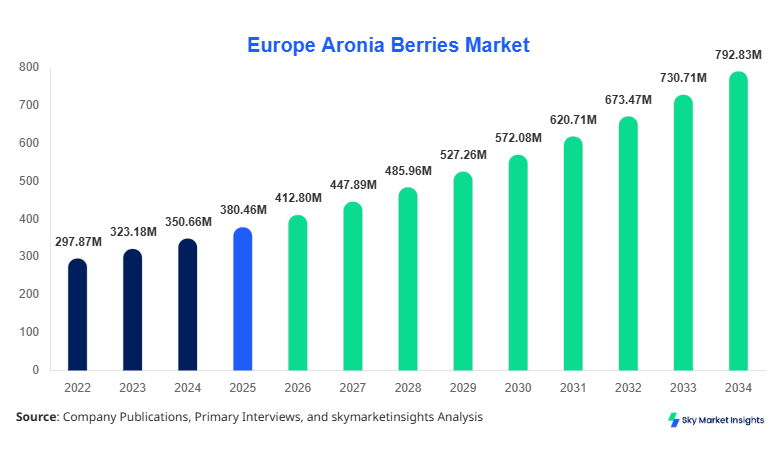
Europe's aronia berry market size is projected at USD 412.8 million in 2026 and is expected to hit USD 792.5 million by 2034 with a CAGR of 8.5%. The market expansion is supported by increasing consumption of antioxidant-rich superfruits, rising functional beverage production, and growing nutraceutical penetration across the United Kingdom, Germany, France, Spain, Italy, and Russia. The market is witnessing increasing investment in organic berry cultivation, cold-chain logistics, and freeze-drying technologies, while competitive dynamics are intensifying among regional processors and ingredient suppliers. Expanding retail shelf penetration, online health product sales, and premium juice formulations continue to strengthen the European Aronia Berry market.
The aronia berry industry in Europe represents a specialized segment within the functional food and botanical ingredient ecosystem. Aronia berries, commonly known as chokeberries, contain anthocyanin concentrations exceeding 1,400 mg per 100 grams and ORAC antioxidant values above 16,000 units, making them highly attractive for functional food formulations and nutraceutical applications. Europe accounted for nearly 38% of global aronia berry production volume in 2025, with total regional cultivation exceeding 72,000 hectares and annual production surpassing 310,000 metric tons. Fresh berries contributed nearly 41% of total product utilization, while processed concentrates and dried powders represented 34% and 25%, respectively. Adoption of aronia-based beverages increased by 18.7% between 2023 and 2025 due to rising consumer preference for low-sugar botanical products. Consumer demand analytics indicate that nearly 62% of health-conscious consumers in Europe purchased antioxidant-rich berry products at least twice monthly during 2025, while 47% preferred naturally sourced polyphenol ingredients over synthetic alternatives. Functional beverages accounted for 44% application share, nutraceutical supplements held 31%, and cosmetic formulations contributed 15%, reinforcing strong penetration of the European Aronia Berry Market.
In the United Kingdom, the aronia berry market accounted for nearly 24% of total European demand during 2025, supported by over 180 specialty berry cultivation facilities and approximately 65 nutraceutical ingredient manufacturers utilizing aronia extracts in capsules, powders, and beverage formulations. Functional beverage applications represented 42% of national consumption, followed by dietary supplements at 33% and cosmetic applications at 11%. Organic-certified aronia products recorded adoption growth of 21.4% in 2025, while freeze-dried berry powder imports increased by 16.8% year-over-year. More than 58% of premium juice brands in the UK integrated antioxidant berry blends containing aronia extracts due to rising consumer awareness regarding immune health and cardiovascular support. Retail penetration in supermarkets and online health platforms exceeded 71% across major metropolitan regions, while cold-pressed beverage manufacturers increased aronia ingredient procurement by nearly 14,000 metric tons between 2023 and 2025, strengthening the aronia berries market.
Explore more data points, trends and opportunities Download Free Sample Report
Aronia Berries Market Trends
Expansion of Functional Beverage Integration
The increasing incorporation of aronia berries into functional beverage manufacturing remains one of the dominant developments shaping the European market. Beverage manufacturers across Germany, the United Kingdom, and France expanded aronia concentrate utilization by more than 27% during 2025 due to escalating demand for polyphenol-rich drinks with low glycemic profiles. More than 1,250 new beverage SKUs containing aronia extracts were launched in Europe between 2024 and 2025, with antioxidant wellness shots and botanical smoothies accounting for nearly 46% of launches. Advanced cold-press extraction technologies improved anthocyanin retention rates by 18%, while shelf-life extension technologies increased packaged juice stability from 6 months to nearly 11 months. Superfruit blends integrating aronia with blueberry, elderberry, and cranberry generated over USD 138 million in sales across European retail channels in 2025. The adoption of recyclable glass and bio-based packaging materials also increased by 22% among premium beverage brands, reinforcing sustainability-focused production strategies within the aronia berry market.
Rising Penetration in Nutraceutical and Preventive Healthcare Products
Nutraceutical applications for aronia berries have expanded significantly as preventive healthcare awareness intensifies across Europe. More than 31% of newly introduced antioxidant supplements in 2025 incorporated aronia-derived compounds due to their high flavonoid and anthocyanin concentrations. Capsule formulations represented 39% of nutraceutical applications, followed by powdered sachets at 28% and liquid concentrates at 19%. European supplement manufacturers collectively processed more than 52,000 metric tons of aronia raw materials during 2025, with freeze-drying technologies improving nutrient preservation by approximately 24%. Clinical nutrition products utilizing aronia polyphenols for cardiovascular and metabolic support expanded by 17.6%, particularly in Germany and the United Kingdom. Additionally, e-commerce sales of botanical antioxidant supplements increased by 26%, supported by subscription-based wellness platforms and personalized nutrition applications. These technological and formulation advancements continue to support the aronia berry market.
Adoption of Sustainable and Organic Cultivation Practices
Sustainable cultivation and organic certification have become increasingly important throughout the European aronia ecosystem. Organic aronia farming acreage expanded by 19% between 2023 and 2025, while water-efficient irrigation systems reduced cultivation water usage by nearly 14% per hectare. Russia, Poland-linked processing regions, Germany, and Spain collectively invested over USD 64 million in regenerative berry farming initiatives and climate-resilient agricultural systems. Drone-assisted crop monitoring and AI-driven soil nutrient analytics improved yield optimization by approximately 16%, enabling more efficient harvesting cycles and reduced crop wastage. Organic-certified aronia concentrates generated nearly 29% higher average selling prices compared to conventional products during 2025. Retailers across France and Italy increased shelf allocation for sustainably sourced berry products by 21%, while demand for pesticide-free superfruit ingredients continued to rise among wellness-focused consumers, contributing positively to the aronia berry market.
Europe Aronia Berries Market Drivers
Growing Demand for Antioxidant-Rich Functional Foods and Beverages
The rising prevalence of lifestyle disorders and preventive healthcare awareness has significantly accelerated demand for antioxidant-rich food ingredients across Europe. Aronia berries contain anthocyanin levels exceeding 1,400 mg per 100 grams, nearly four times higher than blueberries, making them highly desirable for functional beverage and nutraceutical formulations. During 2025, more than 63% of European consumers reported a preference for naturally sourced immunity-supporting products, while functional beverage consumption increased by 18.2% year-over-year. Nearly 44% of food innovation launches involving superfruits included aronia extracts due to increasing demand for clean-label ingredients with low sugar content and high polyphenol concentration. Manufacturers expanded freeze-dried powder production capacity by 22%, and concentrated juice processing volumes surpassed 110,000 metric tons across Europe. The expansion of wellness-oriented retail channels and online nutrition platforms further strengthened product accessibility. Rising investments in clinical nutrition research and botanical ingredient standardization are expected to continue driving consumption across pharmaceutical, nutraceutical, and food processing sectors, reinforcing the aronia berry market.
Europe Aronia Berry Market Restraints
Limited Consumer Awareness and Flavor Acceptance Challenges
Despite rising demand for superfruit ingredients, consumer familiarity with aronia berries remains relatively limited in several European countries, particularly in Southern Europe. Surveys conducted during 2025 indicated that only 38% of mainstream consumers in Spain and Italy recognized aronia berry products compared to 71% recognition for blueberries and cranberries. The naturally astringent flavor profile of aronia berries also presents formulation challenges for beverage manufacturers, often requiring blending with sweeter fruits or natural sweeteners, increasing processing costs by approximately 11% to 15%. Fresh berry perishability contributes to supply chain complexity, while cold-storage and freeze-drying infrastructure investments remain capital intensive for smaller producers. Organic cultivation costs are nearly 24% higher than conventional berry farming due to certification requirements and lower pesticide utilization. Additionally, seasonal production variability caused by climate fluctuations reduced average harvest yields by approximately 9% in selected regions during 2024. These factors continue to constrain wider commercialization and consumer penetration across the aronia berries market.
Europe Aronia Berries Market Opportunities
Expansion of Botanical Nutraceutical and Cosmetic Applications
The increasing integration of botanical extracts into nutraceutical and cosmetic products presents substantial growth potential for European aronia suppliers. Cosmetic manufacturers are increasingly utilizing aronia-derived antioxidants in anti-aging creams, UV-protection serums, and collagen-support formulations due to high flavonoid concentrations. During 2025, botanical cosmetic product launches incorporating antioxidant berry extracts increased by 23%, while natural skincare products represented 41% of premium cosmetic introductions across Europe. Nutraceutical manufacturers expanded clinical trials evaluating aronia’s cardiovascular and anti-inflammatory benefits, leading to increased investment in standardized berry extract production. More than USD 82 million was allocated toward berry extraction facilities and nutraceutical ingredient processing technologies between 2023 and 2025. Encapsulation technologies improved bioavailability rates by approximately 19%, increasing efficacy for dietary supplement formulations. Growing vegan and plant-based product penetration, especially among consumers aged 25–44, is also creating opportunities for naturally sourced polyphenol ingredients within the aronia berry market.
Challenges in Europe's Aronia Berry Market
Supply Chain Volatility and Agricultural Yield Dependence
The European aronia supply chain remains vulnerable to agricultural variability, climate fluctuations, and transportation cost inflation. Extreme weather conditions during 2024 impacted nearly 13% of berry-producing acreage across parts of Germany and Russia, reducing harvest consistency and affecting processor procurement volumes. Labor shortages in seasonal harvesting operations increased operational costs by approximately 17%, while refrigerated transportation expenses rose by nearly 12% due to fuel price volatility. Processing facilities dependent on imported freeze-drying equipment faced machinery lead times exceeding 8 months in certain markets. Additionally, maintaining anthocyanin stability during long-distance transportation requires advanced temperature-controlled logistics systems, increasing distribution costs by 9% to 14%. Smaller cultivators continue to face financing limitations for adopting precision agriculture technologies and organic certification programs. Retail pricing pressures from supermarkets and private-label beverage manufacturers also compress producer margins. These operational and supply-chain-related barriers continue to challenge profitability and scalability across the aronia berry market.
Report Scope
| Report Metric | Details |
|---|---|
| Market Size in 2025 | USD 380.5 Million |
| Market Size in 2026 | USD 412.8 Million |
| Market Size in 2034 | USD 792.5 Million |
| CAGR | 8.5% (2026-2034) |
| Base Year for Estimation | 2025 |
| Historical Data | 2022-2024 |
| Forecast Period | 2026-2034 |
| Report Coverage | Revenue Forecast, Competitive Landscape, Supply Chain Disruption, Growth Factors, Environment & Regulatory Landscape and Trends |
Explore more data points, trends and opportunities Download Free Sample Report
Aronia Berries Market Segmentation
The market is segmented based on type and application, with processed and value-added berry products accounting for nearly 59% of overall consumption during 2025. Functional beverages dominated application demand with 44% share, followed by nutraceuticals at 31% and cosmetics at 15%. Increasing freeze-dried powder utilization and organic-certified product penetration continue reshaping the European supply chain.
By Type
Fresh aronia berries represented approximately 41% of total European product consumption during 2025, supported by rising demand from juice processors and direct retail distribution channels. More than 128,000 metric tons of fresh berries were distributed across Europe, with Germany and the United Kingdom accounting for nearly 49% of regional consumption. Fresh berries contain moisture content exceeding 78% and anthocyanin concentrations above 1,300 mg per 100 grams. Supermarket distribution increased by 18%, while direct-to-consumer organic produce subscriptions expanded by 22%. Retail-ready packaging utilizing modified atmosphere technology extended freshness cycles by approximately 35%, reducing post-harvest wastage. Fresh berry utilization remains highly concentrated within smoothie, cold-pressed juice, and bakery applications.
Frozen aronia berries accounted for nearly a 34% share of total regional consumption due to increasing demand from beverage manufacturers and industrial food processors. More than 102,000 metric tons of frozen berries were processed during 2025, supported by expanding cold-chain infrastructure and IQF freezing technology adoption. Frozen berries maintained nutrient retention rates above 92%, while shelf stability exceeded 18 months under optimized storage conditions. Germany and France collectively represented 46% of frozen product utilization. Foodservice demand for frozen berries increased by 16%, particularly among smoothie chains and yogurt manufacturers utilizing antioxidant-rich fruit inclusions.
Dried aronia berries represented approximately 25% of market consumption and experienced strong penetration within nutraceutical and snack applications. Freeze-dried and air-dried berry products collectively exceeded 61,000 metric tons in 2025. Nutrient retention efficiency for freeze-dried berries remained above 95%, while moisture levels were maintained below 5% for extended shelf life. Powdered aronia extracts recorded increasing use in capsules, protein blends, and sports nutrition formulations. E-commerce distribution for dried berry products increased by nearly 28%, especially across wellness-oriented retail channels in the United Kingdom and Germany.
By Application
Food and beverage applications dominated the European market with nearly 44% share during 2025. Beverage formulations alone consumed more than 136,000 metric tons of aronia berries, supported by increasing demand for low-sugar antioxidant beverages and botanical juice blends. Functional juices accounted for 38% of total food application utilization, while bakery inclusions and dairy products contributed 21% and 18%, respectively. Anthocyanin-rich concentrates improved color stability and antioxidant claims in premium beverage products. Retail sales of aronia-based beverages expanded by 19.3% year-over-year, while natural ingredient labeling increased shelf penetration across supermarkets and convenience retail channels.
Nutraceutical applications represented approximately 31% of market utilization and processed more than 94,000 metric tons of berry-derived raw materials in 2025. Capsules, powders, gummies, and liquid supplements constituted the major delivery formats. Aronia polyphenol concentrations exceeding 25% in standardized extracts improved product differentiation for immune health and cardiovascular formulations. Clinical nutrition product launches incorporating aronia compounds increased by 17%, while sports recovery supplements using antioxidant berry blends expanded by 14%. Personalized nutrition platforms also accelerated online supplement demand across the United Kingdom and Germany.
Cosmetic applications accounted for nearly a 15% share of total consumption and demonstrated strong adoption within anti-aging skincare and botanical beauty formulations. More than 420 cosmetic products launched in Europe during 2025 contained berry-derived antioxidants. Aronia extracts improved free-radical neutralization capacity by nearly 31% in selected dermatological formulations, while natural cosmetic penetration increased significantly across France and Italy. Premium skincare brands expanded sourcing agreements for organic berry extracts due to rising consumer demand for plant-based formulations and sustainable ingredient sourcing.
Europe Aronia Berries Market Segmentations
Type
- Fresh Aronia Berries
- Frozen Aronia Berries
- Dried Aronia Berries
Application
- Food & Beverages
- Nutraceuticals
- Cosmetics
Europe Aronia Berries Market Regional Outlook
United Kingdom
The United Kingdom accounted for approximately 24% of total European consumption during 2025, driven by expanding functional beverage production and high consumer preference for clean-label nutrition products. The country imported and processed more than 72,000 metric tons of aronia raw materials, while premium juice manufacturers represented nearly 39% of total domestic utilization. Nutraceutical formulations contributed 33% of demand, with more than 420 wellness brands utilizing berry-derived antioxidants in capsules, gummies, and powdered blends. Online retail penetration exceeded 61%, while supermarket distribution networks increased shelf allocation for antioxidant beverages by 18%. Sustainable packaging adoption among berry product manufacturers increased by 22%, supporting premium positioning strategies across the market.
Germany
Germany represented nearly 21% of regional market consumption and remained one of the leading processing hubs for freeze-dried berry products in Europe. More than 58,000 metric tons of aronia berries were processed domestically during 2025, with nutraceutical manufacturers accounting for approximately 37% of demand. Advanced freeze-drying technologies improved nutrient retention efficiency above 95%, while organic-certified berry cultivation acreage expanded by 16%. Functional beverage launches containing aronia extracts increased by 24%, and personalized nutrition subscription services accelerated supplement demand among urban consumers.
France
France accounted for approximately 16% of European market demand and demonstrated strong adoption within premium cosmetics and wellness beverage applications. More than 34% of botanical cosmetic launches in 2025 incorporated antioxidant-rich berry extracts, while organic skincare product sales increased by 18%. Beverage manufacturers processed over 39,000 metric tons of aronia concentrates and frozen berries during the year. Functional dairy products integrating berry extracts also expanded significantly, particularly in probiotic yogurt formulations targeting digestive wellness and immune support applications.
Spain
Spain represented nearly 11% of total market demand, supported by increasing awareness regarding preventive nutrition and antioxidant-rich superfoods. More than 21,000 metric tons of berry ingredients were utilized across beverage and dietary supplement applications during 2025. Functional beverage penetration increased by 17%, while sports nutrition products incorporating berry powders expanded by 13%. Organic berry product imports increased substantially due to limited domestic cultivation capacity. E-commerce wellness product sales also recorded double-digit growth across major metropolitan areas.
Italy
Italy accounted for approximately 12% of regional demand and exhibited strong growth in botanical cosmetic formulations and premium wellness beverages. More than 28,000 metric tons of aronia-derived products were utilized during 2025, while natural skincare applications increased by 19%. Beverage applications represented 41% of domestic consumption, followed by nutraceuticals at 29%. Organic product certification demand increased significantly among health-conscious consumers, and freeze-dried powder imports expanded by nearly 15% year-over-year.
Russia
Russia contributed approximately 16% of total European production volume due to extensive agricultural acreage and expanding cultivation infrastructure. Total aronia berry production exceeded 64,000 metric tons during 2025, supported by lower cultivation costs and increasing domestic processing investments. Frozen berry applications represented 38% of local utilization, while juice concentrate production expanded by 14%. Agricultural modernization initiatives and irrigation investments improved yield efficiency by nearly 12%, supporting export-oriented production capabilities across Eastern Europe.
Top players in Europe: Aronia Berries Market
- Aronia Original Naturprodukte GmbH
- Kingherbs Limited
- Nexira
- Shaanxi Undersun Biomedtech Co., Ltd.
- Bero Polska Sp. z o.o.
- Aroniafarm
- Picture
- Biofournil
- MaiaFarm
- Nutraceutical Corporation
- Worlée NaturProdukte GmbH
- Bellbrook Berry Farm
- Hortex Group
- Polska Aronia
- Dennick Fruitsource LLC
Aronia Original Naturprodukte GmbH
-
Estimated regional share: 12%
-
Strong presence in freeze-dried berry powder and organic juice concentrates
-
Operates integrated cultivation and processing facilities across Germany
-
Supplies nutraceutical and beverage manufacturers across over 20 European countries
-
Expanded freeze-drying capacity by approximately 18% in 2025
-
Focuses heavily on organic-certified antioxidant ingredients and clinical nutrition partnerships
Hortex Group
-
Estimated regional share: 9%
-
Major supplier of frozen berry products and beverage concentrates
-
Processes more than 31,000 metric tons of berry raw materials annually
-
Strong distribution network across retail and foodservice sectors
-
Increased cold-storage capacity by nearly 14% during 2025
-
Expanded partnerships with premium beverage brands targeting wellness consumers
Investment Analysis
Investment activity across the European aronia ecosystem accelerated considerably during 2024 and 2025 due to increasing demand for antioxidant-rich products and sustainable agricultural practices. Nearly 39% of total industry investment allocation was directed toward freeze-drying and processing infrastructure, while 27% focused on organic cultivation expansion and precision farming systems. Germany and the United Kingdom collectively attracted approximately 48% of regional investments due to strong nutraceutical and functional beverage manufacturing bases. Venture capital participation in botanical ingredient startups increased by 16%, while government-supported agricultural sustainability programs exceeded USD 58 million across selected European markets.
Mergers, acquisitions, and strategic collaborations also intensified throughout the value chain. Beverage manufacturers established long-term procurement agreements with berry cultivators to secure stable antioxidant ingredient supplies amid increasing raw material demand. More than 14 strategic partnerships were announced between nutraceutical companies and berry extraction facilities during 2025, targeting enhanced polyphenol standardization and clinical validation. Cosmetic manufacturers increased investment in plant-based antioxidant extraction technologies by approximately 21%, particularly in France and Italy. Additionally, AI-assisted cultivation monitoring systems and precision irrigation platforms attracted rising institutional investment due to their ability to improve yield efficiency and reduce agricultural wastage.
New Product Developments
New product innovation within the European aronia industry accelerated significantly during 2025, with more than 1,250 new SKUs launched across beverages, supplements, snacks, and cosmetic applications. Functional beverage products represented approximately 46% of new launches, while nutraceutical supplements accounted for 31%. Freeze-dried berry powder formulations improved antioxidant retention by nearly 24% compared to conventional dehydration techniques, while encapsulation technologies enhanced nutrient bioavailability by 19%.
Manufacturers also introduced low-sugar wellness beverages, vegan collagen support blends, and probiotic berry formulations targeting preventive health consumers. Cosmetic brands launched antioxidant-rich anti-aging serums and UV-defense skincare products utilizing standardized berry extracts with polyphenol concentrations exceeding 25%. Sustainable packaging integration increased by 22%, while clean-label product certifications expanded substantially among premium European brands.
Recent Developments in European Aronia Berry Market
- 2025: Aronia Original Naturprodukte GmbH expanded freeze-drying operations in Germany by 18%, increasing annual processing capacity above 14,000 metric tons. The expansion improved nutrient preservation efficiency and strengthened supply agreements with nutraceutical manufacturers across the United Kingdom and France. The facility also integrated AI-driven moisture monitoring systems that reduced energy consumption by approximately 11%.
- 2025: Several UK-based beverage manufacturers introduced antioxidant wellness drinks utilizing aronia concentrates, increasing functional beverage production volumes by nearly 21%. Retail penetration expanded across more than 4,000 supermarket outlets, while low-sugar formulations improved consumer adoption among health-conscious demographics. Manufacturers also implemented recyclable packaging initiatives to improve sustainability positioning.
- 2025: German nutraceutical manufacturers expanded clinical research programs evaluating cardiovascular and metabolic health benefits of aronia polyphenols. Supplement launches utilizing standardized berry extracts increased by 17%, while encapsulated antioxidant formulations improved nutrient absorption efficiency by nearly 15% compared to conventional powder products.
Research Methodology
The European Aronia Berry market assessment was developed through a structured multi-stage research framework integrating both primary and secondary research methodologies. The research process included extensive evaluation of cultivation statistics, processing capacities, import-export analysis, pricing structures, and application-specific demand patterns across the United Kingdom, Germany, France, Spain, Italy, and Russia. Primary research involved interviews with berry cultivators, ingredient manufacturers, beverage processors, nutraceutical companies, distributors, and retail stakeholders to validate market sizing, technology adoption, and supply chain developments. Secondary research included analysis of company annual reports, agricultural trade databases, government publications, nutrition journals, and industry association data. Market size estimation incorporated production volume analysis, average selling price evaluation, regional demand modeling, and application-specific consumption forecasting. Data triangulation techniques were utilized to ensure consistency across supply-side and demand-side metrics, while forecasting models incorporated macroeconomic indicators, consumer wellness trends, organic product penetration, technological advancements, and investment patterns influencing the European aronia industry between 2026 and 2034.
Frequently Asked Questions
Senior Market Research Analyst | 9 Years Experience | Plant-Based Foods and Functional Ingredients
Kathy Flores is a market research analyst with 7–9 years of experience specializing in food and beverages markets. Contributed to 70+ research reports for global clients. Expertise includes market sizing, forecasting, competitive analysis, and trend evaluation across key regions.