Europe Apple Cider Vinegar Market Size
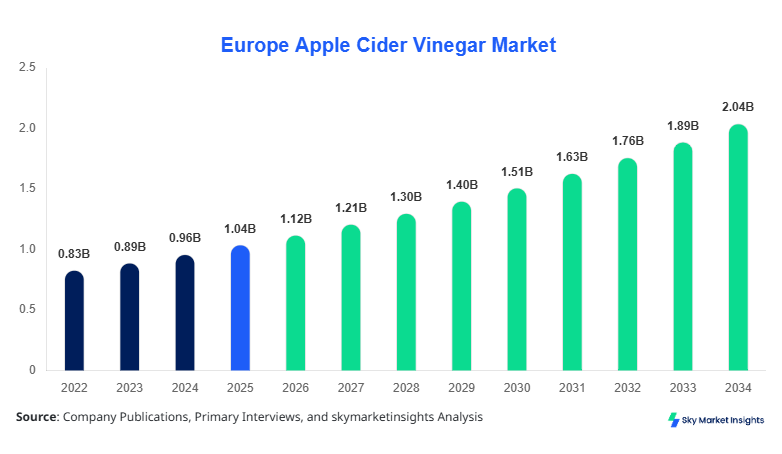
Europe Apple Cider Vinegar market size is projected at USD 1.12 billion in 2026 and is expected to hit USD 2.04 billion by 2034 with a CAGR of 7.8%.The market expansion is supported by increasing consumption of functional beverages, rising adoption of organic food ingredients, and growing utilization of fermented vinegar products across nutraceutical and cosmetic applications. The industry is witnessing strong penetration in retail chains, online grocery platforms, and private-label distribution networks across Europe. Competitive benchmarking indicates that more than 220 medium- and large-scale manufacturers are actively operating across the regional value chain, while exports from Europe exceeded 410 thousand metric tons in 2025. Data-driven segmentation analysis demonstrates that organic formulations accounted for nearly 46% of total revenue contribution, while food-grade applications represented over 58% of total consumption volume.
Apple cider vinegar is a fermented liquid produced from crushed apples, yeast, and bacteria through alcohol and acetic acid fermentation processes. The Europe market has emerged as a significant segment within the fermented foods industry owing to increased awareness regarding digestive wellness, detoxification, and low-calorie dietary products. In 2025, Europe produced approximately 495 thousand metric tons of apple cider vinegar, with Germany, the United Kingdom, and France collectively contributing over 61% of regional manufacturing capacity. Adoption and penetration levels have accelerated in supermarkets and e-commerce channels, where shelf penetration exceeded 74% across premium health-product categories. Consumer demand analytics reveal that nearly 48% of health-conscious consumers in Europe purchased apple cider vinegar products at least once per month during 2025, while 31% used the product daily for dietary management and wellness routines.
Application analytics indicate that food and beverages contributed nearly 58% of total market revenue, pharmaceuticals accounted for 24%, while personal care and cosmetic applications represented around 18% of industry consumption. Technical specifications commonly include acidity levels between 4% and 7%, fermentation cycles ranging from 14 to 30 days, and organic acetic acid concentrations exceeding 5 grams per 100 milliliters in premium-grade products. The Europe Apple Cider Vinegar market continues to benefit from rising demand for organic ingredients, clean-label food products, and fermented wellness formulations.
Explore more data points, trends and opportunities Download Free Sample Report
Apple Cider Vinegar Market Trends
Rising Penetration of Functional Wellness Beverages
The increasing popularity of functional wellness beverages has become one of the dominant trends shaping the Europe apple cider vinegar industry. During 2025, beverage manufacturers launched more than 180 new apple cider vinegar-based drinks across Europe, while flavored formulations with ginger, turmeric, berries, and probiotics recorded volume growth exceeding 23%. Production of ready-to-drink apple cider vinegar beverages surpassed 96 million liters in 2025 compared with 71 million liters in 2023. Approximately 44% of consumers in Germany and the United Kingdom reported preferring fermented beverages with digestive-health claims, while nearly 38% of millennials purchased wellness drinks containing acetic acid compounds at least twice monthly. Foodservice chains and fitness-focused cafés also increased adoption, with over 17,000 outlets across Europe integrating vinegar-based wellness beverages into menus. The Europe Apple Cider Vinegar market is increasingly influenced by premium beverage innovation and health-oriented consumption patterns.
Expansion of Organic and Sustainable Production Technologies
Organic production technologies and sustainable packaging solutions are rapidly transforming manufacturing operations throughout Europe. Nearly 41% of all newly commissioned vinegar-processing facilities in 2025 incorporated low-energy fermentation tanks and automated temperature stabilization systems. Organic-certified product output reached approximately 228 thousand metric tons, reflecting annual expansion of 16.4%. Manufacturers across France, Italy, and Spain increasingly adopted recyclable glass packaging, biodegradable labels, and carbon-neutral transportation networks to align with sustainability mandates. Around 52% of surveyed European consumers indicated willingness to pay premiums of 10%–18% for organically certified apple cider vinegar products. Furthermore, digital supply-chain tracking systems improved traceability for more than 63% of large-scale producers. The Europe Apple Cider Vinegar market is benefiting from sustainability-focused product innovation and organic production modernization.
Growth of Cosmetic and Personal Care Integration
Cosmetic and personal care applications have emerged as a rapidly expanding segment due to increased use of apple cider vinegar in scalp-care, skincare, and cleansing products. In 2025, Europe launched more than 260 cosmetic products containing apple cider vinegar extracts, while demand for sulfate-free scalp treatments increased by 19%. Cosmetic-grade vinegar concentrate production exceeded 34 thousand metric tons, particularly across France and Italy. More than 29% of premium natural cosmetic brands incorporated fermented vinegar ingredients into shampoos, toners, and exfoliation products because of their antimicrobial and pH-balancing properties. Consumer preference surveys indicated that 36% of female consumers aged 20–45 preferred naturally fermented skincare ingredients over synthetic chemical compounds. The Europe Apple Cider Vinegar market is increasingly driven by expanding cosmetic and personal wellness applications.
Europe Apple Cider Vinegar Drivers
Increasing Consumer Preference for Functional and Digestive Health Products
Rising awareness regarding digestive wellness, weight management, and metabolic health continues to accelerate consumption of apple cider vinegar products throughout Europe. More than 61% of consumers surveyed in 2025 indicated that fermented ingredients positively influence gut health, while 42% regularly consumed functional beverages containing acetic acid compounds. Retail sales of wellness-oriented apple cider vinegar products increased by 17.2% between 2024 and 2025, particularly across the United Kingdom, Germany, and France. Pharmaceutical supplement manufacturers launched over 140 vinegar capsule and gummy products during 2025 to address growing demand for convenient consumption formats. Supermarket shelf penetration reached 74% across premium health-food categories, and online grocery platforms recorded more than 28 million transactions involving vinegar-based wellness products. Fitness communities and nutrition influencers also contributed significantly to awareness generation, especially among consumers aged 20–39 years. Production efficiency improvements reduced manufacturing wastage by nearly 9%, enabling companies to maintain competitive pricing despite increasing raw-material costs. The Europe Apple Cider Vinegar market is being strongly supported by rising functional health awareness and wellness-driven consumer purchasing patterns.
Europe Apple Cider Vinegar Restraints
Volatility in Apple Supply and Rising Raw Material Costs
Fluctuating apple harvest output and increasing agricultural input costs remain significant restraints for producers operating across Europe. During 2025, apple crop production in several European countries declined by nearly 8.4% because of irregular weather conditions, frost damage, and drought-related agricultural disruptions. Raw material procurement costs increased by approximately 14%, while transportation and packaging expenses rose by 11% compared with 2024 levels. Small- and medium-scale manufacturers experienced substantial operational pressure because nearly 36% relied on seasonal apple sourcing agreements vulnerable to climatic variability. Furthermore, organic apple prices exceeded conventional fruit prices by 22%–28%, increasing production costs for premium vinegar products. Supply-chain disruptions also contributed to delayed deliveries and inventory shortages in some retail channels. Regulatory compliance costs associated with organic certification, sustainability reporting, and food-safety testing increased average manufacturing expenditure by nearly 7%. The Europe Apple Cider Vinegar market faces limitations due to agricultural volatility and cost-intensive production structures.
Europe Apple Cider Vinegar Opportunities
Expansion of E-commerce and Premium Wellness Retailing
The rapid expansion of digital retailing and premium wellness distribution networks presents strong opportunities for industry participants across Europe. Online sales of apple cider vinegar products increased by 24.6% in 2025, with subscription-based health-product purchases rising by 31%. More than 58% of urban consumers in Europe purchased fermented wellness products through digital channels during 2025, compared with 44% in 2023. E-commerce platforms expanded private-label vinegar offerings by nearly 19%, while cross-border online trade volumes exceeded USD 210 million. Premium wellness stores across Germany, France, and the United Kingdom increased shelf allocation for organic vinegar products by 15% owing to strong demand from health-conscious consumers. Companies are also investing heavily in flavored formulations, probiotic blends, and personalized wellness packages targeting athletes and vegan consumers. Smart packaging technologies and QR-based ingredient traceability systems improved consumer trust and brand transparency. The Europe Apple Cider Vinegar market is positioned to benefit substantially from digital commerce expansion and premium wellness retail growth.
Europe Apple Cider Vinegar Challenge
Consumer Skepticism Regarding Health Claims and Product Standardization
One of the major challenges affecting market participants is the growing scrutiny surrounding health claims associated with apple cider vinegar products. Regulatory authorities across Europe intensified monitoring of marketing practices during 2025, particularly for products claiming rapid weight-loss or blood-sugar management benefits. Nearly 27% of surveyed consumers expressed skepticism regarding exaggerated health advertisements, while 18% indicated concerns about product authenticity and ingredient transparency. Differences in acidity levels, fermentation methods, and filtration standards across manufacturers also created inconsistency in product performance and consumer expectations. Laboratory testing requirements increased by approximately 13%, adding operational costs for smaller producers. In addition, low consumer awareness in Eastern European markets constrained penetration rates, particularly among older demographics unfamiliar with fermented wellness products. Manufacturers are under increasing pressure to provide clinically validated data, organic certifications, and transparent sourcing information. The Europe Apple Cider Vinegar market continues to encounter challenges related to consumer trust, standardization complexities, and regulatory compliance requirements.
Report Scope
| Report Metric | Details |
|---|---|
| Market Size in 2025 | USD 1.04 Billion |
| Market Size in 2026 | USD 1.12 Billion |
| Market Size in 2034 | USD 2.04 Billion |
| CAGR | 7.8% (2026-2034) |
| Base Year for Estimation | 2025 |
| Historical Data | 2022-2024 |
| Forecast Period | 2026-2034 |
| Report Coverage | Revenue Forecast, Competitive Landscape, Supply Chain Disruption, Growth Factors, Environment & Regulatory Landscape and Trends |
Explore more data points, trends and opportunities Download Free Sample Report
Apple Cider Vinegar Market Segmentation
The Europe market is segmented by type and application, with organic variants dominating nearly 46% of total revenue contribution in 2025. Food and beverage applications accounted for approximately 58% of industry consumption, supported by increasing adoption in functional beverages and health-oriented food products. Premium product positioning and organic certification continue to influence purchasing patterns throughout Europe.
BY TYPE
Organic apple cider vinegar represented the largest segment with nearly 46% revenue contribution during 2025. Production volume exceeded 228 thousand metric tons owing to increasing demand for clean-label and naturally fermented food products. Organic variants typically contain acetic acid concentrations between 5% and 6.5% and utilize pesticide-free apples with fermentation cycles lasting 21–30 days. Germany, France, and the United Kingdom collectively accounted for more than 63% of organic product manufacturing capacity in Europe. Consumer penetration among health-conscious households exceeded 52%, while premium retail pricing averaged 18% higher than conventional alternatives. Demand was particularly strong within vegan, gluten-free, and functional wellness categories.
Conventional apple cider vinegar maintained approximately 37% of total market consumption due to lower pricing and broad retail availability. Production exceeded 183 thousand metric tons in 2025, supported by strong foodservice and industrial food-processing applications. Conventional variants are widely utilized in sauces, marinades, and food preservation owing to their stable acidity levels and cost efficiency. Supermarket penetration surpassed 81% across Southern European countries, while large-scale restaurant chains contributed significantly to volume purchases. Industrial manufacturers increasingly adopted automated fermentation systems capable of producing more than 8,000 liters daily.
Filtered apple cider vinegar accounted for around 17% of total industry volume during 2025. Filtered products are commonly preferred in beverages and cosmetic applications due to improved clarity, extended shelf life, and reduced sediment content. Production volume surpassed 84 thousand metric tons, while cosmetic-grade filtered vinegar output increased by 14%. France and Italy emerged as leading producers owing to premium skincare and beauty-product demand. Technical processing standards include multi-stage microfiltration and pH stabilization techniques that improve product consistency and storage durability.
BY APPLICATION
Food and beverages remained the dominant application segment with approximately 58% share of total Europe consumption during 2025. More than 287 thousand metric tons of apple cider vinegar were utilized across beverages, dressings, sauces, pickled products, and wellness drinks. Functional beverage integration increased rapidly, with flavored vinegar shots and probiotic drinks recording annual volume growth exceeding 21%. Restaurants and cafés across Europe integrated vinegar-based wellness drinks into menus, particularly in urban centers and fitness-oriented establishments. Consumer penetration within healthy-food categories exceeded 49%, while private-label retailers expanded product offerings by nearly 17%.
Pharmaceutical applications contributed nearly 24% of total market demand owing to increasing use in dietary supplements, capsules, and wellness gummies. Production of pharmaceutical-grade apple cider vinegar products surpassed 96 thousand metric tons in 2025. Demand for metabolic-health supplements increased by 18%, particularly among consumers aged above 35 years. Manufacturers introduced encapsulated vinegar formulations with standardized acetic acid concentrations between 500 mg and 1,200 mg per serving. Clinical research investments increased by 13% as companies sought regulatory validation for wellness-related product claims.
Personal care and cosmetics represented approximately 18% of Europe market revenue during 2025. More than 34 thousand metric tons of cosmetic-grade vinegar extracts were utilized in shampoos, scalp treatments, facial toners, and exfoliation products. Natural beauty-product penetration exceeded 42% among female consumers aged 20–45 years, particularly in France and Italy. Manufacturers increasingly incorporated fermented vinegar compounds for pH balancing and antimicrobial performance. Product innovation within sulfate-free and organic skincare categories accelerated significantly, with more than 260 new launches recorded during 2025.
Europe Apple Cider Vinegar Market Segmentations
Type
- Organic Apple Cider Vinegar
- Conventional Apple Cider Vinegar
- Filtered Apple Cider Vinegar
Application
- Food & Beverages
- Pharmaceuticals
- Personal Care & Cosmetics
Europe Apple Cider Vinegar Regional Outlook
United Kingdom
The United Kingdom accounted for approximately 27% of Europe revenue during 2025 and remained one of the largest consumption hubs for apple cider vinegar products. Total market consumption exceeded 102 thousand metric tons, supported by strong penetration across supermarkets, pharmacies, and online retail platforms. Food and beverage applications represented 62% of national demand, while dietary supplements contributed 22%. Organic products accounted for nearly 48% of retail revenue because of increasing consumer awareness regarding digestive health and clean-label nutrition. The country also experienced rapid expansion in ready-to-drink vinegar beverages, with production volumes surpassing 18 million liters during 2025.
The UK market benefits from advanced retail infrastructure and high adoption of digital commerce platforms. More than 54% of manufacturers integrated automated fermentation technologies and digital quality-control systems to optimize acidity consistency and production efficiency. E-commerce transactions involving apple cider vinegar products increased by 19% year-on-year. Functional beverage startups and wellness-focused private labels continue to expand aggressively throughout the country.
Germany
Germany represented nearly 22% of regional revenue and remained a major manufacturing center for fermented wellness products. National production exceeded 118 thousand metric tons in 2025, while organic-certified output contributed approximately 51% of domestic supply. Food-processing companies accounted for 57% of total consumption owing to strong utilization in salad dressings, marinades, and functional drinks. Germany also recorded one of the highest wellness-product penetration rates in Europe, with 46% of consumers regularly purchasing fermented health products.
The country invested heavily in sustainable packaging technologies and automated fermentation systems. More than 61% of industrial vinegar facilities implemented energy-efficient processing equipment during 2025. Pharmaceutical applications also expanded steadily, with dietary supplement sales increasing by 15%. Germany continues to influence regional production standards and premium wellness-product innovation.
France
France contributed nearly 17% of Europe revenue during 2025 and remained a leading producer of cosmetic-grade apple cider vinegar products. National production exceeded 76 thousand metric tons, while personal care applications represented 24% of domestic consumption. French beauty-product manufacturers increasingly incorporated vinegar extracts into scalp-care and skincare formulations due to their pH-balancing characteristics. Organic product demand grew by 18%, supported by premium retail and wellness-focused consumer behavior.
The food and beverage sector maintained dominant market share with approximately 53% of total usage volume. Functional beverages and gourmet culinary applications recorded strong penetration across urban retail channels. More than 39% of premium organic-food consumers in France purchased apple cider vinegar products monthly. Investment in biodegradable packaging and sustainable manufacturing technologies also increased significantly throughout 2025.
Spain
Spain accounted for approximately 11% of Europe consumption during 2025, supported by expanding utilization within foodservice and healthy beverage industries. National production exceeded 48 thousand metric tons, while food and beverage applications represented nearly 64% of market demand. Vinegar-based culinary ingredients remain highly popular in Mediterranean diets, particularly in sauces, marinades, and salads. Organic product penetration increased steadily and exceeded 29% of retail sales.
Spanish manufacturers increasingly adopted automated bottling and fermentation systems capable of processing over 6,000 liters daily. Tourism-related foodservice demand also contributed significantly to consumption growth. Functional beverage launches increased by 16% during 2025, while exports to neighboring European countries expanded steadily.
Italy
Italy represented approximately 13% of Europe revenue during 2025 and remained a major producer of premium culinary vinegar products. National production exceeded 61 thousand metric tons, while gourmet food applications accounted for nearly 59% of domestic demand. Italian consumers demonstrated strong preference for naturally fermented products with traditional production methods and high organic content. Premium vinegar exports increased by 14%, particularly to Germany and France.
Cosmetic applications also expanded rapidly, especially within natural haircare and skincare categories. More than 31% of premium cosmetic brands in Italy incorporated fermented vinegar ingredients into product portfolios. Sustainable glass packaging adoption exceeded 58% among large-scale producers, reflecting growing environmental awareness.
Russia
Russia accounted for nearly 10% of Europe market consumption during 2025, supported by increasing penetration of functional food and pharmaceutical products. Domestic production exceeded 43 thousand metric tons, while dietary supplements represented approximately 27% of national demand. Urban consumers increasingly adopted vinegar-based wellness drinks and health supplements, particularly in Moscow and Saint Petersburg.
Retail penetration remained comparatively lower than Western European countries; however, online wellness-product sales increased by 22% during 2025. Local manufacturers expanded low-cost product offerings to improve affordability and reach broader consumer segments. Investments in regional processing infrastructure also increased steadily to reduce import dependency.
Top players in Europe Apple Cider Vinegar
- Bragg Live Food Products
- Aspall Cyder Ltd.
- Vitacost
- Dynamic Health Laboratories
- Eden Foods
- Carl Kühne KG
- Biona Organic
- Burg Groep
- Manzana Products Co.
- Vitane Pharmaceuticals
- Mizkan Holdings
- Fini Vinegar Company
- White House Foods
- Pompeian Inc.
- Marukan Vinegar
Bragg Live Food Products
-
Estimated Europe market share: 12%
-
Strong positioning in premium organic wellness products
-
Extensive distribution across supermarkets and e-commerce platforms
-
Significant investment in probiotic beverage innovation
Bragg Live Food Products maintained one of the strongest premium positions in Europe during 2025 owing to its extensive organic certification portfolio and strong consumer recognition in digestive wellness categories. The company expanded distribution across more than 18,000 retail outlets in Europe and increased investment in flavored wellness beverages and probiotic vinegar shots. Online sales represented approximately 34% of total Europe revenue for the company, while product innovation expenditure increased by 16% during 2025.
Aspall Cyder Ltd.
-
Estimated Europe market share: 9%
-
Strong manufacturing base in the United Kingdom
-
Focus on sustainable production and premium fermentation
-
Expanding presence in gourmet food channels
Aspall Cyder Ltd. strengthened its Europe positioning through premium cider-vinegar manufacturing and sustainable production technologies. The company processed more than 28 thousand metric tons of apples during 2025 and expanded recyclable glass packaging usage to over 72% of total shipments. Gourmet foodservice and premium retail channels represented key revenue contributors, while exports across Germany and France increased by nearly 14%.
Investment Analysis
Investment activity across the Europe industry accelerated significantly during 2025 as manufacturers increased capital allocation toward organic production, digital fermentation technologies, and premium wellness-product expansion. Approximately 38% of total industry investment was directed toward food and beverage applications, while pharmaceuticals attracted 34% and cosmetic applications represented nearly 28%. Germany and the United Kingdom collectively accounted for more than 49% of regional capital expenditure owing to strong consumer demand and advanced processing infrastructure. Sustainable packaging projects represented approximately 16% of total manufacturing investments.
Mergers, acquisitions, and collaboration agreements increased notably across Europe as companies sought to expand product portfolios and distribution networks. During 2025, more than 22 strategic partnerships were signed between beverage manufacturers, wellness brands, and nutraceutical companies. Private equity firms increased investment exposure toward functional wellness startups by approximately 19%, particularly in probiotic and ready-to-drink vinegar beverage categories. Technology-focused collaborations involving automated fermentation monitoring systems and AI-driven quality analytics also increased substantially.
Cross-border trade agreements and co-manufacturing partnerships strengthened supply-chain resilience across Europe. More than 31% of investment agreements involved sustainability-oriented manufacturing projects, including low-energy processing systems and biodegradable packaging solutions. Venture capital investment in organic wellness brands exceeded USD 140 million during 2025, particularly within the United Kingdom and Germany.
New Product Developments
Manufacturers across Europe significantly expanded new product launches during 2025, particularly in flavored beverages, organic formulations, and supplement categories. More than 320 new apple cider vinegar products were introduced across retail and online channels, while probiotic-enhanced vinegar beverages accounted for nearly 26% of innovation activity. Product-performance improvements included 18% higher probiotic retention and 12% extended shelf stability due to advanced fermentation and filtration technologies.
Innovation within cosmetic and pharmaceutical categories also accelerated considerably. More than 90 new dietary supplement formulations and 260 cosmetic products containing fermented vinegar extracts were launched during 2025. Companies increasingly focused on sugar-free beverages, vegan-certified ingredients, and personalized wellness solutions targeting younger consumers and fitness-oriented demographics.
Recent Developments in Europe Apple Cider Vinegar
- 2025: Bragg Live Food Products expanded its Europe beverage manufacturing operations by 14% and introduced probiotic vinegar shots across Germany and the United Kingdom. The expansion increased annual beverage production capacity to more than 24 million liters and strengthened the company’s premium retail penetration across health-oriented supermarkets and digital wellness platforms.
- 2025: Aspall Cyder Ltd. invested in automated fermentation systems capable of increasing processing efficiency by 18%. The company also adopted recyclable glass packaging for over 72% of total shipments and expanded exports across France and Italy, improving premium gourmet distribution throughout Western Europe.
Research Methodology
The research process for the Europe apple cider vinegar industry involved comprehensive primary and secondary data collection methodologies designed to ensure accuracy, reliability, and statistical validation. Primary research included interviews with manufacturers, distributors, wellness-product retailers, foodservice operators, and industry experts across the United Kingdom, Germany, France, Spain, Italy, and Russia. More than 85 executive-level interviews were conducted to evaluate production capacity, pricing trends, consumer demand patterns, and technological advancements within the industry.
Secondary research involved analysis of company annual reports, trade publications, government agricultural databases, import-export statistics, food-industry journals, and regional regulatory frameworks. Market size estimation was conducted using top-down and bottom-up analytical approaches incorporating revenue benchmarking, production-volume analysis, and application-based consumption modeling. Demand forecasting considered macroeconomic indicators, wellness-product adoption rates, retail penetration statistics, and consumer purchasing behavior across Europe. Data triangulation and cross-validation techniques were utilized to minimize forecasting deviations and improve analytical consistency across regional and segment-level estimates.
Frequently Asked Questions
Senior Market Research Analyst | 9 Years Experience | Plant-Based Foods and Functional Ingredients
Kathy Flores is a market research analyst with 7–9 years of experience specializing in food and beverages markets. Contributed to 70+ research reports for global clients. Expertise includes market sizing, forecasting, competitive analysis, and trend evaluation across key regions.