Europe Antiseptic Mouthwash Market Size
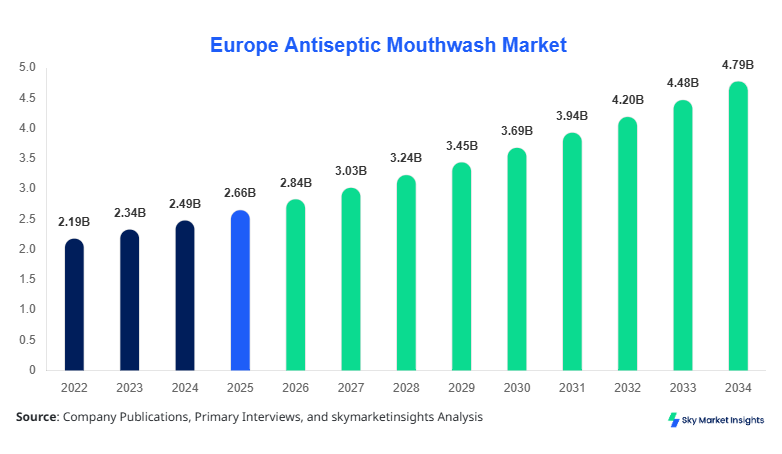
Europe Antiseptic Mouthwash market size is projected at USD 2.84 billion in 2026 and is expected to hit USD 4.79 billion by 2034 with a CAGR of 6.74%. The market expansion is being supported by increasing oral hygiene awareness, growing penetration of therapeutic oral care products, and expanding retail distribution across Europe. Rising consumer demand for antibacterial oral rinses, increasing dental clinic recommendations, and widening availability of alcohol-free antiseptic formulations are accelerating revenue generation across the regional ecosystem. The report evaluates production capacity, distribution network expansion, competitive positioning, consumer purchasing behavior, and technological advancements influencing the Europe Antiseptic Mouthwash market.
The antiseptic mouthwash market refers to the production, distribution, and commercialization of oral rinse solutions formulated with antibacterial agents such as chlorhexidine, cetylpyridinium chloride, essential oils, hydrogen peroxide, and fluoride compounds used to reduce oral bacteria and prevent gingivitis, plaque, and halitosis. Europe produced nearly 612 million units of antiseptic mouthwash products in 2025, with the United Kingdom, Germany, and France contributing more than 61% of total regional output. Consumer adoption increased significantly among adults aged 25–54, with usage penetration reaching 48.3% across urban populations and 31.6% across semi-urban households. Alcohol-free variants accounted for approximately 39% of total product consumption due to increasing sensitivity concerns and dentist recommendations. Pharmacies represented nearly 42% of product sales, while supermarkets and hypermarkets contributed 36% of regional distribution volume. Daily usage frequency among regular users averaged 1.7 times per day, while therapeutic antiseptic formulations demonstrated bacterial reduction efficiency between 78% and 94% depending on formulation strength. Approximately 52% of consumers preferred mouthwash products with herbal or essential-oil-based ingredients, while whitening and breath-freshening applications collectively contributed 34% of overall product utilization. The increasing adoption of preventive oral care routines, combined with digital retail expansion and dentist-driven awareness campaigns, continues to reinforce the antiseptic mouthwash market across Europe.
Explore more data points, trends and opportunities Download Free Sample Report
Antiseptic Mouthwash Market Trends
Rising Demand for Alcohol-free and Herbal Formulations
The European oral care industry is witnessing rapid transformation toward alcohol-free and herbal antiseptic mouthwash products due to increasing consumer sensitivity concerns and preference for natural ingredients. In 2025, alcohol-free formulations generated nearly USD 1.11 billion in regional revenue and represented approximately 39% of overall product sales volume. Herbal and botanical formulations containing tea tree oil, eucalyptus oil, aloe vera, neem extract, and peppermint oil experienced 11.4% year-over-year growth across Germany, France, and the United Kingdom. Nearly 58% of consumers aged 18–35 preferred naturally derived formulations over synthetic antiseptic compounds. Manufacturers expanded production of herbal mouthwash units by approximately 72 million bottles during 2024–2025 to address growing retail demand. Product innovation involving fluoride-free and sulfate-free formulations increased by 26%, while sustainable packaging penetration reached 33% across newly launched antiseptic products. Dental professionals increasingly recommended alcohol-free mouthwashes for long-term daily use, especially among patients with oral sensitivity and dry-mouth conditions. The integration of eco-friendly packaging technologies and plant-derived antibacterial ingredients continues to accelerate the antiseptic mouthwash market.
Expansion of E-commerce and Digital Oral Care Retailing
Digital commerce is emerging as a major distribution channel within the European antiseptic mouthwash industry, driven by subscription-based oral care purchasing patterns and aggressive online promotional campaigns. Online sales contributed approximately 18.6% of regional revenue in 2025 compared to 11.2% in 2022. More than 94 million antiseptic mouthwash units were sold through digital platforms across Europe during 2025, with Germany and the United Kingdom collectively accounting for 49% of online sales. Artificial intelligence-driven recommendation engines improved product conversion rates by 14%, while targeted oral hygiene campaigns increased customer retention by 19%. Subscription-based oral wellness packages grew by 23% annually among consumers aged 25–44. Premium therapeutic antiseptic products demonstrated particularly strong online demand due to wider product availability and competitive pricing structures. QR-enabled packaging adoption reached 29% among leading manufacturers, enabling consumers to access ingredient transparency and dentist-approved usage instructions. The increasing integration of digital retail infrastructure and personalized oral care marketing strategies continues to enhance the antiseptic mouthwash market.
Integration of Clinical Therapeutic Formulations
Clinical-grade antiseptic mouthwash formulations are becoming increasingly prominent within the European oral healthcare sector due to rising prevalence of gingivitis, periodontal disease, and oral infections. Therapeutic products containing chlorhexidine gluconate represented approximately 22% of total regional revenue in 2025. Hospitals and dental clinics consumed over 61 million units of medicated antiseptic rinses for pre-operative and post-operative oral hygiene management. Clinical trials demonstrated plaque reduction effectiveness ranging between 81% and 96% for prescription-strength antiseptic solutions. More than 44% of dentists across Europe recommended specialized therapeutic mouthwash formulations for patients undergoing orthodontic treatment or gum disease management. Pharmaceutical oral care companies increased research expenditure by 17% during 2024–2025 to improve antimicrobial stability and minimize tooth staining effects. Smart dispensing caps and dosage-controlled packaging technologies improved therapeutic compliance by nearly 12%. The increasing penetration of medically supervised oral care routines continues to stimulate the antiseptic mouthwash market.
Europe Antiseptic Mouthwash Drivers
Rising Oral Healthcare Awareness and Preventive Hygiene Adoption
Growing awareness regarding oral hygiene maintenance and preventive dental healthcare is significantly supporting demand across the European antiseptic mouthwash industry. Approximately 72% of European adults reported incorporating mouthwash into their daily oral hygiene routines in 2025 compared to 61% in 2022. Public dental awareness programs conducted across the United Kingdom, Germany, and France reached more than 118 million individuals through healthcare campaigns and retail partnerships. Gingivitis prevalence among adults aged above 35 exceeded 47%, encouraging adoption of antibacterial oral rinse products. Annual oral healthcare expenditure across Europe surpassed USD 54 billion in 2025, with preventive care accounting for nearly 28% of spending. Supermarket shelf expansion for oral care products increased by 14%, while pharmacy-driven promotional campaigns improved antiseptic mouthwash penetration in rural regions by 9.3%. Pediatric oral hygiene awareness programs also accelerated demand, with child-friendly mouthwash variants witnessing sales growth of 10.7%. The increasing integration of preventive oral healthcare practices within daily consumer routines continues to stimulate the antiseptic mouthwash market growth.
Europe Antiseptic Mouthwash Restraints
Consumer Concerns Regarding Chemical Ingredients and Oral Sensitivity
The presence of alcohol, synthetic preservatives, and chemical antibacterial compounds in conventional antiseptic mouthwash products remains a major concern among European consumers. Nearly 41% of surveyed users reported experiencing temporary burning sensations, dry mouth, or taste alteration after prolonged use of alcohol-based formulations. Regulatory scrutiny surrounding chlorhexidine overuse and artificial colorants intensified across multiple European markets during 2024–2025. Approximately 32% of consumers shifted toward herbal or organic formulations due to concerns regarding long-term oral microbiome disruption. Product recalls associated with labeling inaccuracies increased by 6.8% in 2025, impacting consumer confidence in selected regional brands. Smaller manufacturers also face rising compliance costs associated with ingredient transparency regulations and recyclable packaging mandates. Premium alcohol-free products remain 18–27% more expensive than conventional antiseptic mouthwash variants, limiting penetration among price-sensitive populations. These regulatory, pricing, and formulation-related challenges continue to constrain the antiseptic mouthwash market growth.
Europe Antiseptic Mouthwash Opportunities
Expansion of Premium Therapeutic and Personalized Oral Care Solutions
The increasing adoption of personalized oral care regimens presents substantial opportunities for antiseptic mouthwash manufacturers across Europe. More than 36% of consumers expressed willingness to pay premium prices for dentist-recommended oral rinse formulations tailored for gum sensitivity, enamel protection, or orthodontic care. Premium therapeutic antiseptic products generated nearly USD 760 million in revenue during 2025 and are projected to expand rapidly through 2034. Artificial intelligence-assisted oral health assessment applications increased personalized product recommendation accuracy by 21%, enabling brands to target consumers more effectively. Smart oral care ecosystems integrating connected toothbrushes and subscription-based oral hygiene kits gained traction among urban households, particularly in Germany and the United Kingdom. Functional formulations containing probiotics, vitamin complexes, and enamel-repair compounds experienced annual sales growth exceeding 13%. Pharmaceutical partnerships with dental clinics expanded prescription-based antiseptic product penetration across specialized care segments. The growing shift toward customized oral wellness solutions continues to create strong opportunities for the antiseptic mouthwash market.
Europe Antiseptic Mouthwash Challenge
Intense Brand Competition and Retail Shelf Saturation
The European antiseptic mouthwash industry faces increasing challenges associated with market fragmentation, intense price competition, and retail shelf saturation. More than 140 regional and international brands currently compete across pharmacies, supermarkets, and digital platforms throughout Europe. Promotional discounting activity increased by approximately 18% during 2025, pressuring manufacturer profit margins and reducing pricing flexibility. Private-label oral care brands captured nearly 16% of supermarket sales volume due to aggressive pricing strategies and expanding retailer partnerships. Shelf-space competition intensified particularly within Germany, France, and Spain where leading retailers reduced oral care SKU expansion rates by 7%. Logistics costs associated with glass bottle transportation and sustainable packaging compliance increased operational expenses by nearly 12%. Smaller manufacturers also struggle to maintain visibility against multinational oral care corporations investing heavily in digital advertising and dentist partnerships. The combination of pricing pressure, regulatory compliance costs, and aggressive retail competition continues to challenge the antiseptic mouthwash market.
Report Scope
| Report Metric | Details |
|---|---|
| Market Size in 2025 | USD 2.66 Billion |
| Market Size in 2026 | USD 2.84 Billion |
| Market Size in 2034 | USD 4.79 Billion |
| CAGR | 6.74% (2026-2034) |
| Base Year for Estimation | 2025 |
| Historical Data | 2022-2024 |
| Forecast Period | 2026-2034 |
| Report Coverage | Revenue Forecast, Competitive Landscape, Supply Chain Disruption, Growth Factors, Environment & Regulatory Landscape and Trends |
Explore more data points, trends and opportunities Download Free Sample Report
Antiseptic Mouthwash Market Segmentation
The European antiseptic mouthwash industry is segmented by product type and distribution channel, with alcohol-based formulations dominating nearly 44% of total regional sales in 2025 due to strong antibacterial effectiveness and wide consumer familiarity. Pharmacies and drug stores accounted for approximately 42% of overall distribution volume because of increasing dentist recommendations and therapeutic product penetration.
BY TYPE
Alcohol-based antiseptic mouthwash products accounted for approximately 44% of European consumption volume in 2025, supported by strong antibacterial efficacy and established retail presence. More than 269 million units of alcohol-based mouthwash were produced across Europe during the year. These formulations typically contain ethanol concentrations ranging between 18% and 27%, enabling rapid bacterial elimination and extended freshness retention. Clinical studies demonstrated bacterial reduction efficiency above 88% for most alcohol-based formulations. Pharmacies contributed nearly 46% of sales for therapeutic alcohol-based products prescribed for gingivitis and post-dental treatment applications. The United Kingdom and Germany collectively generated over 51% of regional demand for alcohol-based antiseptic rinses due to higher preventive dental care adoption. Manufacturers improved formulation stability and reduced burning sensations through flavor-balancing technologies and controlled ethanol dispersion systems.
Alcohol-free antiseptic mouthwash products represented nearly 39% of total regional revenue in 2025 and demonstrated strong growth among consumers with oral sensitivity concerns. Production exceeded 214 million units across Europe, with pediatric and senior consumer groups accounting for approximately 34% of total demand. These formulations commonly utilize cetylpyridinium chloride, fluoride compounds, and essential oils for antibacterial functionality while minimizing oral irritation. Dentist recommendations for alcohol-free daily-use mouthwash increased by 18% between 2023 and 2025. Germany and France experienced particularly strong adoption due to increasing preference for low-irritation oral hygiene products. Manufacturers also enhanced flavor retention performance by 14% through microencapsulation technologies and natural sweetener integration.
Natural and herbal antiseptic mouthwash products accounted for nearly 17% of regional sales volume and generated strong demand among environmentally conscious consumers. Production surpassed 104 million units in 2025, supported by increasing adoption of plant-derived antibacterial ingredients including neem, peppermint oil, tea tree oil, aloe vera, and eucalyptus extracts. Nearly 58% of consumers aged 18–35 expressed preference for herbal oral care formulations due to perceived safety and sustainability benefits. Organic certification penetration increased to 26% among newly launched products during 2024–2025. Sustainable packaging adoption exceeded 41% within the herbal mouthwash category, reinforcing premium brand positioning across Europe.
BY APPLICATION
Supermarkets and hypermarkets represented approximately 36% of antiseptic mouthwash distribution across Europe in 2025 due to strong consumer accessibility and promotional pricing strategies. More than 221 million units were sold through large retail chains during the year. Retailers expanded oral care shelf space by approximately 11%, particularly within premium and herbal product categories. Promotional campaigns offering bundled oral care kits increased purchase frequency by 15%. The United Kingdom and France demonstrated especially strong supermarket sales due to organized retail infrastructure and growing household penetration of preventive oral care products. Consumer preference for immediate product availability and discounted multi-pack offerings continues to strengthen this segment.
Pharmacies and drug stores accounted for nearly 42% of total regional sales volume, making them the dominant distribution channel within the European antiseptic mouthwash industry. More than 257 million units were distributed through pharmacies in 2025, supported by increasing dentist recommendations and prescription-based therapeutic product sales. Clinical antiseptic formulations designed for gum disease management and post-surgical oral care represented approximately 28% of pharmacy sales. Professional pharmacist guidance improved premium therapeutic product conversion rates by 17%. Germany and Italy collectively contributed nearly 38% of pharmacy-based oral rinse consumption due to strong healthcare infrastructure and high oral disease diagnosis rates.
Online retail contributed approximately 22% of total antiseptic mouthwash revenue in 2025 and emerged as the fastest-growing distribution channel across Europe. Digital platforms sold more than 134 million units during the year, supported by subscription-based oral hygiene purchasing trends and expanding e-commerce penetration. Online-exclusive promotional campaigns improved customer acquisition rates by 19%, while direct-to-consumer oral care brands increased digital advertising expenditure by 24%. Consumer preference for product comparison, ingredient transparency, and home delivery convenience significantly accelerated online purchasing behavior across younger demographics.
Europe Antiseptic Mouthwash Market Segmentations
Product Type
- Alcohol-based
- Alcohol-free
- Natural/Herbal
Distribution Channel
- Supermarkets & Hypermarkets
- Pharmacies & Drug Stores
- Online Retail
Europe Antiseptic Mouthwash Regional Outlook
United Kingdom
The United Kingdom accounted for approximately 27.8% of total European antiseptic mouthwash revenue in 2025 due to high preventive oral healthcare awareness and extensive pharmacy infrastructure. More than 64 million units were sold nationally during the year, with pharmacies representing 44% of product distribution. Alcohol-free formulations contributed approximately 43% of national demand due to growing consumer preference for low-irritation oral care solutions. The country maintained more than 12,000 dental clinics actively promoting antibacterial mouthwash adoption for plaque and gingivitis management. Online retail penetration exceeded 21%, while premium therapeutic formulations recorded annual sales growth above 8%.
Germany
Germany represented nearly 22% of regional antiseptic mouthwash revenue in 2025 and maintained one of the largest pharmaceutical oral care manufacturing ecosystems in Europe. Production exceeded 118 million units annually, supported by advanced oral healthcare infrastructure and high dental consultation frequency. Pharmacies accounted for approximately 46% of national sales volume due to strong dentist-driven product recommendations. Clinical therapeutic formulations demonstrated particularly strong demand among adults aged above 40 experiencing periodontal conditions. Sustainable packaging implementation reached nearly 38% among premium German brands.
France
France contributed approximately 17% of regional antiseptic mouthwash consumption in 2025 and experienced strong demand for natural and herbal formulations. Nearly 82 million units were distributed nationally during the year, with supermarkets and pharmacies collectively accounting for 79% of sales. Consumer preference for essential-oil-based formulations increased by 12%, while organic-certified mouthwash products represented 19% of premium segment revenue. Preventive dental care campaigns conducted across schools and public healthcare facilities improved consumer awareness and expanded pediatric product adoption.
Spain
Spain accounted for approximately 11% of the regional market in 2025, supported by increasing oral hygiene awareness and expanding retail distribution. More than 54 million units were sold nationally, with alcohol-based antiseptic products contributing 47% of total consumption. Supermarkets remained the dominant sales channel, representing nearly 39% of national distribution volume. Growing tourism activity and expanding urban pharmacy networks contributed significantly to therapeutic oral care product demand. Digital oral care retail sales increased by approximately 16% during 2024–2025.
Italy
Italy represented nearly 13% of total European antiseptic mouthwash revenue in 2025 due to strong pharmacy penetration and increasing dentist recommendations. Approximately 61 million units were distributed nationally during the year. Pharmacies accounted for 49% of sales volume because of strong therapeutic product demand among aging consumers. Clinical antiseptic formulations for gum disease treatment generated significant traction, while herbal formulations demonstrated annual growth exceeding 10%. Sustainable refill-pack adoption increased by 14% across Italian oral care brands.
Russia
Russia accounted for approximately 9% of regional antiseptic mouthwash consumption in 2025 and demonstrated increasing penetration of affordable oral hygiene products. National production exceeded 47 million units during the year, with domestic manufacturers contributing approximately 58% of local supply. Supermarkets represented nearly 41% of distribution volume due to strong retail expansion in urban centers. Price-sensitive consumers favored alcohol-based formulations, while pharmacy-driven therapeutic product sales increased by 7.4% annually. Expanding healthcare awareness campaigns are expected to improve long-term oral hygiene adoption across the country.
Top players in Europe Antiseptic Mouthwash
- Procter & Gamble
- Johnson & Johnson
- Colgate-Palmolive Company
- GlaxoSmithKline plc
- Unilever plc
- Lion Corporation
- Sunstar Suisse S.A.
- Church & Dwight Co., Inc.
- Dabur International
- Dr. Wolff Group
- Amway Corporation
- Reckitt Benckiser Group plc
- The Himalaya Drug Company
- Oriflame Holding AG
- Pierre Fabre Group
Johnson & Johnson
-
Johnson & Johnson accounted for approximately 14% of total European antiseptic mouthwash revenue in 2025 through its Listerine product portfolio.
-
The company maintained strong positioning across pharmacies and supermarkets with more than 38 product variants distributed across Europe.
-
Therapeutic antiseptic formulations represented nearly 46% of its regional sales mix.
-
The company invested heavily in sustainable packaging initiatives and digital oral healthcare marketing campaigns.
-
Its alcohol-free product portfolio experienced annual growth exceeding 9% across the United Kingdom and Germany.
Colgate-Palmolive Company
-
Colgate-Palmolive captured nearly 11% of European antiseptic mouthwash sales volume during 2025.
-
The company expanded herbal and sensitive-care formulations to strengthen penetration among premium oral care consumers.
-
More than 72 million units of mouthwash products were distributed annually across European retail channels.
-
Pharmacy partnerships and dentist recommendation programs significantly improved therapeutic product penetration.
-
The company also enhanced recyclable packaging adoption and introduced AI-driven consumer engagement campaigns to strengthen market positioning.
Investment Analysis
Investment activity across the European antiseptic mouthwash industry increased substantially during 2024–2026 due to growing oral healthcare demand, premium product innovation, and sustainable packaging initiatives. Approximately 34% of total industry investments were allocated toward manufacturing automation and production efficiency improvements. Companies invested heavily in recyclable bottle technologies, concentrated refill systems, and biodegradable packaging materials to comply with evolving environmental regulations. Germany and the United Kingdom collectively attracted nearly 46% of total regional oral care manufacturing investments because of advanced pharmaceutical infrastructure and strong retail demand.
Research and development investments represented approximately 21% of total industry capital allocation, with pharmaceutical companies focusing on alcohol-free therapeutic formulations and microbiome-friendly antibacterial compounds. Mergers and acquisition activities increased by 13% during 2024–2025 as multinational oral care brands sought to expand their herbal and premium antiseptic portfolios. Strategic collaborations between oral healthcare companies and dental associations also increased across France and Italy to improve consumer awareness and product credibility. Digital oral healthcare startups attracted venture funding focused on AI-driven oral hygiene monitoring applications and personalized subscription-based mouthwash solutions. Cross-border manufacturing agreements and private-label partnerships expanded significantly within Eastern Europe to improve regional distribution efficiency and reduce transportation costs.
New Product Developments
Product innovation within the European antiseptic mouthwash sector accelerated significantly during 2025 as manufacturers introduced advanced therapeutic formulations and sustainable packaging technologies. More than 31% of newly launched products featured alcohol-free antibacterial compositions designed for sensitive oral conditions. Functional ingredients including probiotics, enamel-repair minerals, activated charcoal, and vitamin-enriched compounds gained strong consumer traction. Manufacturers improved antibacterial efficacy performance by nearly 16% through enhanced active-ingredient stabilization technologies.
Sustainable innovation also became a major competitive differentiator across the industry. Approximately 37% of newly launched antiseptic mouthwash products utilized recyclable or refillable packaging formats during 2025. Smart dispensing caps capable of controlling dosage accuracy improved consumer usage efficiency by 11%. Companies increasingly adopted QR-enabled packaging systems allowing consumers to access clinical trial information, ingredient transparency data, and dentist-recommended oral hygiene instructions through mobile applications.
Recent Developments in Europe Antiseptic Mouthwash
- In 2025, Johnson & Johnson expanded its alcohol-free Listerine portfolio across Europe, increasing production capacity by approximately 14% and launching new sensitive-care formulations targeting consumers with gum irritation concerns.
- In 2025, GlaxoSmithKline introduced a clinically tested chlorhexidine mouthwash range across the United Kingdom and France, demonstrating bacterial reduction performance exceeding 90% in clinical evaluations.
- In 2025, Sunstar Suisse S.A. launched probiotic antiseptic mouthwash formulations across Germany and France, improving oral microbiome balance performance by 13% while expanding premium segment sales volume.
Research Methodology
The Europe antiseptic mouthwash market assessment was developed through a combination of primary and secondary research methodologies designed to ensure accurate market estimation and competitive intelligence analysis. The research process involved collection of quantitative and qualitative data related to production volume, pricing trends, retail penetration, oral healthcare adoption rates, and regulatory developments across major European countries. Primary research included interviews with oral care manufacturers, pharmacy distributors, dental professionals, healthcare consultants, and retail executives to evaluate evolving consumer preferences and therapeutic oral care trends. Secondary research involved analysis of annual reports, healthcare publications, trade journals, oral hygiene association databases, customs statistics, and pharmaceutical industry records.
Market size estimation was conducted using both top-down and bottom-up analytical frameworks. Revenue contribution from product categories, distribution channels, and regional markets was validated using supply-side manufacturing analysis and demand-side consumption modeling. Data triangulation methods were applied to minimize deviations in market forecasting and improve segmentation accuracy. Historical data from 2022–2024 was benchmarked against current industry developments to estimate future demand patterns through 2034. Macroeconomic indicators, healthcare expenditure trends, demographic changes, and oral disease prevalence statistics were also integrated into forecasting models to strengthen the accuracy of long-term market projections.
Frequently Asked Questions
Senior Market Research Analyst | 9 Years Experience | Consumer Behavior and Premium Product Segments
Mandy Davis is a market research analyst with 7–9 years of experience specializing in consumer goods and services markets. Contributed to 70+ research reports for global clients. Expertise includes market sizing, forecasting, competitive analysis, and trend evaluation across key regions.