Europe Animal Protein Market Size
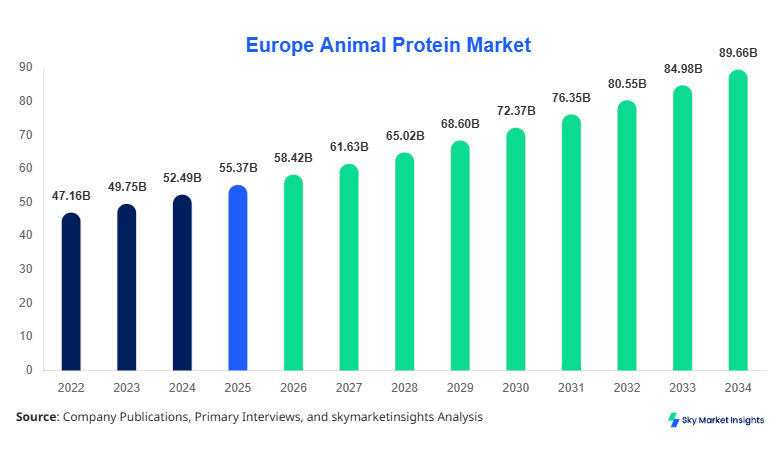
Europe Animal Protein market size is projected at USD 58.42 billion in 2026 and is expected to hit USD 89.73 billion by 2034 with a CAGR of 5.5%. The market expansion is supported by increasing protein consumption across processed food, dairy alternatives enrichment, sports nutrition, and livestock feed formulations throughout Europe. Rising industrial meat processing volumes, expanding dairy ingredient utilization, and increasing demand for protein-enriched nutritional products are accelerating revenue generation across regional supply chains.
The report delivers comprehensive quantitative assessment of production capacity, consumption volume, import-export dynamics, pricing structures, supply chain developments, competitive benchmarking, and application-based analysis. It further evaluates country-level manufacturing concentration, technological adoption rates, regulatory frameworks, and strategic expansion activities shaping the competitive landscape across the Europe Animal Protein market.
The animal protein industry comprises proteins derived from meat, dairy, egg, fish, and other animal-origin raw materials used in food processing, nutrition supplements, pharmaceuticals, and feed manufacturing. Europe produced more than 48.6 million metric tons of processed animal protein products in 2025, with Germany, France, Spain, and the United Kingdom accounting for over 61% of regional production output. Meat-derived proteins represented approximately 46% of total industry consumption, while dairy proteins contributed nearly 38% and egg proteins accounted for 16% of utilization volume across Europe. Adoption of high-protein diets among urban consumers increased by 18.4% between 2022 and 2025, while penetration of protein-fortified food products surpassed 42% in Western Europe. Consumer demand analytics indicate that more than 64% of European consumers prioritize high-protein nutritional products for muscle health, metabolic balance, and functional nutrition benefits. Technical performance metrics such as digestibility efficiency above 92%, amino acid concentration between 18% and 35%, and protein isolate purity levels exceeding 80% are increasing application suitability across industrial food manufacturing. Food and beverage applications contributed 58% of regional demand, animal feed represented 27%, and nutraceuticals accounted for nearly 15% of total utilization, reinforcing sustained expansion of the Europe Animal Protein market.
Explore more data points, trends and opportunities Download Free Sample Report
Animal Protein Market Trends
Rising Adoption of High-Protein Functional Foods
The increasing popularity of protein-enriched foods and beverages is significantly reshaping industrial manufacturing strategies across Europe. In 2025, more than 14.2 billion units of protein-fortified snacks, beverages, and dairy products were sold throughout the region, representing a 16.7% increase compared to 2023. Food manufacturers are increasingly incorporating whey protein concentrates, collagen peptides, egg albumin, and hydrolyzed meat proteins into bakery products, dairy beverages, and meal replacement formulations. Approximately 46% of newly introduced packaged health foods in Europe contained added animal proteins during 2025. Protein-fortified dairy beverages witnessed annual production growth of 13.4%, while ready-to-drink sports beverages expanded by 18.1% across Germany, the United Kingdom, and France. Technological advancements in enzymatic hydrolysis and ultra-filtration have improved protein concentration efficiency by nearly 22%, supporting higher purity and improved digestibility levels. Rising fitness participation rates, increasing geriatric nutrition demand, and expanding preventive healthcare awareness continue to accelerate long-term adoption trends within the Animal Protein Market.
Expansion of Advanced Protein Processing Technologies
Industrial manufacturers are increasingly investing in advanced extraction, concentration, and purification technologies to improve production efficiency and product quality. Europe recorded more than USD 3.6 billion in investments toward protein processing automation and filtration technologies between 2023 and 2025. Membrane filtration adoption exceeded 51% among dairy protein producers, while automated spray-drying technologies penetrated nearly 43% of industrial manufacturing facilities. Production efficiency gains between 12% and 19% were achieved through robotic processing systems and AI-enabled quality monitoring solutions. Additionally, cold-chain logistics integration improved shelf stability performance by approximately 14%, supporting export-oriented growth. Hydrolyzed protein products with enhanced absorption characteristics witnessed consumption growth above 17% annually, particularly across sports nutrition and clinical nutrition segments. Increasing focus on sustainable protein utilization, waste minimization, and high-yield extraction technologies is further strengthening industrial competitiveness throughout the Animal Protein Market.
Increasing Nutraceutical and Clinical Nutrition Demand
The nutraceutical sector is emerging as a high-growth application segment owing to rising preventive healthcare expenditure and aging population demographics across Europe. Clinical nutrition formulations containing collagen proteins, whey isolates, and amino acid concentrates recorded annual demand expansion of 15.8% during 2025. Europe’s population aged above 65 years surpassed 96 million individuals, driving increased consumption of muscle-supporting and metabolic-health nutritional products. More than 37% of sports nutrition products launched in Europe incorporated animal-derived proteins with protein concentration levels above 75%. Pharmaceutical-grade protein formulations also experienced rising utilization in recovery nutrition and immune-support applications. Hospitals and healthcare institutions increased procurement of high-protein therapeutic nutrition products by 11.9% between 2023 and 2025. Expanding e-commerce penetration, personalized nutrition platforms, and digital health integration are supporting rapid product accessibility, thereby reinforcing long-term expansion within the Animal Protein Market.
Europe Animal Protein Drivers
Increasing Protein Consumption Across Functional Food and Sports Nutrition Applications
The rapid rise in protein-focused dietary behavior among European consumers is a major factor driving industrial expansion. More than 68% of fitness-oriented consumers in Europe actively purchased high-protein food products in 2025, compared to 54% in 2022. Consumption of sports nutrition supplements surpassed 2.8 million metric tons annually, while protein-fortified dairy products exceeded 9.6 billion units in regional retail sales. Functional nutrition demand increased substantially among consumers aged between 25 and 45 years, representing nearly 47% of total protein supplement purchases across Europe. Additionally, increasing disposable income levels and preventive healthcare spending supported greater penetration of premium protein products. Meat protein isolates achieved utilization growth of 14.2% within processed food manufacturing, while whey protein concentrates expanded by 16.4% across beverage applications. The expansion of gym memberships beyond 74 million individuals and increasing health awareness campaigns further strengthened protein consumption patterns. Advanced food processing technologies enabling higher digestibility rates above 90% and improved amino acid profiles are also enhancing commercial attractiveness, thereby accelerating Europe Animal Protein market expansion.
Europe Animal Protein Restraints
Stringent Environmental Regulations and Sustainability Concerns
Environmental pressures associated with livestock farming and animal-derived production processes remain significant restraints for industrial participants. Livestock agriculture contributes approximately 14% of greenhouse gas emissions across Europe, prompting governments to implement stricter sustainability regulations and carbon reduction targets. Compliance-related operational costs increased by nearly 11.6% between 2023 and 2025 due to wastewater treatment investments, methane reduction systems, and energy-efficiency upgrades. More than 29% of European consumers reported concerns regarding environmental impacts of industrial meat production, influencing purchasing decisions and encouraging alternative protein exploration. Regulatory limitations on feed additives, antibiotics, and emissions management are increasing operational complexity for manufacturers. Energy-intensive processing technologies also elevated production expenses by approximately 8.9% in 2025 owing to higher electricity and natural gas prices. Furthermore, fluctuating raw material availability caused by livestock disease outbreaks and climatic disruptions impacted regional supply stability. These environmental and operational challenges continue to restrict faster scalability within the Europe Animal Protein market.
Europe Animal Protein Opportunities
Growing Clinical Nutrition and Healthy Aging Applications
The expanding elderly population and increasing healthcare-oriented nutrition demand create substantial opportunities for market participants. Europe’s clinical nutrition sector exceeded USD 8.4 billion in 2025, with animal-derived proteins accounting for nearly 52% of total formulation content. Consumers aged above 60 years represented more than 34% of high-protein therapeutic product purchases across Germany, France, and Italy. Collagen peptide utilization in joint-health supplements expanded by 19.1%, while whey-based recovery formulations witnessed annual demand growth of 17.5%. Healthcare institutions increased procurement of protein-enriched enteral nutrition products by nearly 13% between 2023 and 2025. Manufacturers are also developing customized amino acid profiles and hydrolyzed formulations designed for rapid absorption and metabolic support. Investment in clinical trials related to sarcopenia prevention and immune-support applications increased by 21% during 2025. Digital healthcare platforms and personalized nutrition technologies are further improving patient accessibility and product penetration, creating strong long-term opportunities within the Europe Animal Protein market.
Europe Animal Protein Challenge
Volatility in Livestock Supply Chains and Raw Material Pricing
Supply chain instability and fluctuating livestock costs remain critical operational challenges across the regional industry. Feed costs increased by approximately 18% between 2022 and 2025 due to grain price volatility, geopolitical disruptions, and climatic uncertainties affecting agricultural output. Europe recorded more than 340 reported livestock disease incidents during 2025, impacting meat and dairy production efficiency across multiple countries. Raw material procurement costs for meat proteins increased by nearly 12.3%, while dairy protein input costs rose by 9.8% during the same period. Transportation and cold-chain logistics expenses also climbed by approximately 10.4% because of fuel price inflation and labor shortages. Small and medium-sized processors faced profitability pressure due to limited economies of scale and higher regulatory compliance expenditures. Furthermore, inconsistent livestock availability disrupted production schedules and inventory management across industrial processing facilities. These pricing and supply chain challenges continue to affect production consistency and profitability within the Europe Animal Protein market.
Report Scope
| Report Metric | Details |
|---|---|
| Market Size in 2025 | USD 55.37 Billion |
| Market Size in 2026 | USD 58.42 Billion |
| Market Size in 2034 | USD 89.73 Billion |
| CAGR | 5.5% (2026-2034) |
| Base Year for Estimation | 2025 |
| Historical Data | 2022-2024 |
| Forecast Period | 2026-2034 |
| Report Coverage | Revenue Forecast, Competitive Landscape, Supply Chain Disruption, Growth Factors, Environment & Regulatory Landscape and Trends |
Explore more data points, trends and opportunities Download Free Sample Report
Animal Protein Market Segmentation
The Europe market is segmented based on source and application, with meat proteins maintaining approximately 46% revenue dominance owing to extensive utilization in processed foods, sports nutrition, and industrial meat applications. Food and beverage applications accounted for nearly 58% of overall demand, supported by expanding high-protein packaged food consumption across Germany, France, and the United Kingdom.
BY TYPE
Meat protein remained the dominant segment with nearly 46% of regional revenue contribution in 2025. Europe produced over 22.1 million metric tons of processed meat proteins annually, supported by extensive poultry, pork, and beef processing infrastructure. Meat proteins are extensively utilized in processed meats, ready meals, sports nutrition formulations, and protein supplements due to amino acid concentrations exceeding 24% and digestibility rates above 91%. Germany, Spain, and France together represented more than 58% of Europe’s meat protein production capacity. Automated extraction technologies improved processing efficiency by approximately 15%, while high-purity hydrolyzed proteins recorded demand growth of 17.3% in sports nutrition applications. Industrial manufacturers increasingly prefer meat protein concentrates because of superior texture enhancement, water-binding capacity, and thermal stability in food manufacturing.
Dairy protein accounted for approximately 38% of the regional market owing to extensive demand for whey protein isolates, milk protein concentrates, and casein derivatives. Europe produced nearly 18.4 million metric tons of dairy-derived proteins in 2025, with France, Germany, and the Netherlands representing leading manufacturing hubs. Whey protein isolate penetration exceeded 48% within sports nutrition formulations, while milk proteins contributed significantly to infant nutrition and medical dietary products. Technical advantages such as solubility above 95%, rapid absorption, and branched-chain amino acid concentration supported higher industrial utilization. Dairy protein consumption within ready-to-drink beverages increased by 16.8% between 2023 and 2025 due to rising demand for functional nutrition products.
Egg protein represented approximately 16% of total regional demand and maintained strong utilization across bakery, confectionery, and dietary supplement manufacturing. Europe processed over 8.1 billion eggs for industrial protein extraction applications during 2025. Egg albumin products achieved utilization growth of 12.7% because of superior foaming stability, emulsification efficiency, and amino acid balance. More than 36% of industrial bakery manufacturers incorporated egg protein concentrates into high-protein bakery formulations. Sports supplement manufacturers increasingly adopted egg protein isolates because of lactose-free characteristics and high bioavailability exceeding 93%. Processing innovations improved protein extraction yields by nearly 11%, supporting industrial scalability.
BY APPLICATION
Food and beverages remained the largest application segment with nearly 58% market contribution in 2025. More than 27 million metric tons of animal proteins were incorporated into processed foods, dairy beverages, confectionery products, bakery applications, and nutritional drinks across Europe. High-protein dairy beverages recorded annual sales growth of 18.4%, while protein-fortified bakery products expanded by 14.9%. Functional foods targeting sports nutrition, weight management, and healthy aging represented approximately 39% of application demand. Manufacturers increasingly adopted animal-derived proteins due to superior texture formation, emulsification, and amino acid density. Protein-enriched snack launches increased by nearly 21% between 2023 and 2025, particularly across Germany, France, and the United Kingdom.
Animal feed accounted for approximately 27% of total regional utilization owing to increasing livestock nutrition optimization and aquaculture expansion. Europe consumed over 12.6 million metric tons of processed animal proteins within livestock and pet food formulations during 2025. Poultry feed applications represented nearly 44% of feed-related demand, while aquaculture applications contributed approximately 19%. Protein digestibility above 88% and balanced amino acid profiles improved feed conversion efficiency by nearly 9%. Pet nutrition manufacturers increasingly incorporated collagen proteins and meat concentrates into premium formulations due to rising companion animal ownership rates. Automated feed processing technologies improved production throughput by approximately 13%.
Nutraceuticals represented nearly 15% of overall market demand and emerged as one of the fastest-growing applications. Europe consumed more than 3.4 million metric tons of protein-based nutraceutical ingredients during 2025. Whey isolates, collagen peptides, and hydrolyzed proteins accounted for over 61% of ingredient utilization in dietary supplements and clinical nutrition products. Sports nutrition applications represented approximately 42% of nutraceutical demand, while therapeutic nutrition contributed 28%. Clinical recovery formulations using high-purity proteins recorded demand growth exceeding 17%. Personalized nutrition platforms and online supplement retail channels increased penetration by nearly 24% across Western Europe.
Europe Animal Protein Market Segmentations
Source
- Meat Protein
- Dairy Protein
- Egg Protein
Application
- Food & Beverages
- Animal Feed
- Nutraceuticals
Europe Animal Protein Regional Outlook
United Kingdom
The United Kingdom accounted for approximately 17% of Europe’s total industry revenue in 2025. The country produced more than 7.4 million metric tons of animal-derived proteins annually, supported by strong dairy processing and functional food industries. Food and beverage applications represented nearly 55% of domestic utilization, while sports nutrition products contributed 18%. More than 62% of urban consumers actively purchased high-protein products during 2025. Dairy protein isolates achieved strong penetration across beverage manufacturing, while meat protein applications expanded significantly in ready-to-eat meal production.
Germany
Germany remained the leading regional contributor with nearly 24.8% revenue share in 2025. Annual production exceeded 12.7 million metric tons supported by extensive meat processing and dairy manufacturing infrastructure. Germany represented approximately 31% of Europe’s industrial whey protein production capacity. Functional nutrition applications accounted for nearly 44% of domestic utilization, while feed applications contributed 26%. More than 57% of industrial facilities adopted automated protein extraction systems. Increasing exports of processed meat proteins and dairy concentrates strengthened industrial competitiveness.
France
France contributed approximately 15% of regional market revenue and maintained strong dairy protein production capabilities. The country processed over 6.8 million metric tons of dairy-derived proteins in 2025, representing nearly 28% of Europe’s whey protein exports. Infant nutrition applications accounted for approximately 19% of national protein utilization, while bakery and confectionery applications represented 24%. French manufacturers increased investments in hydrolyzed protein technologies by nearly 16% during 2025 to improve absorption efficiency and clinical nutrition performance.
Spain
Spain accounted for approximately 11% of regional revenue owing to strong pork processing and feed manufacturing industries. The country produced more than 5.6 million metric tons of processed meat proteins during 2025. Animal feed applications represented nearly 34% of national utilization, while food processing contributed 49%. Aquaculture feed demand increased by approximately 14.7% due to expansion of seafood farming activities. Spain also recorded increasing exports of collagen proteins and hydrolyzed meat concentrates across European markets.
Italy
Italy represented nearly 10% of Europe’s industry revenue supported by premium food manufacturing and nutritional product consumption. Processed protein production exceeded 4.9 million metric tons in 2025. Dairy protein utilization represented approximately 41% of domestic demand due to extensive cheese and dairy beverage manufacturing. Nutraceutical applications increased by 16.2% between 2023 and 2025, supported by rising aging population demographics and preventive healthcare spending. Protein-enriched pasta and bakery applications also witnessed substantial expansion.
Russia
Russia accounted for approximately 9% of regional revenue and maintained strong livestock processing capabilities. Annual production surpassed 5.1 million metric tons in 2025, supported by increasing domestic meat consumption and feed manufacturing activities. Poultry proteins represented nearly 46% of national production output, while dairy proteins accounted for 33%. Feed applications contributed approximately 37% of total utilization due to growing livestock farming activities. Investments in industrial protein extraction facilities increased by 13% during 2025.
Top players in Europe Animal Protein
- Arla Foods Ingredients Group
- Fonterra Co-operative Group
- FrieslandCampina
- Glanbia PLC
- Kerry Group PLC
- Lactalis Ingredients
- ABP Food Group
- Danish Crown
- Tönnies Group
- Nestlé Health Science
- Saria Group
- Azelis Group
- Ingredia SA
- DMK Group
- Hilmar Cheese Company
Arla Foods Ingredients Group
-
Holds approximately 11% regional share in dairy-derived protein ingredients.
-
Operates advanced membrane filtration facilities across Denmark, Germany, and the United Kingdom.
-
Invested over USD 420 million in whey isolate capacity expansion between 2023 and 2025.
-
Maintains strong positioning in sports nutrition and clinical nutrition formulations with purity levels exceeding 90%.
-
Supplies protein ingredients to more than 70 countries with annual production surpassing 620,000 metric tons.
Glanbia PLC
-
Accounts for nearly 8% of Europe’s sports nutrition protein ingredient supply.
-
Strong presence in whey protein isolates, hydrolyzed proteins, and performance nutrition products.
-
Increased protein processing efficiency by 14% through automation investments in 2025.
-
Operates multiple innovation centers focused on personalized nutrition and clinical applications.
-
Annual protein ingredient production exceeded 540,000 metric tons during 2025 across Europe.
Investment Analysis
Europe witnessed investments exceeding USD 9.2 billion across protein processing, extraction technologies, and capacity expansion projects between 2023 and 2025. Dairy protein processing received approximately 41% of total investment allocation, while meat protein facilities accounted for 36% and nutraceutical-focused manufacturing represented 23%. Germany attracted nearly 29% of regional investments due to advanced food processing infrastructure and strong export capabilities. France and the United Kingdom collectively represented 31% of capital allocation toward whey protein and clinical nutrition manufacturing.
Mergers, acquisitions, and strategic collaborations increased significantly across the industry. More than 48 partnership agreements related to protein processing technologies, distribution expansion, and nutraceutical product development were recorded during 2025. Large-scale manufacturers increasingly acquired regional protein processors to strengthen production integration and supply chain stability. Strategic collaborations between dairy cooperatives and sports nutrition companies expanded by approximately 18% to improve product innovation and distribution reach. Investment in automated extraction systems and sustainable production technologies increased by nearly 21%, while AI-enabled quality control implementation rose by 17%. Private equity participation in high-protein food startups also accelerated, particularly within personalized nutrition and clinical recovery applications.
New Product Developments
Manufacturers introduced more than 2,700 new animal protein-based products across Europe during 2025. Protein-enriched beverages represented approximately 31% of product launches, while sports supplements accounted for 26% and bakery formulations contributed 18%. Hydrolyzed whey protein formulations improved absorption performance by nearly 22%, while collagen peptide innovations enhanced bioavailability by 17%. Companies increasingly focused on clean-label formulations with reduced sugar and enhanced amino acid profiles.
Advanced spray-drying technologies improved protein stability and shelf life performance by approximately 14%, supporting expansion in ready-to-drink nutritional beverages. Lactose-free dairy protein innovations witnessed annual launch growth exceeding 19%, while customized protein blends targeting elderly nutrition increased by 16%. Manufacturers also integrated AI-based product formulation systems to accelerate product development timelines by nearly 12%.
Recent Developments in Europe Animal Protein
- 2025: Arla Foods Ingredients expanded whey protein isolate production capacity by 15% across its Denmark facilities to address rising demand from sports nutrition and clinical nutrition manufacturers. The expansion increased annual output by more than 70,000 metric tons while reducing energy consumption intensity by approximately 11%. The company also introduced enhanced filtration technologies improving protein purity above 92%.
- 2025: Glanbia PLC invested nearly USD 180 million in advanced hydrolyzed protein manufacturing systems across Europe. Production efficiency improved by approximately 14%, while high-absorption sports nutrition formulations experienced annual sales growth of 18%. The expansion strengthened the company’s distribution network across Germany, France, and Italy.
Research Methodology
The research process for the Europe animal protein industry involved extensive primary and secondary research methodologies to ensure accurate market forecasting and competitive assessment. Primary research included interviews with protein manufacturers, distributors, food processing companies, dairy cooperatives, nutraceutical brands, and regulatory experts across Germany, France, the United Kingdom, Spain, Italy, and Russia. More than 120 industry participants contributed operational, pricing, production, and demand-side insights. Secondary research included company annual reports, trade journals, food industry databases, regulatory publications, export-import statistics, livestock production reports, and industrial manufacturing datasets.
Market size estimation was conducted using both top-down and bottom-up analytical frameworks. Revenue mapping, production volume assessment, pricing analysis, and country-level consumption modeling were integrated to calculate market valuation and future growth projections. Forecast models considered technological advancements, consumer nutrition behavior, regulatory impacts, healthcare expenditure trends, and industrial investment patterns between 2026 and 2034. Data triangulation and validation methods were utilized to ensure reliability, accuracy, and consistency across all statistical forecasts and competitive benchmarking parameters.
Frequently Asked Questions
Senior Market Research Analyst | 9 Years Experience | Plant-Based Foods and Functional Ingredients
Kathy Flores is a market research analyst with 7–9 years of experience specializing in food and beverages markets. Contributed to 70+ research reports for global clients. Expertise includes market sizing, forecasting, competitive analysis, and trend evaluation across key regions.