Europe Agarwood Essential Oil Size
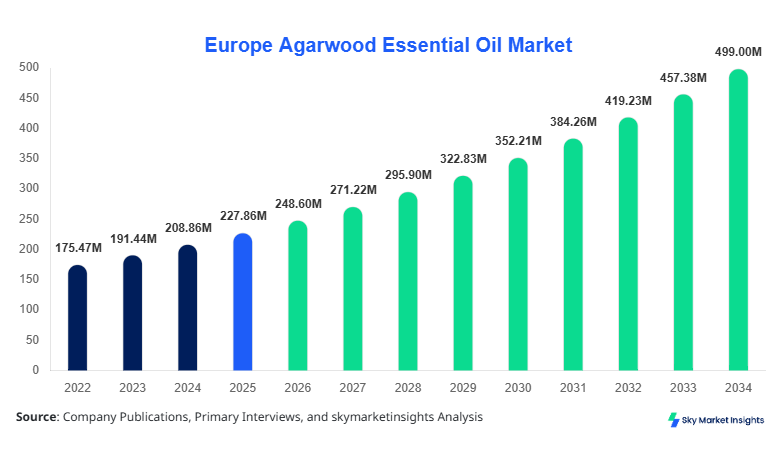
Europe Agarwood Essential Oil market size is projected at USD 248.6 million in 2026 and is expected to hit USD 497.3 million by 2034 with a CAGR of 9.1%.
The Europe Agarwood Essential Oil industry is witnessing increasing commercialization due to rising premium fragrance demand, expanding aromatherapy consumption, and increasing utilization in pharmaceutical formulations across France, Germany, and the United Kingdom. Market participants are focusing on product traceability, organic certifications, and sustainable agarwood extraction technologies to strengthen regional penetration. The competitive landscape includes integrated fragrance manufacturers, niche luxury perfume brands, and essential oil distributors operating through online and specialty retail channels.
The Agarwood Essential Oil market refers to the production, extraction, formulation, distribution, and commercialization of aromatic oil derived from Aquilaria species infected with resin-producing fungi. Europe imported more than 1,850 metric tons of agarwood-derived aromatic materials during 2025, with France accounting for nearly 28% of regional luxury fragrance consumption. Adoption rates of agarwood essential oil products increased by 13.6% between 2023 and 2025 owing to expanding wellness culture and premium personal care preferences. More than 62% of end users purchasing agarwood essential oil products in Europe preferred organic or sustainably certified formulations, while approximately 47% of consumers purchased products through digital retail platforms.
Consumer behavior analysis indicates that nearly 41% of consumers in Europe prioritize therapeutic aroma intensity, purity concentration, and long-lasting fragrance performance when purchasing agarwood essential oil products. In terms of application split, personal care & cosmetics accounted for 46% of total consumption volume in 2025, followed by aromatherapy with 34%, and pharmaceuticals with 20%. Technical metrics reveal that premium-grade agarwood essential oil contains aromatic resin concentrations exceeding 70%, while steam distillation extraction efficiency ranges between 0.8% and 2.5% depending on wood maturity. Increasing penetration across luxury perfumery, spa therapies, and medicinal formulations continues to strengthen the Europe Agarwood Essential Oil market.
Explore more data points, trends and opportunities Download Free Sample Report
Agarwood Essential Oil Market Trends
Rising Adoption of Sustainable and Organic Extraction Technologies
European manufacturers are increasingly shifting toward sustainable agarwood sourcing and environmentally compliant extraction technologies. During 2025, nearly 44% of agarwood essential oil processors in Europe adopted low-temperature extraction systems to preserve resin compounds and reduce energy consumption by 18%. Organic-certified agarwood oil production volumes surpassed 720 metric tons across Europe, reflecting rising consumer demand for traceable and chemical-free aromatic ingredients. Germany and France collectively represented more than 51% of regional sustainable agarwood essential oil imports due to stricter environmental compliance standards and luxury cosmetic manufacturing requirements.
Luxury perfume manufacturers increasingly incorporated high-resin agarwood extracts into premium fragrance collections, with over 38% of niche perfume launches in 2025 containing oud-based aromatic compounds. Retail pricing for premium agarwood essential oil products increased by 11.4% owing to supply constraints and rising raw material costs. Expanding consumer awareness regarding ingredient purity and wellness benefits continues to accelerate the Agarwood Essential Oil market.
Expansion of Aromatherapy and Wellness Applications
The European wellness industry recorded substantial growth in aromatherapy utilization, resulting in increased demand for agarwood essential oil formulations across spa chains, wellness centers, and home-care products. More than 18,000 wellness facilities across Europe incorporated agarwood-infused aromatherapy products during 2025, while aromatherapy diffuser sales increased by 16.2%. Consumer surveys indicated that nearly 58% of wellness-focused consumers preferred woody and resinous fragrance profiles associated with stress reduction and emotional relaxation.
Technology integration within aromatherapy devices also accelerated market expansion. Smart diffusers integrated with automated fragrance control systems witnessed adoption growth exceeding 21% across urban households in France, Germany, and the United Kingdom. Pharmaceutical companies additionally expanded research into anti-inflammatory and antimicrobial properties of agarwood compounds, increasing R&D spending by 12.7% during 2025. Rising wellness expenditure and premium fragrance preferences continue to support the Agarwood Essential Oil market.
Increasing Digital Retail Penetration and Premium Branding
Digital transformation significantly reshaped distribution channels for agarwood essential oil products in Europe. Online retail platforms accounted for approximately 42% of regional agarwood essential oil sales during 2025, compared with 31% in 2022. Subscription-based luxury fragrance platforms and specialty wellness marketplaces collectively processed more than 9.6 million transactions involving oud-based products across Europe.
Premium branding strategies focusing on rare resin concentration, artisanal extraction, and heritage fragrance positioning also strengthened consumer engagement. More than 36% of premium fragrance launches highlighted sustainably sourced agarwood ingredients in marketing campaigns. Cross-border e-commerce exports from France and Italy increased by 14.5%, while social media-driven product discovery contributed to nearly 27% of online purchases. The increasing convergence of luxury retail and digital commerce continues to strengthen the Agarwood Essential Oil market.
Europe Agarwood Essential Oil Drivers
Increasing Demand for Premium Fragrances and Luxury Personal Care Products
Luxury fragrance consumption in Europe increased by 15.8% between 2023 and 2025, significantly supporting agarwood essential oil utilization across premium perfume manufacturing. France, Italy, and the United Kingdom collectively accounted for more than 61% of European luxury fragrance production, generating rising procurement demand for high-resin oud extracts. More than 48% of consumers purchasing premium fragrances preferred long-lasting woody aromatic profiles, increasing utilization of agarwood essential oil in niche and designer formulations. In addition, premium skincare and cosmetic manufacturers increasingly incorporated agarwood oil into anti-aging creams, serums, and aromatic skincare products owing to its antioxidant and anti-inflammatory properties. Organic and natural cosmetic product sales exceeded USD 9.7 billion across Europe in 2025, while agarwood-infused personal care product launches increased by 18.3%. Expanding disposable income levels and rising wellness-focused consumer behavior further accelerated adoption of luxury aromatics. The integration of agarwood compounds into premium candle, incense, and spa formulations also contributed to increasing consumption volumes exceeding 1,850 metric tons during 2025. Rising demand from fragrance, wellness, and cosmetic industries continues to propel the Agarwood Essential Oil market.
Europe Agarwood Essential Oil Restraints
Limited Availability of Mature Agarwood Raw Materials and High Production Costs
The Europe agarwood essential oil industry faces substantial constraints due to the limited availability of mature resinous Aquilaria trees and rising raw material procurement costs. Mature agarwood harvesting cycles often exceed 8 to 15 years, resulting in restricted supply volumes and elevated pricing volatility. During 2025, raw agarwood chip prices increased by approximately 19.4%, while premium-grade resinous wood prices exceeded USD 32,000 per metric ton in specialized trading markets. More than 46% of small-scale essential oil processors reported supply chain disruptions associated with restricted imports and sustainability compliance requirements. Regulatory limitations regarding endangered species conservation and international trade certifications also increased operational costs for manufacturers across Europe. Extraction inefficiencies additionally restrict profitability, as traditional steam distillation yields often remain below 2% depending on resin quality and wood maturity. Small and medium enterprises operating in the wellness and fragrance sector faced margin pressure due to rising logistics, import duties, and sustainable sourcing expenses. High entry barriers and limited cultivation infrastructure continue to challenge the Agarwood Essential Oil market.
Europe Agarwood Essential Oil Opportunities
Expansion of Pharmaceutical and Therapeutic Applications
Pharmaceutical research surrounding agarwood-derived bioactive compounds is creating substantial opportunities across Europe. Research institutions and pharmaceutical companies increased investment in agarwood therapeutic studies by nearly 14.1% during 2025, focusing on anti-inflammatory, antimicrobial, anxiolytic, and antioxidant applications. More than 65 clinical and laboratory studies conducted across Europe evaluated the medicinal properties of agarwood essential oil compounds for neurological and respiratory therapies. Demand for plant-based therapeutic ingredients also expanded significantly, with herbal pharmaceutical product sales increasing by 11.9% during 2025. Germany and France together accounted for nearly 54% of regional botanical pharmaceutical production, strengthening opportunities for agarwood integration into medicinal formulations. In addition, wellness clinics and alternative medicine practitioners increasingly adopted agarwood aromatherapy for stress reduction and emotional balance therapies, increasing treatment penetration by 16.5%. Collaborations between botanical ingredient suppliers and pharmaceutical companies further accelerated innovation in therapeutic product development. The increasing convergence of natural medicine, biotechnology, and wellness therapy continues to create opportunities for the Agarwood Essential Oil market.
Challenges in Europe Agarwood Essential Oil
Counterfeit Products and Quality Standardization Issues
Counterfeit and adulterated agarwood essential oil products represent a major challenge across Europe, particularly within online retail and unregulated distribution channels. Industry assessments conducted during 2025 indicated that nearly 23% of sampled low-cost oud oil products contained synthetic aromatic additives or diluted resin concentrations below accepted premium standards. Variability in extraction techniques, resin maturity, and sourcing origin also creates inconsistencies in fragrance profile, viscosity, and therapeutic efficacy. Approximately 41% of consumers purchasing low-cost agarwood oil products reported dissatisfaction related to fragrance longevity and purity performance. Regulatory agencies across Europe intensified quality monitoring procedures, increasing compliance inspections by 17.6% during 2025. However, fragmented international certification standards continue to complicate quality assurance and trade transparency. Smaller distributors additionally struggle to maintain traceability documentation and organic certification requirements due to elevated auditing costs. Consumer trust erosion caused by counterfeit formulations negatively impacts premium pricing strategies and brand reputation. Addressing traceability, authentication, and quality assurance concerns remains critical for the Agarwood Essential Oil market.
Report Scope
| Report Metric | Details |
|---|---|
| Market Size in 2025 | USD 228 Million |
| Market Size in 2026 | USD 248.6 Million |
| Market Size in 2034 | USD 497.3 Million |
| CAGR | 9.1% (2026-2034) |
| Base Year for Estimation | 2025 |
| Historical Data | 2022-2024 |
| Forecast Period | 2026-2034 |
| Report Coverage | Revenue Forecast, Competitive Landscape, Supply Chain Disruption, Growth Factors, Environment & Regulatory Landscape and Trends |
Explore more data points, trends and opportunities Download Free Sample Report
Agarwood Essential Oil Market Segmentation
The Europe agarwood essential oil industry is segmented based on type and application, with premium-grade formulations accounting for nearly 57% of overall regional revenue in 2025. Personal care and fragrance applications dominate consumption patterns owing to expanding luxury cosmetic and wellness industries. Increasing consumer preference for organic aromatic ingredients and therapeutic wellness formulations further influences product segmentation across Europe.
BY TYPE
Pure agarwood oil represented approximately 43% of the Europe market revenue during 2025 due to strong utilization across luxury perfumery and therapeutic aromatherapy products. Production volumes exceeded 690 metric tons, supported by rising imports of high-resin Aquilaria raw materials from Southeast Asia and the Middle East. Pure agarwood oil formulations contain aromatic resin concentrations ranging between 68% and 82%, enabling superior fragrance longevity exceeding 12 hours in premium perfume applications. France and Italy collectively accounted for nearly 49% of pure agarwood oil consumption owing to their established luxury fragrance manufacturing sectors. More than 58% of premium perfume launches utilized pure oud extracts for high-end woody fragrance profiles. In aromatherapy applications, pure agarwood oil penetration increased by 15.2% due to rising wellness and spa therapy demand. Increasing preference for concentrated and long-lasting fragrance formulations continues to strengthen this segment within the Europe market.
Blended agarwood oil accounted for nearly 34% of regional consumption during 2025 owing to its affordability and wide application across cosmetics, incense, and home fragrance products. More than 840 metric tons of blended agarwood oil products were distributed across Europe through specialty retailers and online wellness platforms. Manufacturers commonly combine agarwood extracts with sandalwood, rose, amber, and musk compounds to optimize fragrance complexity and reduce formulation costs by 18% to 24%. Approximately 46% of wellness product manufacturers preferred blended formulations due to consistent aroma profiles and improved scalability. The United Kingdom and Germany collectively contributed nearly 44% of blended agarwood oil demand owing to rising adoption in candles, diffusers, and personal care formulations. Expanding demand for mid-range luxury fragrance products and accessible wellness solutions continues to support this segment within the Europe market.
Organic agarwood oil represented approximately 23% of regional revenue in 2025 and recorded the fastest adoption rates among environmentally conscious consumers. Certified organic agarwood oil production exceeded 320 metric tons, while demand from natural cosmetic manufacturers increased by 17.8%. Organic formulations avoid synthetic additives, pesticides, and chemical preservatives, resulting in increased penetration within premium skincare and therapeutic aromatherapy products. Nearly 62% of consumers purchasing organic agarwood products belonged to the premium wellness demographic segment concentrated in France, Germany, and Spain. Regulatory compliance and sustainability certifications additionally strengthened retailer preference for organic formulations. Production costs for organic agarwood oil remained approximately 21% higher than conventional formulations due to certification requirements and limited sustainable cultivation infrastructure. Rising consumer emphasis on ethical sourcing and ingredient transparency continues to drive this segment within the Europe market.
BY APPLICATION
Personal care and cosmetics accounted for approximately 46% of Europe agarwood essential oil consumption during 2025. More than 1,120 cosmetic product lines integrated agarwood oil into perfumes, skincare creams, lotions, facial serums, and premium hair care formulations. Luxury fragrance products represented nearly 58% of total cosmetic application demand owing to strong consumer preference for woody oriental scent profiles. France and Italy dominated this segment with a combined 53% share of cosmetic-based agarwood oil utilization. Technical formulation benefits include antioxidant activity, anti-inflammatory functionality, and extended aromatic retention exceeding 10 hours. Premium skincare product penetration increased by 14.2% due to rising consumer expenditure on anti-aging and wellness-oriented beauty products. Digital beauty retail platforms additionally contributed approximately 37% of product distribution volume. Expanding luxury beauty consumption continues to strengthen the Europe market.
Aromatherapy represented nearly 34% of Europe agarwood essential oil demand during 2025, supported by rising wellness awareness and expanding spa infrastructure. More than 18,000 wellness centers and therapeutic clinics across Europe utilized agarwood oil diffusers, massage formulations, and relaxation therapies. Consumer surveys indicated that 57% of wellness users preferred agarwood-based aromas for stress management and emotional relaxation. Diffuser-compatible formulations accounted for nearly 49% of aromatherapy product sales, while therapeutic massage oils contributed 28%. Germany, Spain, and the United Kingdom collectively represented approximately 51% of regional aromatherapy demand. Product innovations involving ultrasonic diffuser compatibility and long-lasting vaporization performance increased usage penetration by 16.4%. Increasing wellness tourism and home-based spa adoption continue to support this segment within the Europe market.
Pharmaceutical applications accounted for nearly 20% of Europe agarwood essential oil consumption during 2025 due to increasing research surrounding therapeutic bioactive compounds. Germany and France together represented more than 55% of pharmaceutical-grade agarwood oil utilization across herbal medicines, respiratory formulations, and neurological wellness therapies. More than 65 active research programs evaluated antimicrobial, anti-inflammatory, anxiolytic, and antioxidant properties associated with agarwood-derived compounds. Pharmaceutical-grade formulations require purity levels exceeding 95% and advanced filtration standards to meet medicinal compliance regulations. Hospital-integrated alternative therapy programs increased adoption by 12.3%, while botanical medicine sales across Europe exceeded USD 7.1 billion during 2025. Expanding integration of herbal medicine and plant-based therapeutics continues to reinforce the Europe market.
Europe Agarwood Essential Oil Market Segmentations
Type
- Pure Agarwood Oil
- Blended Agarwood Oil
- Organic Agarwood Oil
Application
- Personal Care & Cosmetics
- Aromatherapy
- Pharmaceuticals
Europe Agarwood Essential Oil Regional Outlook
United Kingdom
The United Kingdom accounted for approximately 19% of Europe agarwood essential oil revenue during 2025, supported by increasing luxury fragrance imports and expanding wellness retail channels. More than 320 specialty fragrance brands and wellness distributors operated within the UK market, collectively importing over 290 metric tons of agarwood-derived products annually. Aromatherapy applications represented 38% of domestic consumption, while cosmetics contributed 44% and pharmaceuticals accounted for 18%. Online retail platforms processed approximately 46% of regional sales owing to strong digital wellness adoption. Demand for premium oud fragrances increased by 15.7% during 2025, particularly among urban luxury consumers. Expanding wellness culture and niche fragrance demand continue to strengthen the regional market.
Germany
Germany represented nearly 22% of Europe agarwood essential oil consumption during 2025 owing to strong pharmaceutical manufacturing capabilities and rising botanical wellness demand. Germany imported more than 340 metric tons of agarwood extracts and finished essential oil products during the year. Pharmaceutical applications accounted for 31% of domestic utilization due to extensive herbal medicine integration and botanical therapy research. More than 48 research institutions and herbal medicine manufacturers actively evaluated agarwood bioactive compounds. Wellness and spa therapy centers additionally increased adoption by 14.3%, while organic-certified formulations accounted for 36% of total market volume. Expanding pharmaceutical research and wellness penetration continue to support the regional market.
France
France dominated the Europe market with approximately 31% regional revenue share during 2025. The country hosts over 140 luxury fragrance houses and more than 260 essential oil blending companies. Luxury perfume applications accounted for 52% of national consumption, followed by aromatherapy with 29% and pharmaceuticals with 19%. France imported over 510 metric tons of premium-grade agarwood oil products in 2025 to support high-end fragrance manufacturing. More than 63% of manufacturers adopted advanced extraction technologies including CO2 extraction and molecular filtration systems. Expanding luxury exports and premium wellness product innovation continue to reinforce the regional market.
Spain
Spain accounted for approximately 11% of Europe agarwood essential oil demand during 2025 owing to rising wellness tourism and spa infrastructure development. More than 2,800 wellness resorts and therapeutic spa centers integrated agarwood aromatherapy formulations into massage therapies and relaxation programs. Aromatherapy represented 42% of domestic consumption, while cosmetics contributed 37%. Organic wellness product sales increased by 13.1%, while imports of blended agarwood formulations rose by 15.4%. The hospitality sector additionally increased procurement of premium fragrance diffusers and incense products. Expanding wellness tourism continues to strengthen the regional market.
Italy
Italy represented nearly 10% of Europe agarwood essential oil revenue during 2025, driven by strong luxury cosmetic and designer fragrance manufacturing industries. More than 190 premium perfume manufacturers integrated agarwood extracts into niche fragrance collections targeting luxury consumers across Europe and the Middle East. Cosmetic applications represented 49% of domestic consumption, followed by aromatherapy with 33%. Italian luxury fragrance exports increased by 12.7% during 2025, while demand for pure agarwood oil formulations grew by 14.5%. Increasing demand for artisanal fragrance products continues to support the regional market.
Russia
Russia accounted for approximately 7% of Europe agarwood essential oil demand during 2025. Imports exceeded 120 metric tons, supported by increasing luxury fragrance adoption among urban consumers. Aromatherapy and incense applications collectively represented 46% of domestic utilization, while cosmetics contributed 39%. Online wellness product sales increased by 18.2% due to expanding e-commerce penetration. Premium oud fragrance collections launched by international brands also strengthened consumer awareness regarding agarwood aromatic formulations. Increasing disposable income and luxury product adoption continue to support the regional market.
Top players in Europe Agarwood Essential Oil
- Ajmal Perfumes
- Firmenich SA
- Givaudan SA
- Takasago International Corporation
- Essential Oils Company
- Aromatan Cosmetics
- Biolandes SAS
- AgarAura
- Aquila Organics
- Eden Botanicals
- Albert Vieille SAS
- Moksha Lifestyle Products
- Plant Therapy Essential Oils
- Young Living Essential Oils
- doTERRA International
Givaudan SA
-
Estimated Europe market positioning share: 11.6%
-
Strong integration within luxury fragrance and premium aromatic ingredient manufacturing
-
Operates advanced extraction and fragrance development facilities across France and Switzerland
-
Supplies oud-based compounds to more than 85 luxury perfume brands across Europe
-
Invested approximately 14% of fragrance innovation budgets into sustainable aromatic sourcing initiatives
-
Strong presence within premium cosmetic, wellness, and designer fragrance applications
Firmenich SA
-
Estimated Europe market positioning share: 9.8%
-
Extensive expertise in natural fragrance ingredient formulation and specialty essential oils
-
Operates global sourcing partnerships supporting sustainable agarwood procurement
-
Expanded botanical ingredient production capacity by nearly 12% during 2025
-
Focuses on high-purity agarwood extracts utilized across pharmaceuticals and premium perfumery
-
Strong strategic positioning across wellness, luxury fragrance, and personal care sectors
Investment Analysis
Investment activity across the Europe agarwood essential oil sector increased significantly during 2025 due to rising luxury fragrance demand and sustainable wellness product adoption. Nearly 38% of total investments were allocated toward sustainable sourcing and cultivation initiatives, while extraction technology modernization accounted for 27%. France and Germany collectively attracted approximately 49% of total regional investments owing to advanced fragrance manufacturing infrastructure and pharmaceutical research activities. Venture capital participation in organic wellness and luxury fragrance startups increased by 16.2% during the year.
Mergers, acquisitions, and collaboration agreements also intensified across the sector. More than 22 strategic partnerships involving fragrance manufacturers, botanical ingredient suppliers, and wellness brands were recorded during 2025. Approximately 31% of collaboration agreements focused on sustainable Aquilaria cultivation and traceability systems, while 24% targeted advanced extraction technologies and organic certification compliance. Large fragrance houses increasingly partnered with Southeast Asian growers to secure long-term resinous wood supply agreements and reduce raw material volatility. Joint ventures between cosmetic manufacturers and aromatherapy product developers additionally increased by 14.8%, supporting innovation across wellness-focused premium products.
Regional investment distribution showed France accounting for 28% of total investment allocation, followed by Germany with 21%, the United Kingdom with 17%, and Italy with 11%. Pharmaceutical and botanical therapy companies increased R&D spending by 13.5% to evaluate antimicrobial and anti-inflammatory applications associated with agarwood compounds. Expanding investor focus on sustainable luxury ingredients and therapeutic botanicals continues to create favorable opportunities across the Europe market.
New Product Developments
Manufacturers across Europe intensified product innovation initiatives during 2025 to improve aromatic performance, sustainability, and therapeutic applications of agarwood essential oil formulations. More than 26% of newly launched luxury fragrance products incorporated oud-based aromatic compounds, while organic-certified formulations represented approximately 33% of new product introductions. Companies increasingly focused on enhancing aromatic longevity, with advanced molecular stabilization technologies improving fragrance retention performance by nearly 19%.
Innovation in wellness and aromatherapy products also accelerated substantially. Smart diffuser-compatible agarwood formulations increased by 18.7%, while water-soluble therapeutic blends improved diffusion efficiency by approximately 21%. Pharmaceutical manufacturers additionally developed high-purity medicinal formulations targeting respiratory wellness and stress reduction therapies. More than 42 new agarwood-infused skincare products were introduced across Europe during 2025, emphasizing antioxidant and anti-inflammatory properties. Expanding innovation across luxury fragrances, wellness solutions, and therapeutic formulations continues to support the Europe market.
Recent Developments in Europe Agarwood Essential Oil
- 2025: Givaudan SA expanded its sustainable agarwood sourcing partnerships across Southeast Asia, increasing certified raw material procurement volumes by 18% and improving supply chain traceability for European fragrance manufacturers. The company also introduced advanced molecular filtration technologies that improved aromatic purity levels by approximately 14%, supporting increasing demand from luxury perfume brands operating across France and Italy.
- 2025: Firmenich SA launched a new premium oud fragrance compound portfolio targeting luxury cosmetic manufacturers in Europe. Production efficiency improved by nearly 16%, while organic-certified ingredient utilization increased by 22%. The product launch strengthened the company’s penetration across high-end fragrance applications in Germany, France, and the United Kingdom.
Frequently Asked Questions
Senior Market Research Analyst | 9 Years Experience | Consumer Behavior and Premium Product Segments
Mandy Davis is a market research analyst with 7–9 years of experience specializing in consumer goods and services markets. Contributed to 70+ research reports for global clients. Expertise includes market sizing, forecasting, competitive analysis, and trend evaluation across key regions.