Europe Artisan Bakery Market Size
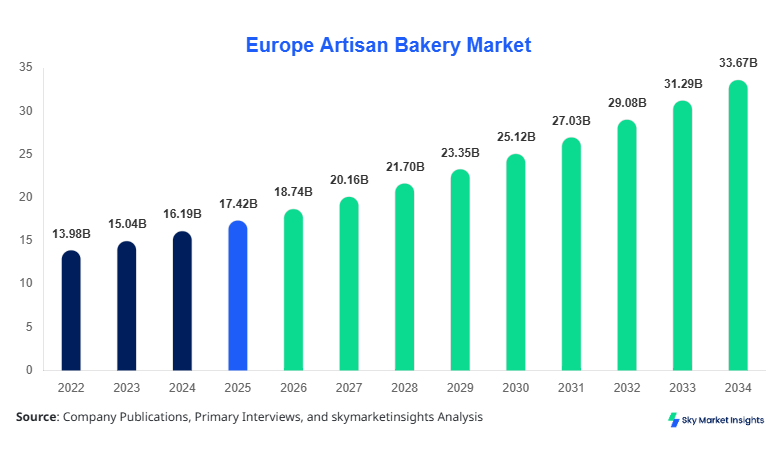
The European artisan bakery market size is projected at USD 18.74 billion in 2026 and is expected to hit USD 33.68 billion by 2034 with a CAGR of 7.6%.
The expansion of specialty baked products, premium handcrafted bread consumption, and rising consumer preference for preservative-free food products are supporting revenue generation across Europe. The report evaluates production capacity, consumption patterns, pricing trends, raw material availability, and competitive positioning across major European economies. Increasing investments in premium bakery chains, sourdough processing technologies, and frozen artisan dough manufacturing are strengthening the competitive ecosystem while improving supply chain efficiency and retail penetration.
The artisan bakery sector represents a premium segment within the European baked goods industry focused on handcrafted bread, pastries, cakes, and specialty bakery products manufactured using traditional fermentation, natural ingredients, and small-batch processing techniques. Europe produced more than 14.8 million metric tons of premium bakery products in 2025, with France, Germany, and Italy accounting for nearly 58% of regional production volume. Adoption of naturally fermented sourdough products reached 42% among urban consumers in Western Europe, while premium bakery penetration across organized retail channels surpassed 61% in 2025. Consumer demand analytics indicate that nearly 67% of European households purchased artisan bread products at least twice per week, while 38% preferred organic bakery ingredients and 44% favored gluten-reduced formulations. Bread applications contributed approximately 49% of overall revenue, followed by pastries at 31% and cakes at 20%. Product freshness cycles typically range between 12 and 48 hours, while fermentation duration averages 8–24 hours depending on product complexity. Retail bakery outlets accounted for nearly 52% of product sales, foodservice channels contributed 33%, and online bakery subscriptions represented 15% of total transactions. Rising urbanization, premium food adoption, and changing breakfast consumption habits continue to strengthen the European artisan bakery market demand.
In France, the artisan bakery market accounted for nearly 27% of regional revenue generation in 2025, supported by more than 35,000 operational artisan bakery facilities and over 180,000 bakery professionals employed across independent and franchise bakery networks. Bread products contributed approximately 54% of French artisan bakery consumption, pastries represented 28%, and cakes accounted for 18% of sales value. France produced nearly 3.2 million metric tons of artisan bread products during 2025, with sourdough and baguette categories dominating urban consumption centers, including Paris, Lyon, Marseille, and Bordeaux. Technology adoption rates within French artisan bakeries increased substantially, with 48% of facilities implementing automated dough fermentation systems and 36% adopting energy-efficient baking ovens. Organic flour utilization expanded by 19% year-over-year, while premium butter and specialty grain consumption increased by 14%. Approximately 63% of consumers in France preferred fresh bakery products over packaged industrial alternatives, and average weekly bakery spending exceeded USD 24 per household. Tourism-related bakery sales contributed 11% of market revenue, particularly in premium pastry categories. The increasing emphasis on authentic recipes, regional bakery heritage, and sustainable sourcing continues to reinforce Europe's artisan bakery market share.
Explore more data points, trends and opportunities Download Free Sample Report
Artisan Bakery Market Trends
Premium Sourdough and Organic Ingredient Expansion
The adoption of premium sourdough bakery products increased by 21% across Europe during 2025, supported by rising consumer awareness regarding gut health, fermentation benefits, and natural ingredient sourcing. More than 5.8 million metric tons of naturally fermented bakery products were sold throughout the region, while organic ingredient integration surpassed 39% among premium bakery chains. Germany and France collectively accounted for over 46% of regional sourdough production volume, while Spain experienced a 17% increase in demand for ancient grain bread products. Smart fermentation monitoring systems improved production consistency by 24%, while automated temperature-controlled proofing equipment reduced wastage by nearly 12%. Consumers increasingly favored bakery products with low sugar content, clean-label formulations, and non-GMO ingredients, leading to substantial expansion in premium bakery menus across urban retail stores. Retail chains reported that average spending on premium handcrafted bread products increased by 15% year-over-year. Growing demand for sustainable packaging and locally sourced wheat varieties continues shaping the European artisan bakery market trend.
Expansion of Frozen Artisan Dough and Omnichannel Bakery Sales
Frozen artisan dough manufacturing emerged as a major operational trend across Europe, with production volumes surpassing 2.4 million metric tons in 2025. Foodservice operators increasingly adopted frozen bakery solutions to reduce labor dependency and maintain product consistency, resulting in a 28% rise in frozen dough installations across hotels, cafés, and restaurants. Online bakery subscription services expanded by nearly 32%, while same-day bakery delivery volumes exceeded 210 million transactions across major metropolitan regions. Digital ordering applications improved bakery order processing efficiency by 26%, while cloud-based inventory management reduced ingredient losses by approximately 9%. The United Kingdom and Italy experienced rapid expansion in premium online pastry sales, particularly among consumers aged 25–40 years. Gluten-free artisan product launches increased by 18%, while vegan pastry offerings expanded by 23% across premium retail bakeries. Continuous innovation in ingredient preservation technologies and distribution logistics remains a defining European artisan bakery market trend.
Europe Artisan Bakery Market Drivers
Increasing Consumer Preference for Premium and Fresh Bakery Products
Consumer expenditure on premium baked products across Europe exceeded USD 92 billion in 2025, with artisan bakery purchases representing approximately 34% of total bakery spending. More than 71% of urban consumers preferred freshly baked products over packaged industrial alternatives due to perceived quality, freshness, and nutritional benefits. Rising disposable income levels, premium dining preferences, and tourism-driven bakery demand significantly accelerated bakery consumption across France, Germany, and Italy. Approximately 58% of consumers actively sought preservative-free bread products, while 41% preferred naturally fermented bakery formulations with enhanced texture and nutritional value. Retail bakery expansion across metropolitan cities increased outlet density by 13% during 2025, improving product accessibility and distribution efficiency. Investments in specialty grain processing, organic flour sourcing, and premium butter imports collectively surpassed USD 2.8 billion throughout Europe. The foodservice industry also expanded premium bakery procurement by 19%, particularly in hotels, cafés, and quick-service restaurants. Seasonal bakery consumption during festive periods contributed nearly 16% of annual sales volume. Rising premium food awareness and changing eating habits continue driving Europe's artisan bakery market growth.
European Artisan Bakery Market Restaurants
Volatility in Raw Material Costs and Skilled Labor Shortages
The artisan bakery industry faces operational pressure due to rising wheat, butter, cocoa, and dairy prices across Europe. Wheat procurement costs increased by approximately 14% during 2025, while premium butter prices rose nearly 18% because of supply chain disruptions and energy inflation. Independent bakeries experienced labor cost escalation of nearly 11%, with skilled artisan bakers remaining in short supply across France, Germany, and the United Kingdom. More than 37% of bakery operators reported workforce recruitment difficulties, particularly for fermentation specialists and pastry chefs. Energy-intensive baking operations also increased production costs, as electricity and gas expenses represented nearly 22% of operational expenditure for medium-sized bakeries. Regulatory compliance requirements for labeling, food safety, and sustainability certification further elevated operating complexity. Smaller bakeries struggled to compete with large industrial chains offering lower-priced alternatives and extensive distribution capabilities. Ingredient wastage associated with short product shelf life remained above 8% in premium bakery segments. These operational constraints continue limiting Europe's artisan bakery market growth.
Europe Artisan Bakery Market Opportunities
Expansion of Functional, Gluten-Free, and Vegan Bakery Segments
The functional bakery segment across Europe generated more than USD 4.2 billion in 2025, with gluten-free artisan products accounting for approximately 29% of specialty bakery sales. Vegan pastry consumption increased by 24% year-over-year, particularly among consumers aged below 35 years in Germany, Spain, and the United Kingdom. Approximately 43% of consumers actively searched for high-fiber, protein-enriched, or low-carb bakery products, encouraging manufacturers to diversify product portfolios. Investment in plant-based bakery innovation exceeded USD 780 million during 2025, while oat-based and almond-based bakery ingredient usage increased by 17%. Premium cafés and health-focused retailers expanded dedicated functional bakery shelves by nearly 21% across urban markets. Technological advancements in enzyme processing and gluten replacement systems improved texture retention by approximately 16%, enhancing consumer acceptance of specialty bakery formulations. Online bakery customization platforms also increased personalized product sales by 14%. Expanding demand for health-oriented premium baked products presents significant opportunities for the European artisan bakery market demand.
Challenges in Europe's Artisan Bakery Market
Maintaining Product Freshness and Supply Chain Efficiency
Maintaining freshness standards for artisan bakery products remains a major challenge due to short shelf life and complex distribution logistics. Most handcrafted bread and pastry products retain optimal quality for only 24–48 hours, creating operational pressure for inventory management and transportation systems. Approximately 12% of bakery products across Europe experience losses associated with spoilage, delayed transportation, or unsold retail inventory. Cold-chain logistics investments increased by 15% during 2025, yet regional supply inconsistencies continue affecting bakery efficiency. Independent bakeries operating in rural regions face distribution limitations because of fragmented transportation networks and limited access to automated storage facilities. Premium ingredient imports, including specialty wheat flour, Belgian chocolate, and dairy butter, are vulnerable to geopolitical disruptions and seasonal supply shortages. Nearly 31% of bakery operators reported reduced profit margins because of elevated packaging, transportation, and energy costs. E-commerce bakery businesses also face challenges in maintaining texture, temperature, and product integrity during delivery operations. These operational difficulties continue influencing the European artisan bakery market demand.
Report Scope
| Report Metric | Details |
|---|---|
| Market Size in 2025 | USD 17.42 Billion |
| Market Size in 2026 | USD 18.74 Billion |
| Market Size in 2034 | USD 33.68 Billion |
| CAGR | 7.6% (2026-2034) |
| Base Year for Estimation | 2025 |
| Historical Data | 2022-2024 |
| Forecast Period | 2026-2034 |
| Report Coverage | Revenue Forecast, Competitive Landscape, Supply Chain Disruption, Growth Factors, Environment & Regulatory Landscape and Trends |
Explore more data points, trends and opportunities Download Free Sample Report
Artisan Bakery Market Segmentation
The European artisan bakery industry is segmented based on product type and distribution channel. Bread products dominated overall consumption, with approximately 49% revenue contribution in 2025, while retail bakeries represented nearly 52% of total sales volume due to strong consumer preference for fresh in-store purchases. Increasing product diversification and premiumization are supporting cross-category expansion.
By Type
Bread remained the leading category within the European artisan bakery industry, accounting for nearly 49% of overall sales revenue in 2025. Production volumes exceeded 7.1 million metric tons, driven by strong consumer preference for sourdough, baguettes, rye bread, ciabatta, and multigrain loaves. Average fermentation duration ranged between 12 and 24 hours, while hydration ratios in premium sourdough products exceeded 78%, improving texture and shelf quality. France and Germany jointly contributed more than 51% of premium bread production across Europe. Organic bread penetration reached 33% in urban retail channels, while gluten-reduced bread consumption increased by 16% year-over-year. Automated proofing systems improved consistency by 21%, while premium wheat utilization increased significantly across bakery chains. Fresh bread purchases represented approximately 62% of weekly bakery spending among European households.
Pastries accounted for nearly 31% of market revenue, supported by strong tourism demand and café consumption across Italy, France, and Spain. Production volume surpassed 4.3 million metric tons during 2025, with croissants, Danish pastries, puff pastries, and sweet rolls dominating consumer demand. Butter content in premium pastries averaged between 22% and 32%, while frozen laminated dough technology improved production scalability by approximately 18%. Urban café chains increased pastry procurement by 24%, while online dessert subscriptions expanded rapidly in the United Kingdom and Germany. Premium chocolate-filled pastries experienced 14% annual demand expansion because of changing snacking patterns and growing café culture.
Cakes contributed approximately 20% of industry revenue, with specialty celebration cakes and premium desserts driving category expansion. Europe produced nearly 2.1 million metric tons of artisan cakes in 2025, supported by increasing event catering and customized bakery demand. Vegan cake launches increased by 19%, while sugar-reduced cake formulations accounted for nearly 13% of new product introductions. Italy and Spain collectively represented approximately 36% of premium cake production across Southern Europe. Bakery chains invested heavily in advanced frosting systems, digital cake customization, and edible decoration technologies to improve customer engagement and operational productivity.
By Application
Retail bakeries represented the largest distribution segment, contributing nearly 52% of regional sales revenue in 2025. More than 165,000 independent and franchise bakery outlets operated across Europe, serving approximately 280 million consumers weekly. Average in-store bread production exceeded 1,200 units per day for medium-sized bakeries, while premium bakery cafés generated higher consumer retention through integrated dining experiences. Smart POS systems improved transaction efficiency by 18%, while in-store premium bakery sections expanded by 16% within supermarkets and hypermarkets. France and Germany maintained the highest retail bakery density, with urban districts reporting one artisan bakery outlet for every 3,800 residents.
Foodservice channels accounted for approximately 33% of total industry revenue due to rising procurement by cafés, hotels, restaurants, and quick-service chains. Foodservice bakery consumption surpassed 4.9 million metric tons during 2025, supported by tourism recovery and increasing café culture across Europe. Hotels increased artisan pastry procurement by 14%, while restaurant chains expanded specialty bread sourcing by nearly 17%. Frozen artisan dough adoption within foodservice operations increased substantially because of labor optimization and consistency requirements. Premium brunch menus and gourmet sandwich applications significantly contributed to bakery utilization rates across metropolitan hospitality markets.
Online platforms represented approximately 15% of industry sales and experienced the fastest expansion rate across Europe. Digital bakery transactions exceeded 210 million orders during 2025, while subscription-based bakery delivery services expanded by 32%. Mobile ordering applications improved repeat consumer purchases by nearly 26%, particularly among younger demographics. Personalized cake customization and same-day pastry delivery services experienced rapid adoption across urban markets in the United Kingdom, Spain, and Italy. Investment in insulated packaging technologies improved product freshness retention by approximately 13% during transportation operations.
Europe Artisan Bakery Market Segmentations
Product Type
- Bread
- Pastries
- Cakes
Distribution Channel
- Retail Bakeries
- Online Platforms
- Foodservice
Europe Artisan Bakery Market Regional Outlook
United Kingdom
The United Kingdom accounted for approximately 16% of European artisan bakery revenue during 2025, supported by premium café culture and increasing demand for handcrafted bread products. More than 11,500 artisan bakery facilities operated across the country, while annual premium bakery production exceeded 1.8 million metric tons. Bread products represented 46% of domestic bakery sales, pastries contributed 34%, and cakes accounted for 20%. Consumer demand for vegan bakery products increased by 27%, while gluten-free bakery purchases expanded by 19%. London remained the largest urban bakery hub, accounting for nearly 29% of national premium bakery transactions.
Germany
Germany represented nearly 22% of regional artisan bakery production in 2025, supported by strong bread consumption traditions and advanced bakery manufacturing infrastructure. The country produced approximately 3.4 million metric tons of artisan bread products, with rye bread and sourdough categories dominating domestic demand. More than 9,800 premium bakeries operated nationwide, while bakery exports exceeded USD 2.1 billion. Functional bakery products experienced 18% demand expansion, while organic ingredient utilization increased by 21% across commercial bakeries.
France
France maintained leadership in premium bakery consumption and contributed approximately 27% of overall regional revenue. More than 35,000 artisan bakery outlets generated significant consumer engagement across urban and tourism-driven markets. Baguette consumption exceeded 9 billion units annually, while premium pastry exports increased by 13% during 2025. Organic bakery penetration reached 38%, while smart fermentation systems improved production efficiency by nearly 20%. Tourism-related bakery spending remained a major contributor to premium pastry demand.
Spain
Spain accounted for nearly 11% of Europe’s artisan bakery industry revenue in 2025, supported by rising café culture and increasing urban premium bakery penetration. Production volumes exceeded 1.5 million metric tons, while premium pastry consumption increased by 17%. Barcelona and Madrid collectively represented approximately 43% of national artisan bakery sales. Gluten-free bakery demand increased by 15%, while Mediterranean-inspired bread formulations gained strong popularity among younger consumers and tourists.
Italy
Italy contributed approximately 14% of regional artisan bakery revenue, driven by traditional bakery culture and premium dessert consumption. The country produced nearly 2 million metric tons of artisan bakery products during 2025, with ciabatta, focaccia, and premium pastries dominating sales. Independent family-owned bakeries represented nearly 72% of total outlets, while café-linked bakery sales increased by 18%. Premium celebration cakes and gourmet pastry exports supported continued industry expansion across Southern Europe.
Russia
Russia accounted for approximately 10% of the European artisan bakery industry, supported by increasing urban premium bakery adoption and expanding café chains. Production exceeded 1.7 million metric tons in 2025, while specialty rye bread demand increased by 14%. Moscow and Saint Petersburg represented nearly 48% of domestic artisan bakery consumption. Investment in automated dough processing systems improved operational efficiency by approximately 16%, while premium frozen bakery imports increased significantly across organized retail channels.
Top players in European artisan bakery market
- Grupo Bimbo
- Aryzta AG
- PAUL Bakery
- Le Duff Group
- Lantmännen Unibake
- Vandemoortele
- Gail’s Bakery
- Bread Holdings
- Poilâne
- Maison Kayser
- Bakels Group
- Délifrance
- Neuhauser Group
- Cérélia Group
- Baker & Spice
Grupo Bimbo
-
Grupo Bimbo accounted for approximately 8% of the European premium bakery sector revenue during 2025.
-
The company operates large-scale bakery facilities across Spain, France, and the United Kingdom.
-
Annual premium bakery production exceeded 1.2 million metric tons, while frozen dough capacity increased by 14%.
-
Investment in sustainable packaging and energy-efficient ovens improved operational efficiency by approximately 11%.
-
The company strengthened retail and foodservice partnerships across Europe, supporting expansion in artisan bread and pastry categories.
Aryzta AG
-
Aryzta AG represented nearly 6% of Europe’s premium bakery sector during 2025.
-
The company specializes in frozen artisan bakery products and foodservice bakery solutions.
-
Production capacity exceeded 950,000 metric tons annually, while foodservice distribution expanded across more than 40,000 customer locations.
-
Investments in automation and digital fermentation systems improved manufacturing consistency by 18%.
-
Aryzta expanded gluten-free and vegan bakery portfolios, supporting stronger positioning within specialty bakery categories.
Investment Analysis
Investment activity within the European artisan bakery industry increased substantially during 2025, with total capital allocation exceeding USD 6.4 billion. Approximately 41% of investments targeted production automation, while 24% focused on sustainable packaging technologies and energy-efficient baking systems. France, Germany, and the United Kingdom collectively accounted for nearly 63% of total regional bakery investments. Private equity participation in premium bakery chains increased by 17%, while franchise bakery expansion projects grew by 14%. Investments in frozen artisan dough manufacturing and cold-chain logistics improved operational scalability across foodservice and retail channels.
Mergers, acquisitions, and strategic collaborations intensified across the industry as bakery manufacturers sought geographical expansion and specialty product diversification. More than 28 bakery-related acquisition agreements were recorded across Europe during 2025, while cross-border collaborations between ingredient suppliers and bakery chains increased by approximately 19%. Premium café brands increasingly partnered with local artisan bakeries to improve product differentiation and customer retention. Technology-focused investments in fermentation monitoring systems, AI-based inventory forecasting, and smart baking equipment accounted for nearly 22% of total capital deployment. Sustainable sourcing partnerships involving organic flour suppliers and regional wheat cooperatives expanded rapidly across France, Germany, and Italy. Foodservice operators also increased investments in frozen artisan bakery systems to reduce labor dependency and improve operational consistency.
New Product Developments
Premium bakery innovation accelerated significantly during 2025, with nearly 18% of all new bakery launches across Europe categorized as artisan or specialty products. Gluten-free artisan bread launches increased by 21%, while vegan pastry introductions expanded by approximately 23%. Protein-enriched bakery products experienced 16% annual growth due to rising health-conscious consumer demand. Manufacturers introduced low-sugar cakes, ancient grain bread products, and plant-based pastry fillings to strengthen premium positioning.
Technological innovation also improved product quality and operational efficiency. Smart fermentation systems enhanced dough consistency by nearly 20%, while advanced baking ovens reduced energy consumption by approximately 14%. Shelf-life enhancement technologies improved freshness retention by 11%, supporting online bakery delivery expansion across major European metropolitan regions. Premium seasonal pastry collections and customizable celebration cakes remained key drivers of innovation across retail bakery chains.
Recent Developments in European Artisan Bakeries Market
- 2025: Grupo Bimbo expanded its premium bakery production network in Spain and France, increasing artisan bread output by approximately 13% while investing more than USD 180 million in automated dough fermentation systems and sustainable bakery packaging operations. The expansion strengthened foodservice distribution capabilities across Western Europe.
- 2025: Aryzta AG launched new frozen artisan pastry lines targeting hotel and café operators across Germany and the United Kingdom. Production efficiency improved by nearly 16%, while frozen pastry distribution volumes exceeded 240,000 metric tons annually following implementation of upgraded cold-chain infrastructure.
- 2025: Lantmännen Unibake expanded gluten-free artisan bakery production across Northern Europe, increasing specialty bakery output by approximately 21% and strengthening partnerships with supermarket chains and premium café operators. The company also invested heavily in sustainable grain sourcing and digital inventory systems.
Research Methodology
The European artisan bakery industry report was prepared using a combination of primary research, secondary research, and advanced market estimation techniques to ensure data accuracy and reliability. The research process included extensive analysis of bakery manufacturing statistics, retail sales databases, trade publications, company annual reports, government food industry records, and regional import-export statistics from 2022 to 2025. Primary interviews were conducted with bakery manufacturers, ingredient suppliers, retail distributors, café operators, foodservice procurement managers, and industry consultants across France, Germany, the United Kingdom, Italy, Spain, and Russia. Secondary research involved evaluation of production volumes, pricing structures, technological developments, and investment activities within the premium bakery ecosystem. Market size estimation was conducted using bottom-up and top-down analytical approaches, considering production capacity, consumption trends, pricing benchmarks, and regional demand distribution. Forecast modeling for 2026–2034 incorporated macroeconomic indicators, consumer spending behavior, urbanization rates, premium food adoption, and technological advancement in bakery processing systems. Data triangulation and validation methods were applied to maintain consistency across all regional and segment-level forecasts.
Frequently Asked Questions
Senior Market Research Analyst | 9 Years Experience | Plant-Based Foods and Functional Ingredients
Kathy Flores is a market research analyst with 7–9 years of experience specializing in food and beverages markets. Contributed to 70+ research reports for global clients. Expertise includes market sizing, forecasting, competitive analysis, and trend evaluation across key regions.