Top 11 Companies in Urea Market
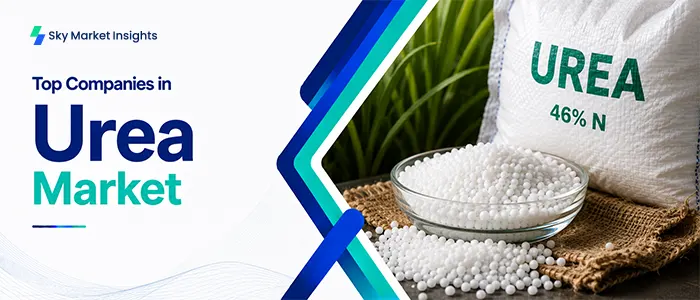
The Top 11 Leading Companies in Urea Market are central to the global nitrogen fertilizer and industrial chemicals supply chain, serving agricultural producers as well as manufacturers of resins, adhesives, melamine, and diesel exhaust fluid. Urea is one of the most widely traded nitrogen fertilizers because of its high nitrogen content, ease of transportation, and suitability for granular and prilled applications. Global urea production is estimated at more than 180 million metric tons annually, while fertilizer applications account for the majority of consumption. Standard granular urea commonly trades in the range of USD 300–600 per metric ton, although prices vary according to region, feedstock costs, freight, and market conditions. Leading producers are strengthening their positions through large-scale ammonia-urea complexes, integrated natural-gas supply, export infrastructure, and lower-carbon production technologies.
Market Overview
The urea market encompasses fertilizer-grade and industrial-grade urea used across agriculture, chemical manufacturing, automotive emissions control, and engineered-material applications. Fertilizer-grade urea represents the dominant consumption segment because its nitrogen concentration makes it an efficient source of crop nutrition.
Global urea production exceeds 180 million metric tons annually, with Asia-Pacific representing roughly 40% of global consumption. North America accounts for approximately 30%, while Europe and other regions collectively represent the remaining demand. Production is concentrated around regions with access to competitively priced natural gas, since ammonia synthesis is the primary upstream process for urea manufacturing.
Pricing varies according to grade, granulation, packaging, logistics, and market conditions. Standard granular urea commonly ranges from USD 300 to USD 600 per metric ton, while specialty or enhanced-efficiency products can command premiums of approximately 20–40% over conventional product.
The market is also becoming increasingly diversified beyond conventional fertilizer. Industrial urea is used in diesel exhaust fluid, melamine production, resins, adhesives, and other chemical applications. Manufacturers are therefore investing in production flexibility, downstream integration, storage infrastructure, and lower-carbon ammonia and urea technologies.
Top 11 Leading Companies in Urea Market
1. CF Industries

CF Industries is one of the world's largest nitrogen fertilizer producers and a major supplier of ammonia, urea, UAN, and other nitrogen products. The company benefits from extensive manufacturing capacity and access to competitively priced North American natural gas, supporting cost-efficient nitrogen production. Its urea portfolio serves agricultural distributors, farmers, and industrial customers requiring reliable nitrogen supply. CF Industries emphasizes operational efficiency, logistics optimization, and integrated ammonia-urea production. The company is also investing in lower-carbon ammonia and clean-energy initiatives to address changing industrial requirements. Its large production network and established distribution infrastructure make CF Industries a major participant in the global urea supply chain.
2. Yara International

Yara International is a leading global fertilizer producer with an extensive portfolio spanning urea, nitrate fertilizers, ammonia, and specialty crop nutrition products. The company operates an international production and distribution network serving agricultural markets across Europe, the Americas, Africa, and Asia. Yara differentiates itself through integrated production capabilities, agronomic expertise, and value-added fertilizer solutions. Its urea products support broad-acre farming and commercial agriculture, while its specialty portfolio helps customers optimize nutrient application. Yara is also investing in low-carbon ammonia and more sustainable fertilizer production. Its combination of global distribution, technical expertise, and product diversification strengthens its position among leading urea suppliers.
3. Nutrien
Nutrien is a major global provider of agricultural inputs and one of the leading nitrogen fertilizer producers. Its portfolio includes urea, ammonia, UAN, and other nitrogen products supplied through extensive retail and distribution networks. Nutrien benefits from vertically integrated operations and significant production capabilities in North America, allowing it to serve both domestic and international markets. The company focuses on reliable fertilizer supply, agronomic services, operational efficiency, and digital agricultural solutions. Its combination of manufacturing and downstream retail operations provides direct access to farmers and agricultural customers. This integrated model strengthens Nutrien's ability to manage procurement, distribution, and customer relationships throughout the fertilizer value chain.
4. EuroChem

EuroChem is a global fertilizer producer with an extensive portfolio covering nitrogen, phosphate, and potash-based products. Its nitrogen business includes urea and related fertilizer products supplied to agricultural markets across Europe, Asia, Latin America, and other regions. EuroChem benefits from integrated mining, chemical processing, fertilizer manufacturing, logistics, and distribution capabilities. The company's strategy emphasizes production efficiency, geographic diversification, and reliable access to raw materials. Its broad fertilizer portfolio allows customers to source multiple nutrient products from a single supplier. EuroChem continues to focus on manufacturing modernization and sustainable production practices while maintaining a strong position in international fertilizer markets.
5. OCI GLOBAL

OCI Global is a major producer of nitrogen-based fertilizers and industrial chemicals, with urea and ammonia forming important components of its portfolio. The company operates production assets across Europe, North America, and the Middle East and serves agricultural and industrial customers. OCI's urea products are used in fertilizer applications as well as industrial processes requiring high-purity nitrogen compounds. The company's integrated ammonia and nitrogen production capabilities support supply reliability and operational efficiency. OCI has also focused on low-carbon ammonia, clean fuels, and sustainable chemical production. Its diversification across fertilizer, chemicals, and energy-transition applications gives it a differentiated position in the global urea industry.
6. SABIC

SABIC is a major Saudi Arabian chemicals manufacturer with a significant position in nitrogen fertilizers through its SABIC Agri-Nutrients business. The company produces urea, ammonia, and other fertilizer products and benefits from access to competitive hydrocarbon feedstocks in Saudi Arabia. Its large-scale manufacturing infrastructure supports both domestic and international agricultural markets. SABIC emphasizes operational efficiency, product quality, global logistics, and sustainable manufacturing. Its urea business is supported by extensive export infrastructure and established international distribution channels. The company's scale within the chemical and fertilizer industries enables it to serve large-volume agricultural and industrial customers requiring consistent product availability.
7. QAFCO
Qatar Fertiliser Company (QAFCO) is a major integrated ammonia and urea producer based in Qatar and an important supplier to international fertilizer markets. Its production complexes are designed for large-scale ammonia and urea manufacturing, supported by Qatar's natural-gas resources and export infrastructure. QAFCO supplies granular urea to agricultural markets across multiple regions, making it an important participant in global fertilizer trade. Its strategy emphasizes high-capacity production, operational reliability, energy efficiency, and export logistics. The company's integration with Qatar's industrial infrastructure provides advantages in feedstock availability and international distribution, supporting its position as a major Middle Eastern urea producer.
8. Koch Fertilizer, LLC
Koch Fertilizer, LLC is a major nitrogen fertilizer producer and distributor serving agricultural customers in North America and international markets. Its portfolio includes urea, ammonia, UAN, and other nitrogen products. The company benefits from integrated production facilities, extensive logistics infrastructure, and access to agricultural distribution channels. Koch Fertilizer focuses on production reliability, supply-chain efficiency, agronomic support, and technology-driven fertilizer solutions. Its North American presence gives it strong access to major agricultural regions, while its distribution network supports large-volume procurement. The company is also associated with efforts to improve nitrogen-use efficiency and develop technologies that help farmers optimize fertilizer applications.
9. Togliattiazot (TOAZ)

Togliattiazot, commonly known as TOAZ, is a major Russian chemical manufacturer with extensive experience in ammonia and nitrogen fertilizer production. The company produces urea and other nitrogen-based products for agricultural and industrial applications. Its large-scale production infrastructure supports significant output, while its geographic position provides access to important domestic and international fertilizer markets. TOAZ emphasizes production efficiency, plant modernization, and logistics capabilities. Its portfolio diversification across ammonia and urea allows it to serve different customer requirements. The company remains an important participant in the broader global nitrogen fertilizer supply chain, particularly within markets connected to Eastern Europe and neighboring regions.
10. BASF SE
BASF SE is one of the world's largest chemical companies, generating annual sales exceeding EUR 59 billion and operating a highly diversified portfolio across chemicals, materials, industrial solutions, and agricultural products. Urea and nitrogen chemistry form part of its broader chemical manufacturing expertise rather than its primary business focus. BASF uses nitrogen-based intermediates in several industrial applications, including resins, adhesives, chemical formulations, and emissions-control products. Its competitive advantage comes from integrated chemical production, global research capabilities, and extensive industrial customer relationships. The company's expertise in high-value chemical applications provides an important industrial dimension to the urea market beyond conventional fertilizer demand.
11. PT Pupuk Kalimantan Timur
PT Pupuk Kalimantan Timur (PKT) is one of Indonesia's major nitrogen fertilizer manufacturers and an important producer of urea for the Southeast Asian market. The company operates large-scale ammonia and urea production facilities and serves agricultural distributors, plantation operators, and industrial customers. PKT benefits from Indonesia's domestic natural-gas resources and strategic manufacturing location in East Kalimantan. Its strategy emphasizes production efficiency, domestic fertilizer availability, export capabilities, and sustainable manufacturing. The company is also investing in improvements to energy efficiency and lower-emission production. Its scale and strategic location strengthen its role in Indonesia's fertilizer supply chain and regional urea trade.
Competitive Landscape Insights
The Top 11 Leading Companies in the Urea Market compete primarily through production scale, natural-gas access, plant efficiency, logistics infrastructure, product quality, and geographic reach. Major producers such as CF Industries, Yara, Nutrien, EuroChem, OCI, SABIC, and QAFCO benefit from integrated ammonia-urea facilities and established international distribution networks. Industry research identifies these companies among the key global urea market participants.
Pricing is segmented between conventional commodity urea and higher-value enhanced-efficiency products. Standard granular urea generally falls within the USD 300–600 per metric ton range, while coated and inhibitor-treated products can command premiums of approximately 20–40%.
Supply-chain competitiveness depends heavily on natural-gas availability because feedstock costs significantly influence ammonia and urea production economics. Export terminals, bulk storage, rail connectivity, port access, and proximity to agricultural markets also influence delivered costs. Producers are increasingly investing in low-carbon ammonia, energy-efficient plants, and enhanced-efficiency fertilizers to reduce environmental impact while maintaining cost competitiveness.
The Top 11 Leading Companies in Urea Market represent a diverse group of global fertilizer and chemical manufacturers with strengths in large-scale production, feedstock integration, logistics, and downstream applications. CF Industries, Yara International, Nutrien, EuroChem, OCI GLOBAL, SABIC, QAFCO, Koch Fertilizer, LLC, Togliattiazot (TOAZ), BASF SE, and PT Pupuk Kalimantan Timur serve agricultural and industrial customers across major global markets. Their competitive strategies increasingly center on production efficiency, secure feedstock access, reliable distribution, enhanced-efficiency products, and lower-carbon manufacturing. For procurement professionals, supplier selection increasingly depends on delivered cost, product grade, supply reliability, logistics infrastructure, and technical specifications rather than production capacity alone.
Author : Myra Irons
Senior Market Research Analyst | 9 Years Experience | Specialty Chemicals and Industrial Coatings
Myra Irons is a market research analyst with 7–9 years of experience specializing in chemicals and materials markets. Contributed to 70+ research reports for global clients. Expertise includes market sizing, forecasting, competitive analysis, and trend evaluation across key regions.