Top 10 Companies in Modular Construction Market
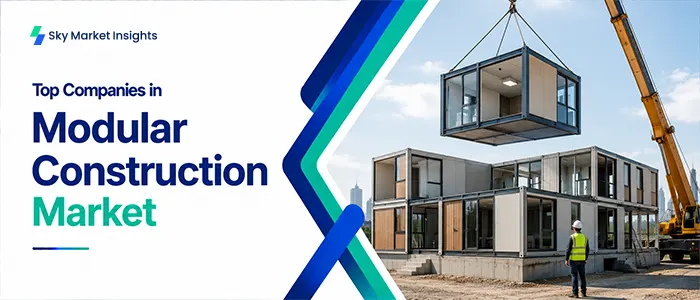
The Top 10 Leading Companies in Modular Construction Market are reshaping the building industry by combining off-site manufacturing, standardized components, digital design, and rapid on-site assembly. Modular construction covers prefabricated buildings, volumetric modules, relocatable structures, accommodation units, workforce facilities, healthcare buildings, educational facilities, and commercial spaces. The approach can reduce project timelines by approximately 30%–50% compared with conventional construction for suitable projects, while factory-controlled production can reduce material waste by around 20%–30%. Demand is particularly strong for workforce housing, healthcare infrastructure, education facilities, hotels, and temporary commercial buildings. For procurement teams, supplier selection increasingly depends on manufacturing capacity, geographic coverage, customization capabilities, installation expertise, material quality, and total project cost rather than module price alone.
Market Overview
The modular construction market has developed into a global supply ecosystem spanning specialized manufacturers, construction groups, equipment providers, and integrated building-service companies. Production ranges from standardized portable units to highly engineered volumetric modules manufactured under controlled factory conditions.
North America and Europe remain important markets for modular buildings, while Asia-Pacific is a major manufacturing and construction hub. North America accounts for an estimated 30%–35% of global modular construction demand, supported by housing shortages, workforce accommodation requirements, healthcare projects, and faster construction schedules. Europe represents approximately 25%–30%, driven by sustainability targets, labor constraints, urban development, and demand for energy-efficient buildings.
Pricing varies significantly according to specification. Basic relocatable modules can range from approximately USD 15,000–USD 40,000 per unit, while engineered residential, healthcare, education, and commercial modules can exceed USD 60,000–USD 150,000 per module. Premium projects involving advanced mechanical, electrical, plumbing, façade, fire-safety, and interior systems can command substantially higher project values.
The production model also creates procurement advantages. Factory manufacturing can improve dimensional consistency, shorten installation periods, and allow multiple modules to be produced simultaneously. For large projects, orders involving 100–500 modules can generate meaningful purchasing efficiencies through standardized components, bulk material procurement, and repeatable manufacturing processes.
Top 10 Leading Companies in Modular Construction Market
1. Guerdon Modular Buildings
Guerdon Modular Buildings is a major North American modular construction specialist with a strong position in large-scale commercial, multifamily, hospitality, education, and workforce accommodation projects. The company's portfolio includes volumetric modular buildings, multifamily housing, student accommodation, hotels, workforce facilities, and complex multi-story developments. Guerdon differentiates itself through large-module manufacturing capabilities and its ability to coordinate design, engineering, manufacturing, transportation, and installation. Its factory-based model supports repeatable production while reducing exposure to weather-related construction delays. The company is particularly relevant to developers and procurement teams seeking high-volume modular solutions rather than individual portable units. Its positioning in complex multifamily and hospitality projects allows it to compete on project speed, quality control, and scalability. Large developments can involve hundreds of modules, making production scheduling and logistics management key purchasing considerations.
2. Laing O'Rourke
Laing O'Rourke is a major engineering and construction group with extensive expertise in off-site manufacturing and Design for Manufacture and Assembly (DfMA). Its modular capabilities extend across healthcare, education, infrastructure, residential, and commercial construction. The company operates through an integrated model combining digital engineering, manufacturing, logistics, and on-site construction. Laing O'Rourke's off-site approach enables components and building systems to be manufactured under controlled factory conditions before being transported to project locations. This strategy supports consistent quality and improves construction productivity. The company has invested heavily in advanced manufacturing, automation, digital design, and standardized building systems. For procurement managers, its primary advantage is the ability to integrate modular components into large and technically demanding construction programs. Its scale and engineering expertise also make it suitable for projects where modularization must comply with complex structural, safety, and regulatory requirements.
3. ATCO

ATCO is a diversified infrastructure and modular construction company with extensive experience in workforce accommodation, relocatable buildings, site facilities, and permanent modular structures. Its portfolio serves energy, mining, construction, government, education, healthcare, and remote-site applications. ATCO's modular solutions include accommodation units, offices, kitchens, classrooms, washroom facilities, and integrated workforce camps. The company's major competitive advantage is its ability to support projects in challenging and remote environments where conventional construction can be expensive and time-consuming. Modular units can be manufactured centrally and transported to project sites, reducing the amount of on-site labor required. ATCO also provides integrated services covering design, manufacturing, transportation, installation, and facility support. For procurement teams, the company offers a broad supply capability and established logistics expertise. Its modular operations are particularly relevant for projects requiring dozens to several hundred units within compressed delivery schedules.
4. Red Sea International Company

Red Sea International Company is a Saudi Arabia-based specialist in modular buildings, prefabricated structures, and turnkey construction solutions. The company has strong exposure to the Middle East's industrial, commercial, infrastructure, oil and gas, and workforce accommodation markets. Its portfolio includes modular accommodation, site offices, camps, steel structures, and prefabricated facilities. Red Sea's regional positioning provides an advantage in projects requiring rapid deployment under demanding climatic and logistical conditions. The company combines engineering, manufacturing, project management, and installation capabilities, allowing customers to procure integrated solutions rather than separate building components. Its modular expertise is particularly relevant to large industrial developments and workforce housing programs. Procurement teams in the Middle East can benefit from localized project knowledge, regional logistics capabilities, and familiarity with local construction requirements. Its competitive position is strengthened by the region's demand for fast-deployment infrastructure.
5. Bouygues Construction

Bouygues Construction is a leading international construction group with extensive experience in industrialized construction, prefabrication, digital engineering, and modular building techniques. The company serves residential, commercial, healthcare, hospitality, infrastructure, and public-sector projects. Bouygues integrates modularization into broader construction programs rather than focusing exclusively on relocatable buildings. Its strategy emphasizes standardization, automation, digital modeling, and industrialized production to improve project efficiency. The company can leverage its international engineering and construction network to integrate prefabricated components into large projects. Its scale allows procurement teams to source engineering, construction, logistics, and installation through a coordinated delivery structure. Bouygues is particularly competitive where modular construction must meet demanding architectural, sustainability, and technical requirements. Its ability to manage complex projects with multiple subcontractors also provides value for developers seeking a single large-scale construction partner.
6. VINCI Construction Grands Projets

VINCI Construction Grands Projets operates within the broader VINCI construction ecosystem and focuses on technically complex international construction programs. Its modular and prefabrication capabilities support infrastructure, accommodation, commercial, industrial, and specialized building requirements. The company uses industrialized construction techniques to improve project coordination, productivity, and construction-site efficiency. VINCI's strength lies in combining modular approaches with major engineering and project-management capabilities. This makes it particularly suitable for large projects where modular components form part of a wider construction package. The company's global presence also supports procurement programs requiring international engineering standards and sophisticated supply-chain management. For buyers, key advantages include project integration, technical expertise, quality management, and access to an extensive construction network. Modularization can help VINCI reduce on-site activities and improve schedule control for projects involving repetitive building elements or standardized accommodation.
7. Skanska AB
Skanska AB is a major European and North American construction company that incorporates industrialized construction, prefabrication, modularization, and digital construction techniques across selected projects. Its portfolio spans commercial buildings, healthcare facilities, infrastructure, residential developments, and public projects. Skanska focuses heavily on sustainability, energy efficiency, construction productivity, and lifecycle performance. Modular and prefabricated solutions can support these objectives by improving material control and reducing construction-site waste. The company also uses digital design and building-information modeling to coordinate prefabricated components before manufacturing and installation. For procurement professionals, Skanska offers the advantage of combining modular techniques with large-scale construction management. Its sustainability-oriented positioning is particularly attractive to developers targeting green-building standards. Projects can benefit from factory-controlled manufacturing, standardized components, and reduced site disruption, especially in densely populated urban locations.
8. Algeco

Algeco is one of the best-known modular space providers, specializing in temporary and permanent modular buildings, site accommodation, offices, classrooms, healthcare facilities, and workforce solutions. The company operates across multiple European and international markets and maintains a large fleet of modular units available for rental, leasing, and sale. Its business model gives customers flexibility to scale facilities according to project requirements. Standard modules can be configured into larger buildings, allowing organizations to add or remove capacity as operational needs change. Algeco's strong recurring-revenue model is supported by modular rental and fleet-management services. Procurement teams benefit from shorter deployment cycles and reduced upfront investment compared with conventional construction. Standardized modules also simplify maintenance and replacement. With modular units often deployed for several months to multiple years, Algeco is particularly competitive in education, construction sites, healthcare, public-sector, and commercial applications.
9. KLEUSBERG GmbH & Co. KG
KLEUSBERG is a German modular construction specialist serving commercial, educational, healthcare, residential, and industrial customers. The company provides modular buildings, temporary structures, room modules, and prefabricated construction systems. Its production approach emphasizes factory manufacturing, standardized processes, energy efficiency, and flexible building configurations. KLEUSBERG can manufacture modules with integrated technical systems before delivery, helping reduce on-site installation work. The company has particular strength in the European market, where demand for sustainable construction and labor-efficient building systems continues to support modular adoption. Its product portfolio enables customers to create schools, offices, accommodation facilities, healthcare buildings, and other multi-room structures. For procurement managers, KLEUSBERG's key differentiators include engineering quality, German manufacturing standards, customization, and lifecycle efficiency. Modular construction can also help customers manage tight urban construction sites where minimizing on-site work is commercially important.
10. Katerra
Katerra was an American technology-driven construction company that pursued large-scale modular and off-site construction using vertically integrated design, manufacturing, and building processes. Its strategy centered on applying manufacturing principles to construction, including standardized components, digital design, automated production, and integrated supply chains. Although Katerra ceased operations in 2021, its role remains significant when analyzing the competitive development of modern modular construction. The company demonstrated both the potential and complexity of scaling construction manufacturing. Katerra invested heavily in factories, technology platforms, engineered wood products, and standardized building systems. Its experience highlighted the importance of factory utilization, project pipeline stability, logistics, working capital, and disciplined procurement. For today's market participants, Katerra provides a useful benchmark for understanding why successful modular construction requires not only advanced manufacturing but also reliable project volumes and strong execution across the entire construction value chain.
Competitive Landscape Insights
The competitive landscape is divided among specialized modular manufacturers, global construction companies, and modular rental providers. Specialized manufacturers such as Guerdon, ATCO, Algeco, and KLEUSBERG compete primarily on manufacturing capacity, customization, delivery speed, and modular-unit economics. Large construction groups such as Bouygues, VINCI, Skanska, and Laing O'Rourke compete through integrated engineering and construction capabilities.
An estimated 35%–40% of modular construction demand is concentrated in residential, workforce accommodation, and commercial applications, while education, healthcare, industrial, and temporary facilities account for substantial additional demand.
Pricing also varies by complexity. Standardized modules typically occupy the lower-cost segment, while premium engineered modules with integrated MEP systems, high-performance façades, and specialized interiors can cost 2–4 times more than basic units.
Supply-chain performance remains critical. Modules must be coordinated across factory production, transportation, lifting equipment, storage, and site installation. Procurement teams therefore increasingly evaluate suppliers using total delivered cost rather than factory pricing alone. Transportation distance, module dimensions, crane requirements, import duties, installation labor, and local regulations can materially affect final project costs.
The Top 10 Leading Companies in Modular Construction Market include specialized manufacturers such as Guerdon Modular Buildings, ATCO, Algeco, and KLEUSBERG, alongside global construction leaders including Laing O'Rourke, Bouygues Construction, VINCI Construction Grands Projets, and Skanska. Red Sea International provides strong regional expertise in the Middle East, while Katerra remains an important case study in industrialized construction.
For procurement and project-development teams, supplier selection should focus on manufacturing capacity, module quality, delivery reliability, customization, logistics infrastructure, installation capability, and lifecycle costs. As modular construction becomes increasingly integrated with digital engineering and factory-based production, companies that combine scale with supply-chain discipline are positioned to capture the strongest opportunities across residential, commercial, healthcare, education, industrial, and workforce applications.
If needed, I can also convert this into a market-research report format with 10 company profiles, key company facts, segmentation, and 5 short FAQs while keeping the same no-sources/no-CAGR requirement.
Author : Melva Cortez
Senior Market Research Analyst | 8 Years Experience | Smart Cities and Infrastructure Development
Melva Cortez is a market research analyst with 7–9 years of experience specializing in construction and infrastructure markets. Contributed to 70+ research reports for global clients. Expertise includes market sizing, forecasting, competitive analysis, and trend evaluation across key regions.