Top 10 Companies in Collectible Card Games Market: Leading Brands, Market Positioning, and Competitive Insights
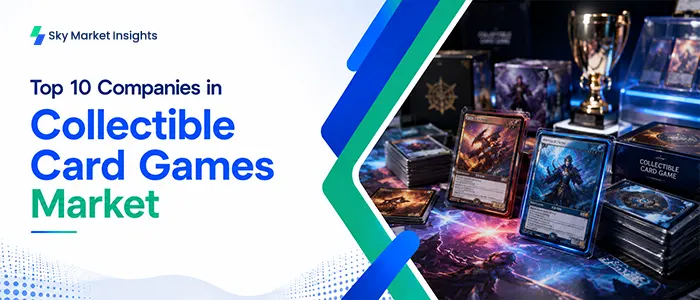
The Top Companies in Collectible Card Games Market are expanding the global trading and collectible card ecosystem through physical card products, competitive tournaments, digital platforms, licensed entertainment franchises, and community-driven gameplay. Collectible card games generate revenue through booster packs, starter decks, expansion sets, premium collections, digital purchases, tournaments, and licensed merchandise. The global market sells billions of individual cards annually, while leading franchises generate substantial revenue through recurring expansion releases and organized play programs. Physical collectible card games remain highly popular among hobbyists and collectors, while digital titles are expanding the market by providing continuous content updates and global accessibility. Leading companies are increasingly combining strong intellectual property with digital integration, esports, organized communities, and premium collectibles to strengthen their market positions.
Market Overview
The collectible card games market includes physical trading card games, strategic card games, collectible card products, digital card games, booster packs, expansion sets, and related accessories.
Physical collectible card games account for approximately 65% of total market revenue, while digital collectible and strategic card games contribute nearly 35%. North America and Asia-Pacific represent major markets, with Asia-Pacific accounting for approximately 40% of global player participation due to the strong popularity of anime, gaming, and trading card franchises.
A standard booster pack generally contains between 5 and 15 cards, depending on the franchise and product format. Retail prices commonly range from $4 to $15 per booster pack, while premium collector products can exceed $100 per box. Rare and highly sought-after individual cards can command prices of $1,000 or more, creating an additional secondary market for collectors and investors.
The market is increasingly driven by recurring expansion launches, organized tournaments, digital adaptations, licensed entertainment properties, and strong online communities.
Top 10 Leading Companies in Collectible Card Games Market
1. Wizards of the Coast (Hasbro)
.png)
Wizards of the Coast, a subsidiary of Hasbro, is one of the most influential companies among the Top Companies in Collectible Card Games Market. Its flagship Magic: The Gathering franchise has developed a global player and collector community through decades of expansion releases, tournament programs, digital platforms, and licensed collaborations. The company offers booster packs, starter products, collector editions, and digital gameplay through Magic: The Gathering Arena. Its strategy focuses on continuous content releases, competitive organized play, premium collectibles, and digital integration. Wizards of the Coast also benefits from Hasbro's broader entertainment and intellectual property ecosystem, supporting cross-franchise growth and global distribution.
2. The Pokémon Company

The Pokémon Company is one of the strongest brands in the global collectible card games industry, operating the Pokémon Trading Card Game alongside a vast entertainment, gaming, and merchandise ecosystem. The Pokémon TCG is distributed across international markets and attracts players, collectors, and franchise fans of different age groups. Its product portfolio includes booster packs, expansion sets, elite trainer products, special collections, and premium cards. The company's strategy focuses on regular content releases, character-driven collectibles, competitive tournaments, and cross-platform brand integration. Strong global recognition and limited-edition products support sustained consumer demand and a highly active secondary market.
3. Konami (Yu-Gi-Oh!)
.png)
Konami is a major participant in the collectible card games market through the globally recognized Yu-Gi-Oh! Trading Card Game. The franchise combines physical card collecting with competitive gameplay, digital platforms, anime content, and organized tournaments. Konami offers booster packs, structure decks, special editions, and collectible products across numerous international markets. Its strategy emphasizes frequent card releases, competitive tournament systems, digital versions, and long-term franchise engagement. The combination of established intellectual property and continuous gameplay innovation allows Konami to maintain a strong position among players and collectors while supporting multiple revenue streams across physical and digital formats.
4. Bandai / Bandai Namco

Bandai and Bandai Namco are major entertainment and gaming companies with strong positions in collectible card games through popular franchises such as One Piece Card Game, Dragon Ball Super Card Game, and other anime-related properties. Their product portfolios benefit from the popularity of Japanese animation, manga, and video game franchises. The companies use character licensing, competitive gameplay, collectible products, and international distribution to reach global audiences. Their strategy emphasizes franchise expansion, frequent product launches, organized events, and cross-media integration. Strong connections with anime and gaming communities provide significant advantages in attracting younger players and collectors.
5. Bushiroad

Bushiroad is a leading Japanese entertainment company specializing in trading card games, digital content, media, and live entertainment. Its collectible card game portfolio includes franchises such as Cardfight!! Vanguard and Weiß Schwarz, supported by anime, manga, tournaments, and extensive character-based content. Bushiroad operates across Asian and international markets and uses multimedia integration to strengthen player engagement. Its strategy focuses on developing card games alongside entertainment franchises, organized play, events, and digital media. This integrated approach creates recurring engagement and helps the company maintain a strong position within the anime-focused collectible card games segment.
6. Panini

Panini is a global collectibles company with a strong presence in trading cards, sports cards, stickers, and licensed collectible products. The company operates across international markets and benefits from partnerships involving major sports leagues, athletes, and entertainment properties. Panini's product portfolio includes collectible card sets, premium trading cards, limited editions, and sports-related releases. Its strategy focuses on licensing, rarity-based collecting, premium products, and global distribution. Sports fandom provides Panini with a broad customer base, while limited-edition cards and athlete collectibles support strong demand from collectors and enthusiasts.
7. Upper Deck

Upper Deck is a major collectible card company known for sports trading cards, entertainment properties, premium collectibles, and memorabilia. The company has developed a strong reputation for high-quality card design, limited editions, autographed cards, and memorabilia-based products. Its portfolio includes hockey, basketball, entertainment, and other licensed collectible categories. Upper Deck's strategy emphasizes premium product quality, scarcity, authentication, and strong relationships with sports and entertainment properties. The company targets dedicated collectors through high-value products and limited releases, strengthening its position in the premium segment of the collectible card market.
8. Blizzard/Activision (Hearthstone Digital)
.png)
Blizzard Entertainment, part of the broader Activision Blizzard ecosystem, is a major digital participant in the collectible card games market through Hearthstone. The digital card game combines strategic gameplay, frequent content expansions, competitive events, and online community engagement. Unlike physical card manufacturers, Blizzard generates revenue through digital card packs, in-game purchases, expansion content, and other virtual products. Its strategy emphasizes regular updates, live-service engagement, esports, seasonal events, and integration with the broader Warcraft universe. Hearthstone demonstrates the growing importance of digital platforms in expanding collectible card game accessibility and global participation.
9. Fantasy Flight / Asmodee

Fantasy Flight Games, part of the Asmodee ecosystem, develops strategy and collectible card games supported by strong storytelling, premium artwork, and established entertainment franchises. Its portfolio includes living card games and other expandable card-based experiences that provide players with recurring content releases. The company focuses on immersive gameplay, narrative depth, and high-quality physical products. Its strategy emphasizes licensed intellectual property, organized communities, expansion-based sales, and specialized hobby retail distribution. Fantasy Flight's position within the broader Asmodee group provides access to global publishing, distribution, and tabletop gaming networks.
10. Cygames (Shadowverse)
.png)
Cygames is a leading Japanese game developer and a significant participant in digital collectible card games through Shadowverse. The game combines strategic card-based gameplay with anime-inspired design, digital expansion releases, competitive tournaments, and a global online player community. Cygames generates revenue through digital card packs, in-game purchases, and ongoing content updates. Its strategy focuses on live-service development, esports, cross-media content, and continuous gameplay innovation. Shadowverse demonstrates how digital-first companies can compete in the collectible card games market by combining mobile accessibility, sophisticated game mechanics, and strong visual storytelling.
Competitive Landscape Insights
The Top Companies in Collectible Card Games Market compete across intellectual property strength, gameplay quality, product rarity, community engagement, organized tournaments, digital accessibility, and distribution reach.
Physical card games account for approximately 65% of market revenue, while digital platforms contribute nearly 35%. Major franchises benefit from recurring expansion releases, which encourage repeat purchases and maintain long-term player engagement.
Booster products typically range from $4 to $15, while premium collector boxes can exceed $100. The secondary market also plays an important role, with rare cards potentially selling for thousands of dollars depending on rarity, condition, demand, and franchise popularity.
The competitive landscape increasingly combines physical and digital experiences. Companies with strong intellectual property, active tournament communities, online marketplaces, digital gameplay, and cross-media partnerships are better positioned to sustain long-term consumer engagement.
The Top Companies in Collectible Card Games Market are building powerful ecosystems that combine gameplay, collecting, entertainment, digital platforms, and community engagement. Wizards of the Coast (Hasbro), The Pokémon Company, Konami, Bandai/Bandai Namco, Bushiroad, Panini, Upper Deck, Blizzard/Activision, Fantasy Flight/Asmodee, and Cygames represent leading companies across physical and digital collectible card games. Their competitive strategies range from globally recognized entertainment franchises and sports licensing to digital live-service platforms and anime-based gaming ecosystems. As collectors and players increasingly engage across physical and digital channels, companies that combine strong intellectual property, recurring content, premium products, and active communities are positioned to remain influential in the evolving collectible card games market.
Author : Mandy Davis
Senior Market Research Analyst | 9 Years Experience | Consumer Behavior and Premium Product Segments
Mandy Davis is a market research analyst with 7–9 years of experience specializing in consumer goods and services markets. Contributed to 70+ research reports for global clients. Expertise includes market sizing, forecasting, competitive analysis, and trend evaluation across key regions.