Europe Aloe Vera Market Size
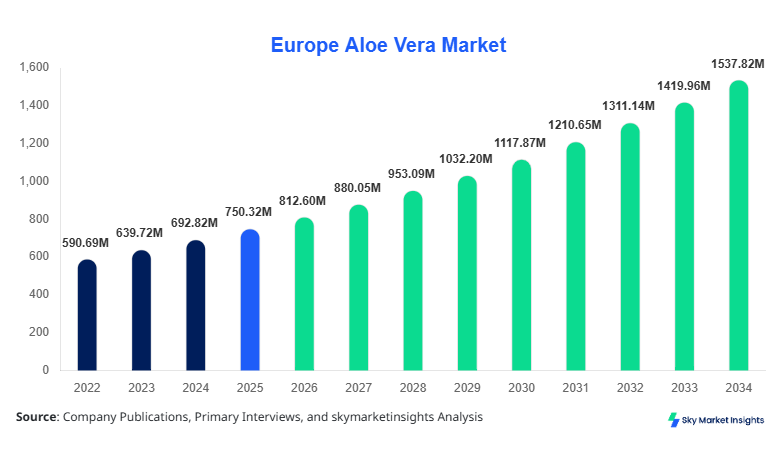
Europe Aloe Vera market size is projected at USD 812.6 million in 2026 and is expected to hit USD 1.54 billion by 2034 with a CAGR of 8.3%. The industry expansion is supported by rising consumption of botanical ingredients, increasing utilization of aloe-derived formulations in personal care products, and strong penetration of plant-based nutraceutical applications across Europe. The report evaluates quantitative production metrics, import-export volumes, consumption patterns, pricing benchmarks, and competitive positioning across the regional value chain. Increasing investments in processing facilities, advanced extraction technologies, and sustainable cultivation practices are further strengthening the regional competitive landscape while driving long-term industrial adoption across pharmaceutical, cosmetic, and beverage applications.
The aloe vera industry represents the commercial cultivation, extraction, formulation, processing, and distribution of aloe-derived ingredients including gels, concentrates, powders, and extracts utilized in food, cosmetics, pharmaceuticals, and nutraceutical products. Europe recorded more than 228 thousand metric tons of aloe vera raw material consumption in 2025, while processed aloe ingredient imports exceeded 142 thousand tons from Latin America, Africa, and Asia-Pacific suppliers. Cosmetics accounted for nearly 46% of overall application consumption, followed by pharmaceuticals at 31% and food & beverages at 23%. Adoption rates among premium skincare brands surpassed 62% in France, Germany, and Italy owing to increasing demand for natural moisturizing compounds, anti-inflammatory ingredients, and organic personal care products. Consumer analytics indicate that more than 58% of European consumers preferred botanical ingredients in skincare products during 2025, while functional beverage penetration containing aloe vera ingredients crossed 19% across urban retail channels. Industrial processing efficiency improved by 17% due to cold-stabilization extraction systems capable of maintaining polysaccharide retention above 92%, supporting stronger product performance across nutraceutical and pharmaceutical applications. Increased organic certification rates, rising vegan product launches, and elevated herbal ingredient penetration continue supporting Europe Aloe Vera market expansion.
In the France, the Aloe Vera Market accounted for approximately 24% of the regional revenue contribution in 2025 due to strong demand from cosmetic manufacturing, pharmaceutical processing, and premium nutraceutical sectors. The country operated more than 210 cosmetic formulation facilities utilizing aloe-derived ingredients, while over 430 nutraceutical brands incorporated aloe vera extracts into dietary supplements and wellness products. Cosmetics represented nearly 52% of domestic aloe ingredient demand, followed by pharmaceuticals at 27% and food applications at 21%. France processed close to 48 thousand metric tons of aloe vera derivatives during 2025, supported by import dependency from Mexico, Spain, and India. Technology adoption rates for cold-processing extraction systems exceeded 61% among premium skincare manufacturers to preserve active enzymes, amino acids, and bioactive polysaccharides. More than 44% of natural skincare launches in France during 2025 included aloe-based compounds due to increasing consumer preference for sulfate-free and paraben-free products. Expansion of certified organic product categories and rising herbal dermatology prescriptions continue reinforcing Europe Aloe Vera market penetration.
Explore more data points, trends and opportunities Download Free Sample Report
Aloe Vera Market Trends
Rising Adoption of Organic and Functional Aloe-Based Products
The increasing preference for organic wellness products has significantly accelerated aloe ingredient utilization across Europe. More than 36% of new cosmetic launches in 2025 incorporated certified botanical ingredients, while aloe-based skincare product introductions increased by 21% year-over-year. Functional beverage production containing aloe extracts exceeded 118 million liters across Europe during 2025, supported by rising consumer focus on digestive wellness and immunity enhancement. Germany, France, and the United Kingdom collectively represented over 63% of functional aloe beverage consumption. Premium cosmetic brands increased aloe ingredient procurement by 18% to support clean-label formulations and vegan-certified skincare products. Processing facilities adopting enzymatic stabilization technologies recorded nearly 14% improvement in shelf-life performance and 11% higher active compound retention. Increasing integration of aloe-derived polysaccharides in anti-aging serums, moisturizing gels, and dermatological creams continues strengthening the European aloe vera market expansion.
Technological Advancements in Extraction and Stabilization
Advanced extraction technologies are reshaping the operational structure of aloe ingredient manufacturing across Europe. More than 48% of regional processors adopted low-temperature extraction systems during 2025 to minimize nutrient degradation and improve bioactive compound preservation. High-pressure homogenization technologies improved aloe gel purity by approximately 16%, while membrane filtration systems enhanced concentration efficiency by nearly 22%. Pharmaceutical manufacturers increased utilization of pharmaceutical-grade aloe concentrates for wound healing and anti-inflammatory formulations, resulting in production volumes surpassing 31 thousand tons in 2025. Cosmetic laboratories across Italy, France, and Spain invested over USD 94 million in herbal extraction infrastructure modernization programs. The increasing deployment of traceability software, blockchain-enabled sourcing systems, and automated quality control mechanisms is improving supply chain transparency and supporting Europe's aloe vera market adoption.
Expansion of Herbal Nutraceutical Consumption
The nutraceutical sector remains one of the strongest demand generators for aloe-based ingredients across Europe. Aloe dietary supplement consumption exceeded 1.8 billion units in 2025, supported by rising health-conscious populations and increasing preventive healthcare expenditure. Approximately 41% of consumers purchasing herbal supplements preferred aloe-based digestive wellness formulations. Capsule and powder-based aloe nutraceuticals represented 39% of total nutraceutical application volume due to convenience and shelf stability advantages. Online herbal supplement sales increased by 27% across regional e-commerce platforms during 2025, while private-label nutraceutical launches incorporating aloe compounds grew by 19%. Growing investments in functional nutrition, expansion of herbal pharmacy networks, and increasing physician recommendations for botanical digestive support continue supporting Europe's aloe vera market penetration.
Europe Aloe Vera Drivers
Growing Consumer Preference for Natural and Organic Ingredients
The increasing transition toward plant-based wellness and natural personal care products is one of the primary growth stimulators across the regional industry. More than 64% of European consumers actively searched for natural ingredient labels in cosmetic and food products during 2025, while organic skincare retail sales surpassed USD 11.2 billion. Aloe-derived compounds gained substantial traction because of anti-inflammatory, antimicrobial, moisturizing, and digestive health properties. Pharmaceutical-grade aloe ingredient demand increased by 18% year-over-year across dermatological treatment applications. Europe imported more than 142 thousand tons of aloe raw materials and concentrates during 2025 to support rising industrial utilization. Cosmetic brands launched over 1,900 aloe-containing product variants across moisturizers, serums, sunscreens, shampoos, and facial cleansers. Food and beverage manufacturers also increased aloe utilization in wellness drinks, immunity beverages, and sugar-free health products, contributing nearly 23% of overall regional application consumption. Rising awareness regarding synthetic chemical side effects and increasing penetration of clean-label formulations continue driving Europe's aloe vera market expansion.
Europe Aloe Vera Restraints
High Dependence on Imported Raw Materials and Price Volatility
The regional industry remains heavily dependent on imported aloe raw materials due to limited large-scale cultivation capacity within Europe. More than 71% of processed aloe concentrates utilized by European manufacturers originated from Asia-Pacific and Latin American suppliers during 2025. Supply-chain disruptions, shipping inflation, agricultural yield fluctuations, and climatic uncertainties significantly affected procurement costs across processing companies. Average aloe concentrate prices increased by 13% between 2024 and 2025 due to transportation constraints and rising global demand. Smaller cosmetic and nutraceutical companies experienced margin pressure as raw material costs represented nearly 32% of total formulation expenditure. Additionally, inconsistent quality standards among international suppliers resulted in elevated rejection rates exceeding 9% across pharmaceutical-grade imports. Regulatory compliance costs associated with organic certifications, microbial testing, and preservative-free stabilization technologies also increased operational expenditure across manufacturing facilities. These pricing fluctuations and import dependency issues continue restraining Europe's aloe vera market scalability.
Europe Aloe Vera Opportunities
Expansion of Functional Beverage and Herbal Supplement Industries
The rapid expansion of functional nutrition and wellness beverages creates substantial opportunities for aloe ingredient manufacturers across Europe. Functional beverage consumption grew by approximately 14% during 2025, while aloe-enhanced hydration products gained strong traction among younger consumers aged 20–40 years. More than 118 million liters of aloe-based drinks were consumed regionally, with premium retail channels accounting for 47% of total sales. Nutraceutical investments exceeded USD 620 million across Europe during 2025, supporting the launch of digestive wellness, detoxification, immunity, and gut health supplements containing aloe compounds. Pharmaceutical firms are also investing in standardized aloe extracts for wound healing, topical anti-inflammatory formulations, and gastrointestinal health applications. E-commerce penetration for herbal wellness products crossed 38%, enabling broader consumer accessibility and faster product launches. Rising collaborations between ingredient suppliers and functional beverage brands continue generating strong European aloe vera market opportunities.
Challenges in Europe: Aloe Vera
Regulatory Compliance and Product Standardization Complexities
Stringent European regulatory frameworks surrounding botanical ingredients, organic labeling, food safety, and cosmetic formulations remain major operational challenges for manufacturers. More than 27% of aloe ingredient suppliers encountered delays in certification approvals during 2025 due to changing compliance standards related to preservatives, active compounds, and microbial thresholds. Pharmaceutical-grade aloe formulations require polysaccharide consistency above 85%, resulting in additional stabilization and quality assurance costs. Cosmetic brands operating across multiple countries also face varying documentation requirements for herbal ingredient registration and product testing. Approximately 18% of small-scale manufacturers reported increased compliance expenditure associated with REACH regulations, toxicological assessments, and organic traceability systems. Furthermore, concerns regarding adulterated aloe extracts and inconsistent purity standards negatively impacted consumer confidence across certain low-cost product categories. These regulatory and quality standardization complexities continue challenging Europe's aloe vera market development.
Report Scope
| Report Metric | Details |
|---|---|
| Market Size in 2025 | USD 750.32 Million |
| Market Size in 2026 | USD 812.6 Million |
| Market Size in 2034 | USD 1540 Million |
| CAGR | 8.3% (2026-2034) |
| Base Year for Estimation | 2025 |
| Historical Data | 2022-2024 |
| Forecast Period | 2026-2034 |
| Report Coverage | Revenue Forecast, Competitive Landscape, Supply Chain Disruption, Growth Factors, Environment & Regulatory Landscape and Trends |
Explore more data points, trends and opportunities Download Free Sample Report
Aloe Vera Market Segmentation
The industry is segmented by product type and application, with cosmetics accounting for nearly 46% of overall application demand while aloe vera gel represented approximately 49% of total processed ingredient consumption in 2025. Increasing utilization across pharmaceuticals, nutraceuticals, and food processing industries is expanding the operational footprint of aloe-based ingredients across Europe.
BY TYPE
Aloe vera gel dominated the regional product category with nearly 49% share due to extensive utilization in skincare, dermatology, beverages, and wellness formulations. Production volumes exceeded 112 thousand tons during 2025 owing to rising demand for moisturizing creams, anti-inflammatory lotions, and hydration beverages. Cold-stabilized aloe gels maintained bioactive retention above 90%, improving formulation efficacy and shelf-life performance. Cosmetic applications represented approximately 58% of aloe gel utilization because of high compatibility with premium skincare products. France and Germany accounted for nearly 44% of total gel processing activities due to advanced cosmetic manufacturing infrastructure and strong organic product penetration.
Aloe vera extract represented nearly 31% of regional consumption and is increasingly utilized in pharmaceutical and nutraceutical applications because of concentrated active compounds and enhanced functional performance. Pharmaceutical-grade extracts recorded purity levels above 95% polysaccharide concentration and were extensively utilized in wound healing creams, digestive support capsules, and dermatological therapies. Regional production volumes surpassed 68 thousand tons in 2025, while standardized extraction technologies improved concentration efficiency by nearly 18%. Italy and Spain emerged as key extract processing centers due to expanding herbal medicine industries and growing export activities.
Aloe vera powder accounted for approximately 20% of total product consumption due to superior shelf stability, ease of transportation, and high penetration in dietary supplements and powdered beverage formulations. Powder production exceeded 42 thousand tons during 2025, supported by increasing demand from nutraceutical manufacturers. Spray-drying technologies improved nutrient preservation rates by nearly 15%, while powder formulations reduced logistics costs by approximately 12% compared with liquid concentrates. Pharmaceutical and wellness supplement applications represented more than 61% of aloe powder utilization across Europe.
BY APPLICATION
Food & beverages accounted for approximately 23% of total application consumption in 2025 due to increasing demand for wellness drinks, digestive beverages, and herbal nutrition products. Aloe-based beverage production exceeded 118 million liters across Europe, with Germany, France, and the United Kingdom contributing nearly 66% of total regional consumption. Functional hydration products containing aloe ingredients experienced 17% annual sales expansion due to rising health-conscious populations and reduced sugar beverage preferences. Beverage manufacturers integrated aloe compounds with vitamins, probiotics, and botanical extracts to improve nutritional positioning and shelf differentiation.
Pharmaceutical applications represented nearly 31% of industry utilization because of increasing adoption in wound care, gastrointestinal treatment, dermatological creams, and anti-inflammatory products. Pharmaceutical-grade aloe formulations exceeded 54 thousand tons during 2025, while standardized extract utilization increased by approximately 16%. Dermatology applications contributed nearly 42% of pharmaceutical demand due to the growing incidence of skin sensitivity disorders and the increasing prescription of botanical therapeutic products. Germany and France remained major pharmaceutical consumption centers because of advanced healthcare infrastructure and rising herbal medicine integration.
Cosmetics remained the dominant application category, with approximately 46% share of total regional demand. More than 1,900 cosmetic product launches during 2025 incorporated aloe ingredients in moisturizers, anti-aging creams, serums, sunscreens, shampoos, and cleansing products. Cosmetic production facilities processed over 104 thousand tons of aloe compounds across Europe during 2025. Natural skincare penetration surpassed 58% in premium retail channels, while organic cosmetic product launches increased by 22% year-over-year. Advanced stabilization technologies improved aloe formulation compatibility and active ingredient preservation, enhancing product performance across luxury skincare brands.
Europe Aloe Vera Market Segmentations
Product Type
- Aloe Vera Gel
- Aloe Vera Extract
- Aloe Vera Powder
Application
- Food & Beverages
- Pharmaceuticals
- Cosmetics
Europe Aloe Vera Regional Outlook
United Kingdom
The United Kingdom accounted for nearly 17% of regional revenue contribution during 2025 due to increasing nutraceutical consumption and rising demand for premium botanical skincare products. Aloe beverage consumption exceeded 21 million liters, while more than 340 wellness supplement brands incorporated aloe-derived compounds into digestive health and immunity products. Cosmetics represented approximately 43% of domestic application demand, followed by pharmaceuticals at 33%. Online herbal product sales increased by 29% across UK retail platforms during 2025, supporting broader consumer penetration.
Germany
Germany represented approximately 22% of regional industry consumption owing to strong pharmaceutical infrastructure and advanced nutraceutical manufacturing capacity. The country processed more than 51 thousand tons of aloe ingredients during 2025 across pharmaceutical, cosmetic, and functional beverage applications. Pharmaceutical applications accounted for nearly 38% of domestic utilization because of rising demand for botanical therapeutic formulations and dermatological products. Germany also led regional investments in advanced extraction technologies, accounting for nearly 31% of industrial automation expenditure across aloe processing facilities.
France
France remained the leading regional contributor with approximately a 24% share due to strong cosmetic production and premium skincare consumption. More than 210 cosmetic manufacturing facilities utilized aloe compounds in moisturizers, anti-aging creams, and dermatological products. Cosmetics represented 52% of domestic aloe ingredient demand, while nutraceutical applications contributed 24%. France processed approximately 48 thousand metric tons of aloe derivatives during 2025 and invested heavily in organic certification and cold-processing technologies to strengthen premium skincare positioning.
Spain
Spain accounted for nearly 13% of regional demand and emerged as a strategic processing and re-export hub for aloe ingredients. Domestic cultivation and processing activities exceeded 34 thousand tons during 2025 due to favorable climatic conditions supporting aloe farming operations. Cosmetic applications represented nearly 44% of total domestic utilization, while pharmaceutical applications accounted for 29%. Spain also expanded exports of organic aloe extracts to Germany, France, and Italy, contributing significantly to regional supply-chain integration.
Italy
Italy contributed approximately 12% of overall regional consumption because of growing herbal cosmetic production and expanding nutraceutical sectors. More than 160 cosmetic laboratories incorporated aloe-derived compounds into luxury skincare formulations during 2025. Italy processed nearly 26 thousand tons of aloe concentrates and extracts, while herbal supplement production exceeded 190 million units. Rising consumer preference for vegan-certified personal care products accelerated aloe ingredient penetration across premium retail channels.
Russia
Russia accounted for nearly 8% of regional consumption due to increasing pharmaceutical utilization and expanding wellness product distribution. Herbal medicine demand increased by approximately 14% during 2025, while aloe supplement consumption exceeded 110 million units. Pharmaceutical applications represented nearly 41% of domestic aloe utilization because of growing demand for topical therapeutic products and digestive formulations. Import dependency remained high, with more than 76% of aloe ingredients sourced from international suppliers.
Top players in Europe Aloe Vera
- Forever Living Products
- LR Health & Beauty
- Herbalife Nutrition
- Aloe Plus Lanzarote
- Lily of the Desert
- Terry Laboratories
- Aloe Farms Inc.
- Natural Aloe Costa Rica
- Aloe Vera Australia
- Patanjali Ayurved
- Aloe Laboratories
- Pharmachem Laboratories
- Foodchem International Corporation
- AloeCorp Inc.
- Real Aloe Solutions
Forever Living Products
-
Estimated regional market positioning exceeded 11% within branded aloe, wellness, and cosmetic distribution channels.
-
Operates extensive vertically integrated sourcing and processing systems across multiple international cultivation centers.
-
The company expanded European nutraceutical distribution by approximately 18% during 2025 through wellness product diversification and digital retail expansion.
-
Maintains strong penetration in premium aloe beverages, supplements, and skincare products across France, Germany, and the United Kingdom.
-
Investment in advanced stabilization technologies improved product shelf life by nearly 14% while supporting higher active compound preservation.
Herbalife Nutrition
-
Accounted for nearly 8% share within aloe-based dietary supplement and wellness beverage segments across Europe.
-
Increased aloe supplement production capacity by approximately 16% during 2025 due to rising consumer demand for digestive wellness products.
-
The company strengthened regional e-commerce distribution networks, resulting in online aloe product sales growth exceeding 21%.
-
Expanded functional beverage portfolios incorporating aloe concentrates and botanical extracts across multiple European retail channels.
-
Continued investment in scientific validation and nutritional research improved product credibility and supported stronger retail penetration.
Investment Analysis
Investments across the regional industry exceeded USD 1.2 billion between 2024 and 2026, with approximately 38% allocated toward cosmetic ingredient processing facilities and 29% directed toward nutraceutical manufacturing expansion. France, Germany, and the United Kingdom collectively accounted for nearly 67% of total regional investment inflows due to advanced personal care and pharmaceutical industries. Extraction technology modernization projects represented approximately 22% of industrial capital expenditure as companies focused on enhancing bioactive retention, purity standards, and operational efficiency.
Mergers, acquisitions, and strategic collaborations increased substantially during 2025 as ingredient suppliers sought vertical integration and geographic expansion. More than 26 partnership agreements were recorded between aloe processors, cosmetic manufacturers, and nutraceutical companies across Europe. Pharmaceutical firms increased investments in standardized aloe extract development for wound healing and dermatological applications, while beverage manufacturers expanded partnerships with botanical ingredient suppliers to support functional drink launches. Private equity participation in herbal wellness brands increased by nearly 18% year-over-year due to rising consumer preference for plant-based health products. Regional governments also supported agricultural sustainability initiatives and organic cultivation projects, contributing approximately 9% of total investment allocations across the industry.
New Product Developments
Product innovation remained strong across the regional industry, with more than 1,900 new cosmetic and wellness products incorporating aloe compounds launched during 2025. Approximately 34% of newly introduced botanical skincare formulations included aloe-derived ingredients because of their moisturizing and anti-inflammatory properties. Advanced stabilization technologies improved active compound retention by nearly 15%, while preservative-free aloe gels increased shelf-life performance by approximately 12%.
Functional beverage manufacturers launched sugar-free aloe hydration products with vitamin fortification and probiotic integration, supporting nearly 19% improvement in wellness beverage sales performance. Nutraceutical companies also introduced concentrated aloe capsules and powder formulations targeting digestive wellness, immunity enhancement, and detoxification applications. Innovation in cold-processing extraction technologies enhanced polysaccharide preservation rates above 92%, improving formulation efficacy across pharmaceutical and cosmetic applications.
Recent Developments in Europe Aloe Vera
- 2025: Major cosmetic manufacturers in France increased aloe ingredient procurement by approximately 18% following rising consumer demand for botanical skincare products. More than 320 premium skincare launches incorporated aloe-based moisturizing compounds and anti-inflammatory extracts, improving natural cosmetic category sales by nearly 21% across regional retail channels.
- 2025: Spanish aloe processing companies invested over USD 68 million in advanced cold-stabilization extraction systems capable of improving bioactive retention by nearly 17%. Processing efficiency improvements supported stronger export activities across France, Germany, and Italy while reducing ingredient wastage rates by approximately 11%.
- 2025: Pharmaceutical firms across Europe increased investments in standardized aloe therapeutic formulations targeting wound healing and dermatological applications. Pharmaceutical-grade aloe extract production expanded by approximately 16%, while clinical research expenditure related to herbal anti-inflammatory compounds increased by nearly 13%.
Research Methodology
The research process for this report involved comprehensive primary and secondary investigation methodologies to evaluate production volumes, industrial demand patterns, technological adoption, pricing structures, and competitive positioning across Europe. Primary research included interviews with aloe ingredient suppliers, cosmetic manufacturers, nutraceutical companies, pharmaceutical formulators, distributors, agricultural experts, and regulatory authorities operating across France, Germany, the United Kingdom, Spain, Italy, and Russia. More than 65 industry participants contributed quantitative and qualitative insights related to capacity expansion, procurement trends, and application demand dynamics.
Secondary research included assessment of trade databases, annual reports, investor presentations, regulatory publications, import-export statistics, agricultural production records, company press releases, and industry association data. Market size estimation utilized bottom-up and top-down analytical approaches incorporating production capacity analysis, consumption benchmarking, pricing evaluation, and application-wise penetration mapping. Forecast modeling integrated macroeconomic indicators, consumer preference trends, technological advancements, herbal wellness expenditure patterns, and regulatory developments across regional industries. Statistical triangulation and validation frameworks were applied to ensure consistency, reliability, and accuracy of quantitative market assessments across all evaluated segments and countries.
Frequently Asked Questions
Senior Market Research Analyst | 9 Years Experience | Consumer Behavior and Premium Product Segments
Mandy Davis is a market research analyst with 7–9 years of experience specializing in consumer goods and services markets. Contributed to 70+ research reports for global clients. Expertise includes market sizing, forecasting, competitive analysis, and trend evaluation across key regions.