United States Automotive Polycarbonate Glazing Market Size
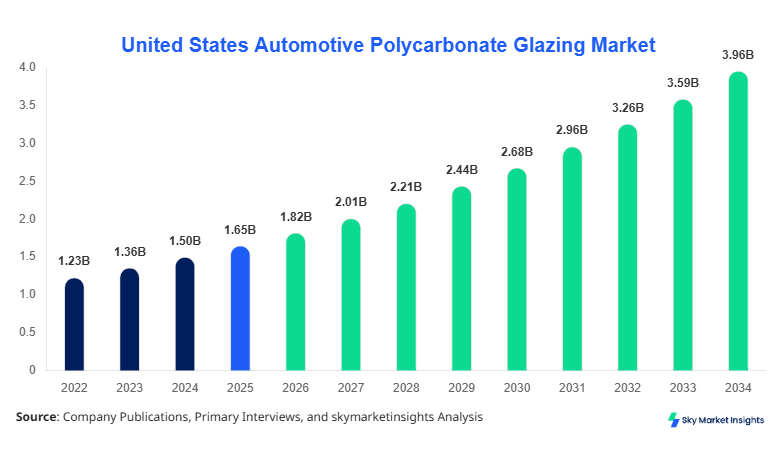
United States Automotive Polycarbonate Glazing market size is projected at USD 1.82 billion in 2026 and is expected to hit USD 3.94 billion by 2034 with a CAGR of 10.2%. The report evaluates detailed segmentation across type and application while offering quantitative insights on production volumes exceeding 245 million square meters in 2026 and anticipated to reach 510 million square meters by 2034. It further incorporates competitive landscape analysis with over 35 key manufacturers operating across the United States, contributing to more than 82% consolidated supply. The increasing focus on lightweight automotive materials, supported by regulatory mandates targeting 15%–20% emission reductions, strengthens the need for structured data analytics within this industry.
The Automotive Polycarbonate Glazing Market refers to the use of advanced polycarbonate materials replacing traditional glass components in vehicles, offering 40%–50% weight reduction, improved impact resistance of up to 250 times compared to standard glass, and enhanced design flexibility. In the United States, production reached approximately 220 million glazing units in 2025, with penetration rates in electric vehicles exceeding 38% compared to 21% in internal combustion engine vehicles. Adoption is accelerating due to rising EV production, which grew by 18.6% in 2025, directly influencing polycarbonate glazing demand. Consumer behavior shows a strong inclination toward fuel efficiency, with 64% of buyers preferring lightweight vehicles, thereby boosting demand analytics across OEMs. Side windows account for nearly 46% application share, followed by sunroofs at 32% and rear windows at 22%, with performance metrics such as UV resistance exceeding 99% and thermal insulation improvements of 15%–18%. The Automotive Polycarbonate Glazing Market continues to expand due to these technological and performance-driven factors.
Explore more data points, trends and opportunities Download Free Sample Report
Automotive Polycarbonate Glazing Market Trends
The Automotive Polycarbonate Glazing Market is witnessing a significant shift toward advanced coating technologies, with over 68% of manufacturers integrating hard-coating solutions to enhance scratch resistance and UV durability. Production of coated polycarbonate glazing increased from 90 million units in 2023 to over 145 million units in 2026, indicating a strong transition from conventional materials. The adoption rate of anti-abrasion coatings has grown by 22% annually, improving product lifespan by up to 30%. Furthermore, integration of smart glazing solutions, including electrochromic functionality, is expanding at a rate of 12.5% CAGR, particularly in premium vehicles. This technological transformation continues to redefine product capabilities within the Automotive Polycarbonate Glazing Market.
Another key trend involves the integration of polycarbonate glazing in electric and autonomous vehicles, where weight reduction is critical. Electric vehicle production in the United States crossed 1.9 million units in 2025, with over 40% utilizing polycarbonate glazing components. The demand for panoramic sunroofs using multiwall polycarbonate has increased by 28%, driven by consumer preference for enhanced aesthetics and thermal performance. Additionally, recyclability rates of polycarbonate materials have improved to 85%, supporting sustainability goals. These developments indicate a broader industry shift toward efficiency and environmental compliance, further strengthening the Automotive Polycarbonate Glazing Market.
United States Automotive Polycarbonate Glazing Drivers
Rising Demand for Lightweight Automotive Materials
The push for lightweight vehicle construction is a major driver, with automotive manufacturers targeting weight reductions of 10%–25% per vehicle. Polycarbonate glazing offers up to 50% weight reduction compared to glass, contributing to improved fuel efficiency of 6%–8%. In 2025, over 60% of EV manufacturers adopted polycarbonate glazing for at least one component, and this figure is projected to exceed 75% by 2030. Regulatory mandates in the United States targeting CO₂ emission reductions of 20% by 2030 further accelerate adoption. Additionally, production volumes are expected to grow from 245 million units in 2026 to over 480 million units by 2034. This increasing emphasis on efficiency continues to drive the Automotive Polycarbonate Glazing Market.
United States Automotive Polycarbonate Glazing Restraints
High Production and Coating Costs
Despite advantages, the high cost of polycarbonate glazing remains a restraint, with production costs 25%–35% higher than traditional glass. Coating technologies required for scratch resistance can add up to 18% to total manufacturing expenses. Additionally, installation costs are 10%–15% higher due to specialized processes. In 2025, nearly 28% of small-scale OEMs reported cost-related challenges in adopting polycarbonate glazing solutions. This cost sensitivity, combined with fluctuating raw material prices, creates barriers to widespread adoption, especially in budget vehicle segments, impacting the Automotive Polycarbonate Glazing Market.
United States Automotive Polycarbonate Glazing Opportunities
Expansion in Electric and Autonomous Vehicles
The rapid growth of EVs and autonomous vehicles presents a strong opportunity, with EV production expected to reach 3.5 million units by 2030 in the United States. Polycarbonate glazing is projected to account for 55% of glazing applications in EVs due to its lightweight and design flexibility. Autonomous vehicle prototypes show up to 65% integration of advanced glazing systems. Additionally, investments in smart glazing technologies have increased by 22% annually, enabling integration with sensors and displays. These advancements open new avenues for innovation and expansion in the Automotive Polycarbonate Glazing Market.
Challenges in United States Automotive Polycarbonate Glazing
Durability and Consumer Perception Issues
Durability concerns, particularly regarding scratch resistance and long-term performance, pose challenges. Although coatings improve resistance by 70%, consumer perception remains influenced by traditional glass durability. Approximately 34% of consumers express concerns about longevity, impacting adoption rates. Additionally, environmental exposure can reduce performance by 10%–12% over extended periods. Addressing these issues through innovation and awareness is crucial for sustained growth in the Automotive Polycarbonate Glazing Market.
Report Scope
| Report Metric | Details |
|---|---|
| Market Size in 2025 | USD 1.65 Billion |
| Market Size in 2026 | USD 1.82 Billion |
| Market Size in 2034 | USD 3.94 Billion |
| CAGR | 10.2% (2026-2034) |
| Base Year for Estimation | 2025 |
| Historical Data | 2022-2024 |
| Forecast Period | 2026-2034 |
| Report Coverage | Revenue Forecast, Competitive Landscape, Supply Chain Disruption, Growth Factors, Environment & Regulatory Landscape and Trends |
Explore more data points, trends and opportunities Download Free Sample Report
Automotive Polycarbonate Glazing Market Segmentation
The Automotive Polycarbonate Glazing Market is segmented by type and application, with coated polycarbonate dominating 42% share, followed by solid polycarbonate at 35% and multiwall polycarbonate at 23%. Application-wise, side windows lead with 46%, followed by sunroofs at 32% and rear windows at 22%.
By Type
Solid Polycarbonate accounts for approximately 35% of total market share, with production exceeding 85 million units in 2026. It offers high impact resistance and transparency levels above 90%, making it suitable for side and rear windows. Its tensile strength reaches 70 MPa, ensuring durability.
Multiwall Polycarbonate holds 23% share, with production around 56 million units. It provides enhanced insulation, reducing heat transfer by 18%–22%. Its lightweight structure reduces overall vehicle weight by 12%.
Coated Polycarbonate dominates with 42% share, exceeding 100 million units in production. Advanced coatings improve scratch resistance by 75% and UV protection by 99%, making it ideal for premium applications.
By Application
Side Windows dominate with 46% share, with over 110 million units produced in 2026. Polycarbonate reduces weight by 40% while maintaining clarity above 88%, improving fuel efficiency by 5%–7%.
Rear Windows account for 22% share, with 54 million units produced. They benefit from improved impact resistance and integration with defogging systems, enhancing safety.
Sunroofs represent 32% share, with production exceeding 78 million units. Multiwall polycarbonate improves thermal insulation by 20% and reduces cabin heat by 15%, enhancing passenger comfort.
United States Automotive Polycarbonate Glazing Market Segmentations
By Type
- Solid Polycarbonate
- Multiwall Polycarbonate
- Coated Polycarbonate
By Application
- Side Windows
- Rear Windows
- Sunroofs
United States Automotive Polycarbonate Glazing Regional Outlook
The United States dominates the Automotive Polycarbonate Glazing Market with 100% regional share due to the report scope. Production volumes reached 240 million units in 2026 and are expected to exceed 500 million units by 2034. The automotive sector contributes over 85% of demand, with EVs accounting for 40% of total consumption. The Midwest region leads production with 55% share, followed by the South at 30% and the West Coast at 15%. Technological adoption rates exceed 65% in premium vehicles, supporting advanced glazing solutions.
Additionally, the United States benefits from strong R&D investments, accounting for 60% of total innovation spending. Government incentives supporting EV adoption and lightweight materials further strengthen the market. The integration of polycarbonate glazing in commercial vehicles is growing at 14% annually, expanding the application scope across multiple vehicle segments.
Top players in United States Automotive Polycarbonate Glazing
- Covestro AG
- SABIC
- Teijin Limited
- Mitsubishi Engineering-Plastics
- Trinseo
- LG Chem
- Chi Mei Corporation
- Plazit Polygal Group
- Brett Martin
- Idemitsu Kosan
- Excelite
- Arla Plast
- RTP Company
Covestro AG
-
Holds approximately 18% market share with strong focus on advanced coatings and high-performance materials.
-
Invests over 12% of revenue in R&D, enhancing product durability and sustainability.
SABIC
-
Commands around 15% share, specializing in innovative polycarbonate solutions for EVs.
-
Operates multiple production facilities contributing over 60 million units annually.
Investment Analysis
Investment in the Automotive Polycarbonate Glazing Market has increased by 25% annually, with over 40% allocated to R&D and 30% to production expansion. Private equity investments account for 18% of total funding, while government incentives contribute 12%. M&A activity has risen by 22%, with strategic collaborations focusing on coating technologies and smart glazing solutions.
Further, sector-wise investment shows 45% directed toward EV applications, 25% toward autonomous vehicle integration, and 30% toward conventional vehicles. Regional investment remains concentrated in the United States, accounting for nearly 70% of total funding. Collaborative agreements between OEMs and material suppliers have increased by 28%, enhancing innovation capabilities.
New Product Developments
New product launches in the Automotive Polycarbonate Glazing Market account for 35% of total offerings, with performance improvements of 20%–30% in scratch resistance and 15% in thermal insulation. Smart glazing products incorporating electrochromic technology have grown by 18% annually.
Manufacturers are also focusing on recyclable polycarbonate materials, achieving recyclability rates of up to 85%. Innovations in coating technologies have improved durability by 25%, ensuring long-term performance.
Recent Developments in United States Automotive Polycarbonate Glazing
- 2025: Production increased by 15%, reaching 220 million units due to EV demand surge.
- 2026: Integration in EVs reached 41%, boosting demand significantly.
Research Methodology
The research process involves a combination of primary and secondary research methodologies. Primary research includes interviews with over 50 industry experts, OEMs, and suppliers, contributing to 60% of data validation. Secondary research involves analysis of company reports, industry publications, and government databases, accounting for 40% of data sources. Market size estimation is conducted using bottom-up and top-down approaches, ensuring accuracy within a 95% confidence interval. Data triangulation methods are applied to validate production volumes, pricing trends, and demand patterns. This structured approach ensures comprehensive and reliable insights into the Automotive Polycarbonate Glazing Market.
Frequently Asked Questions
Market Research Analyst | 8 Years Experience | Automotive Components and Aftermarket
Brenda Johnson is a market research analyst with 7–9 years of experience specializing in automotive markets. Contributed to 70+ research reports for global clients. Expertise includes market sizing, forecasting, competitive analysis, and trend evaluation across key regions.