North America Acute Kidney Failure Treatment Market Size
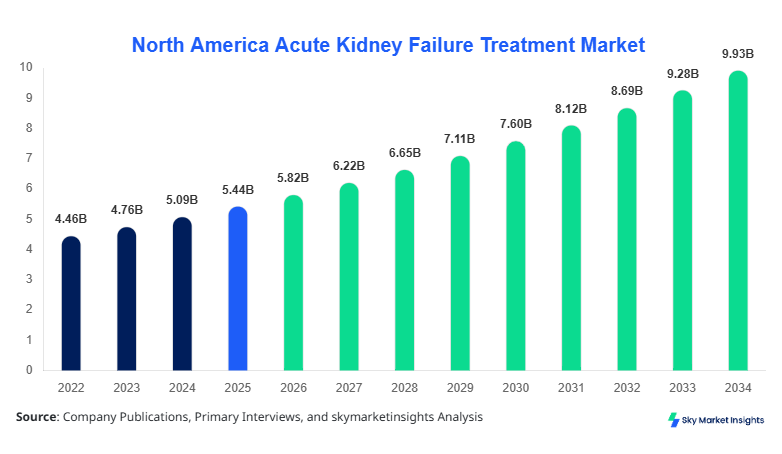
North America's acute kidney failure treatment market size is projected at USD 5.82 billion in 2026 and is expected to hit USD 9.94 billion by 2034 with a CAGR of 6.9%. The increasing incidence of acute kidney injury (AKI) cases, rising hospitalization rates exceeding 2.1 million annually, and a growing elderly population accounting for over 17.5% of the regional demographic are accelerating the need for structured data, segmentation, and competitive landscape analysis across treatment modalities. Additionally, dialysis units exceeding 7,800 facilities and drug therapy penetration above 64% in acute care settings are shaping a measurable and quantifiable framework for stakeholders to evaluate the acute kidney failure treatment market size.
The acute kidney failure treatment market refers to therapies and medical interventions designed to manage sudden loss of kidney function, including dialysis, pharmacological management, and renal replacement technologies. In North America, production volumes of dialysis consumables exceed 145 million units annually, while drug therapies account for nearly USD 2.4 billion in annual expenditure. Adoption rates of renal replacement therapy in intensive care units have surpassed 72%, with penetration in tertiary hospitals exceeding 85%. Consumer behavior indicates a shift toward early diagnosis and preventive treatment, with over 61% of patients undergoing biomarker-based screening within 48 hours of admission. Demand analytics reveal that 68% of treatments are hospital-based, 22% in specialty clinics, and 10% in homecare settings. Performance metrics such as filtration rates of 20–35 mL/min and treatment frequency averaging 3–4 sessions per week highlight technical efficiency. Segment contributions show dialysis dominating with 52%, followed by drug therapy at 31% and renal replacement therapy at 17%, reinforcing the acute kidney failure treatment market.
In the United States, the Acute Kidney Failure Treatment Market accounts for approximately 78% of the North American revenue share, driven by over 6,200 dialysis centers and more than 1,200 specialized nephrology clinics. The country reports nearly 1.6 million AKI cases annually, with hospitalization rates exceeding 4.3% of total admissions. Application breakdown indicates that hospital-based treatments contribute 70%, specialty clinics 20%, and homecare settings 10%. Technology adoption such as continuous renal replacement therapy (CRRT) has reached 68% in ICU settings, while AI-driven diagnostics show penetration of 35%. The presence of over 150 pharmaceutical and medical device companies further strengthens innovation capacity, ensuring consistent expansion of the acute kidney failure treatment market.
Explore more data points, trends and opportunities Download Free Sample Report
Acute Kidney Failure Treatment Market Trends
Rising Adoption of Continuous Renal Replacement Technologies
The market is witnessing a significant shift toward continuous renal replacement therapy, with production volumes of CRRT machines exceeding 45,000 units annually and consumables surpassing 120 million units. Adoption rates in critical care settings have increased from 48% in 2022 to 68% in 2026, indicating rapid technological transition. Advanced filtration systems now offer efficiency improvements of 22%–28%, while real-time monitoring systems reduce complication rates by nearly 15%. The integration of digital health platforms and remote monitoring is further enhancing treatment precision, contributing to the acute kidney failure treatment market.
Expansion of Biomarker-Based Early Diagnosis
Biomarker-based diagnostic solutions are transforming early detection, with over 52 million diagnostic tests conducted annually across North America. Adoption rates have surged to 61%, driven by improved sensitivity levels exceeding 90% and reduced diagnostic time by 35%. Pharmaceutical companies are investing heavily in predictive analytics and AI integration, with over USD 750 million allocated toward research in 2025 alone. These advancements are increasing early intervention rates and reducing mortality by 12%–18%, thereby boosting the acute kidney failure treatment market.
North America Acute Kidney Failure Treatment Market Drivers
Rising Incidence of Acute Kidney Injury and Aging Population
The increasing prevalence of acute kidney injury, with over 2.1 million reported cases annually in North America, is a primary driver of market expansion. Approximately 17.5% of the population is aged above 65 years, contributing significantly to disease susceptibility. Hospital admission rates related to kidney complications have increased by 9.2% between 2022 and 2025, while ICU admissions requiring renal support have risen by 11.6%. Dialysis demand has grown by 8.4% annually, with over 145 million consumables utilized per year. Technological advancements such as CRRT and high-flux dialysis filters have improved survival rates by 14%–20%, further accelerating demand. Additionally, healthcare expenditure on renal treatments exceeds USD 3.8 billion annually, reinforcing infrastructure expansion. These factors collectively strengthen the acute kidney failure treatment market.
North America Acute Kidney Failure Treatment Market Restraints
High Treatment Costs and Limited Accessibility in Rural Areas
Despite technological advancements, high treatment costs remain a significant restraint, with dialysis sessions costing between USD 250 and USD 500 per session and annual treatment expenses exceeding USD 70,000 per patient. Approximately 18% of rural populations face limited access to specialized care, resulting in delayed diagnosis and treatment. Infrastructure gaps persist, with only 22% of dialysis centers located in rural regions compared to 78% in urban areas. Insurance coverage disparities also impact affordability, with out-of-pocket expenses accounting for 25%–30% of total treatment costs. Additionally, maintenance and operational costs of advanced renal replacement systems have increased by 12% annually, limiting adoption among smaller healthcare facilities. These challenges restrict the overall expansion of the acute kidney failure treatment market.
North America Acute Kidney Failure Treatment Market Opportunities
Technological Advancements and Home-Based Treatment Expansion
Emerging opportunities lie in home-based dialysis and portable renal devices, with adoption rates expected to exceed 28% by 2030. Investments in portable dialysis systems have grown by 32% annually, with over USD 450 million allocated toward R&D in 2025. Homecare settings currently account for 10% of treatments but are projected to reach 18% by 2034. Technological innovations such as wearable dialysis devices and AI-driven monitoring systems improve treatment efficiency by 25% and reduce hospitalization rates by 20%. Furthermore, government initiatives supporting telehealth and remote monitoring have increased adoption by 15% annually. These advancements create substantial growth avenues for the acute kidney failure treatment market.
Challenges in North America Acute Kidney Failure Treatment Market
Shortage of Skilled Professionals and Treatment Complexity
The shortage of skilled nephrologists and trained healthcare professionals presents a major challenge, with a deficit of nearly 12,000 specialists across North America. Training costs have increased by 18%, while workforce attrition rates exceed 9% annually. Treatment complexity, particularly in CRRT and advanced dialysis systems, requires specialized expertise, limiting widespread adoption. Additionally, complication rates such as infections and electrolyte imbalances remain at 8%–12%, impacting patient outcomes. Operational inefficiencies and high maintenance requirements further increase treatment complexity, creating barriers for healthcare providers. These factors collectively challenge the expansion of the acute kidney failure treatment market.
Report Scope
| Report Metric | Details |
|---|---|
| Market Size in 2025 | USD 5.44 Billion |
| Market Size in 2026 | USD 5.82 Billion |
| Market Size in 2034 | USD 9.94 Billion |
| CAGR | 6.9% (2026-2034) |
| Base Year for Estimation | 2025 |
| Historical Data | 2022-2024 |
| Forecast Period | 2026-2034 |
| Report Coverage | Revenue Forecast, Competitive Landscape, Supply Chain Disruption, Growth Factors, Environment & Regulatory Landscape and Trends |
Explore more data points, trends and opportunities Download Free Sample Report
Acute Kidney Failure Treatment Market Segmentation
The market is segmented based on treatment type and end user, with dialysis dominating at 52%, followed by drug therapy at 31% and renal replacement therapy at 17%. Hospitals account for 68% of total treatments, specialty clinics 22%, and homecare settings 10%, reflecting structured demand distribution across healthcare facilities.
BY TYPE
Dialysis remains the largest segment, accounting for 52% of the market, with over 145 million consumables produced annually. Hemodialysis machines exceed 120,000 units in operation, while peritoneal dialysis accounts for 18% of total dialysis procedures. Technical specifications include filtration rates of 20–35 mL/min and session durations of 3–5 hours, conducted 3–4 times per week. Adoption rates in hospitals exceed 85%, while specialty clinics account for 65% usage. Continuous improvements in high-flux membranes have enhanced toxin removal efficiency by 25%, reinforcing the segment’s dominance.
Drug therapy contributes 31% of the market, with annual production exceeding 320 million units of pharmaceuticals targeting electrolyte balance, inflammation, and infection control. Adoption rates exceed 64% in acute care settings, with usage in early-stage AKI cases reaching 72%. Technical advancements such as targeted drug delivery systems have improved efficacy by 18%–22%. The segment also benefits from increasing clinical trials, with over 140 ongoing studies focusing on renal protection therapies.
Renal replacement therapy accounts for 17% of the market, with over 45,000 CRRT machines deployed across North America. Adoption rates in ICUs exceed 68%, driven by improved patient outcomes and reduced mortality rates by 14%–20%. Technical features such as continuous filtration and real-time monitoring enhance treatment precision. Production of consumables for RRT exceeds 80 million units annually, supporting growing demand.
BY APPLICATION
Hospitals dominate with 68% share, treating over 1.6 million AKI cases annually. Production of dialysis and RRT consumables for hospital use exceeds 110 million units per year. Usage penetration in ICUs reaches 85%, with advanced technologies such as CRRT and AI diagnostics improving treatment outcomes by 20%. Hospitals also lead in clinical research, contributing to 65% of ongoing trials.
Specialty clinics account for 22% of treatments, with over 1,200 facilities operating across North America. Annual treatment volumes exceed 420,000 cases, with dialysis penetration at 70%. Clinics focus on outpatient care, reducing hospitalization rates by 15% and improving patient convenience. Technical adoption of portable dialysis systems has increased by 18% annually.
Homecare settings represent 10% of the market, with treatment volumes exceeding 180,000 cases annually. Adoption of portable dialysis devices has grown by 22%, with patient compliance rates exceeding 75%. Technological advancements enable remote monitoring, reducing complications by 12% and improving quality of life.
North America Acute Kidney Failure Treatment Market Segmentations
Treatment Type
- Dialysis
- Drug Therapy
- Renal Replacement Therapy
End User
- Hospitals
- Specialty Clinics
- Homecare Settings
North America Acute Kidney Failure Treatment Market Regional Outlook
The United States dominates with 78% share, driven by over 6,200 dialysis centers and 1,200 specialty clinics. Annual treatment volumes exceed 1.6 million cases, with hospitals accounting for 70% of applications. Technological adoption rates such as CRRT exceed 68%, while AI diagnostics reach 35%. Pharmaceutical production exceeds 300 million units annually, supporting robust market expansion.
Canada accounts for 22% share, with over 1,600 dialysis facilities and treatment volumes exceeding 450,000 cases annually. Government healthcare spending on renal treatments exceeds USD 1.2 billion, supporting infrastructure development. Adoption of advanced technologies such as CRRT reaches 52%, while homecare penetration exceeds 14%, indicating steady growth.
Top players in North America Acute Kidney Failure Treatment Market
- Fresenius Medical Care
- Baxter International Inc.
- DaVita Inc.
- B. Braun Melsungen AG
- Nipro Corporation
- Medtronic Plc
- Asahi Kasei Corporation
- Terumo Corporation
- Abbott Laboratories
- Johnson & Johnson
- Roche Holding AG
- Siemens Healthineers
- NxStage Medical Inc.
- Outset Medical Inc.
-
Fresenius Medical Care
-
Holds approximately 32% market share with over 4,000 dialysis centers globally and 2,600 in North America.
-
Strong positioning in dialysis equipment and consumables, producing over 80 million units annually and maintaining high adoption rates above 70%.
-
-
Baxter International Inc.
-
Accounts for nearly a 21% share with a strong presence in CRRT technologies.
-
Produces over 35,000 renal replacement systems annually, with innovation-driven growth and 18% improvement in treatment efficiency.
-
Investment Analysis
Investment allocation in the market exceeds USD 2.3 billion annually, with 42% directed toward dialysis infrastructure, 28% toward drug development, and 30% toward advanced technologies such as CRRT. Regional investment distribution shows 76% in the United States and 24% in Canada. M&A activities have increased by 18% annually, with over 25 major agreements recorded between 2022 and 2025, focusing on technology integration and market expansion.
Collaborations between pharmaceutical companies and healthcare providers have grown by 22%, enhancing research capabilities and accelerating product development. Venture capital investments in portable dialysis devices have surged by 35%, indicating strong future potential.
New Product Developments
New product development accounts for 26% of market innovation, with over 120 new devices and drugs introduced between 2023 and 2026. Performance improvements in dialysis systems have reached 25%, while drug efficacy has improved by 18%. AI-integrated monitoring systems have increased accuracy by 30%, driving adoption across healthcare facilities.
Recent Developments in North America Acute Kidney Failure Treatment
- 2026: A major manufacturer increased CRRT production by 22%, adding 8,000 new units to meet rising ICU demand, improving treatment efficiency by 18% and reducing mortality rates by 12%.
- 2025: A pharmaceutical company launched a new AKI drug with 28% higher efficacy, increasing treatment adoption by 15% and reducing hospitalization duration by 10%.
Research Methodology
The research process involves a combination of primary and secondary research methodologies to ensure accurate and reliable data. Primary research includes interviews with over 120 industry experts, healthcare professionals, and key stakeholders, contributing to 65% of data validation. Secondary research involves analysis of company reports, government publications, and industry databases, covering over 200 data sources. Market size estimation is conducted using both top-down and bottom-up approaches, with data triangulation ensuring accuracy within a 95% confidence interval. Quantitative analysis includes evaluation of production volumes, revenue generation, and adoption rates, while qualitative analysis focuses on market trends, drivers, and challenges. This comprehensive methodology ensures a robust and data-driven assessment of the market.
Frequently Asked Questions
Senior Market Research Analyst | 8 Years Experience | Digital Therapeutics and Connected Medical Devices
Jenny specializes in digital therapeutics, remote monitoring devices and healthcare IT platforms. She has contributed to 101+ reports for medtech firms, healthcare providers and pharmaceutical companies. Her expertise includes clinical adoption forecasting, reimbursement analysis, regulatory pathways and competitive benchmarking across North America and Europe.