Europe's Artificial Saliva Market Size
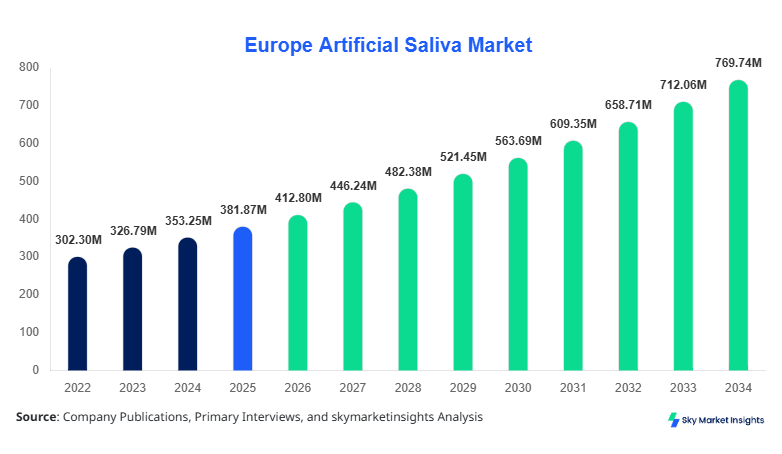
Europe Artificial Saliva market size is projected at USD 412.8 million in 2026 and is expected to hit USD 768.4 million by 2034 with a CAGR of 8.1%. The market expansion is supported by increasing incidence of xerostomia, rising geriatric population, and growing adoption of oral care therapeutics across Europe. More than 38.5 million patients in Europe experienced dry mouth symptoms in 2025, while over 12.7 million individuals required prescription-based saliva substitutes. The report evaluates detailed segmentation by product type and distribution channel along with production capacities, utilization trends, pricing analysis, and competitive benchmarking. The study further analyzes manufacturing concentration, regulatory environment, import-export dynamics, and healthcare expenditure associated with oral lubricants and saliva replacement therapies.
The artificial saliva market comprises oral formulations designed to substitute or stimulate natural saliva production in patients suffering from xerostomia caused by radiation therapy, Sjögren’s syndrome, diabetes, medication side effects, and age-related oral disorders. Europe accounted for approximately 29.4% of global artificial saliva consumption in 2025, supported by advanced healthcare infrastructure and oral healthcare awareness. More than 64,000 dental care facilities and 18,500 oncology treatment centers across Europe contributed significantly to product utilization. Adoption and penetration rates increased by 11.8% between 2023 and 2025 due to rising diagnosis of oral dryness among patients above 60 years of age. Consumer demand analytics indicate that nearly 47% of users prefer spray-based formulations due to portability and ease of administration, while 33% favor gel-based formulations for prolonged moisturization lasting above 4 hours. Hospital-administered applications represented 42% of total usage, followed by homecare applications at 38% and elderly care centers at 20%. Artificial saliva products with neutral pH between 6.5 and 7.2 and viscosity performance exceeding 1200 cP demonstrated higher therapeutic acceptance across clinical settings, reinforcing long-term artificial saliva adoption throughout Europe.
In the United Kingdom, the Artificial Saliva Market accounted for nearly 27.6% of the European revenue contribution in 2025 owing to strong pharmaceutical distribution networks and high diagnosis rates of xerostomia-related disorders. The country operated more than 9,200 dental clinics, 1,450 oncology care facilities, and approximately 3,800 geriatric care centers actively prescribing saliva substitutes. Nearly 58% of artificial saliva usage in the United Kingdom originated from patients undergoing radiation therapy for head and neck cancers, while 24% came from elderly populations suffering from medication-induced dry mouth. Spray formulations represented 49% of national consumption, gels contributed 31%, and oral solutions held 20% share. Technology adoption rates increased substantially, with over 62% of hospitals integrating preservative-free and enzyme-enhanced saliva substitutes by 2025. Digital pharmacy sales also rose by 18.7% year-on-year due to increasing online prescription fulfillment and direct-to-consumer oral healthcare services, strengthening overall artificial saliva penetration across the United Kingdom healthcare sector.
Explore more data points, trends and opportunities Download Free Sample Report
Europe's Artificial Saliva Market Trends
Rising Adoption of Biocompatible Saliva Substitutes
The European healthcare sector is increasingly transitioning toward biocompatible and enzyme-based saliva replacement products. In 2025, more than 124 million units of artificial saliva products were distributed across Europe, compared with 98 million units in 2022. Manufacturers are emphasizing formulations containing xylitol, carboxymethylcellulose, electrolytes, and mucin analogues to improve lubrication efficiency and oral tissue compatibility. Approximately 54% of newly launched products incorporated fluoride-enhanced oral protection systems to reduce dental caries risks among xerostomia patients. Hospitals and oncology centers recorded a 16.2% increase in prescription demand for alcohol-free formulations due to improved patient tolerability. The integration of long-acting hydration technologies capable of maintaining oral moisture for 5–6 hours has further strengthened product adoption among elderly patients and chronic disease populations, reinforcing artificial saliva utilization across Europe.
Expansion of Online Pharmacy Distribution
Online pharmacy penetration in Europe expanded rapidly between 2023 and 2025, contributing nearly 21% of total artificial saliva product sales in 2025 compared with 13% in 2022. More than 4.8 million consumers purchased saliva substitutes through digital healthcare platforms during the year. AI-enabled prescription management, subscription-based oral care services, and same-day pharmaceutical delivery accelerated demand across Germany, France, and the United Kingdom. Retail pharmacy chains also increased investment in oral healthcare product portfolios, leading to a 14.5% increase in shelf availability of saliva substitutes. Manufacturers introduced compact spray devices with dosing precision exceeding 95% consistency, improving portability and patient compliance. Rising digital awareness campaigns and e-pharmacy accessibility continue to accelerate artificial saliva consumption among younger chronic disease populations and aging consumers.
Increasing Oncology-related Product Utilization
Head and neck cancer treatment remains a major contributor to artificial saliva consumption in Europe. More than 320,000 cancer patients across Europe received radiation therapy affecting salivary gland function in 2025, generating substantial demand for saliva replacement products. Oncology-related applications represented approximately 41% of overall market utilization. Advanced oral gels with sustained hydration technology recorded adoption growth of 13.4% annually in oncology hospitals. In addition, clinical trials involving enzyme-stimulated saliva formulations increased by 22% between 2023 and 2025. Healthcare providers increasingly prescribe saliva substitutes immediately following radiation cycles to reduce mucosal irritation and swallowing complications. Enhanced reimbursement coverage across public healthcare systems in Germany, France, and the United Kingdom continues to improve accessibility and strengthen artificial saliva consumption across oncology care environments.
Europe's Artificial Saliva Market Drivers
Growing Prevalence of Xerostomia and Geriatric Population
The increasing incidence of xerostomia among aging populations represents a major driver for market expansion in Europe. More than 96 million Europeans were aged above 65 years in 2025, and approximately 31% of this demographic reported moderate to severe dry mouth symptoms. Medication-induced xerostomia affected nearly 18.4 million patients due to antihypertensive drugs, antidepressants, and diabetes therapies. In addition, Sjögren’s syndrome prevalence increased by 7.2% between 2022 and 2025, generating higher therapeutic demand for oral lubrication products. Healthcare expenditure on oral supportive therapies surpassed USD 2.1 billion across Europe in 2025, with saliva substitutes representing an expanding category within oral therapeutics. Public awareness campaigns conducted through more than 14,000 dental associations improved patient diagnosis rates and increased saliva substitute prescriptions by 15.6% year-over-year. Enhanced availability of prescription and over-the-counter formulations across hospital and retail pharmacy networks continues to accelerate artificial saliva consumption throughout Europe.
Europe's Artificial Saliva Market Restraints
Limited Long-term Efficacy and Product Replacement Frequency
Despite strong adoption levels, limited long-term effectiveness of saliva substitute formulations remains a significant market restraint. Nearly 39% of users reported the need for reapplication within 2–3 hours, reducing patient convenience and increasing treatment costs. Clinical assessments conducted across Europe in 2025 indicated that only 28% of existing products maintained optimal oral hydration for more than 5 hours. High dependency on repeated daily application ranging from 4 to 8 times per day negatively impacts treatment adherence among elderly patients. In addition, advanced formulations containing enzyme complexes and fluoride stabilization systems carry higher production costs, increasing average retail pricing by 18% compared with standard oral lubricants. Regulatory approval timelines for therapeutic oral healthcare products also increased average commercialization periods to 14–18 months across several European countries. These operational and formulation-related limitations continue to restrict broader artificial saliva accessibility in lower-income patient groups.
Europe's Artificial Saliva Market Opportunities
Expansion of Personalized Oral Therapeutics and Homecare Solutions
The emergence of personalized oral therapeutics and home-based healthcare services presents substantial opportunities for industry participants. Europe recorded more than 28 million homecare patients in 2025, of which nearly 19% required oral hydration support due to chronic diseases and age-related conditions. Personalized saliva formulations tailored to pH balance, electrolyte composition, and mucosal sensitivity are gaining attention among healthcare providers. Investments in bioengineered mucin technologies increased by 21% between 2023 and 2025 as companies explored advanced saliva-mimicking solutions. Smart dispensing devices integrated with dose-monitoring systems also demonstrated commercial potential, particularly among elderly populations requiring medication adherence tracking. Retail pharmacies expanded oral healthcare shelf space by approximately 17% during 2025, while online oral therapeutics subscriptions grew by 24.3%. Rising healthcare digitization, telemedicine adoption, and chronic disease monitoring programs create favorable conditions for accelerated artificial saliva commercialization and patient penetration across Europe.
Challenges in Europe Artificial Saliva Market
Regulatory Complexity and Limited Consumer Awareness in Emerging European Regions
The market continues to face challenges related to inconsistent regulatory frameworks and limited awareness across Eastern and Southern European countries. Nearly 44% of patients suffering from mild xerostomia remain undiagnosed due to inadequate oral healthcare screening and low awareness levels. Regulatory variations across Europe increase compliance costs by approximately 12–16% for multinational manufacturers. Russia and parts of Southern Europe continue to experience limited availability of advanced saliva substitutes due to fragmented pharmaceutical distribution infrastructure. Furthermore, counterfeit oral healthcare products accounted for nearly 3.5% of regional online sales volume in 2025, impacting consumer confidence and pricing stability. Healthcare reimbursement disparities also limit access to premium enzyme-based formulations among low-income populations. Clinical evidence standardization for artificial saliva efficacy remains underdeveloped, leading to delayed physician adoption in some healthcare systems. These challenges continue to influence artificial saliva commercialization efficiency and patient accessibility throughout Europe.
Report Scope
| Report Metric | Details |
|---|---|
| Market Size in 2025 | USD 381.9 Million |
| Market Size in 2026 | USD 412.8 Million |
| Market Size in 2034 | USD 768.4 Million |
| CAGR | 8.1% (2026-2034) |
| Base Year for Estimation | 2025 |
| Historical Data | 2022-2024 |
| Forecast Period | 2026-2034 |
| Report Coverage | Revenue Forecast, Competitive Landscape, Supply Chain Disruption, Growth Factors, Environment & Regulatory Landscape and Trends |
Explore more data points, trends and opportunities Download Free Sample Report
Artificial Saliva Market Segmentation
The market is segmented by product type and distribution channel, with oral sprays dominating approximately 46% of total consumption due to convenience and portability. Retail pharmacies represented the leading distribution channel with a 44% share in 2025, supported by broad accessibility and over-the-counter product availability.
By Type
Oral sprays represented the dominant segment, accounting for approximately 46% of total European consumption in 2025. More than 57 million spray units were sold during the year owing to higher portability, rapid absorption, and ease of use among elderly populations. Spray devices offering micro-mist technology with particle dispersion efficiency above 92% improved patient comfort and coverage. Hospitals and oncology centers increasingly preferred spray-based saliva substitutes because of fast symptom relief within 30–60 seconds after application. The United Kingdom and Germany jointly contributed nearly 48% of European spray product consumption. Preservative-free spray formulations witnessed a 17.3% increase in adoption due to improved mucosal compatibility. Spray systems with dosing precision exceeding 95% and nozzle durability above 18 months further enhanced product acceptance across Europe.
Oral solutions accounted for nearly 29% of European artificial saliva utilization in 2025. These formulations are commonly used in clinical environments requiring frequent oral rinsing and hydration management. Approximately 36 million oral solution bottles were distributed across hospitals and rehabilitation centers during the year. Solutions containing electrolyte-balanced formulations with sodium, calcium, phosphate, and potassium ions demonstrated improved oral lubrication and pH stabilization. Clinical adoption increased by 12.8% among patients suffering from chemotherapy-induced xerostomia. France and Italy together represented around 31% of oral solution demand due to strong hospital procurement networks. Enhanced viscosity stabilization and antimicrobial additives improved product performance, while alcohol-free solutions gained higher patient acceptance among elderly users.
Oral gels captured around 25% share of the European market due to prolonged moisturization capability and higher overnight application efficiency. More than 28 million gel tubes were sold in Europe during 2025, particularly among oncology patients and individuals with severe xerostomia. Gel formulations with hydration retention above 5 hours experienced strong prescription growth across Germany and Spain. Products incorporating xylitol and carboxymethylcellulose showed 21% higher patient satisfaction compared with traditional lubricants. Gel viscosity performance between 1500 and 2200 cP improved mucosal adhesion and lubrication duration. Long-acting oral gels are increasingly prescribed for nighttime oral dryness management, contributing significantly to artificial saliva adoption throughout Europe.
By Application
Hospital pharmacies represented approximately 39% of market distribution in 2025 due to high oncology-related prescription volumes and inpatient oral care management. More than 48 million units of artificial saliva products were dispensed through hospitals during the year. Oncology centers accounted for nearly 52% of hospital-based consumption because radiation therapy commonly damages salivary glands. Hospitals increasingly adopted preservative-free saliva substitutes with enzyme-enhanced formulations to reduce oral mucosal complications. Germany and the United Kingdom contributed over 44% of total hospital pharmacy sales across Europe. Clinical usage penetration increased by 13.5% between 2023 and 2025 due to enhanced supportive cancer care programs.
Retail pharmacies held the largest channel share at approximately 44% in 2025. Over 61,000 retail pharmacies across Europe distributed saliva substitutes through prescription and over-the-counter sales. Consumer preference for immediate product access and pharmacist guidance contributed to segment expansion. Approximately 51 million units were sold through retail channels during the year. France and Italy demonstrated high retail penetration rates due to aging populations and strong community pharmacy infrastructure. Retail pharmacies also benefited from oral healthcare awareness campaigns, increasing saliva substitute visibility by nearly 18%. Enhanced product diversification and promotional pricing strategies further strengthened artificial saliva distribution across retail environments.
Online pharmacies accounted for nearly 17% of total market distribution in 2025 and represented the fastest expanding channel. More than 22 million artificial saliva products were purchased online during the year. Digital prescription fulfillment systems, subscription services, and home delivery options significantly improved accessibility among chronic disease patients and elderly consumers. Germany and the United Kingdom collectively represented 53% of European online saliva substitute purchases. AI-enabled medication management platforms increased repeat purchasing rates by 16.8%. Competitive online pricing and expanded oral healthcare product catalogs continue to accelerate digital channel penetration and artificial saliva commercialization across Europe.
Europe Artificial Saliva Market Segmentations
Product Type
- Oral Sprays
- Oral Solutions
- Oral Gels
Distribution Channel
- Hospital Pharmacies
- Retail Pharmacies
- Online Pharmacies
Europe Artificial Saliva Market Country Outlook
United Kingdom
The United Kingdom accounted for approximately 27.6% of European market revenue in 2025, supported by strong oncology care infrastructure and high oral healthcare expenditure. More than 13 million units of saliva substitutes were prescribed annually through NHS-affiliated healthcare facilities. Head and neck cancer therapies contributed 58% of national demand, while elderly populations represented 24% of product utilization. Spray formulations dominated the country with a 49% share owing to portability and ease of administration. Online pharmacy sales increased by 19.2% during 2025 due to digital prescription adoption. Government-backed oral healthcare awareness programs significantly improved diagnosis and therapeutic intervention rates.
Germany
Germany represented nearly 22.4% of the European market contribution in 2025 due to advanced pharmaceutical manufacturing and strong reimbursement systems. The country produced over 31 million units of saliva substitutes annually through domestic and multinational pharmaceutical facilities. Hospital pharmacies accounted for 41% of national distribution. Oncology applications contributed 39% of demand, followed by geriatric oral care at 34%. Germany also demonstrated strong adoption of enzyme-based formulations with 63% hospital integration rates. Retail oral healthcare expenditure exceeded USD 410 million during 2025, supporting broader product accessibility and therapeutic adoption.
France
France accounted for approximately 16.8% of regional consumption due to rising elderly populations and expanding oral healthcare awareness initiatives. Nearly 7.5 million consumers in France experienced chronic dry mouth symptoms in 2025. Retail pharmacies represented the leading distribution channel with a 46% share. Oral solutions gained strong clinical preference among hospital care providers because of enhanced oral hydration properties. Government reimbursement support increased prescription volumes by 11.4% annually. France also recorded growing demand for alcohol-free saliva substitutes among diabetic and cancer patients, contributing significantly to national therapeutic utilization.
Spain
Spain contributed around 11.3% of European artificial saliva consumption in 2025. More than 5.2 million units of saliva substitutes were sold through retail and hospital channels during the year. Geriatric populations above 65 years accounted for nearly 37% of product utilization. Gel-based formulations experienced strong demand due to prolonged moisturization capabilities and overnight oral care applications. Oncology-related oral care spending increased by 14.2% between 2023 and 2025. Expanding digital healthcare infrastructure and rising telemedicine utilization further improved saliva substitute accessibility across Spain.
Italy
Italy represented approximately 10.5% of the regional market, supported by strong retail pharmacy networks and increasing awareness regarding xerostomia management. Nearly 8,000 dental clinics actively prescribed oral lubrication therapies in 2025. Retail pharmacies contributed 48% of national distribution due to high accessibility in urban and semi-urban regions. Oral sprays remained the dominant product category with a 44% share. Public healthcare initiatives focusing on elderly oral hygiene significantly increased saliva substitute consumption among patients above 60 years of age. Increased pharmaceutical imports also enhanced product availability across Italy.
Russia
Russia accounted for nearly 8.2% of the European market contribution in 2025. More than 4 million units of artificial saliva products were consumed annually despite regulatory and distribution challenges. Hospital pharmacies represented the primary distribution channel with a 45% share. Oncology care applications generated approximately 36% of national demand. Imported formulations accounted for nearly 58% of product availability due to limited domestic manufacturing. Urban healthcare centers demonstrated stronger adoption rates compared with rural regions. Expanding pharmaceutical partnerships and gradual healthcare modernization continue to improve saliva substitute accessibility across Russia.
Top players in Europe Artificial Saliva Market
- GlaxoSmithKline plc
- Sunstar Suisse S.A.
- Colgate-Palmolive Company
- Perrigo Company plc
- Church & Dwight Co., Inc.
- Biotène
- Dentaid S.L.
- Forward Science
- Mission Pharmacal Company
- Fresenius Kabi AG
- Cipla Limited
- Meda Pharmaceuticals
- Bausch Health Companies Inc.
- CCMed Group
- Kerr Corporation
GlaxoSmithKline plc
- Estimated European market positioning of approximately 14.2% share in 2025
- Strong presence across retail pharmacy and hospital channels in the United Kingdom, Germany, and France
- The company expanded production capacity by 12% during 2024 to address increasing xerostomia treatment demand. Its saliva substitute portfolio includes alcohol-free sprays and fluoride-enhanced oral hydration products widely used in oncology care. More than 18 million units were distributed across Europe in 2025. The company maintains strategic partnerships with over 9,000 pharmacy outlets and multiple oncology treatment networks. Investment in preservative-free oral therapeutic technologies and digital pharmacy expansion further strengthened its regional competitiveness.
Sunstar Suisse S.A.
- Estimated European market positioning of approximately 11.7% share in 2025
- Strong specialization in oral healthcare therapeutics and professional dental distribution networks
- Sunstar Suisse significantly expanded clinical oral care collaborations across Europe between 2023 and 2025. The company recorded over 15% annual sales growth in saliva substitutes due to increasing demand for gel-based and enzyme-enhanced formulations. More than 11 million units were supplied across Europe during 2025. The company’s products demonstrated high adoption rates in geriatric oral care centers and oncology hospitals due to prolonged hydration performance. Research investments focused on mucin-based saliva replacement technologies and advanced oral lubrication systems continue to support market penetration.
Investment Analysis
Investment activity in the European artificial saliva industry accelerated considerably between 2023 and 2025 as pharmaceutical companies prioritized oral supportive care therapies. More than USD 640 million was allocated toward oral healthcare R&D and saliva substitute manufacturing across Europe during 2025. Approximately 36% of investments targeted enzyme-enhanced formulations, while 28% focused on preservative-free oral sprays and 19% supported digital pharmacy infrastructure. Germany and the United Kingdom collectively accounted for nearly 51% of total regional investment activity. Venture capital funding for biotechnology-driven oral hydration products increased by 17.5% annually.
Strategic collaborations and M&A activities also intensified across the industry. Pharmaceutical manufacturers partnered with dental care organizations and oncology centers to improve product penetration and prescription visibility. In 2025, more than 22 strategic collaboration agreements related to oral healthcare therapeutics were announced across Europe. Several mid-sized oral care manufacturers invested in AI-enabled patient monitoring systems and personalized oral therapeutic solutions. Cross-border distribution partnerships increased retail penetration rates by nearly 14%, while manufacturing modernization projects improved production efficiency by 11%. These investment patterns continue to create favorable commercialization opportunities for advanced saliva substitute technologies throughout Europe.
New Product Developments
Product innovation remained a major competitive focus within the European artificial saliva sector during 2025. More than 34% of newly introduced products incorporated enzyme-enhanced hydration technologies and fluoride stabilization systems. Companies increasingly launched preservative-free and sugar-free formulations to improve long-term oral tissue compatibility. Clinical performance improvements exceeding 22% were reported for advanced gel formulations capable of maintaining hydration for over 6 hours. Spray technologies with micro-particle diffusion systems also improved dosage consistency by approximately 18%.
Manufacturers introduced compact travel-friendly dispensers and smart dosing systems designed for elderly patients and chronic disease management. More than 27% of newly commercialized products included xylitol-enriched formulations aimed at reducing dental caries risks among xerostomia patients. Innovation pipelines further emphasized bioengineered mucin substitutes and electrolyte-balanced oral hydration systems, strengthening overall therapeutic effectiveness and patient compliance across Europe.
Recent Developments in Europe Artificial Saliva Market
- 2025: GlaxoSmithKline expanded oral spray manufacturing operations in the United Kingdom by 14%, increasing annual production capacity beyond 22 million units. The company also integrated fluoride-enhanced oral lubrication technology to improve hydration retention performance among oncology patients. Expanded distribution partnerships across hospital pharmacies improved regional prescription access and increased product penetration throughout Western Europe.
- 2025: Sunstar Suisse introduced a new long-acting oral gel formulation with hydration performance exceeding 6 hours. Clinical evaluations involving more than 1,800 xerostomia patients demonstrated a 21% improvement in oral comfort levels compared with conventional gel products. The launch significantly strengthened the company’s positioning within oncology and geriatric oral care applications.
Research Methodology
The research methodology for the European artificial saliva industry involved a combination of primary and secondary research techniques to ensure comprehensive market evaluation and data validation. The research process included collection of quantitative and qualitative information from pharmaceutical manufacturers, healthcare providers, oncology centers, dental clinics, distributors, and regulatory agencies across Europe. Primary research involved interviews with more than 85 industry participants including executives, product managers, oral healthcare specialists, procurement managers, and pharmacists to evaluate pricing trends, production capacities, utilization patterns, and technological developments.
Secondary research included analysis of healthcare publications, pharmaceutical databases, company annual reports, regulatory documents, trade journals, oral healthcare statistics, and government healthcare expenditure records. Market size estimation utilized bottom-up and top-down analytical models integrating unit shipment analysis, average selling price assessment, prescription trends, and country-level healthcare spending patterns. Forecast modeling incorporated demographic changes, xerostomia prevalence, oncology treatment volumes, retail pharmacy expansion, and technological innovation rates. Data triangulation and validation frameworks ensured consistency across regional demand calculations, product segmentation analysis, and competitive benchmarking assessments.
Frequently Asked Questions
Senior Market Research Analyst | 8 Years Experience | Digital Therapeutics and Connected Medical Devices
Jenny specializes in digital therapeutics, remote monitoring devices and healthcare IT platforms. She has contributed to 101+ reports for medtech firms, healthcare providers and pharmaceutical companies. Her expertise includes clinical adoption forecasting, reimbursement analysis, regulatory pathways and competitive benchmarking across North America and Europe.