Europe Aptamers Market Size
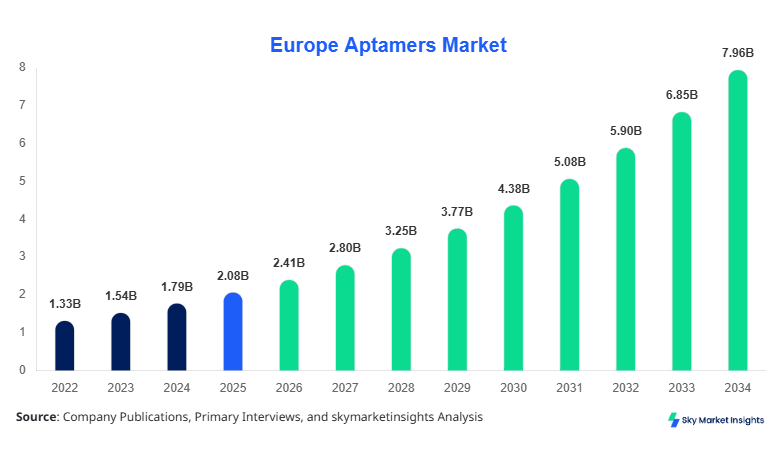
Europe Aptamers market size is projected at USD 2.41 billion in 2026 and is expected to hit USD 7.96 billion by 2034 with a CAGR of 16.1%. The increasing integration of aptamer-based diagnostics, therapeutic discovery programs, and precision medicine technologies across Europe is accelerating commercialization opportunities across healthcare and biotechnology sectors. Rising pharmaceutical collaborations, expanding genomic research investments, and growing utilization of aptamers in oncology and infectious disease applications are reshaping the regional competitive environment. The report further evaluates detailed segmentation patterns, technological innovation intensity, regulatory frameworks, production capacities, and the competitive landscape across major European economies.
The Europe aptamers industry represents a rapidly expanding biotechnology segment focused on short single-stranded oligonucleotides or peptides capable of binding specific molecular targets with high affinity and selectivity. In 2025, Europe recorded more than 3,800 active aptamer-related research projects, with approximately 41% concentrated in diagnostics and 36% in therapeutic development programs. The region produced over 112 million aptamer synthesis units across pharmaceutical and academic laboratories during the base year, while healthcare applications contributed nearly 63% of total utilization volumes. Adoption rates of aptamer-enabled biosensors increased by 24% between 2023 and 2025 owing to demand for rapid molecular detection systems. Penetration within oncology diagnostics surpassed 38%, while cardiovascular and autoimmune applications collectively accounted for 27% of product deployment. Consumer demand for minimally invasive diagnostic procedures and precision-targeting biologics has increased laboratory procurement spending by nearly 19% annually. Aptamer binding efficiency levels above 90%, thermal stability ranges exceeding 70°C, and lower immunogenicity compared with antibodies are enhancing commercialization potential across Europe Aptamers market.
Explore more data points, trends and opportunities Download Free Sample Report
Aptamers Market Trends
Expansion of AI-Integrated Aptamer Discovery Platforms
Artificial intelligence and machine learning integration within aptamer selection and molecular screening platforms has significantly transformed research productivity across Europe. During 2025, nearly 52% of biotechnology companies in Germany, France, and the United Kingdom adopted AI-assisted aptamer modeling systems to reduce target screening timelines by 35% to 48%. Automated SELEX platforms processed more than 7.8 million molecular sequences annually compared with fewer than 4.1 million in 2022. Pharmaceutical companies increased investments in computational aptamer optimization technologies by approximately 28%, supporting higher specificity and reduced development costs. Clinical diagnostic laboratories reported that AI-optimized aptamer biosensors improved pathogen detection sensitivity by nearly 22% compared with conventional antibody systems. Increased demand from oncology and neurodegenerative disease research programs is accelerating high-throughput molecular synthesis volumes across Europe Aptamers market.
Rising Demand for Aptamer-Based Point-of-Care Diagnostics
Point-of-care diagnostics remain one of the strongest commercial opportunities within Europe due to increasing healthcare decentralization and rapid testing demand. Europe produced over 31 million aptamer-enabled diagnostic cartridges in 2025, representing a 26% increase from 2023 production levels. Approximately 43% of hospitals across Spain, Italy, and Germany integrated aptamer-based biosensor technologies into infectious disease screening workflows. Portable diagnostic systems using aptamer recognition technology demonstrated detection accuracy rates exceeding 94% with turnaround times below 15 minutes. Consumer preference for rapid molecular diagnostics and home healthcare monitoring increased procurement volumes among retail healthcare providers by nearly 21%. Government-funded infectious disease preparedness programs across Europe invested over USD 590 million in advanced molecular diagnostics infrastructure, reinforcing Aptamers market adoption.
Increasing Therapeutic Development Partnerships
Collaborative agreements between pharmaceutical manufacturers and biotechnology firms are accelerating therapeutic aptamer commercialization. More than 95 strategic collaborations related to aptamer drug development were announced across Europe between 2023 and 2025. Oncology-related therapeutic programs represented approximately 48% of all partnership activities, followed by cardiovascular disease applications at 17%. Clinical-stage aptamer therapeutics under development increased from 62 molecules in 2022 to nearly 104 molecules in 2025. Investments in RNA-targeting aptamer therapies expanded by 33%, while targeted drug delivery systems using aptamer conjugates improved treatment specificity by over 27%. Increased biologics manufacturing capabilities and precision medicine adoption continue influencing Aptamers market.
Europe Aptamers Drivers
Growing Precision Medicine Adoption Across European Healthcare Systems
The increasing focus on personalized medicine and targeted therapeutic strategies is driving substantial demand for aptamer technologies across Europe. Precision medicine programs represented nearly 39% of total genomic healthcare investments in 2025, while molecular diagnostics spending exceeded USD 6.8 billion across major European economies. Aptamers are increasingly preferred because of their lower immunogenicity, enhanced target affinity, and reduced manufacturing costs compared with monoclonal antibodies. Oncology screening programs using aptamer biosensors expanded patient testing volumes by approximately 24% between 2023 and 2025. More than 58% of biotechnology laboratories in Europe incorporated aptamer technologies into biomarker discovery pipelines. Hospitals adopting aptamer-based diagnostic systems reported testing accuracy improvements of 18% and workflow efficiency gains exceeding 21%. Pharmaceutical companies increased therapeutic aptamer R&D expenditure by nearly 31% due to growing demand for targeted therapies in oncology, autoimmune disorders, and infectious diseases. Expansion of molecular diagnostics infrastructure and rising genomic sequencing penetration continue supporting Aptamers market.
Europe Aptamers Restraints
High Development Complexity and Regulatory Validation Requirements
Despite increasing commercial opportunities, aptamer development continues facing challenges related to validation complexity, clinical trial costs, and regulatory compliance. Clinical approval timelines for novel aptamer therapeutics average 5 to 7 years, while late-stage development expenditures frequently exceed USD 180 million per product candidate. Approximately 37% of biotechnology startups reported delays associated with analytical validation and molecular reproducibility concerns. Regulatory agencies across Europe maintain stringent safety evaluation protocols for nucleic acid therapeutics, increasing documentation and testing burdens. Manufacturing consistency remains a critical issue because minor sequence deviations can affect target-binding efficiency by over 15%. Additionally, limited large-scale manufacturing infrastructure for specialized oligonucleotide synthesis has increased production costs by approximately 18% since 2023. Adoption within smaller hospitals and diagnostic centers remains constrained by elevated equipment acquisition expenses and limited reimbursement coverage for advanced molecular diagnostics, restraining Aptamers market growth.
Europe Aptamers Opportunities
Expansion of Rapid Molecular Diagnostics and Home Healthcare Testing
The growing demand for decentralized diagnostics and home healthcare monitoring solutions presents major opportunities for aptamer technology providers. Europe’s point-of-care diagnostics sector surpassed USD 9.2 billion in 2025, with molecular testing representing nearly 32% of market demand. Aptamer-enabled biosensors are increasingly utilized because they offer rapid detection times, thermal stability, and enhanced portability compared with antibody-based systems. Home healthcare testing adoption increased by 27% across Europe between 2023 and 2025, while wearable biosensor integration expanded by approximately 19%. More than 44% of healthcare technology companies are actively investing in aptamer-based portable diagnostic devices targeting infectious diseases, oncology markers, and metabolic disorders. Emerging collaborations between pharmaceutical firms and digital health companies are accelerating commercialization pipelines for real-time monitoring systems. Rising healthcare digitization and telemedicine penetration continue creating favorable conditions for Aptamers market.
Challenges in Europe Aptamers Market
Limited Commercial Awareness and Manufacturing Scalability Constraints
Commercial scalability remains a significant challenge within the European aptamer ecosystem despite growing scientific interest. Approximately 42% of regional healthcare providers still rely predominantly on antibody-based diagnostic systems because of limited awareness regarding aptamer performance advantages. Manufacturing facilities capable of high-purity oligonucleotide synthesis above 99% remain concentrated in only a few European countries, restricting broader supply chain scalability. Production yield inconsistencies can increase operational losses by 11% to 16% during large-scale synthesis cycles. Biotechnology companies additionally face shortages of specialized molecular biologists and bioinformatics experts, particularly in Eastern Europe and smaller regional markets. Raw material costs for chemically modified aptamers increased by nearly 14% during 2025 because of dependence on imported synthesis reagents. These operational and awareness-related limitations continue challenging Aptamers market expansion.
Report Scope
| Report Metric | Details |
|---|---|
| Market Size in 2025 | USD 2.08 Billion |
| Market Size in 2026 | USD 2.41 Billion |
| Market Size in 2034 | USD 7.96 Billion |
| CAGR | 16.1% (2026-2034) |
| Base Year for Estimation | 2025 |
| Historical Data | 2022-2024 |
| Forecast Period | 2026-2034 |
| Report Coverage | Revenue Forecast, Competitive Landscape, Supply Chain Disruption, Growth Factors, Environment & Regulatory Landscape and Trends |
Explore more data points, trends and opportunities Download Free Sample Report
Aptamers Market Segmentation
The Europe market is segmented based on type and application, with nucleic acid aptamers accounting for approximately 47% of total demand due to high specificity and broad therapeutic applications. Diagnostics remained the largest application segment with nearly 44% share during 2025, supported by rising infectious disease testing volumes and precision medicine adoption.
BY TYPE
Nucleic acid aptamers dominated the European landscape with nearly 47% market contribution in 2025 owing to extensive utilization across diagnostics, therapeutic delivery, and biosensing applications. Production volumes surpassed 49 million units during the base year, primarily concentrated in Germany, the United Kingdom, and France. These aptamers demonstrate target affinity rates above 92% and molecular stability at temperatures ranging from 60°C to 75°C, enabling reliable performance within clinical diagnostics. Oncology and infectious disease screening collectively represented 58% of nucleic acid aptamer applications. Pharmaceutical firms increased procurement volumes by approximately 23% because of growing therapeutic research programs targeting RNA pathways and cancer biomarkers. Integration within portable biosensors improved diagnostic sensitivity by nearly 19% compared with conventional assays. The segment continues supporting Aptamers market.
Peptide aptamers represented nearly 29% of regional revenue contribution in 2025 due to their superior protein-binding capabilities and enhanced intracellular targeting performance. Europe produced approximately 31 million peptide aptamer units during the year, with biotechnology laboratories accounting for nearly 64% of utilization. Cardiovascular disease research contributed 24% of peptide aptamer demand, while neurodegenerative disease applications accounted for 18%. Improved structural flexibility and binding specificity enhanced therapeutic efficiency by over 17% across experimental clinical programs. Pharmaceutical collaborations related to peptide aptamer therapeutics increased by 21% between 2023 and 2025. Research institutions across Italy and France expanded peptide aptamer screening programs by nearly 26% due to rising investments in targeted drug discovery platforms.
DNA aptamers accounted for approximately 24% of total European demand because of their cost-effectiveness, simplified synthesis procedures, and broad biosensor compatibility. More than 32 million DNA aptamer synthesis cycles were completed during 2025 across European biotechnology facilities. Diagnostics represented nearly 51% of DNA aptamer applications owing to increasing deployment in rapid molecular testing devices. Thermal stability exceeding 70°C and low degradation rates improved operational efficiency in portable healthcare systems. Hospitals utilizing DNA aptamer biosensors reported detection turnaround reductions of 31% and testing throughput increases above 22%. Academic research institutions additionally expanded DNA aptamer utilization by 19% because of growing genomic sequencing and biomarker discovery programs.
BY APPLICATION
Diagnostics remained the leading application area with approximately 44% share of European revenue during 2025. More than 36 million aptamer-enabled diagnostic kits were utilized across hospitals, laboratories, and point-of-care facilities throughout the region. Infectious disease detection accounted for 41% of diagnostic demand, followed by oncology diagnostics at 34%. Aptamer biosensors improved molecular recognition sensitivity by nearly 24% while reducing testing turnaround times below 20 minutes. Healthcare providers increased procurement spending on rapid diagnostics by 18% amid rising patient demand for minimally invasive testing. Germany and the United Kingdom collectively contributed nearly 52% of total diagnostic application volumes. Increased integration within wearable health monitoring systems and mobile healthcare platforms continues accelerating adoption.
Therapeutic applications represented nearly 37% of total European demand in 2025 due to increasing investments in targeted drug delivery and precision oncology programs. More than 104 clinical-stage aptamer therapeutic candidates were under development across Europe during the year. Oncology therapies accounted for 48% of therapeutic demand, while autoimmune and cardiovascular applications represented 16% and 13%, respectively. Aptamer conjugates improved treatment specificity by approximately 27% and reduced adverse immune reactions by 18% compared with antibody-based biologics. Pharmaceutical R&D investments in therapeutic aptamers exceeded USD 2.3 billion during 2025. Rising clinical trial activity and increasing collaboration between biotechnology firms and academic institutions continue strengthening the therapeutic application landscape.
Research and development applications contributed approximately 19% of European revenue because of expanding genomic medicine, molecular diagnostics, and drug discovery activities. Academic laboratories and pharmaceutical research facilities collectively utilized over 21 million aptamer synthesis units during 2025. Biomarker discovery projects represented 38% of research demand, while protein interaction studies contributed 24%. Government-funded biotechnology programs across Europe increased R&D grants by nearly 22% between 2023 and 2025. Integration of AI-assisted molecular modeling improved aptamer screening productivity by approximately 29%, enabling faster identification of high-affinity candidates. Universities and research institutes across France, Germany, and the UK continue investing heavily in advanced oligonucleotide engineering infrastructure.
Europe Aptamers Market Segmentations
By Type
- Nucleic Acid Aptamers
- Peptide Aptamers
- DNA Aptamers
By Application
- Diagnostics
- Therapeutics
- Research & Development
Europe Aptamers Regional Outlook
United Kingdom
The United Kingdom remained the leading contributor to regional revenue with nearly 29% share in 2025 due to advanced biotechnology infrastructure and strong pharmaceutical innovation ecosystems. More than 240 biotechnology companies actively participated in aptamer development, molecular diagnostics, and therapeutic research. Diagnostic applications represented approximately 46% of domestic demand, while therapeutic applications accounted for 34%. The country produced nearly 34 million aptamer synthesis units during the year. Government support exceeding USD 410 million for genomic medicine and molecular diagnostics significantly accelerated clinical adoption rates. Oncology biomarker screening and infectious disease detection continue driving commercialization opportunities across hospitals and academic institutions.
Germany
Germany accounted for approximately 24% of European revenue because of strong pharmaceutical manufacturing capabilities and extensive biotechnology R&D investments. The country operated over 190 molecular diagnostics facilities and produced more than 28 million aptamer units during 2025. Diagnostics contributed nearly 42% of domestic demand, while therapeutic applications represented 39%. AI-assisted aptamer screening adoption exceeded 58% among biotechnology laboratories. Germany additionally invested over USD 620 million in precision medicine and genomic healthcare initiatives between 2024 and 2025. Increased clinical trial activities and advanced oligonucleotide manufacturing capacity continue strengthening national competitiveness.
France
France contributed nearly 16% of regional revenue during 2025, supported by expanding academic research programs and molecular diagnostics infrastructure. The country recorded over 120 active aptamer-related clinical and preclinical research projects. Research applications represented approximately 27% of domestic demand, while diagnostics accounted for 41%. France produced more than 17 million aptamer synthesis units during the year. Government-backed biotechnology funding increased by nearly 19%, supporting innovation in oncology diagnostics and targeted therapeutics. Expansion of university-led genomic medicine programs continues accelerating commercialization potential.
Spain
Spain represented approximately 11% of regional revenue because of growing healthcare modernization initiatives and increasing point-of-care diagnostics adoption. More than 11 million aptamer diagnostic kits were utilized across Spanish healthcare facilities during 2025. Diagnostics represented nearly 49% of domestic application demand, while therapeutic research contributed 28%. Investments in molecular diagnostics infrastructure increased by approximately 21% between 2023 and 2025. Expansion in infectious disease testing and wearable healthcare monitoring systems continues supporting national adoption rates.
Italy
Italy accounted for nearly 10% of regional revenue owing to increasing pharmaceutical collaborations and rising genomic medicine investments. The country produced approximately 9 million aptamer synthesis units during 2025, while therapeutic applications represented 38% of domestic demand. Academic institutions expanded aptamer-related biomarker discovery programs by nearly 24%. Government funding for precision healthcare and molecular diagnostics increased significantly, supporting commercialization across oncology and cardiovascular applications. Integration of aptamer biosensors within hospital laboratories improved testing efficiency by over 17%.
Russia
Russia contributed approximately 10% of regional demand because of increasing biotechnology investments and expanding research infrastructure. More than 80 molecular diagnostics laboratories utilized aptamer technologies during 2025. Diagnostics accounted for 44% of domestic utilization, while research applications represented 29%. The country increased biotechnology funding by nearly 18% during the year, supporting genomic medicine and infectious disease diagnostics. Production volumes exceeded 8 million aptamer synthesis units, while healthcare institutions expanded adoption of rapid molecular testing platforms across urban healthcare centers.
Top players in Europe Aptamers Market
- Aptamer Group PLC
- Base Pair Biotechnologies
- NeoVentures Biotechnology Inc.
- SomaLogic Inc.
- NOXXON Pharma AG
- AM Biotechnologies LLC
- Aptus Biotech
- TriLink BioTechnologies
- Ribomic Inc.
- Aptagen LLC
- Vivonics Inc.
- Cytiva
- Kaneka Eurogentec
- Maravai LifeSciences
- Biogenes GmbH
Aptamer Group PLC
-
Aptamer Group PLC maintained approximately 11% regional share in 2025 due to strong expertise in Optimer-based molecular recognition platforms and diagnostics partnerships across Europe.
-
The company expanded its manufacturing capacity by nearly 22% during 2024–2025 while increasing R&D expenditure by approximately 18%.
-
Oncology diagnostics and biosensor applications represented over 54% of company revenue contribution.
-
Strategic collaborations with pharmaceutical and medical device companies enhanced product penetration across the United Kingdom and Germany.
-
The company additionally accelerated AI-assisted aptamer discovery initiatives, improving target identification efficiency by nearly 27%.
SomaLogic Inc.
-
SomaLogic Inc. accounted for approximately 9% of regional revenue owing to strong proteomics and molecular diagnostics capabilities.
-
The company processed more than 1.5 billion protein interaction analyses annually through its advanced aptamer-based proteomics platforms.
-
Clinical diagnostics represented nearly 48% of company business activities, while pharmaceutical research collaborations contributed 33%.
-
Investments in high-throughput screening technologies improved assay sensitivity by approximately 24% during 2025.
-
Strategic partnerships with genomic medicine institutions and biotechnology firms significantly strengthened European commercialization activities.
Investment Analysis
Investment activities across the European aptamer ecosystem increased substantially during 2024–2025 due to growing demand for molecular diagnostics and precision therapeutics. Approximately 39% of biotechnology investments were allocated toward therapeutic aptamer development, while diagnostics accounted for nearly 34% and biosensor technologies represented 18%. The United Kingdom and Germany collectively attracted over 56% of total regional biotechnology investment flows related to aptamer technologies. Venture capital participation in genomic medicine startups increased by approximately 23%, while pharmaceutical collaborations exceeded USD 3.1 billion in cumulative agreement value during 2025.
Mergers, acquisitions, and strategic collaborations continue reshaping the competitive environment across Europe. More than 95 partnership agreements associated with aptamer therapeutics, AI-driven molecular screening, and diagnostic biosensors were announced between 2023 and 2025. Oncology-focused partnerships represented approximately 48% of all collaborative activities, while infectious disease diagnostics accounted for 21%. Biotechnology firms increasingly pursued licensing agreements with pharmaceutical manufacturers to accelerate commercialization and clinical validation. Research institutions across France, Germany, and the United Kingdom additionally expanded cross-border collaborations to strengthen genomic medicine infrastructure and oligonucleotide synthesis capabilities. Public-private partnerships supporting rapid molecular diagnostics and decentralized healthcare systems continue attracting strong institutional investment.
New Product Developments
New product development activities accelerated significantly during 2025 as biotechnology firms focused on improving molecular specificity, biosensor sensitivity, and therapeutic targeting efficiency. Approximately 31% of newly launched aptamer products targeted oncology diagnostics, while 24% focused on infectious disease screening applications. Advanced aptamer biosensors demonstrated detection sensitivity improvements exceeding 22% compared with previous-generation molecular assays. Integration of AI-assisted sequence optimization reduced screening timelines by nearly 35% and improved target-binding efficiency above 90%.
Therapeutic innovation additionally expanded across precision oncology and RNA-targeting applications. More than 40 new clinical-stage aptamer therapeutic candidates entered European development pipelines during 2025. Pharmaceutical manufacturers increased investment in multifunctional aptamer conjugates capable of targeted drug delivery and real-time biomarker monitoring. Wearable biosensors integrating aptamer technologies improved continuous patient monitoring performance by approximately 19%, supporting the broader adoption of digital healthcare systems.
Recent Developments in Europe Aptamers Market
-
2025: Aptamer Group PLC expanded its UK molecular diagnostics manufacturing facility by approximately 22%, increasing annual production capacity above 14 million aptamer units. The expansion supported rising demand for oncology biosensors and infectious disease screening systems. The company additionally introduced AI-assisted screening workflows that reduced molecular target identification timelines by nearly 31%.
-
2025: SomaLogic Inc. launched an advanced proteomics platform capable of analyzing over 11,000 protein targets simultaneously, improving diagnostic throughput by approximately 26%. The new system increased adoption among pharmaceutical research laboratories across Germany, France, and the United Kingdom, supporting rapid biomarker discovery and precision medicine applications.
- 2025: French academic institutions and biotechnology companies announced collaborative investments exceeding USD 140 million toward genomic medicine and aptamer biosensor development. The initiative supported over 60 new molecular diagnostic projects targeting oncology, cardiovascular disease, and infectious disease detection across European healthcare systems.
Research Methodology
The research methodology for the Europe aptamers industry involved a combination of primary and secondary research approaches to ensure high statistical accuracy and reliable forecasting models. The research process included extensive analysis of biotechnology databases, healthcare expenditure records, pharmaceutical company reports, molecular diagnostics publications, and regulatory frameworks across Europe. Primary research activities involved interviews with biotechnology executives, pharmaceutical manufacturers, laboratory researchers, healthcare procurement managers, and molecular diagnostics specialists. More than 120 industry participants contributed qualitative and quantitative insights related to production capacities, technology adoption, pricing structures, and clinical application trends.
Secondary research included evaluation of annual reports, government biotechnology investments, genomic medicine databases, healthcare infrastructure statistics, and scientific journals associated with aptamer technologies. Market size estimation utilized bottom-up and top-down analytical frameworks integrating production volumes, application penetration rates, investment patterns, and country-level healthcare expenditure trends. Forecast models considered macroeconomic indicators, precision medicine adoption, molecular diagnostics demand, therapeutic development pipelines, and biotechnology infrastructure expansion across the United Kingdom, Germany, France, Spain, Italy, and Russia. Data triangulation techniques and validation procedures ensured consistency across all regional and segment-level forecasts.
Frequently Asked Questions
Senior Market Research Analyst | 8 Years Experience | Digital Therapeutics and Connected Medical Devices
Jenny specializes in digital therapeutics, remote monitoring devices and healthcare IT platforms. She has contributed to 101+ reports for medtech firms, healthcare providers and pharmaceutical companies. Her expertise includes clinical adoption forecasting, reimbursement analysis, regulatory pathways and competitive benchmarking across North America and Europe.