Europe Antiplatelet Drugs Market Size
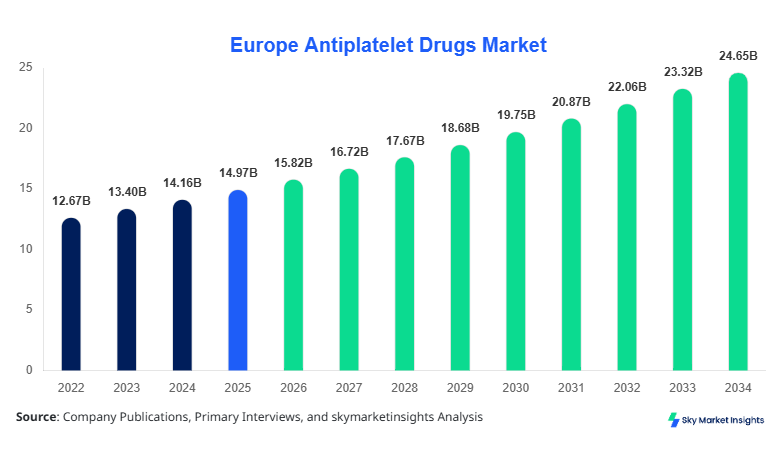
Europe's antiplatelet drugs market size is projected at USD 15.82 billion in 2026 and is expected to hit USD 24.67 billion by 2034 with a CAGR of 5.7%.
The increasing prevalence of cardiovascular disorders, rising geriatric population, and expanding adoption of preventive cardiac therapies are accelerating revenue generation across the European Antiplatelet Drugs Market. The report evaluates comprehensive market segmentation, prescription volumes, treatment penetration, procurement channels, reimbursement frameworks, and competitive benchmarking across leading pharmaceutical manufacturers operating in Europe. Growing clinical demand for dual antiplatelet therapy and increased hospitalization rates for acute coronary syndromes are supporting sustained pharmaceutical consumption across the region.
The antiplatelet drugs industry consists of pharmaceutical agents designed to inhibit platelet aggregation and reduce thrombotic events, including myocardial infarction, ischemic stroke, and peripheral arterial disease. Europe accounted for nearly 28.4% of global cardiovascular pharmaceutical consumption in 2025, with more than 168 million cardiovascular patients requiring long-term antithrombotic therapies. Annual production of antiplatelet formulations in Europe exceeded 14.8 billion tablets and capsules in 2025, supported by over 240 pharmaceutical manufacturing facilities distributed across Germany, France, Italy, and the United Kingdom. Hospital pharmacies contributed approximately 48% of total drug distribution volume, while retail pharmacies represented 39% and online pharmaceutical channels contributed 13%.
Adoption rates of second-generation P2Y12 inhibitors increased by 11.6% between 2023 and 2025 due to superior efficacy profiles and reduced adverse cardiovascular events. More than 64% of cardiologists across Western Europe prescribed combination antiplatelet regimens for post-percutaneous coronary intervention management. Consumer demand analytics indicate that over 72 million patients across Europe are actively receiving long-term antiplatelet prescriptions, with adherence rates reaching 74.2% in France and 69.8% in Germany. Acute coronary syndrome applications represented nearly 44% of overall prescription utilization, followed by stroke prevention at 33% and peripheral arterial disease at 15%. Enhanced diagnostic rates, expansion of catheterization laboratories, and reimbursement-driven accessibility continue reinforcing the European antiplatelet drugs market expansion.
Explore more data points, trends and opportunities Download Free Sample Report
Antiplatelet Drugs Market Trends
Rising Adoption of Next-Generation Antiplatelet Therapies
The growing transition from conventional aspirin-based monotherapy toward advanced dual antiplatelet regimens is reshaping pharmaceutical procurement patterns across Europe. Production volume for P2Y12 inhibitors surpassed 5.8 billion units in 2025, reflecting a 13.4% increase from 2023 levels. Hospitals across Germany, France, and the United Kingdom reported nearly 61% adoption of ticagrelor-based therapies for acute coronary syndrome management compared with 49% in 2022. Clinical studies demonstrating a 19% reduction in recurrent thrombotic complications accelerated physician preference for newer therapies. Furthermore, over 44% of newly diagnosed coronary artery disease patients received dual therapy prescriptions during initial hospitalization. Pharmaceutical manufacturers increased investment in extended-release formulations and lower-bleeding-risk compounds to improve treatment adherence and clinical outcomes. Advanced digital monitoring platforms integrated into cardiovascular clinics also improved medication compliance rates by 8.6% across tertiary care institutions, reinforcing antiplatelet drug market trend development.
Expansion of Personalized Cardiovascular Therapy Programs
Precision medicine integration is becoming a major technological transformation within European cardiovascular treatment ecosystems. More than 38% of cardiac specialty centers adopted pharmacogenomic testing protocols for antiplatelet therapy optimization in 2025, compared with 21% in 2021. France and Germany collectively performed over 1.6 million platelet function tests annually to personalize dosing strategies and minimize adverse bleeding events. AI-based clinical decision support systems demonstrated approximately 27% improvement in treatment selection accuracy, particularly for elderly patients with multiple comorbidities. Pharmaceutical companies allocated nearly USD 1.9 billion toward biomarker-based antithrombotic research programs between 2023 and 2025. Simultaneously, minimally invasive coronary interventions increased by 12.8%, expanding the patient pool requiring long-duration antiplatelet therapy. These developments are significantly strengthening the antiplatelet drug market trend acceleration across Europe.
Increased Generic Drug Penetration and Online Pharmacy Expansion
Generic penetration within cardiovascular pharmaceuticals reached 58% across Europe in 2025, with antiplatelet therapies among the highest-volume therapeutic categories. Online pharmacy channels processed more than 312 million cardiovascular medication orders during the year, reflecting 17.2% annual growth. Generic clopidogrel formulations represented approximately 41% of total prescription volumes due to cost-effective reimbursement frameworks. Retail pharmacy chains across Spain and Italy expanded direct-to-patient delivery services by 22%, improving access among elderly populations in rural regions. Manufacturers also introduced blister packaging innovations and adherence-monitoring technologies that reduced missed-dose frequencies by nearly 9%. Stronger healthcare digitization initiatives, rising telemedicine consultations, and improved reimbursement accessibility continue advancing the antiplatelet drugs market trend across regional healthcare systems.
Europe Antiplatelet Drugs Drivers
Increasing Burden of Cardiovascular Diseases and Aging Population
Europe continues experiencing a substantial rise in cardiovascular disease prevalence, creating sustained demand for antiplatelet therapies across hospitals and outpatient treatment centers. More than 49 million individuals in Europe were diagnosed with coronary artery disease and ischemic stroke conditions in 2025, while approximately 3.9 million cardiovascular-related deaths were reported annually. The population aged above 65 years represented nearly 21.4% of total European demographics, significantly increasing long-term dependency on thrombosis prevention therapies. Percutaneous coronary interventions exceeded 2.3 million procedures in 2025, resulting in elevated utilization of dual antiplatelet regimens for post-operative management. France, Germany, and the United Kingdom collectively accounted for 58% of total antiplatelet prescription volumes in Europe. Healthcare expenditure on cardiovascular therapeutics surpassed USD 84 billion, with antiplatelet drugs contributing nearly 16% of hospital pharmaceutical procurement budgets. Increasing diagnostic awareness, preventive cardiac screening adoption, and improved reimbursement accessibility are continuously strengthening Europe's antiplatelet drugs market growth.
Europe Antiplatelet Drugs Restraints
High Bleeding Risks and Strict Regulatory Monitoring
The risk of severe bleeding complications remains a major limitation impacting long-term adoption of antiplatelet therapies across Europe. Clinical data indicates that approximately 7.8% of patients undergoing dual antiplatelet therapy experienced moderate-to-severe bleeding events in 2025. Elderly populations with renal disorders or multiple chronic conditions demonstrated nearly 13% higher adverse reaction rates compared with younger patient groups. Regulatory agencies across Europe have increased pharmacovigilance requirements and post-market surveillance programs, extending approval timelines for novel antiplatelet compounds by an average of 18 months. In addition, more than 22% of healthcare providers reported concerns regarding prolonged treatment-related gastrointestinal bleeding complications. Reimbursement restrictions in Eastern Europe and Russia also reduced access to premium branded therapies among lower-income patient populations. Generic competition further compressed manufacturer profit margins by nearly 11%, limiting aggressive innovation investment. These clinical and regulatory challenges continue constraining Europe's antiplatelet drugs market growth.
Europe Antiplatelet Drugs Opportunities
Expansion of Precision Medicine and Digital Cardiovascular Monitoring
Rapid advancement in precision medicine technologies is creating significant opportunities for pharmaceutical companies operating in the European antiplatelet therapeutics landscape. More than 41% of tertiary care hospitals in Western Europe initiated pharmacogenomic-guided treatment programs for cardiovascular patients during 2025. Personalized therapy strategies reduced hospitalization recurrence rates by approximately 16% and improved medication adherence by 12%. Digital cardiovascular monitoring devices connected to AI-driven analytics platforms reached adoption rates of 36% across major cardiac institutions. Investments in wearable cardiac monitoring systems exceeded USD 2.6 billion across Europe between 2023 and 2025. Additionally, pharmaceutical collaborations with digital health technology providers increased by 28%, enabling remote monitoring of platelet aggregation responses and therapy effectiveness. Emerging opportunities in combination therapies, extended-release oral formulations, and biomarker-driven thrombosis prediction tools are expected to accelerate Europe's antiplatelet drugs market demand over the forecast period.
Challenges in Europe's Antiplatelet Drugs Market
Rising Cost Pressures and Complex Supply Chain Dependencies
European pharmaceutical manufacturers are experiencing increasing pressure from rising raw material costs, stringent production standards, and supply chain disruptions impacting antiplatelet drug availability. Active pharmaceutical ingredient procurement expenses increased by approximately 14% between 2023 and 2025 due to import dependency and inflationary pressures. Nearly 31% of manufacturers reported intermittent shortages of specialized excipients used in advanced antithrombotic formulations. Production compliance with European Medicines Agency quality regulations increased operational expenditures by 9.4%, particularly for sterile injectable glycoprotein inhibitors. Russia-Ukraine geopolitical instability further disrupted logistics routes across Eastern Europe, increasing distribution lead times by nearly 18 days for some pharmaceutical shipments. Simultaneously, healthcare systems are demanding lower-priced generic alternatives, creating profitability challenges for premium therapy developers. Managing pricing sustainability while maintaining therapeutic innovation and supply continuity remains a major operational barrier for the Europe Antiplatelet Drugs Market Demand.
Report Scope
| Report Metric | Details |
|---|---|
| Market Size in 2025 | USD 14.97 Billion |
| Market Size in 2026 | USD 15.82 Billion |
| Market Size in 2034 | USD 24.67 Billion |
| CAGR | 5.7% (2026-2034) |
| Base Year for Estimation | 2025 |
| Historical Data | 2022-2024 |
| Forecast Period | 2026-2034 |
| Report Coverage | Revenue Forecast, Competitive Landscape, Supply Chain Disruption, Growth Factors, Environment & Regulatory Landscape and Trends |
Explore more data points, trends and opportunities Download Free Sample Report
Antiplatelet Drugs Market Segmentation
The European antiplatelet therapeutics industry is segmented based on drug type and clinical application. P2Y12 inhibitors dominated the market with approximately 52% revenue contribution in 2025 due to their extensive use in acute coronary syndrome and post-stent implantation therapies. Acute coronary syndrome applications represented nearly 44% of total pharmaceutical consumption volume, followed by stroke prevention at 33%. Hospitals remained the dominant end-use channel with 48% distribution share owing to increased cardiac intervention procedures and emergency cardiovascular admissions.
By Type
P2Y12 inhibitors represented the leading therapeutic segment within Europe, accounting for nearly USD 8.1 billion in pharmaceutical revenues during 2025. Production volume exceeded 5.8 billion oral dosage units annually across European manufacturing facilities. Ticagrelor and clopidogrel remained the most prescribed molecules, collectively contributing more than 71% of total P2Y12 inhibitor utilization. These therapies demonstrated platelet aggregation inhibition rates exceeding 55% within two hours of administration, making them highly effective for acute coronary syndrome and percutaneous coronary intervention management. Germany and France jointly accounted for approximately 46% of regional demand due to high cardiovascular hospitalization rates. More than 62% of tertiary cardiac hospitals adopted dual antiplatelet protocols incorporating P2Y12 inhibitors for post-operative care. Generic penetration within clopidogrel products surpassed 44%, improving affordability among elderly populations. The increasing prevalence of coronary artery disease and expansion of minimally invasive cardiac interventions continue strengthening the segment’s pharmaceutical procurement volume.
Glycoprotein inhibitors accounted for nearly 18% of Europe’s antiplatelet therapeutics revenue in 2025. These injectable therapies are primarily utilized in intensive cardiac care units and catheterization laboratories during high-risk coronary interventions. Annual production volume exceeded 620 million injectable doses, supported by advanced sterile manufacturing infrastructure in Italy and the United Kingdom. Approximately 72% of glycoprotein inhibitor utilization occurred in tertiary hospitals performing complex angioplasty procedures. Clinical trials demonstrated nearly a 24% reduction in peri-procedural thrombotic complications when administered alongside dual antiplatelet regimens. Adoption among high-risk diabetic cardiovascular patients increased by 13% between 2023 and 2025 due to improved efficacy in preventing acute thrombosis. However, strict administration monitoring and bleeding risk concerns slightly limited outpatient adoption. Pharmaceutical companies are increasingly focusing on low-dose infusion technologies and rapid reversal agents to improve safety profiles and treatment flexibility across European healthcare institutions.
Phosphodiesterase inhibitors represented approximately 12% of the regional market revenue and continued gaining adoption in peripheral arterial disease and stroke prevention therapies. Europe produced more than 1.1 billion phosphodiesterase inhibitor tablets in 2025, with Spain and Italy accounting for nearly 37% of manufacturing capacity. Cilostazol remained the dominant molecule due to its vasodilatory and antiplatelet properties, demonstrating walking-distance improvement of nearly 45% among peripheral arterial disease patients during clinical evaluations. More than 18 million prescriptions were issued across Europe in 2025, supported by rising diagnoses of vascular insufficiency conditions. Technological innovations involving controlled-release oral formulations improved medication adherence by approximately 8%. Retail pharmacies represented nearly 54% of total distribution volume due to the chronic outpatient nature of therapy utilization. Increasing awareness regarding peripheral vascular disorders and stroke prevention continues supporting segment expansion.
By Application
Acute coronary syndrome remained the largest clinical application segment, contributing approximately 44% of total European antiplatelet therapeutic consumption in 2025. More than 4.7 million acute coronary syndrome admissions were recorded across Europe during the year, resulting in significant pharmaceutical utilization across emergency departments and catheterization laboratories. Dual antiplatelet therapy penetration exceeded 78% among post-percutaneous coronary intervention patients. France and Germany collectively accounted for nearly 49% of treatment procedures due to advanced cardiac care infrastructure. Pharmaceutical procurement for acute coronary syndrome therapies surpassed 6.3 billion dosage units annually. Advanced platelet inhibition therapies demonstrated a nearly 22% reduction in recurrent myocardial infarction risk when compared with conventional aspirin monotherapy. Hospitals also increased adoption of AI-supported thrombosis risk prediction systems by 31%, improving treatment customization and medication optimization. Growing cardiovascular screening programs and rising prevalence of obesity, diabetes, and hypertension continue driving pharmaceutical utilization within this segment.
Stroke prevention represented approximately 33% of Europe’s antiplatelet pharmaceutical demand in 2025, supported by the increasing incidence of ischemic cerebrovascular disorders. Europe reported more than 1.4 million stroke cases annually, with ischemic stroke accounting for nearly 84% of total diagnoses. Antiplatelet therapy utilization among post-stroke patients exceeded 69%, while long-term medication adherence rates reached 72% in France and 67% in the United Kingdom. More than 3.2 billion oral antiplatelet doses were consumed annually for secondary stroke prevention programs. Hospitals and rehabilitation centers increasingly adopted pharmacogenomic-guided treatment planning to reduce adverse bleeding events among elderly patients. Additionally, wearable neurological monitoring technologies improved early recurrence detection by approximately 14%, supporting optimized therapeutic intervention strategies. Government-funded stroke awareness initiatives and reimbursement expansion across Western Europe continue supporting pharmaceutical demand in this application segment.
Peripheral arterial disease applications contributed nearly 15% of regional antiplatelet therapeutic revenues during 2025. More than 38 million individuals across Europe were estimated to suffer from lower-extremity arterial insufficiency, creating significant demand for chronic thrombosis prevention therapies. Cilostazol and combination antiplatelet regimens demonstrated approximately 41% improvement in vascular blood flow and symptom management during long-term treatment evaluations. Spain, Italy, and Russia collectively represented nearly 43% of peripheral arterial disease patient populations within Europe. Annual production of peripheral vascular therapy formulations exceeded 1.7 billion oral doses. Approximately 58% of diagnosed patients received long-duration antiplatelet therapy alongside lipid-lowering medications and antihypertensive agents. Retail pharmacy channels dominated distribution due to outpatient management requirements. Increasing smoking prevalence among aging populations and rising diabetes-related vascular complications continue supporting therapeutic expansion in peripheral arterial disease management.
Europe Antiplatelet Drugs Market Segmentations
Drug Type
- P2Y12 Inhibitors
- Glycoprotein Inhibitors
- Phosphodiesterase Inhibitors
Application
- Acute Coronary Syndrome
- Stroke Prevention
- Peripheral Arterial Disease
Europe Antiplatelet Drugs: Regional Outlook
United Kingdom
The United Kingdom accounted for approximately 17.2% of Europe’s cardiovascular pharmaceutical expenditure in 2025. More than 7.4 million individuals were diagnosed with cardiovascular disorders requiring antiplatelet therapy. The country performed over 245,000 coronary angioplasty procedures annually, supporting high utilization of dual antiplatelet regimens. Hospital pharmacy channels represented 51% of national drug distribution. Government reimbursement programs covered nearly 79% of cardiovascular therapeutic costs, improving patient accessibility. Adoption of AI-supported thrombosis management platforms increased by 29% between 2023 and 2025. The United Kingdom also invested more than USD 640 million in cardiovascular clinical research and pharmaceutical innovation initiatives during the year.
Germany
Germany remained one of the largest pharmaceutical manufacturing hubs in Europe, contributing nearly 24% of regional antiplatelet drug production volume. More than 52 pharmaceutical facilities were involved in cardiovascular therapeutics manufacturing operations. Germany reported over 1.8 million ischemic heart disease cases annually, resulting in strong prescription demand for advanced antiplatelet therapies. P2Y12 inhibitors accounted for nearly 56% of national therapeutic utilization. Digital cardiovascular monitoring adoption reached 41% across tertiary hospitals. The country also maintained one of the highest healthcare expenditures in Europe, exceeding USD 520 billion annually, with cardiovascular therapies accounting for approximately 14% of pharmaceutical procurement budgets.
France
France contributed approximately 21.8% of Europe’s antiplatelet pharmaceutical revenue in 2025 and maintained strong growth in precision cardiovascular therapies. More than 1.3 million patients required chronic antiplatelet medications for ischemic heart disease management. Advanced pharmacogenomic testing adoption exceeded 38% among tertiary cardiac hospitals. France performed nearly 248,000 drug-eluting stent procedures annually, increasing dual antiplatelet therapy utilization by 14.3%. Retail pharmacies represented approximately 43% of pharmaceutical distribution volume. Government-supported reimbursement coverage and preventive cardiovascular screening programs continue strengthening therapeutic penetration across urban and rural healthcare systems.
Spain
Spain represented nearly 10.6% of regional antiplatelet drug demand and demonstrated strong growth in outpatient cardiovascular treatment programs. The country produced more than 1.2 billion oral antiplatelet dosage units annually, supported by expanding generic pharmaceutical manufacturing operations. Peripheral arterial disease cases exceeded 4.1 million, driving high utilization of phosphodiesterase inhibitors. Hospital admissions related to acute coronary syndrome increased by 8.4% between 2023 and 2025. Online pharmacy sales of cardiovascular medications expanded by 19%, reflecting growing telemedicine adoption and digital prescription integration.
Italy
Italy accounted for approximately 12.8% of Europe’s cardiovascular therapeutic procurement volume in 2025. More than 9.7 million elderly individuals aged above 65 years required long-term cardiovascular treatment management. Glycoprotein inhibitor utilization within intensive cardiac care units increased by 11.7% due to rising angioplasty procedures. Italy also invested nearly USD 410 million in cardiovascular biotechnology research and pharmaceutical manufacturing modernization. Retail pharmacy penetration exceeded 48%, supported by chronic disease management programs and government-funded reimbursement systems.
Russia
Russia represented nearly 8.2% of regional antiplatelet pharmaceutical consumption despite ongoing economic and logistical challenges. More than 12 million cardiovascular patients required antithrombotic therapy in 2025. Domestic pharmaceutical manufacturing contributed approximately 61% of the national cardiovascular drug supply, reducing dependency on imported medications. However, raw material shortages increased production costs by nearly 15%. Acute coronary syndrome remained the leading application segment, accounting for 47% of therapeutic utilization. Government healthcare reforms and increased investment in local pharmaceutical production facilities continue supporting long-term market expansion.
Top players in Europe's antiplatelet drugs market
- Sanofi
- AstraZeneca
- Bristol-Myers Squibb
- Bayer AG
- Pfizer Inc.
- Novartis AG
- Merck & Co.
- Boehringer Ingelheim
- Daiichi Sankyo
- Johnson & Johnson
- GlaxoSmithKline
- Teva Pharmaceutical Industries
- Dr. Reddy’s Laboratories
- Abbott Laboratories
- Eli Lilly and Company
AstraZeneca
-
AstraZeneca accounted for approximately 14.6% of the European antiplatelet therapeutics revenue in 2025 through its strong portfolio of cardiovascular therapies, particularly ticagrelor-based products.
-
The company maintained extensive partnerships with over 3,200 hospitals and cardiovascular specialty clinics across Europe.
-
AstraZeneca invested nearly USD 1.1 billion in cardiovascular R&D programs between 2023 and 2025, focusing on next-generation platelet inhibition technologies and precision medicine platforms.
-
Its advanced clinical trial network across France, Germany, and the United Kingdom improved treatment penetration and strengthened physician adoption rates.
Sanofi
-
Sanofi represented approximately 11.9% of regional cardiovascular pharmaceutical revenues and maintained a strong manufacturing presence across France and Germany.
-
The company produced over 1.4 billion cardiovascular drug units annually, including multiple antithrombotic therapies supplied to hospital and retail channels.
-
Sanofi expanded AI-enabled pharmacovigilance systems across European healthcare institutions, improving adverse-event detection accuracy by nearly 21%.
-
The company also strengthened collaborations with digital healthcare providers and biotechnology firms to accelerate innovation in precision cardiovascular treatment solutions.
Investment Analysis
Investment activity within Europe’s cardiovascular pharmaceutical industry increased significantly between 2023 and 2025, with more than USD 8.7 billion allocated toward antithrombotic drug development, manufacturing modernization, and precision medicine technologies. Approximately 38% of investments targeted advanced P2Y12 inhibitor development, while 27% focused on biologic thrombosis therapies and 18% supported AI-enabled cardiovascular monitoring systems. France, Germany, and the United Kingdom collectively attracted over 63% of total pharmaceutical cardiovascular investments due to advanced research infrastructure and reimbursement-driven healthcare systems.
Mergers, acquisitions, and strategic collaborations also intensified across the industry. More than 34 cross-border cardiovascular pharmaceutical partnerships were recorded between 2023 and 2025. Biotechnology firms specializing in platelet function biomarkers received nearly USD 1.4 billion in venture capital funding. Large pharmaceutical companies increasingly collaborated with digital health startups to integrate wearable cardiovascular monitoring systems with antiplatelet therapy management platforms. Germany accounted for approximately 29% of regional pharmaceutical manufacturing expansion investments, while France represented 22% and Italy contributed 11%.
Hospital infrastructure modernization projects across Europe further accelerated therapeutic demand. More than 480 cardiac catheterization laboratories underwent technological upgrades between 2023 and 2025, increasing procedural capacity by approximately 16%. Investments in telecardiology and remote patient monitoring programs also expanded significantly, particularly in Spain and the United Kingdom. These strategic investment patterns continue enhancing long-term therapeutic accessibility and pharmaceutical innovation capabilities across Europe.
New Product Developments
Pharmaceutical innovation within the European antiplatelet therapeutics industry accelerated considerably during 2025, with nearly 18% of newly approved cardiovascular formulations involving advanced platelet inhibition mechanisms. More than 42 clinical-stage compounds targeting reduced bleeding risk and enhanced thrombosis prevention entered European clinical trial pipelines. Novel oral antiplatelet therapies demonstrated approximately 24% improvement in bioavailability and 17% faster onset of action compared with conventional formulations.
Manufacturers also introduced controlled-release delivery systems and AI-assisted dosing optimization platforms to improve treatment adherence and minimize adverse effects. Nearly 31% of new cardiovascular pharmaceutical launches incorporated digital monitoring compatibility for remote therapy management. Pharmaceutical companies increased investment in nanotechnology-enabled drug delivery platforms and biomarker-based precision medicine systems to improve efficacy among elderly cardiovascular patients. These technological innovations are expected to significantly enhance long-term patient outcomes and therapeutic efficiency across Europe.
Recent Developments in Europe's Antiplatelet Drugs Market
- 2025: AstraZeneca expanded production capacity for ticagrelor formulations in Europe by 14%, increasing annual manufacturing output to more than 2.1 billion dosage units. The expansion supported rising demand from acute coronary syndrome treatment programs across France, Germany, and Italy. The company also integrated AI-based quality monitoring systems across three manufacturing plants, improving batch efficiency by approximately 11%.
Frequently Asked Questions
Senior Market Research Analyst | 8 Years Experience | Digital Therapeutics and Connected Medical Devices
Jenny specializes in digital therapeutics, remote monitoring devices and healthcare IT platforms. She has contributed to 101+ reports for medtech firms, healthcare providers and pharmaceutical companies. Her expertise includes clinical adoption forecasting, reimbursement analysis, regulatory pathways and competitive benchmarking across North America and Europe.