Europe Animal Vaccines Market Size
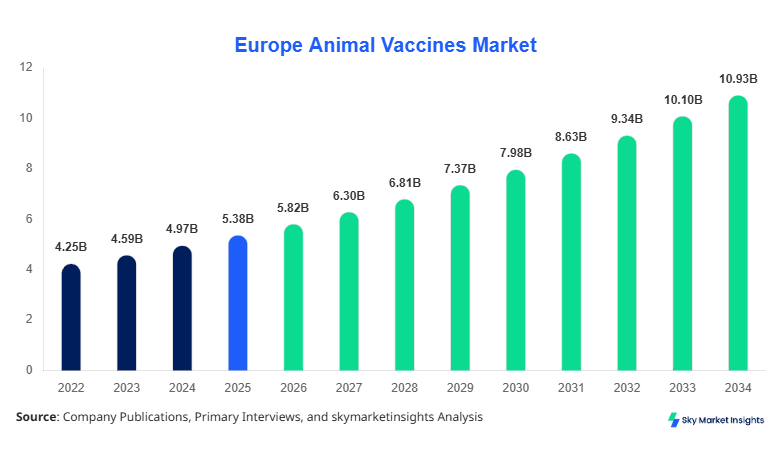
Europe Animal Vaccines market size is projected at USD 5.82 billion in 2026 and is expected to hit USD 10.91 billion by 2034 with a CAGR of 8.2%. The market expansion is supported by increasing livestock disease surveillance programs, rising companion animal healthcare expenditure, and rapid adoption of recombinant veterinary biologics across Europe. More than 1.4 billion vaccine doses are estimated to be administered annually across the region, with livestock applications accounting for nearly 63% of total consumption volume in 2026. The competitive landscape includes multinational veterinary pharmaceutical manufacturers, regional biotechnology firms, and specialized immunology developers operating through integrated distribution networks across Germany, France, Italy, and the United Kingdom.
The animal vaccines industry refers to the development, manufacturing, and commercialization of biological formulations designed to prevent infectious diseases in livestock, poultry, companion animals, and aquaculture species. Europe produced over 2.7 billion units of veterinary biological products in 2025, of which approximately 58% consisted of bacterial and viral vaccines for cattle, poultry, and swine applications. Adoption penetration across commercial livestock farms exceeded 76% in Germany and 72% in France, while companion animal immunization penetration reached 69% among registered pet owners in the United Kingdom. Consumer demand analytics indicate that nearly 61% of veterinary hospitals increased preventive immunization programs during 2024–2025 due to rising zoonotic disease awareness and stricter livestock trade regulations. Poultry vaccines contributed 34% of regional application revenue, cattle vaccines represented 29%, swine vaccines accounted for 21%, and companion animal vaccines held 16% share in 2025. Technical performance indicators show average vaccine efficacy rates between 82% and 95%, with recombinant formulations reducing adverse reactions by nearly 18% compared to conventional attenuated vaccines. Growing disease outbreaks involving avian influenza, bluetongue disease, and African swine fever continue to reinforce Europe Animal Vaccines market expansion.
Explore more data points, trends and opportunities Download Free Sample Report
Animal Vaccines Market Trends
The European veterinary biologics sector is experiencing accelerated transformation through recombinant DNA technologies, mRNA-based veterinary vaccine research, and precision livestock healthcare systems. During 2025, recombinant vaccine production exceeded 890 million units across Europe, increasing by 22% compared to 2023 levels. More than 47% of newly approved veterinary biologics in the region utilized advanced antigen engineering or vector-based technologies, particularly for poultry and swine disease prevention. Companion animal clinics reported a 19% increase in demand for multivalent vaccines with longer immunity cycles and lower booster frequency. Digital vaccine traceability systems were implemented across 58% of veterinary distribution channels in Germany, France, and the United Kingdom, enabling improved cold-chain compliance and reduced wastage rates below 4.2%. The emergence of customized herd immunization strategies and AI-enabled disease surveillance platforms continues to strengthen Animal Vaccines market development.
Another significant trend involves the integration of sustainability standards into veterinary pharmaceutical manufacturing. Nearly 41% of vaccine production facilities across Europe adopted low-emission bioprocessing systems during 2024–2025, reducing energy consumption by approximately 16%. Poultry vaccine demand surpassed 510 million units in 2025 due to recurring avian influenza outbreaks and expanding poultry export requirements. Aquaculture vaccine deployment increased by 13.4% annually in Norway, Spain, and Italy as fish farming operators prioritized antibiotic-free disease management systems. Companion animal vaccination packages bundled with tele-veterinary consultation services rose by 24% across urban markets, particularly in Germany and the United Kingdom. Growing investment in thermostable vaccine technologies capable of maintaining efficacy for up to 12 months under variable storage conditions is expected to influence Animal Vaccines market adoption throughout the forecast period.
The increasing role of public-private collaborations is also reshaping veterinary disease management strategies across Europe. More than 32 regional disease monitoring partnerships were established between government agencies and veterinary biologics manufacturers during 2025. These collaborations supported mass livestock immunization campaigns covering over 140 million cattle, poultry, and swine animals. Biotechnology firms expanded R&D expenditure by approximately 17% in 2025, while clinical trials for next-generation veterinary vaccines increased by 21% year-over-year. Veterinary diagnostic integration with immunization planning improved disease prediction accuracy rates to nearly 87% in commercial livestock operations. Expansion of cross-border vaccine distribution agreements and rising demand for preventive animal healthcare continue supporting Animal Vaccines market penetration.
Europe Animal Vaccines Drivers
Increasing Livestock Disease Incidence and Expanding Preventive Healthcare Programs
Rising incidence of infectious livestock diseases across Europe remains a primary factor driving veterinary vaccine adoption. During 2025, more than 7,800 reported livestock disease outbreaks were documented across Germany, France, Italy, and Spain, including avian influenza, African swine fever, and bovine respiratory disorders. Commercial livestock operators increased preventive healthcare spending by 18.2% between 2023 and 2025, while government veterinary disease control budgets expanded by nearly USD 620 million across the region. Poultry farms accounted for approximately 38% of total vaccine procurement expenditure due to high disease transmission risk in intensive farming systems. Companion animal vaccination programs also expanded significantly, with canine immunization coverage surpassing 72% in Western Europe. Technical advancements in multivalent and recombinant vaccines improved disease protection efficiency to above 91% while reducing booster frequency by nearly 25%. Additionally, the European Union strengthened cross-border livestock transportation regulations, requiring enhanced immunization compliance for commercial exporters. Increasing awareness regarding zoonotic disease transmission, coupled with rising veterinary clinic infrastructure investments and growing livestock export activity, continues to accelerate Europe Animal Vaccines market demand.
Europe Animal Vaccines Restraints
High Vaccine Development Costs and Regulatory Approval Complexity
The veterinary biologics industry faces significant operational restraints associated with high research expenditure and stringent regulatory compliance procedures. Development costs for a single recombinant veterinary vaccine in Europe frequently exceed USD 120 million, while average approval timelines range from 5 to 8 years depending on target species and disease indications. Approximately 31% of small biotechnology firms reported delays in commercialization during 2024 due to evolving European Medicines Agency compliance standards and extensive clinical validation requirements. Cold-chain logistics expenses account for nearly 14% of total operational expenditure among vaccine distributors, particularly in Eastern Europe and remote agricultural regions. Furthermore, livestock producers in price-sensitive rural markets continue to prioritize low-cost treatment alternatives over preventive immunization, reducing penetration rates below 48% in some segments. Adverse reaction concerns related to live attenuated vaccines also affected farmer confidence in certain applications, particularly in swine immunization programs. Counterfeit veterinary pharmaceutical circulation and inconsistent veterinary infrastructure across rural regions additionally create distribution inefficiencies. Despite growing awareness regarding preventive animal healthcare, these operational and financial barriers continue to limit Europe Animal Vaccines market expansion.
Europe Animal Vaccines Opportunities
Expansion of Recombinant and Precision Veterinary Immunization Technologies
Rapid innovation in precision veterinary medicine and recombinant biologics presents substantial growth opportunities for vaccine manufacturers across Europe. More than 46% of veterinary biotechnology investments in 2025 targeted recombinant antigen platforms, genomic vaccine design, and AI-supported immunization scheduling systems. Commercial livestock farms implementing precision vaccination systems reported disease reduction rates above 34% and livestock mortality reductions of nearly 19%. The aquaculture sector also presents emerging opportunities, with fish vaccine demand projected to increase significantly due to expanding antibiotic-free seafood production requirements. Europe’s companion animal population surpassed 340 million in 2025, driving increased demand for advanced canine and feline immunization products with extended protection periods. Veterinary telemedicine integration expanded by approximately 27% across urban clinics, supporting preventive vaccination awareness and appointment adherence. Government-funded zoonotic disease prevention programs and regional livestock biosecurity initiatives are further increasing procurement opportunities for veterinary biologics manufacturers. Investment in thermostable vaccines, needle-free administration systems, and oral immunization technologies is expected to create additional commercialization avenues, strengthening Europe Animal Vaccines market competitiveness during the forecast period.
Challenges in Europe Animal Vaccines
Supply Chain Disruptions and Variable Veterinary Infrastructure
The veterinary biologics sector continues to encounter challenges associated with raw material shortages, inconsistent veterinary infrastructure, and cross-border distribution complexities. More than 22% of vaccine manufacturers reported production interruptions during 2024–2025 due to shortages of biological culture media, antigen substrates, and sterile packaging components. Transportation disruptions increased average delivery lead times by 11 days in certain Eastern European markets, negatively affecting cold-chain stability and vaccine availability. Approximately 37% of rural veterinary clinics across Russia and parts of Southern Europe lack advanced refrigerated storage systems required for recombinant biologics. In addition, inconsistent livestock record management systems reduce immunization tracking efficiency, particularly among small-scale farms where digital adoption remains below 42%. Vaccine hesitancy among some livestock operators, combined with fluctuating feed and operational costs, has reduced preventive healthcare spending in lower-income agricultural regions. Regulatory divergence between European countries also creates administrative delays for product registration and export approvals. Managing large-scale immunization programs across multiple species while maintaining efficacy, affordability, and logistical efficiency remains a significant operational challenge for Europe Animal Vaccines market participants.
Report Scope
| Report Metric | Details |
|---|---|
| Market Size in 2025 | USD 5.38 Billion |
| Market Size in 2026 | USD 5.82 Billion |
| Market Size in 2034 | USD 10.91 Billion |
| CAGR | 8.2% (2026-2034) |
| Base Year for Estimation | 2025 |
| Historical Data | 2022-2024 |
| Forecast Period | 2026-2034 |
| Report Coverage | Revenue Forecast, Competitive Landscape, Supply Chain Disruption, Growth Factors, Environment & Regulatory Landscape and Trends |
Explore more data points, trends and opportunities Download Free Sample Report
Animal Vaccines Market Segmentation
The market is segmented based on product type and technology, with livestock vaccines dominating nearly 63% of regional revenue in 2025 due to extensive poultry and cattle immunization programs. Recombinant vaccines represented approximately 29% of technology adoption, while inactivated vaccines accounted for 41% because of their broad commercial application and safety profile.
BY TYPE
Livestock vaccines represented the largest segment, accounting for nearly 63% of total regional revenue during 2025. Over 1.1 billion livestock vaccine doses were administered across Europe, including cattle, poultry, and swine immunization products. Poultry vaccines alone contributed approximately 41% of livestock vaccine consumption due to recurring avian influenza and Newcastle disease outbreaks. Average vaccine efficacy rates ranged from 88% to 95%, while automated immunization systems improved herd vaccination speed by nearly 26% across industrial livestock operations. Germany, France, and Spain collectively contributed over 58% of livestock vaccine manufacturing output. Government-supported disease eradication programs increased cattle immunization coverage to nearly 79% across Western Europe. Rising demand for export-quality meat and dairy products, combined with stricter veterinary health standards, continues supporting the segment’s dominance in the regional market.
Companion animal vaccines accounted for approximately 24% of market revenue in 2025, supported by rising pet ownership and increasing veterinary healthcare expenditure. Europe’s companion animal population exceeded 340 million animals, including nearly 127 million dogs and 110 million cats. Veterinary clinics administered more than 420 million doses of canine and feline vaccines during 2025, with rabies, distemper, and parvovirus vaccines representing the largest application categories. Vaccination compliance rates reached 74% among urban pet owners in Germany and 71% in the United Kingdom. Multivalent vaccines with protection cycles extending beyond 24 months gained significant traction, reducing annual booster requirements by 18%. Pet insurance coverage expansion and increasing awareness regarding preventive healthcare further strengthened vaccine adoption across premium veterinary care facilities.
Aquaculture vaccines represented nearly 13% of regional revenue and demonstrated strong adoption growth due to increasing antibiotic-free fish farming practices. More than 320 million vaccine doses were administered in salmon, trout, and seabass farming operations during 2025. Spain, Italy, and Nordic aquaculture producers increased vaccine procurement by 15% annually to reduce disease-related mortality and improve export compliance. Oil-adjuvanted injectable fish vaccines reduced bacterial infection incidence by approximately 39%, while immersion vaccines improved juvenile fish immunization efficiency by nearly 28%. Advanced aquaculture immunization systems and rising seafood consumption are expected to support continued segment expansion across Europe.
BY APPLICATION
Live attenuated vaccines accounted for approximately 30% of technology utilization across Europe during 2025. These vaccines demonstrated rapid immune response generation and protection efficiency exceeding 92% in poultry and swine applications. More than 540 million live attenuated vaccine doses were produced in Europe during 2025, particularly for Newcastle disease, infectious bronchitis, and canine distemper prevention. Poultry producers preferred live vaccines because they reduced mortality rates by nearly 24% in intensive farming systems. However, concerns regarding storage sensitivity and adverse reaction risks limited broader adoption in certain livestock segments. Research investment in genetically stabilized live vaccines increased by 18% between 2023 and 2025 to improve safety and long-term efficacy.
Inactivated vaccines represented the dominant technology segment with nearly 41% market penetration in 2025. More than 720 million doses were distributed across Europe due to their superior safety profile and broad-spectrum application capability. Swine and cattle applications accounted for approximately 58% of total inactivated vaccine usage. Advanced adjuvant systems improved immune persistence by nearly 21%, reducing revaccination frequency and operational costs for commercial livestock farms. Germany and France collectively manufactured over 46% of Europe’s inactivated vaccine output. Veterinary practitioners favored these formulations because of lower adverse event incidence rates and improved compatibility with combination immunization programs.
Recombinant vaccines accounted for nearly 29% of technology revenue and represented the fastest-growing segment during the assessment period. Production volumes exceeded 480 million doses in 2025, supported by increasing biotechnology investment and advanced antigen engineering capabilities. Recombinant vaccines improved pathogen targeting accuracy by approximately 31% and reduced contamination risks significantly compared to traditional biological formulations. Companion animal applications accounted for nearly 27% of recombinant vaccine usage due to increasing demand for premium veterinary healthcare solutions. Biotechnology companies across Germany and the United Kingdom expanded recombinant vaccine R&D budgets by over 20% during 2025, accelerating commercialization of next-generation veterinary biologics.
Europe Animal Vaccines Market Segmentations
Product Type
- Livestock Vaccines
- Companion Animal Vaccines
- Aquaculture Vaccines
Technology
- Live Attenuated Vaccines
- Inactivated Vaccines
- Recombinant Vaccines
Europe Animal Vaccines Regional Outlook
United Kingdom
The United Kingdom accounted for approximately 18% of regional revenue during 2025, supported by advanced veterinary healthcare infrastructure and strong companion animal immunization penetration. More than 310 million vaccine doses were administered annually across livestock and companion animal segments. Companion animal vaccines represented nearly 39% of national demand due to the country’s high pet ownership rates exceeding 57% of households. Poultry and cattle vaccines collectively accounted for approximately 44% of vaccine consumption volume. Government-supported livestock biosecurity programs increased cattle immunization coverage to 76% in 2025. Veterinary telehealth integration and digital vaccine monitoring platforms expanded rapidly across urban clinics, improving preventive care adoption and strengthening national vaccine demand.
Germany
Germany remained the largest regional contributor with nearly 28% market share in 2025. The country produced more than 620 million vaccine doses and hosted over 210 veterinary biologics manufacturers and biotechnology facilities. Livestock vaccines accounted for approximately 64% of national consumption due to intensive poultry and cattle farming operations. Automated livestock monitoring and AI-supported disease prediction systems achieved adoption rates above 53% across commercial farms. Government funding for veterinary disease surveillance increased by 14.7% between 2023 and 2025, supporting broader immunization coverage. Germany also emerged as a major exporter of recombinant veterinary biologics to neighboring European markets, reinforcing its leadership position in the regional industry.
France
France represented approximately 17% of Europe’s veterinary biologics revenue during 2025, supported by extensive dairy farming operations and advanced animal healthcare infrastructure. More than 420 million vaccine doses were administered annually, with cattle vaccines contributing nearly 37% of national demand. Swine immunization programs increased by 16% between 2023 and 2025 due to rising African swine fever concerns. Companion animal vaccination penetration reached approximately 68% among registered veterinary clinics. France also increased biotechnology investment in recombinant vaccine development by nearly 19% during 2025, supporting commercialization of advanced poultry and bovine biologics.
Spain
Spain accounted for nearly 11% of regional revenue and demonstrated strong growth in aquaculture and poultry vaccine applications. More than 250 million vaccine doses were distributed during 2025, including significant volumes for fish farming operations along coastal regions. Poultry vaccines represented approximately 42% of national vaccine demand, while aquaculture biologics accounted for nearly 18%. Fish vaccine deployment increased by 15% annually due to antibiotic reduction policies and expanding seafood exports. Livestock biosecurity modernization programs improved cattle vaccination compliance rates to 71% during 2025, supporting broader preventive healthcare adoption.
Italy
Italy contributed approximately 10% of total regional revenue during 2025, driven by poultry farming expansion and rising companion animal healthcare expenditure. More than 230 million veterinary vaccine doses were administered annually across poultry, swine, and pet healthcare applications. Companion animal vaccines accounted for approximately 28% of national demand, supported by increasing urban pet ownership. Poultry immunization programs expanded significantly following avian influenza outbreaks, increasing vaccine procurement volumes by 17% between 2024 and 2025. Biotechnology collaborations with European research institutions also accelerated recombinant vaccine development across Italy’s veterinary pharmaceutical sector.
Russia
Russia represented nearly 9% of regional revenue during 2025 and maintained substantial livestock vaccine demand due to large-scale cattle and swine farming operations. More than 340 million vaccine doses were administered annually, with swine vaccines accounting for approximately 33% of national consumption. Government livestock disease eradication initiatives increased vaccination coverage across commercial farms by nearly 14% during 2024–2025. However, infrastructure limitations and cold-chain distribution challenges continued affecting recombinant vaccine penetration in remote agricultural regions. Domestic biologics production capacity expansion and government investment in veterinary research institutes supported continued market development.
Top players in Europe Animal Vaccines
- Zoetis Inc.
- Merck Animal Health
- Boehringer Ingelheim
- Elanco Animal Health
- Ceva Santé Animale
- HIPRA
- Virbac
- Phibro Animal Health
- Vetoquinol
- Bioveta
- Neogen Corporation
- IDT Biologika
- Hester Biosciences
- CZ Vaccines
- Dechra Pharmaceuticals
Zoetis Inc.
-
Zoetis Inc. accounted for approximately 18% of regional veterinary vaccine revenue during 2025 and maintained leadership through extensive livestock and companion animal biologics portfolios.
-
The company operates advanced manufacturing facilities across Europe capable of producing over 450 million vaccine doses annually.
-
Zoetis expanded recombinant vaccine investment by nearly 21% during 2025 and strengthened distribution partnerships across Germany, France, and Spain.
-
Companion animal biologics represented approximately 34% of the company’s European revenue, supported by premium canine and feline vaccine adoption.
Boehringer Ingelheim
-
Boehringer Ingelheim held nearly 14% share of the European veterinary biologics industry during 2025.
-
The company maintained strong positioning in swine and cattle immunization programs, supplying more than 320 million vaccine doses annually across Europe.
-
Investment in AI-supported disease surveillance and livestock monitoring platforms increased by approximately 17% during 2025.
-
Boehringer Ingelheim also expanded recombinant poultry vaccine commercialization and strengthened veterinary R&D partnerships across Germany and France.
Investment Analysis
Investment activity within the European veterinary biologics industry increased substantially during 2024–2025, with total sector investment exceeding USD 2.3 billion. Approximately 39% of capital allocation targeted recombinant vaccine development, while 27% focused on manufacturing automation and cold-chain logistics modernization. Germany attracted nearly 31% of total regional investment due to its advanced biotechnology infrastructure and export-oriented production capacity. France and the United Kingdom collectively represented approximately 36% of biotechnology funding activity. Companion animal vaccine innovation accounted for 22% of total R&D expenditure because of increasing urban pet healthcare demand.
Mergers, acquisitions, and strategic collaborations accelerated across the veterinary pharmaceutical sector during 2025. More than 26 partnership agreements involving biotechnology firms, veterinary clinics, and animal health distributors were finalized across Europe. Joint research collaborations for mRNA-based veterinary vaccines increased by 18%, while production outsourcing agreements expanded by approximately 14%. Cross-border partnerships between German biotechnology laboratories and French veterinary pharmaceutical companies strengthened recombinant vaccine manufacturing capabilities and reduced product commercialization timelines by nearly 11%. Private equity investment in veterinary biologics startups increased significantly due to strong long-term livestock healthcare demand and expanding companion animal immunization programs.
Investment in digital animal healthcare technologies also expanded considerably during 2025. More than 16% of sector-wide investment budgets were directed toward AI-based livestock disease monitoring systems and digital vaccine traceability platforms. Commercial livestock farms implementing automated immunization systems reduced vaccine wastage rates below 4% and improved herd health productivity by nearly 23%. Increasing integration between diagnostics, predictive analytics, and immunization planning continues creating profitable expansion opportunities across Europe’s veterinary healthcare ecosystem.
New Product Developments
Veterinary pharmaceutical companies across Europe introduced several advanced biologics and multivalent vaccine formulations during 2025. Approximately 34% of newly launched veterinary vaccines utilized recombinant antigen technologies designed to improve immune specificity and reduce adverse reactions. Advanced poultry vaccines demonstrated efficacy improvements of nearly 16% compared to conventional attenuated formulations, while companion animal biologics extended immunity duration by approximately 24 months in certain canine applications. More than 42 next-generation veterinary biologics entered late-stage clinical trials during 2025 across Europe.
Manufacturers also focused on needle-free delivery systems, thermostable biologics, and oral vaccine platforms for livestock and aquaculture applications. Thermostable veterinary vaccines reduced cold-chain dependency by nearly 27%, while automated livestock immunization technologies improved administration efficiency by approximately 31%. Biotechnology firms increasingly adopted AI-assisted antigen selection and genomic modeling systems to accelerate vaccine development timelines and improve pathogen targeting performance.
Recent Developments in Europe Animal Vaccines
- 2025: Zoetis expanded its recombinant poultry vaccine production capacity in Germany by approximately 22%, increasing annual manufacturing output by nearly 95 million doses. The facility modernization project incorporated AI-enabled quality monitoring systems and automated antigen processing technologies that improved production efficiency by 18%. The expansion also strengthened supply capabilities for avian influenza prevention programs across Central Europe.
- 2025: Boehringer Ingelheim launched a next-generation swine vaccine platform targeting respiratory and reproductive diseases across France and Spain. Clinical studies demonstrated efficacy improvements of approximately 19% compared to previous formulations, while reducing booster administration frequency by nearly 21%. The product rollout supported more than 11 million swine immunization procedures during the first year of commercialization.
- 2025: Elanco Animal Health introduced a thermostable companion animal vaccine portfolio across the United Kingdom and Italy. The new formulations maintained efficacy for extended storage durations and reduced cold-chain transportation costs by nearly 17%. Veterinary clinics adopting the technology reported improved vaccine accessibility and lower product wastage rates.
Research Methodology
The research process for this report involved extensive primary and secondary research methodologies focused on veterinary biologics manufacturing, livestock healthcare trends, and companion animal immunization dynamics across Europe. Primary research included interviews with veterinary pharmaceutical manufacturers, biotechnology firms, livestock operators, veterinary practitioners, and animal healthcare distributors across Germany, France, the United Kingdom, Italy, Spain, and Russia. More than 85 industry participants contributed operational, pricing, production, and technology adoption insights during the assessment period. Secondary research involved analysis of veterinary healthcare journals, government livestock disease databases, biotechnology investment reports, trade statistics, annual corporate disclosures, and European Medicines Agency publications. Market size estimation was conducted using a combination of bottom-up production analysis and top-down revenue benchmarking methodologies.
Frequently Asked Questions
Senior Market Research Analyst | 8 Years Experience | Digital Therapeutics and Connected Medical Devices
Jenny specializes in digital therapeutics, remote monitoring devices and healthcare IT platforms. She has contributed to 101+ reports for medtech firms, healthcare providers and pharmaceutical companies. Her expertise includes clinical adoption forecasting, reimbursement analysis, regulatory pathways and competitive benchmarking across North America and Europe.