Europe Aneurysmal Subarachnoid Hemorrhage Market Size
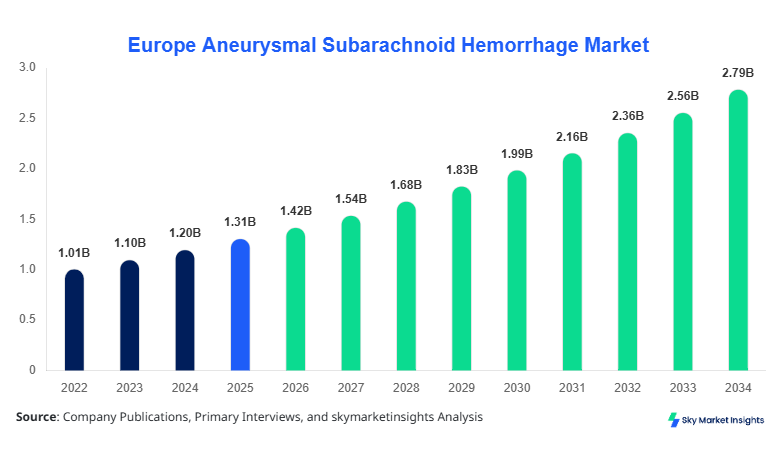
Europe's aneurysmal subarachnoid hemorrhage market size is projected at USD 1.42 billion in 2026 and is expected to hit USD 2.78 billion by 2034 with a CAGR of 8.8%. The increasing prevalence of intracranial aneurysms, rising neurological emergency admissions, and expanding neurovascular treatment infrastructure across Europe are contributing significantly to market expansion. More than 185,000 aneurysmal subarachnoid hemorrhage cases are estimated annually across the region, with tertiary care hospitals accounting for over 71% of treatment procedures in 2026. Increasing integration of minimally invasive neurovascular therapies, enhanced imaging systems, and advanced ICU monitoring technologies are strengthening treatment outcomes and procedural efficiency. The report provides extensive analysis of treatment segmentation, application penetration, reimbursement structures, technological innovations, and competitive positioning across the European Aneurysmal Subarachnoid Hemorrhage market.
Aneurysmal subarachnoid hemorrhage refers to bleeding within the subarachnoid space caused by rupture of cerebral aneurysms, representing nearly 5% of all stroke-related incidents across Europe. The condition requires rapid neurovascular intervention due to mortality rates exceeding 30% within the first 30 days without timely treatment. Europe recorded approximately 2.9 million neurological emergency admissions in 2025, among which aneurysmal subarachnoid hemorrhage represented around 6.4%. France, Germany, and the United Kingdom collectively contributed over 58% of total neurovascular treatment procedures in the region. Endovascular coiling procedures represented nearly 63% of interventions in 2025 due to shorter hospitalization periods and reduced surgical trauma compared to clipping procedures. Hospitals accounted for 68% of application share owing to advanced neurocritical care facilities, while specialty neurology clinics contributed approximately 21%. Adoption of AI-assisted angiography systems increased by 34% between 2023 and 2025, improving aneurysm detection accuracy above 92%. Increasing elderly population, smoking prevalence above 22% in selected European countries, and hypertension incidence nearing 29% are significantly accelerating Europe Aneurysmal Subarachnoid Hemorrhage market expansion.
In France, the aneurysmal subarachnoid hemorrhage market accounted for nearly 19% of total Europeanan revenue generation in 2025 due to high neurovascular treatment accessibility and strong reimbursement frameworks. France operates more than 145 advanced neurological treatment centers and approximately 310 specialized stroke management facilities supporting aneurysm management procedures. Endovascular coiling procedures represented 67% of total interventions performed in France during 2025, while surgical clipping contributed approximately 24%. More than 18,500 aneurysmal subarachnoid hemorrhage cases were treated across France in 2025, with Paris and Lyon accounting for over 38% of procedure volume. AI-enabled angiography platforms recorded adoption penetration above 41% across tertiary hospitals, while robotic catheter navigation systems grew by 22% year-over-year. Public healthcare expenditure on neurovascular diseases exceeded USD 2.3 billion in 2025, with nearly 11% directed toward aneurysm diagnosis and intervention technologies. Increasing use of minimally invasive neurovascular treatment systems and higher screening rates among high-risk populations continue to reinforce Europe's aneurysmal subarachnoid hemorrhage market development.
Explore more data points, trends and opportunities Download Free Sample Report
Aneurysmal Subarachnoid Hemorrhage Market Trends
Rising Adoption of Minimally Invasive Neurovascular Interventions
The transition toward minimally invasive neurovascular procedures has become one of the most significant developments across Europe. Endovascular coiling systems witnessed procedural adoption exceeding 63% across regional hospitals in 2025 compared with 54% in 2022. More than 118,000 neurovascular catheter systems were utilized across Europe during 2025, reflecting strong procedural growth. Advanced stent-assisted coiling systems improved procedural success rates to nearly 91%, reducing recurrence risks by approximately 17%. Germany and France collectively accounted for 44% of total endovascular consumable demand in the region. Robotic-assisted catheter guidance platforms recorded installation growth of 28% between 2023 and 2025, especially in university hospitals and tertiary stroke centers. Increasing preference for minimally invasive procedures due to lower ICU stay duration, which declined from 14 days to nearly 9 days on average, continues supporting Europe's aneurysmal subarachnoid hemorrhage market expansion.
Integration of AI-Based Diagnostic Imaging Systems
AI-driven neuroimaging technologies are transforming aneurysm detection and emergency diagnosis workflows throughout Europe. More than 38% of tertiary hospitals integrated AI-supported CT angiography platforms in 2025, compared with 19% in 2022. These technologies improved aneurysm identification sensitivity from 82% to nearly 94% while reducing diagnostic turnaround time below 12 minutes in emergency stroke units. Annual installations of high-resolution digital subtraction angiography systems exceeded 2,700 units across Europe in 2025. The United Kingdom and Italy reported AI imaging adoption growth rates above 31% year-over-year. Machine-learning-supported hemorrhage segmentation tools improved clinical decision accuracy by approximately 26%, particularly in complex aneurysm localization cases. Increased investment in neurological imaging infrastructure and digital hospital ecosystems is accelerating Europe Aneurysmal Subarachnoid Hemorrhage market penetration.
Expansion of Neurocritical Care Infrastructure
Healthcare systems across Europe are expanding neurocritical care capacity to address increasing stroke emergencies and aneurysm-related complications. ICU bed allocations dedicated to neurological emergencies increased by 14% between 2023 and 2025, surpassing 42,000 specialized neurocritical care beds across Europe. Russia, Spain, and Italy collectively invested more than USD 780 million in neurovascular emergency infrastructure modernization during 2025. Remote patient monitoring technologies recorded adoption rates above 36% among neurological intensive care units, improving post-operative monitoring efficiency and reducing readmission rates by 18%. Hospitals equipped with integrated neurocritical monitoring systems achieved survival rates exceeding 72% among high-risk aneurysmal subarachnoid hemorrhage patients. The rising establishment of stroke-ready hospitals and specialized neurosurgical networks continues strengthening Europe's aneurysmal subarachnoid hemorrhage market dynamics.
Europe Aneurysmal Subarachnoid Hemorrhage Market Drivers
Increasing Prevalence of Hypertension and Smoking-Related Cerebral Aneurysms
The growing prevalence of hypertension, smoking, obesity, and vascular disorders across Europe is significantly driving aneurysmal subarachnoid hemorrhage incidence. More than 152 million adults in Europe were diagnosed with hypertension in 2025, while smoking prevalence remained above 22% in Eastern Europe and nearly 18% in Western Europe. Clinical studies indicate that smokers face nearly 3.1 times higher aneurysm rupture risk compared with non-smokers. Approximately 42% of diagnosed aneurysm patients across Europe were aged above 55 years, reflecting strong demographic influence on disease occurrence. The number of annual aneurysm screening procedures surpassed 3.8 million in 2025 due to increasing awareness campaigns and preventive healthcare programs. Government-supported stroke management initiatives in France and Germany expanded neurovascular screening accessibility by nearly 27% over the last three years. Increasing prevalence of cerebrovascular disorders and strong clinical emphasis on early diagnosis are substantially supporting Europe's aneurysmal subarachnoid hemorrhage market development.
Europe Aneurysmal Subarachnoid Hemorrhage Market Restraints
High Treatment Costs and Limited Accessibility in Rural Healthcare Systems
Despite technological advancement, high treatment costs remain a major barrier across several European healthcare systems. Endovascular coiling procedures cost between USD 18,000 and USD 41,000 per patient, while surgical clipping procedures often exceed USD 35,000, including ICU hospitalization expenses. Rural and underdeveloped regions in Eastern Europe continue facing limited access to advanced neurovascular treatment facilities, with more than 37% of patients requiring intercity emergency transfers. Russia and selected Southern European regions reported neurovascular specialist shortages exceeding 21% during 2025. Advanced AI imaging systems and robotic catheter platforms require installation costs above USD 1.2 million per facility, restricting adoption among medium-sized hospitals. Insurance reimbursement variability and delayed procedural approvals also affect treatment timelines. Additionally, post-operative rehabilitation expenses increased by nearly 16% between 2023 and 2025 due to inflationary healthcare pressures. These limitations continue to restrain Europe's aneurysmal subarachnoid hemorrhage market expansion.
Europe Aneurysmal Subarachnoid Hemorrhage Market Opportunities
Growing Investments in Neurovascular Innovation and Precision Medicine
Expanding investment in neurovascular innovation and precision medicine technologies is creating substantial opportunities across Europe. Public and private neurological R&D funding exceeded USD 4.7 billion in 2025, with approximately 13% directed toward aneurysm treatment innovation. Development of bioactive coils, flow-diverting stents, and AI-supported hemorrhage prediction systems is improving treatment precision and long-term survival outcomes. More than 95 neurovascular clinical trials related to aneurysmal subarachnoid hemorrhage were active across Europe in 2025. Personalized imaging analytics and genomic risk profiling platforms improved high-risk patient identification rates by nearly 29%. France, Germany, and the United Kingdom collectively accounted for 61% of total neurovascular startup investments in the region. Strategic collaborations between medical device manufacturers and neurological research institutes increased by 24% year-over-year. Rising innovation intensity and digital healthcare transformation are generating strong opportunities for European aneurysmal subarachnoid hemorrhage market participants.
Challenges in Europe Aneurysmal Subarachnoid Hemorrhage Market
Delayed Diagnosis and Post-Treatment Neurological Complications
Delayed diagnosis remains one of the primary challenges impacting clinical outcomes across Europe. Nearly 18% of aneurysmal subarachnoid hemorrhage patients initially receive misdiagnosis during emergency admission due to symptom overlap with migraines or ischemic stroke conditions. Vasospasm-related complications affect approximately 32% of patients following hemorrhage events, significantly increasing mortality risk. Cognitive impairment and neurological disability rates remain above 27% even after successful intervention procedures. Healthcare systems across Eastern Europe continue facing prolonged imaging turnaround times exceeding 2 hours in several secondary hospitals, delaying emergency intervention. Additionally, a shortage of trained neurointerventional radiologists and neurosurgeons has increased treatment waiting times by nearly 11% since 2023. Rehabilitation infrastructure gaps and inconsistent post-operative care protocols further complicate long-term recovery. These operational and clinical barriers continue challenging Europe's aneurysmal subarachnoid hemorrhage market progression.
Report Scope
| Report Metric | Details |
|---|---|
| Market Size in 2025 | USD 1.31 Billion |
| Market Size in 2026 | USD 1.42 Billion |
| Market Size in 2034 | USD 2.78 Billion |
| CAGR | 8.8% (2026-2034) |
| Base Year for Estimation | 2025 |
| Historical Data | 2022-2024 |
| Forecast Period | 2026-2034 |
| Report Coverage | Revenue Forecast, Competitive Landscape, Supply Chain Disruption, Growth Factors, Environment & Regulatory Landscape and Trends |
Explore more data points, trends and opportunities Download Free Sample Report
Aneurysmal Subarachnoid Hemorrhage Market Segmentation
The European market is segmented based on treatment type and end-user applications. Endovascular coiling dominated nearly 63% of treatment procedures in 2025 due to higher safety and reduced hospitalization duration. Hospitals represented approximately 68% of application share owing to strong emergency response infrastructure and specialized neurocritical care systems.
BY TYPE
Surgical clipping accounted for approximately 24% of total treatment procedures across Europe in 2025. More than 42,000 clipping procedures were performed annually due to effectiveness in complex aneurysm structures and younger patient populations. Germany and Russia collectively contributed around 39% of clipping surgeries owing to large neurosurgical hospital networks. Titanium clip systems dominated nearly 81% of procedural demand because of durability and MRI compatibility. Average procedural duration remained between 3.5 and 5 hours, while post-operative ICU stays averaged 11 days. Mortality rates for clipping procedures declined from 18% in 2022 to approximately 13% in 2025 due to improved intraoperative imaging systems. Advanced neuronavigation platforms increased procedural precision by nearly 22%. Surgical clipping continues to maintain clinical relevance in large aneurysm cases and posterior circulation aneurysm management within the European market.
Endovascular coiling represented the dominant treatment segment, with nearly 63% procedural share in 2025. More than 112,000 coil embolization procedures were performed throughout Europe, supported by rising availability of catheter-based neurovascular systems. Platinum detachable coils accounted for over 72% of device demand due to superior flexibility and thrombogenicity. France, the United Kingdom, and Italy collectively contributed nearly 51% of total coiling procedures. Procedure time averaged below 2 hours compared with longer surgical interventions, while hospitalization duration declined by nearly 31%. Flow-diversion systems integrated with coiling technologies improved occlusion success rates to above 90%. AI-guided angiography platforms enhanced aneurysm localization efficiency by approximately 25%. Growing physician preference for minimally invasive interventions continues driving procedural penetration across the Europe market.
Pharmacological therapy contributed approximately 13% of treatment-related expenditure in 2025, primarily focusing on vasospasm prevention, pain management, and neuroprotection. Nimodipine-based therapies represented nearly 58% of prescribed neurological medications for aneurysmal subarachnoid hemorrhage management. Annual neurovascular pharmaceutical consumption exceeded 46 million units across Europe during 2025. Hospitals accounted for over 74% of pharmacological utilization due to intensive care administration protocols. Combination therapies integrating calcium channel blockers and anti-inflammatory agents improved neurological stabilization rates by 19%. Intravenous infusion therapy penetration increased by nearly 14% year-over-year. Expanding pharmaceutical R&D in neuroprotective compounds and critical care management is supporting therapeutic diversification in the European market.
BY APPLICATION
Hospitals dominated the application landscape with approximately 68% market share in 2025 due to integrated neurocritical care infrastructure and emergency response capabilities. More than 1,850 tertiary hospitals across Europe offered aneurysmal subarachnoid hemorrhage treatment services. Annual hospital-based neurovascular procedures exceeded 158,000 cases during 2025. Germany and France collectively accounted for nearly 36% of total hospital admissions related to aneurysmal hemorrhage. Advanced imaging installations surpassed 5,400 neuroangiography systems across European hospitals. ICU occupancy associated with neurological emergencies increased by 17% over the last three years. Hospitals equipped with robotic-assisted neurovascular systems reported procedural complication reductions nearing 21%. Increasing reimbursement coverage and expansion of stroke-ready facilities continue to reinforce hospital dominance in the European market.
Specialty neurology clinics accounted for approximately 21% of application share owing to increasing outpatient diagnostics and post-operative monitoring services. Europe operated more than 3,700 dedicated neurology clinics in 2025, supporting early aneurysm detection and rehabilitation management. Advanced MRI and CT angiography utilization rates exceeded 61% among specialized clinics. Outpatient aneurysm follow-up visits surpassed 4.2 million annually across Europe. France and the United Kingdom collectively contributed over 33% of specialty neurology clinic procedures. Tele-neurology adoption increased by nearly 29% between 2023 and 2025, improving rural patient accessibility. Specialty clinics also reduced tertiary hospital burden by handling nearly 26% of rehabilitation assessments and long-term monitoring services. Increasing neurological awareness and expansion of outpatient care systems are strengthening clinic-based applications in the Europe market.
Ambulatory surgical centers represented approximately 11% of application share in 2025, supported by increasing adoption of minimally invasive coiling procedures. More than 740 ambulatory neurovascular centers were operational across Europe during 2025. Same-day neurovascular interventions increased by 18% compared with 2023 due to technological advancements in catheter systems and anesthesia protocols. Average patient recovery duration in ambulatory centers declined below 48 hours, significantly improving operational efficiency. Spain and Italy collectively accounted for 28% of ambulatory neurovascular procedures. Cost savings associated with outpatient intervention models ranged between 17% and 24% compared with hospital admissions. Integration of portable angiography systems and AI-supported monitoring tools improved procedural accuracy by approximately 15%. Ambulatory surgical centers are increasingly contributing to decentralized neurovascular treatment delivery across the European market.
Europe Aneurysmal Subarachnoid Hemorrhage Market Segmentations
Treatment Type
- Surgical Clipping
- Endovascular Coiling
- Pharmacological Therapy
End User
- Hospitals
- Specialty Neurology Clinics
- Ambulatory Surgical Centers
Europe Aneurysmal Subarachnoid Hemorrhage Market Regional Outlook
United Kingdom
The United Kingdom accounted for approximately 17% of Europe's revenue generation in 2025 due to advanced stroke management systems and strong neurological healthcare funding. More than 22,000 aneurysmal subarachnoid hemorrhage cases were treated annually across NHS-affiliated hospitals. Endovascular coiling procedures represented nearly 66% of interventions in the country. Over 145 stroke-ready hospitals and 52 advanced neurovascular centers supported emergency aneurysm management across England, Scotland, and Wales. AI-assisted imaging systems recorded penetration rates above 39% within tertiary healthcare facilities. Neurological healthcare spending exceeded USD 5.8 billion annually, with approximately 9% allocated to neurovascular diseases. Increasing integration of robotic-assisted catheter navigation technologies and digital stroke pathways continues supporting treatment efficiency across the United Kingdom.
Germany
Germany represented nearly 21% of Europe's revenue share due to extensive neurosurgical infrastructure and high healthcare expenditure. The country operated over 190 certified stroke centers and more than 430 neurological intensive care facilities during 2025. Annual aneurysm intervention procedures surpassed 31,000 cases, with endovascular coiling accounting for approximately 61%. Germany contributed nearly 27% of Europe’s total neuroangiography equipment installations owing to strong medical technology adoption. ICU mortality rates associated with aneurysmal subarachnoid hemorrhage declined from 16% in 2022 to approximately 11% in 2025. The country invested more than USD 1.1 billion in neurological infrastructure modernization between 2023 and 2025. High procedural accuracy, strong reimbursement systems, and advanced neurosurgical expertise continue strengthening Germany’s role within the European market.
France
France contributed around 19% of regional market activity due to widespread neurovascular accessibility and favorable public healthcare frameworks. More than 18,500 aneurysmal subarachnoid hemorrhage patients received treatment during 2025, while tertiary neurological hospitals exceeded 145 nationwide. Endovascular intervention penetration surpassed 67%, supported by advanced catheterization laboratories and AI-based angiography systems. France recorded nearly 41% adoption rates for AI-supported emergency stroke imaging platforms in 2025. Paris, Marseille, and Lyon collectively accounted for over 44% of national neurovascular procedure volume. Public healthcare expenditure directed toward neurological emergencies exceeded USD 2.3 billion annually. Increasing neurological awareness campaigns and preventive screening programs continue strengthening France’s contribution to the European market.
Spain
Spain accounted for approximately 11% of regional revenue generation due to growing neurological emergency care investments and increasing outpatient neurovascular procedures. More than 13,000 aneurysmal hemorrhage interventions were conducted across Spain in 2025. Ambulatory neurovascular treatment adoption increased by 21% between 2023 and 2025 due to shorter recovery durations and cost efficiencies. Barcelona and Madrid contributed nearly 46% of total procedural activity. Spain installed more than 380 advanced neuroangiography systems during 2025, improving emergency diagnosis capabilities. Public-private healthcare collaborations increased neurovascular infrastructure investments by approximately 18%. Expanding stroke management awareness and minimally invasive intervention adoption continue driving Spain’s participation within the European market.
Italy
Italy represented nearly 12% of regional market share in 2025, supported by advanced neurology departments and rising elderly population incidence. More than 15,400 aneurysmal hemorrhage cases were treated annually across the country. Hospitals accounted for approximately 71% of total treatment applications owing to strong ICU infrastructure and emergency response systems. Italy recorded AI-enabled CT angiography adoption rates above 34% in tertiary neurological centers. Northern Italy contributed nearly 58% of total neurovascular procedures due to the concentration of specialized hospitals in Milan and Turin. Neurovascular healthcare investments exceeded USD 620 million in 2025, particularly in imaging modernization and digital stroke systems. Rising chronic hypertension prevalence and increasing neurosurgical capacity continue supporting Italy’s contribution to the European market.
Russia
Russia accounted for approximately 9% of Europe's revenue share due to a large patient population and expanding neurological treatment infrastructure. Annual aneurysmal hemorrhage admissions exceeded 27,000 cases across major urban hospitals in 2025. Moscow and Saint Petersburg collectively contributed around 39% of neurovascular procedures nationwide. Endovascular coiling adoption increased from 43% in 2022 to approximately 56% in 2025. Government investments in neurological emergency infrastructure surpassed USD 470 million between 2023 and 2025. Russia expanded neurocritical care bed capacity by nearly 16% to address increasing stroke emergencies. However, regional disparities in specialist availability and imaging accessibility continue impacting treatment efficiency. Ongoing healthcare modernization initiatives are expected to strengthen Russia’s role in the European market.
Top players in Europe Aneurysmal Subarachnoid Hemorrhage Market
- Medtronic plc
- Stryker Corporation
- Terumo Corporation
- Johnson & Johnson MedTech
- Penumbra Inc.
- MicroPort Scientific Corporation
- Balt Group
- Kaneka Corporation
- Phenox GmbH
- Abbott Laboratories
- Siemens Healthineers
- GE HealthCare
- Philips Healthcare
- B. Braun Melsungen AG
- Asahi Intecc Co., Ltd.
Medtronic plc
-
Estimated Europe neurovascular market positioning exceeded 18% share during 2025 due to a strong endovascular device portfolio and widespread hospital partnerships.
-
The company expanded its detachable coil and flow-diverter system installations by nearly 24% across Europe between 2023 and 2025.
-
Medtronic operated extensive neurovascular training collaborations with over 210 tertiary hospitals across Germany, France, and the United Kingdom.
-
Investment in AI-integrated catheter guidance technologies improved procedural precision by approximately 19%.
-
Strong R&D expenditure exceeding USD 180 million in neurovascular innovation continues to reinforce the company’s leadership position within the European market.
Stryker Corporation
-
Stryker accounted for approximately 15% of Europe's neurovascular procedural device demand in 2025 through its advanced embolization and neurovascular access systems.
-
The company recorded annual sales growth above 13% across France and Germany due to increasing minimally invasive intervention adoption.
-
More than 9,000 European aneurysm procedures utilized Stryker embolization systems during 2025.
-
Strategic acquisitions and physician training programs expanded hospital penetration by nearly 17% over the last three years.
-
Integration of enhanced imaging compatibility and microcatheter technologies improved treatment efficiency and strengthened Stryker’s competitive positioning within the European market.
Investment Analysis
Investment activity within the European neurovascular healthcare sector increased substantially during 2025, with total neurological infrastructure investments exceeding USD 7.6 billion. Approximately 36% of total investment allocation focused on advanced imaging systems, while 29% targeted minimally invasive neurovascular intervention technologies. France, Germany, and the United Kingdom collectively accounted for nearly 63% of total regional neurovascular funding. Private equity participation in neurovascular startups increased by approximately 21% year-over-year, particularly in AI imaging and robotic-assisted catheter navigation technologies. Hospitals allocated nearly 18% of neurological capital expenditure toward digital stroke management ecosystems and ICU modernization projects. Expansion of neurocritical care infrastructure and precision medicine platforms continues attracting institutional healthcare investors across Europe.
Mergers, acquisitions, and strategic collaborations remain central to competitive expansion within the European market. During 2025, more than 34 strategic partnership agreements were recorded among medical device companies, hospital networks, and neurological research institutes. Cross-border collaborations between France and Germany increased by 16% to accelerate AI-driven neurovascular innovation. Medtronic, Stryker, and Penumbra collectively invested over USD 480 million in European neurovascular technology partnerships between 2023 and 2025. Academic collaborations related to aneurysm biomarker development increased by nearly 22% year-over-year. Additionally, regional governments allocated approximately 14% of digital healthcare modernization budgets toward neurological emergency management systems. The strong focus on minimally invasive innovation, emergency stroke preparedness, and precision neurovascular treatment is expected to maintain robust investment momentum across the European market.
New Product Developments
Manufacturers across Europe intensified neurovascular product development activities during 2025, with more than 28% of launched products focused on minimally invasive aneurysm intervention technologies. Bioactive coil systems demonstrated occlusion performance improvements exceeding 17% compared with traditional platinum coils. AI-integrated angiography systems reduced aneurysm detection time by nearly 32%, improving emergency treatment efficiency. Development of ultra-flexible microcatheters enhanced navigation precision in complex cerebral vasculature by approximately 21%. Hospitals adopting next-generation flow-diverting stents reported complication reductions nearing 14%.
Several companies also introduced advanced neurocritical monitoring solutions and real-time hemorrhage analytics platforms during 2025. Portable neuroangiography systems improved emergency imaging accessibility by nearly 19% in ambulatory care environments. Digital monitoring platforms integrated with predictive AI algorithms enhanced vasospasm risk prediction accuracy above 88%. Europe-based neurovascular manufacturers increased R&D budgets by approximately 15% year-over-year, supporting rapid innovation cycles and commercialization of precision neurological treatment technologies.
Recent Developments in Europe Aneurysmal Subarachnoid Hemorrhage Market
- 2025: Medtronic expanded its neurovascular manufacturing capacity in Europe by 14%, increasing annual detachable coil production above 2.6 million units. The company also launched AI-assisted catheter navigation technologies across 75 tertiary hospitals in France and Germany, improving procedural efficiency by nearly 18%.
- 2025: Stryker introduced a next-generation embolization coil platform with enhanced thrombogenic coating technology, reducing aneurysm recurrence rates by approximately 16%. The launch supported procedural adoption growth exceeding 12% across the United Kingdom and Italy.
Research Methodology
The European Aneurysmal Subarachnoid Hemorrhage market report was prepared using a combination of primary and secondary research methodologies to ensure accuracy and data reliability. The research process included extensive collection of information from neurological treatment centers, neurovascular device manufacturers, healthcare databases, regulatory authorities, and clinical publications. Primary research involved interviews with neurosurgeons, neurointerventional radiologists, hospital procurement managers, and healthcare policymakers across France, Germany, the United Kingdom, Italy,
Frequently Asked Questions
Senior Market Research Analyst | 8 Years Experience | Digital Therapeutics and Connected Medical Devices
Jenny specializes in digital therapeutics, remote monitoring devices and healthcare IT platforms. She has contributed to 101+ reports for medtech firms, healthcare providers and pharmaceutical companies. Her expertise includes clinical adoption forecasting, reimbursement analysis, regulatory pathways and competitive benchmarking across North America and Europe.