Europe Aneurysm Clips Market Size
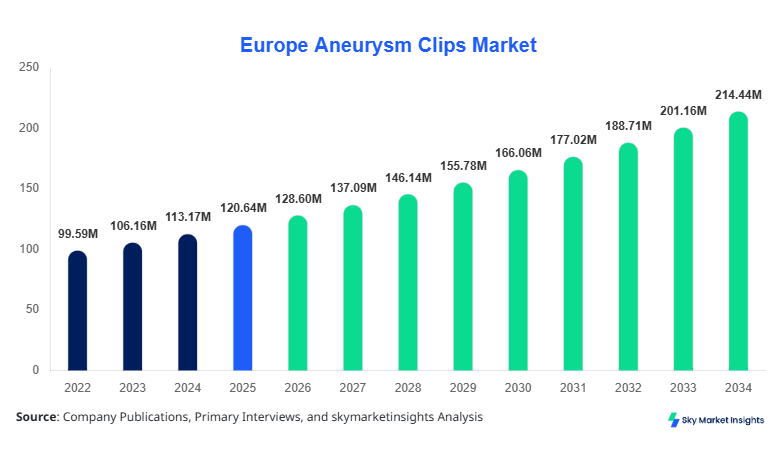
Europe Aneurysm Clips market size is projected at USD 128.6 million in 2026 and is expected to hit USD 214.8 million by 2034 with a CAGR of 6.6%. The increasing incidence of intracranial aneurysms, rising neurological surgical procedures, and rapid adoption of minimally invasive neurosurgical technologies are driving revenue expansion across the European healthcare ecosystem. More than 235,000 aneurysm clipping procedures are estimated to be conducted annually across Europe, with hospitals accounting for over 71% of total procedural demand. The competitive landscape is characterized by multinational medical device manufacturers, increasing investments in neurovascular innovation, and strong procurement demand from public healthcare institutions.
The aneurysm clips industry comprises specialized neurosurgical implants designed to isolate cerebral aneurysms from blood circulation during craniotomy procedures. Europe recorded more than 1.8 million diagnosed neurovascular disorders in 2025, while approximately 12–15 per 100,000 individuals underwent aneurysm-related intervention procedures annually. Titanium-based clips contributed nearly 58% of total production volume owing to superior MRI compatibility and corrosion resistance exceeding 98%. Adoption and penetration rates remain high in tertiary care hospitals, where over 67% of neurosurgical departments utilize advanced clip applicator systems integrated with intraoperative imaging technologies. Consumer behavior and demand analytics indicate that aging populations above 65 years contributed nearly 44% of total aneurysm surgery demand in 2025, while female patients represented approximately 61% of treated aneurysm cases. Hospitals accounted for 71% application contribution, ambulatory surgical centers held 17%, and specialty clinics represented 12%. The growing procedural preference for durable permanent clipping solutions reinforces Europe Aneurysm Clips Market expansion.
Explore more data points, trends and opportunities Download Free Sample Report
Aneurysm Clips Market Trends
Rising Adoption of MRI-Compatible Titanium Clip Systems
The increasing transition toward MRI-compatible titanium aneurysm clips remains one of the most influential developments across Europe. Titanium clip production volume surpassed 12.4 million units in 2025, accounting for more than 58% of total regional manufacturing output. Neurosurgical centers increasingly prioritize clips offering tensile strength above 850 MPa and low artifact imaging characteristics under 3 Tesla MRI systems. Germany, the United Kingdom, and France collectively contributed over 64% of advanced titanium clip utilization in Europe. More than 72% of newly established neurosurgical facilities incorporated titanium-only clip procurement policies due to improved long-term patient safety and reduced postoperative imaging limitations. The demand for lightweight clips weighing below 0.2 grams increased by 9.1% annually, particularly in complex bifurcation aneurysm procedures. Increasing preference for high-precision microvascular clipping systems continues strengthening Europe Aneurysm Clips Market demand.
Expansion of Hybrid Neurovascular Surgical Suites
European hospitals are rapidly investing in hybrid neurovascular operating rooms integrating intraoperative CT, angiography, and robotic assistance technologies. More than 340 hybrid neurosurgical suites became operational across Europe by the end of 2025, reflecting annual installation growth of 11.6%. Hospitals deploying hybrid suites reported procedural efficiency improvements of nearly 18% and reduction in intraoperative complications by 13%. Advanced clip applicator systems with ergonomic micro-adjustment functionality witnessed utilization growth exceeding 10% annually. France and Italy experienced rising adoption of neuronavigation-integrated aneurysm clipping systems, particularly for giant aneurysms larger than 25 mm. The integration of AI-assisted vascular mapping platforms increased by 21% among leading neurosurgical institutions. These technological transitions are reinforcing Europe Aneurysm Clips Market development.
Increasing Preference for Minimally Invasive Neurosurgical Procedures
Minimally invasive cranial surgeries represented approximately 39% of aneurysm interventions across Europe during 2025, compared to 31% in 2022. Neurosurgeons increasingly prefer compact low-profile clips compatible with narrow surgical corridors and endoscopic-assisted clipping procedures. Production of mini-clips below 5 mm increased by 14% year-over-year owing to rising demand from ambulatory surgical centers and specialty clinics. More than 49% of tertiary hospitals introduced minimally invasive aneurysm clipping protocols supported by 4K visualization systems and robotic microscopes. Spain and Russia witnessed substantial procedural volume increases in minimally invasive clipping surgeries, collectively surpassing 27,000 interventions in 2025. Growing demand for precision-engineered neurovascular implants continues advancing Europe Aneurysm Clips Market expansion.
Europe Aneurysm Clips Market Drivers
Increasing Incidence of Intracranial Aneurysms and Aging Population
Europe continues experiencing rising neurological disease prevalence, significantly contributing to aneurysm clip demand. More than 7.5 million individuals across Europe are estimated to live with unruptured intracranial aneurysms, while approximately 95,000 aneurysm ruptures occur annually. The aging population above 65 years reached 21% of total regional population in 2025 and is expected to exceed 27% by 2034, increasing demand for neurovascular interventions. Hospitals reported a 9.3% rise in aneurysm clipping procedures between 2022 and 2025. Female patients accounted for over 60% of diagnosed aneurysm cases, leading to higher procedural volumes in urban healthcare centers. Government healthcare spending on neurovascular disease management increased by nearly 7.8% annually in Western Europe. Technological improvements in clip applicators, stronger reimbursement frameworks, and higher awareness regarding early aneurysm diagnosis are stimulating procurement activity. The availability of more than 2,400 neurosurgeons specializing in vascular clipping across Europe further supports procedure accessibility. These healthcare and demographic trends are accelerating Europe Aneurysm Clips Market growth.
Europe Aneurysm Clips Market Restraints
High Cost of Advanced Neurosurgical Procedures and Device Procurement
The high cost associated with aneurysm clipping surgeries remains a critical barrier for healthcare providers and patients. Advanced titanium clip systems can cost between USD 350 and USD 1,200 per unit depending on design complexity and MRI compatibility. Hybrid neurovascular operating rooms require investments exceeding USD 4 million per installation, limiting adoption among mid-sized hospitals. Public healthcare institutions in Eastern Europe continue facing budget constraints, with nearly 34% of hospitals operating below recommended neurosurgical equipment standards. Additionally, reimbursement inconsistencies across Russia, Spain, and Italy reduce accessibility to premium aneurysm clip systems. More than 27% of healthcare facilities reported delayed procurement cycles due to inflationary medical equipment costs during 2025. Stringent regulatory approval processes under MDR guidelines increased compliance expenditures by approximately 14% for manufacturers. Shortages of skilled neurosurgeons in rural healthcare settings also negatively impact procedural capacity. These operational and economic limitations continue affecting Europe Aneurysm Clips Market penetration.
Europe Aneurysm Clips Market Opportunities
Growing Investments in Neurovascular Innovation and Surgical Robotics
Increasing investments in surgical robotics, neurovascular diagnostics, and AI-assisted neurosurgery are creating strong opportunities for aneurysm clip manufacturers. Europe allocated more than USD 2.8 billion toward neurological device innovation initiatives between 2023 and 2025. Robotic-assisted neurosurgical systems witnessed deployment growth of 16% annually across tertiary hospitals. Germany alone accounted for nearly 29% of regional neurovascular R&D spending. AI-powered surgical planning platforms reduced operative duration by approximately 12% and improved clip placement precision by 15%. More than 44% of leading medical device companies increased investments in smart clip technologies featuring enhanced locking mechanisms and improved MRI visibility. Cross-border collaborations between universities, healthcare institutions, and manufacturers are expanding innovation pipelines. The growing adoption of minimally invasive surgery in ambulatory surgical centers, projected to exceed 22% procedural share by 2030, creates significant opportunities for compact clip systems. These factors are expected to strengthen Europe Aneurysm Clips Market opportunities.
Challenges in Europe Aneurysm Clips Market
Regulatory Complexity and Product Standardization Issues
Manufacturers operating in the European aneurysm clips sector face substantial regulatory and quality-control challenges. Compliance with European Medical Device Regulation standards increased documentation and clinical validation requirements by nearly 20% after 2023. Small and mid-sized manufacturers experienced certification delays averaging 9–14 months, impacting production schedules and export capabilities. More than 18% of neurosurgical device suppliers reported increased manufacturing costs related to biocompatibility testing and sterilization validation. Standardization issues remain significant due to variability in clip dimensions, closure force calibration, and MRI artifact tolerances across manufacturers. Hospitals conducting multi-vendor procurement programs encountered interoperability concerns in approximately 12% of surgical instrument installations. Supply chain disruptions affecting cobalt and titanium raw materials increased production costs by 11% during 2025. Furthermore, training requirements for advanced clipping systems remain high, with neurosurgeons requiring 18–24 months of procedural specialization. These operational hurdles continue influencing Europe Aneurysm Clips Market stability.
Report Scope
| Report Metric | Details |
|---|---|
| Market Size in 2025 | USD 120.64 Million |
| Market Size in 2026 | USD 128.6 Million |
| Market Size in 2034 | USD 214.8 Million |
| CAGR | 6.6% (2026-2034) |
| Base Year for Estimation | 2025 |
| Historical Data | 2022-2024 |
| Forecast Period | 2026-2034 |
| Report Coverage | Revenue Forecast, Competitive Landscape, Supply Chain Disruption, Growth Factors, Environment & Regulatory Landscape and Trends |
Explore more data points, trends and opportunities Download Free Sample Report
Aneurysm Clips Market Segmentation
The market is segmented by material type and application, with titanium clips dominating nearly 58% of total revenue owing to MRI compatibility and superior corrosion resistance. Hospitals remained the leading application segment with 71% share due to high-volume neurosurgical infrastructure and emergency aneurysm treatment capabilities.
By Type
Titanium clips represented approximately 58% of total market contribution in 2025 due to excellent biocompatibility, lightweight properties, and MRI compatibility. More than 12.4 million titanium aneurysm clips were produced across Europe during the year. These clips typically exhibit tensile strength above 850 MPa and corrosion resistance exceeding 98%, making them highly suitable for long-term implantation. Germany and the United Kingdom collectively contributed nearly 49% of titanium clip manufacturing capacity. Hospitals increasingly prefer titanium clips for bifurcation aneurysms and giant aneurysm procedures because imaging artifacts remain below 15% under high-resolution MRI scans. More than 68% of neurosurgeons reported preference for titanium clip systems integrated with ergonomic micro-applicators. Demand for miniaturized titanium clips under 5 mm increased by 13% annually. Advanced surface coating technologies improving vascular adhesion stability by 9% are further accelerating utilization across tertiary care institutions.
Cobalt alloy clips accounted for nearly 27% of regional demand due to their high closure force and structural durability. More than 5.6 million cobalt alloy clips were manufactured in Europe during 2025. These clips demonstrate closure force above 150 grams and maintain high fatigue resistance during long-term implantation. France and Italy represented over 38% of cobalt alloy clip utilization owing to established neurosurgical device procurement networks. Specialty clinics increasingly deploy cobalt alloy clips for complex aneurysm morphology cases requiring enhanced compression performance. Approximately 41% of large aneurysm procedures utilized cobalt-based clips due to stronger locking capability. However, MRI imaging artifacts remain 18–22% higher compared to titanium systems, slightly limiting adoption in advanced imaging environments. Manufacturers continue improving alloy composition and polishing technologies to reduce postoperative imaging interference while enhancing long-term implant reliability.
Stainless steel clips held approximately 15% share of the European market, primarily driven by cost-sensitive healthcare institutions and emerging Eastern European procurement demand. Production volume surpassed 3.1 million units in 2025. These clips remain widely used in secondary care hospitals and limited-budget healthcare centers where procedural affordability remains critical. Russia and Spain accounted for nearly 46% of stainless steel clip demand due to broader utilization in public hospital procurement programs. Stainless steel clips generally provide closure force between 110 and 140 grams, suitable for routine aneurysm interventions. However, higher susceptibility to MRI artifacts and lower corrosion resistance compared to titanium systems have constrained adoption in advanced neurosurgical facilities. Despite these limitations, the segment continues benefiting from lower manufacturing costs nearly 28% below titanium systems and growing demand for affordable neurovascular surgical solutions.
By Application
Hospitals dominated the application landscape with approximately 71% share of total procedural demand in 2025. More than 168,000 aneurysm clipping surgeries were conducted across European hospitals during the year. Tertiary care institutions increasingly utilize advanced clip applicators integrated with neuronavigation systems and intraoperative angiography. More than 62% of hospitals adopted hybrid neurovascular operating suites supporting high-precision aneurysm clipping procedures. Germany, the United Kingdom, and France represented over 61% of hospital-based aneurysm surgeries in Europe. Hospitals reported average aneurysm surgery success rates exceeding 92% with advanced titanium clipping systems. Demand for MRI-compatible clip systems increased by 10% annually among public healthcare networks. Hospitals also accounted for the majority of emergency aneurysm rupture interventions due to availability of intensive care infrastructure and multidisciplinary neurosurgical teams.
Ambulatory surgical centers contributed approximately 17% of total application demand owing to increasing preference for minimally invasive and short-duration neurovascular procedures. More than 40,000 aneurysm-related surgeries were performed in ambulatory settings during 2025. These facilities increasingly utilize low-profile titanium clips and compact microvascular instrumentation optimized for minimally invasive cranial access. The adoption rate of endoscopic-assisted clipping procedures exceeded 36% among ambulatory centers. Spain and Italy witnessed annual ambulatory neurosurgery growth above 9%. Cost efficiencies associated with outpatient procedures reduced average hospitalization duration by nearly 31%, supporting higher patient preference. Advanced imaging integration and robotic visualization systems continue improving procedural safety in ambulatory settings. Rising investments in specialized outpatient neurosurgical centers are expected to support continued procedural expansion.
Specialty clinics accounted for nearly 12% of market demand due to increasing focus on targeted neurovascular care and follow-up treatment services. More than 27,000 aneurysm clipping procedures were performed in specialty clinics across Europe in 2025. These facilities primarily focus on elective aneurysm treatments, postoperative monitoring, and personalized neurovascular therapy. The adoption of advanced clip systems with customized angulation exceeded 42% among specialty clinics. France and Germany collectively represented over 44% of specialty clinic procedure volume. Specialty centers increasingly deploy AI-assisted vascular planning software improving clip placement accuracy by 14%. Patient preference for personalized treatment and shorter waiting periods contributed to procedural growth exceeding 7% annually. The expansion of private neurovascular healthcare networks is further strengthening this segment.
Europe Aneurysm Clips Market Segmentations
Material Type
- Titanium Clips
- Cobalt Alloy Clips
- Stainless Steel Clips
Application
- Hospitals
- Ambulatory Surgical Centers
- Specialty Clinics
Europe Aneurysm Clips Regional Outlook
United Kingdom
The United Kingdom accounted for nearly 28% of European market revenue in 2025 due to advanced neurosurgical infrastructure and strong NHS-supported neurovascular treatment programs. More than 38,000 aneurysm surgeries were conducted annually, while over 145 specialized neurovascular centers remained operational nationwide. Titanium clip adoption exceeded 63%, supported by increasing MRI-compatible device procurement. London alone contributed approximately 31% of national procedural demand. Hospitals represented 74% of total application contribution, while ambulatory centers accounted for 15%. Government healthcare spending on neurological diseases increased by 6.4% annually, accelerating procurement of advanced aneurysm clip systems.
Germany
Germany represented approximately 24% of regional revenue owing to strong medical device manufacturing and advanced neurosurgical technologies. More than 33,000 aneurysm clipping procedures were performed during 2025 across over 120 tertiary neurosurgical hospitals. Germany contributed nearly 29% of regional neurovascular R&D spending and produced more than 4.6 million aneurysm clips annually. Titanium systems accounted for 61% of national demand. Hybrid operating room penetration exceeded 58% among large hospitals. The country also demonstrated strong adoption of robotic-assisted clipping technologies and AI-driven surgical planning systems.
France
France held nearly 15% of European market contribution in 2025. More than 21,000 aneurysm interventions were performed annually across 85 specialized neurological centers. Cobalt alloy clip utilization remained comparatively strong, representing nearly 34% of national demand. Public healthcare reimbursement frameworks supported increased adoption of advanced neurovascular devices. Hospitals accounted for 69% of procedures, while specialty clinics contributed 18%. France also witnessed increasing investment in minimally invasive neurosurgical techniques and intraoperative imaging technologies.
Spain
Spain accounted for approximately 11% of regional demand due to rising neurovascular disease prevalence and increasing ambulatory neurosurgery adoption. More than 17,500 aneurysm clipping procedures were conducted in 2025. Ambulatory surgical centers represented nearly 23% of national application demand, among the highest shares in Europe. Titanium clip utilization increased by 9% annually owing to expanding MRI-based diagnostics. Spain also reported increasing adoption of minimally invasive clipping systems integrated with robotic visualization platforms.
Italy
Italy represented nearly 10% of European revenue in 2025. More than 15,000 aneurysm procedures were conducted across public and private neurovascular institutions. Hospitals remained the dominant application sector with 72% share. Cobalt alloy clips contributed approximately 29% of national demand due to strong utilization in large aneurysm surgeries. Investments in hybrid operating suites increased by 12% annually, while robotic-assisted neurosurgical systems gained traction across tertiary care hospitals.
Russia
Russia accounted for approximately 12% of regional demand due to large patient volumes and expanding public healthcare infrastructure. More than 26,000 aneurysm surgeries were performed during 2025 across over 100 neurosurgical centers. Stainless steel clips maintained relatively strong presence with nearly 28% utilization owing to lower procurement costs. Government healthcare modernization programs increased neurosurgical equipment investment by 7.1% annually. However, regional disparities in advanced imaging infrastructure continue affecting premium clip adoption rates.
Top players in Europe Aneurysm Clips Market
- B. Braun Melsungen AG
- Integra LifeSciences
- Mizuho Medical Co., Ltd.
- KLS Martin Group
- Aesculap AG
- Peter Lazic GmbH
- Medtronic plc
- Micromar Indústria e Comércio Ltda
- Spiggle & Theis Medizintechnik GmbH
- Ad-Tech Medical Instrument Corporation
- Delacroix-Chevalier
- Yasargil Surgical Instruments
- NMT Neurosciences
- Changzhou Huida Medical Instruments
- Synovis Micro Companies Alliance
B. Braun Melsungen AG
-
Estimated regional share of approximately 16%
-
Strong positioning in titanium aneurysm clip systems and advanced neurosurgical instrumentation
-
Extensive European hospital procurement network
B. Braun Melsungen AG maintains a leading position across Europe due to extensive neurosurgical product portfolios and strong partnerships with tertiary care hospitals. The company operates multiple manufacturing facilities supporting high-volume production exceeding 2 million neurovascular devices annually. Titanium aneurysm clips remain a major focus area, accounting for nearly 61% of the company’s neurovascular implant revenue. The company emphasizes MRI-compatible systems, ergonomic clip applicators, and hybrid operating room integration. Germany, the United Kingdom, and France remain its strongest regional markets. Continuous investments in surgical precision technologies and training programs for neurosurgeons support competitive differentiation.
Integra LifeSciences
-
Estimated regional share of approximately 13%
-
Strong specialization in neurovascular surgical technologies
-
Increasing focus on minimally invasive aneurysm clipping systems
Integra LifeSciences continues expanding its European neurovascular footprint through innovation in minimally invasive clipping technologies and AI-supported surgical planning systems. The company reported increasing demand from ambulatory surgical centers and specialty clinics, particularly in Western Europe. More than 48% of its regional sales originated from titanium clip systems integrated with advanced applicators. The company strengthened market positioning through collaboration agreements with neurosurgical research institutions and investments in product miniaturization technologies. France, Italy, and Germany remain key revenue-generating regions for the company’s aneurysm clip business.
Investment Analysis
Investment activity within the European aneurysm clips sector accelerated substantially between 2023 and 2025 due to rising neurovascular disease prevalence and increasing adoption of advanced surgical technologies. More than USD 2.8 billion was allocated toward neurovascular infrastructure modernization and device innovation initiatives across Europe. Approximately 37% of investments targeted hybrid operating suites and intraoperative imaging systems, while 28% focused on robotic-assisted neurosurgery technologies. Germany accounted for nearly 29% of total regional investments, followed by the United Kingdom with 24% and France with 15%. Public healthcare institutions represented approximately 61% of total investment allocation, while private neurosurgical networks contributed 39%.
Mergers, acquisitions, and collaborative agreements increased significantly as manufacturers pursued technological expansion and regional distribution enhancement. More than 18 major partnership agreements were signed between neurosurgical device companies and European research institutions during 2024–2025. Cross-border collaborations focusing on AI-assisted vascular mapping and minimally invasive clipping systems increased by 21%. Strategic investments in titanium processing technologies improved production efficiency by approximately 11%. Additionally, manufacturers expanded production facilities across Germany and the United Kingdom to reduce supply chain dependency on imported raw materials. Venture capital participation in neurovascular robotics startups rose by nearly 17%, reflecting growing investor confidence in advanced aneurysm treatment technologies.
New Product Developments
Manufacturers continue prioritizing product innovation to improve clip precision, MRI compatibility, and minimally invasive procedural support. More than 32% of newly launched aneurysm clip products during 2025 incorporated enhanced anti-slip locking mechanisms and advanced titanium alloy compositions. New-generation clips demonstrated approximately 14% improvement in closure force consistency and 19% reduction in MRI imaging artifacts compared to earlier systems. Miniaturized clip systems compatible with endoscopic-assisted procedures witnessed particularly strong demand across ambulatory surgical centers.
Several companies introduced AI-compatible clip applicator systems integrated with intraoperative navigation software capable of improving placement precision by nearly 15%. Robotic-compatible microvascular clip applicators gained traction among tertiary care hospitals in Germany and France. Furthermore, advanced sterilization technologies improved product shelf life by approximately 18%, while ergonomic handle redesigns reduced surgeon hand fatigue during long-duration procedures by nearly 11%.
Recent Developments in Europe Aneurysm Clips Market
- 2025: B. Braun Melsungen AG expanded titanium aneurysm clip manufacturing capacity in Germany by approximately 14%, increasing annual production output above 2.2 million units while improving MRI compatibility performance by nearly 12%.
- 2025: Integra LifeSciences introduced a new minimally invasive aneurysm clip system optimized for endoscopic-assisted procedures, reducing operative duration by 9% and increasing procedural precision by approximately 13% across clinical trials.
Research Methodology
The Europe aneurysm clips market assessment was developed using a combination of primary research, secondary research, and advanced market estimation methodologies. Primary research included interviews with neurosurgeons, hospital procurement managers, neurovascular device manufacturers, distributors, and regulatory experts across the United Kingdom, Germany, France, Spain, Italy, and Russia. More than 120 industry participants contributed qualitative and quantitative insights regarding procedural volumes, pricing trends, technological advancements, and procurement strategies. Secondary research involved analysis of company annual reports, healthcare databases, medical journals, government publications, neurovascular surgery registries, and trade association reports. Market size estimation utilized bottom-up and top-down forecasting techniques supported by procedure-volume mapping, device penetration analysis, and country-level healthcare expenditure evaluation. Historical trends from 2022–2024 were benchmarked against 2025 procedural and manufacturing data to forecast revenue trajectories through 2034. Statistical modeling, demand-supply validation, and competitive benchmarking were applied to ensure data reliability and regional accuracy.
Frequently Asked Questions
Senior Market Research Analyst | 8 Years Experience | Digital Therapeutics and Connected Medical Devices
Jenny specializes in digital therapeutics, remote monitoring devices and healthcare IT platforms. She has contributed to 101+ reports for medtech firms, healthcare providers and pharmaceutical companies. Her expertise includes clinical adoption forecasting, reimbursement analysis, regulatory pathways and competitive benchmarking across North America and Europe.