Europe Anesthesia Breathing Circuits Market Size
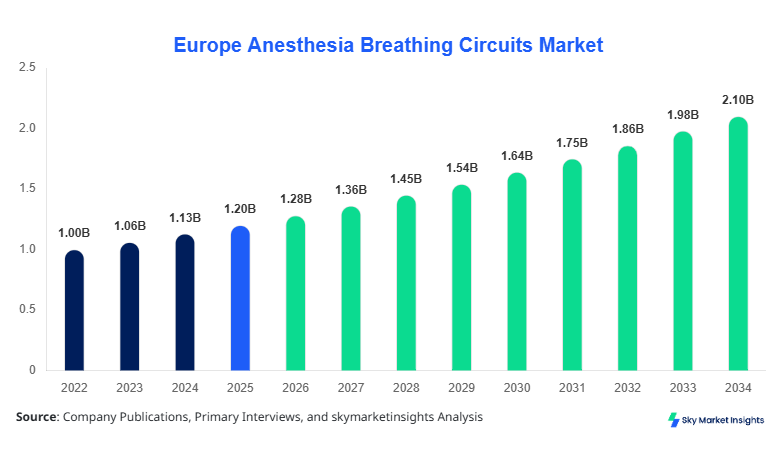
Europe Anesthesia Breathing Circuits market size is projected at USD 1.28 billion in 2026 and is expected to hit USD 2.11 billion by 2034 with a CAGR of 6.4%. The market expansion is supported by increasing surgical volumes, rising ICU admissions, and accelerating adoption of disposable anesthesia systems across Europe. More than 78 million surgical procedures were conducted across European healthcare facilities in 2025, while over 62% of tertiary care hospitals integrated advanced breathing circuit monitoring systems into anesthesia workstations. Growing emphasis on infection prevention, respiratory efficiency, and patient safety is strengthening procurement activities across hospitals and ambulatory surgical centers. Competitive intensity remains high with multinational medical device manufacturers focusing on low-resistance airflow systems, lightweight polymer materials, and eco-efficient breathing circuit designs to strengthen Europe Anesthesia Breathing Circuits market size.
The anesthesia breathing circuits industry comprises medical tubing systems used to deliver oxygen, anesthetic gases, and ventilation support during surgical and critical care procedures. Europe produced approximately 128 million anesthesia breathing circuit units in 2025, with Germany, France, and the United Kingdom accounting for more than 64% of regional manufacturing capacity. Disposable circuits represented nearly 58% of total unit shipments due to rising infection-control compliance and single-patient usage regulations across intensive care units and operating theaters. Adoption penetration exceeded 72% in high-volume surgical hospitals, while advanced coaxial circuits achieved 18% penetration in minimally invasive surgery environments.
Consumer behavior and procurement analytics indicate that healthcare institutions are prioritizing low-dead-space breathing circuits capable of reducing gas wastage by 14%–18% and improving ventilation efficiency by 9%. Hospitals with more than 500 beds contributed 46% of procurement demand in 2025, while ambulatory surgical centers accounted for 27% owing to increasing outpatient surgical procedures. Application segmentation shows hospitals contributed 61% of total demand, ambulatory surgical centers held 24%, and specialty clinics represented 15%. Technical specifications increasingly focus on airflow resistance below 2.5 cmH₂O/L/sec, circuit compliance below 3 mL/cmH₂O, and filtration efficiency above 99.99%. Increasing preference for disposable and antimicrobial circuit materials continues to reinforce Europe Anesthesia Breathing Circuits market share.
Explore more data points, trends and opportunities Download Free Sample Report
Anesthesia Breathing Circuits Market Trends
The Europe anesthesia breathing circuits industry is witnessing rapid transition toward disposable and antimicrobial systems driven by hospital-acquired infection concerns and rising regulatory scrutiny. Disposable breathing circuit production exceeded 74 million units in 2025, increasing by 11.6% from 2024. More than 67% of hospitals across Germany, France, and the United Kingdom shifted procurement budgets toward single-use anesthesia accessories. Adoption of HEPA and electrostatic filtration systems increased by 21%, with filtration performance exceeding 99.99% efficiency against airborne contaminants. Manufacturers are increasingly integrating latex-free thermoplastic elastomers and lightweight polymer tubing to reduce patient discomfort and improve flexibility by 13%. Growing adoption of infection-control-focused products continues to accelerate Europe Anesthesia Breathing Circuits market trend.
Technological advancements in low-flow anesthesia systems are reshaping operational efficiency across operating rooms. Smart breathing circuits integrated with airflow monitoring sensors and capnography compatibility represented nearly 19% of total market revenues in 2025. Coaxial circuit systems capable of reducing heat loss by 16% and moisture loss by 22% are increasingly utilized in prolonged surgical procedures exceeding 4 hours. Hospitals adopting digital anesthesia workstations reported reductions of 12% in anesthetic gas wastage and 9% improvement in ventilation precision. Pediatric anesthesia circuit demand increased by 8.7% due to rising neonatal surgical procedures across Europe. These developments continue to expand Europe Anesthesia Breathing Circuits market share.
Sustainability and recyclable material innovation are emerging as significant operational priorities among healthcare providers. Nearly 38% of healthcare procurement organizations introduced sustainability-based supplier selection criteria during 2025. Manufacturers are developing recyclable breathing circuits using biodegradable polymers capable of reducing medical waste generation by 17%–20%. Reusable circuits incorporating advanced sterilization resistance technologies demonstrated operational lifespan improvements of 28% compared with conventional systems. The European Union’s environmental compliance initiatives are encouraging healthcare institutions to adopt low-emission anesthesia accessories, contributing to rising investments in eco-friendly production technologies. Sustainability-led procurement policies continue to strengthen Europe Anesthesia Breathing Circuits market trend.
Europe Anesthesia Breathing Circuits Drivers
Increasing Surgical Procedure Volumes and Critical Care Admissions
Rising surgical interventions across Europe remain a major driver for anesthesia breathing circuit adoption. More than 78 million surgeries were performed across European hospitals in 2025, increasing by 6.8% compared with 2023. Orthopedic surgeries represented 24% of procedures, cardiovascular surgeries accounted for 14%, and gastrointestinal surgeries contributed 19%. The region recorded over 11.4 million ICU admissions requiring respiratory management and anesthesia support systems. Hospitals expanded operating room capacity by 9% between 2022 and 2025, while ambulatory surgery centers increased by 13% across Germany, France, and Italy. Disposable anesthesia breathing circuit demand increased by 14% due to heightened infection prevention protocols following post-pandemic healthcare reforms. Technological integration of advanced anesthesia workstations compatible with low-resistance circuits improved respiratory efficiency by 12% and reduced gas leakage by 8%. Government healthcare expenditure across Europe exceeded USD 2.4 trillion in 2025, supporting infrastructure modernization and surgical equipment procurement. Rising chronic disease prevalence, aging demographics, and increasing elective surgeries continue to reinforce Europe Anesthesia Breathing Circuits market growth.
Europe Anesthesia Breathing Circuits Restraints
High Product Costs and Medical Waste Management Concerns
Elevated procurement costs associated with advanced anesthesia breathing circuits are limiting adoption among small healthcare institutions and rural clinics. Disposable breathing circuits cost between USD 6 and USD 28 per unit depending on filtration specifications, while premium coaxial systems exceed USD 42 per unit. More than 34% of small European clinics reported budget constraints affecting replacement cycles for anesthesia accessories. Reusable breathing circuits require sterilization systems costing hospitals approximately USD 110,000–USD 240,000 annually for maintenance and compliance operations. Medical waste generation from disposable breathing circuits exceeded 92,000 metric tons across Europe during 2025, increasing environmental disposal concerns. Regulatory compliance costs associated with biomedical waste management rose by 18% between 2022 and 2025. Supply chain volatility affecting thermoplastic polymers and silicone materials increased raw material costs by nearly 13%. Furthermore, inconsistent reimbursement structures across Eastern European healthcare systems limited advanced circuit adoption in price-sensitive regions. These cost and sustainability concerns continue to restrain Europe Anesthesia Breathing Circuits market growth.
Europe Anesthesia Breathing Circuits Opportunities
Expansion of Ambulatory Surgical Centers and Smart Ventilation Technologies
The rapid expansion of ambulatory surgical centers across Europe presents strong opportunities for anesthesia breathing circuit manufacturers. More than 2,600 ambulatory surgical facilities operated across the region in 2025, with annual growth exceeding 7%. Outpatient surgeries represented nearly 38% of total surgical procedures, increasing demand for lightweight, disposable, and rapid-installation breathing circuits. Smart ventilation systems integrated with digital monitoring platforms are gaining traction, with adoption rates expected to exceed 41% by 2030. Hospitals implementing AI-assisted anesthesia management systems reported reductions of 11% in ventilation errors and 14% improvement in anesthetic efficiency. Pediatric and neonatal respiratory care applications also present significant opportunities, as neonatal intensive care admissions increased by 9.3% across Europe. Emerging Eastern European healthcare markets including Poland and Romania expanded hospital modernization budgets by over 16% in 2025. Manufacturers investing in recyclable materials, antimicrobial tubing, and advanced filtration systems are expected to benefit from long-term procurement contracts. These developments are anticipated to create substantial Europe Anesthesia Breathing Circuits market demand.
Europe Anesthesia Breathing Circuits Challenge
Regulatory Compliance Complexity and Supply Chain Disruptions
Regulatory standardization across European healthcare systems remains a significant challenge for anesthesia breathing circuit manufacturers. Medical device compliance under MDR regulations increased product certification timelines by nearly 22% and elevated approval costs by approximately 18%. More than 31% of manufacturers experienced delays exceeding six months for new product launches during 2025. Supply chain disruptions involving medical-grade polymers, silicone tubing, and filtration membranes affected nearly 27% of regional manufacturers between 2023 and 2025. Transportation costs for imported components increased by 15%, while energy costs for medical manufacturing facilities rose by 19% across Europe. Healthcare institutions also faced shortages of trained anesthesia professionals, with staffing gaps exceeding 11% in public hospitals. Technical integration challenges involving digital anesthesia workstations and legacy ventilation systems delayed equipment upgrades in 23% of facilities. Rising competitive pricing pressure from regional manufacturers continues to compress operating margins by approximately 7%. These operational and compliance hurdles remain key challenges in Europe Anesthesia Breathing Circuits market demand.
Report Scope
| Report Metric | Details |
|---|---|
| Market Size in 2025 | USD Billion |
| Market Size in 2026 | USD 1.28 Billion |
| Market Size in 2034 | USD 2.11 Billion |
| CAGR | 6.4% (2026-2034) |
| Base Year for Estimation | 2025 |
| Historical Data | 2022-2024 |
| Forecast Period | 2026-2034 |
| Report Coverage | Revenue Forecast, Competitive Landscape, Supply Chain Disruption, Growth Factors, Environment & Regulatory Landscape and Trends |
Explore more data points, trends and opportunities Download Free Sample Report
Anesthesia Breathing Circuits Market Segmentation
The Europe anesthesia breathing circuits industry is segmented by product type and end user, with disposable systems dominating nearly 58% of total revenue in 2025 due to strong infection-control requirements. Hospitals represented approximately 61% of total demand, followed by ambulatory surgical centers at 24% and specialty clinics at 15%. Increasing outpatient surgical procedures and adoption of advanced anesthesia delivery systems are reshaping procurement dynamics across Europe.
BY TYPE
Disposable breathing circuits accounted for approximately 58% of total market revenues in 2025 due to widespread adoption across intensive care units and operating rooms. Production volumes exceeded 74 million units annually across Europe, with Germany and France contributing nearly 49% of manufacturing output. These circuits provide filtration efficiency above 99.99%, airflow resistance below 2.4 cmH₂O/L/sec, and compatibility with low-flow anesthesia systems. Hospitals increasingly prefer disposable circuits because they reduce cross-contamination risks by 31% and eliminate sterilization expenses. Pediatric surgeries contributed nearly 12% of disposable circuit utilization, while cardiovascular and orthopedic procedures represented 34% combined demand. Procurement growth remained particularly strong among hospitals performing more than 10,000 surgeries annually. Integration with antimicrobial filters and lightweight polymer tubing improved patient safety and ventilation performance by approximately 14%.
Reusable breathing circuits represented nearly 24% of regional demand due to cost-efficiency advantages in public healthcare institutions. More than 28 million reusable units were operational across Europe during 2025, with lifecycle durability averaging 45–60 sterilization cycles. Silicone-based reusable circuits demonstrated temperature tolerance exceeding 134°C and airflow stability above 97% during prolonged ventilation procedures. Public hospitals in Italy, Spain, and Eastern Europe increasingly adopted reusable systems to reduce operational expenditure by 18%–22%. Sterilization compliance remains a critical requirement, with centralized sterilization facilities accounting for nearly 63% of reusable system processing operations. Improved autoclavable materials and reinforced connectors enhanced product durability by 26% compared with previous-generation designs.
Coaxial breathing circuits accounted for nearly 18% of total revenues and are increasingly used in advanced surgical environments requiring thermal efficiency and compact system integration. Annual production exceeded 18 million units in 2025, driven by rising minimally invasive and laparoscopic procedures across Europe. Coaxial systems reduced heat loss by 16% and moisture loss by 22%, supporting improved respiratory management during prolonged surgeries. These circuits also demonstrated dead-space reductions of approximately 11%, making them suitable for pediatric and neonatal applications. Germany and the United Kingdom represented over 57% of coaxial system adoption due to high penetration of technologically advanced anesthesia workstations. Integration with digital ventilation systems and capnography monitoring further accelerated adoption across tertiary healthcare facilities.
BY APPLICATION
Hospitals dominated the application landscape with approximately 61% revenue contribution in 2025 due to high surgical volumes and intensive care admissions. More than 47 million breathing circuit units were utilized across European hospitals annually. General surgeries accounted for 31% of hospital utilization, orthopedic surgeries contributed 18%, cardiovascular procedures represented 14%, and neurological surgeries held 9% share. Hospitals increasingly adopted low-flow anesthesia systems capable of reducing anesthetic gas consumption by 12% and improving ventilation precision by 9%. Disposable circuits represented nearly 63% of hospital procurement due to infection-control compliance requirements. Public healthcare institutions accounted for 56% of hospital demand, while private multispecialty hospitals contributed 44%.
Ambulatory surgical centers accounted for approximately 24% of total application demand due to rapid expansion of outpatient procedures. More than 2,600 ambulatory facilities across Europe consumed nearly 21 million breathing circuit units in 2025. Cataract surgeries, ENT procedures, gastrointestinal interventions, and minor orthopedic procedures collectively represented over 68% of circuit utilization in these facilities. Disposable breathing circuits dominated procurement with 72% share due to fast turnaround requirements and limited sterilization infrastructure. Compact anesthesia workstations integrated with lightweight breathing circuits improved operational efficiency by 17% and reduced procedure setup time by 13%. Rising same-day surgical procedures continue to strengthen demand among ambulatory centers.
Clinics represented approximately 15% of the application market, supported by increasing specialty respiratory and dental surgery procedures. Specialty clinics utilized over 13 million breathing circuit units during 2025, with dental anesthesia applications accounting for 28% of usage. Lightweight pediatric circuits gained strong traction among neonatal and pediatric clinics due to lower airflow resistance and reduced dead space. Clinics increasingly preferred reusable systems for cost optimization, representing nearly 39% of clinic procurement volumes. Advanced ventilation compatibility and enhanced filtration efficiency above 99% supported wider utilization in specialty respiratory centers. Growth in private healthcare investments across Spain and Italy continues to expand breathing circuit adoption in clinical environments.
Europe Anesthesia Breathing Circuits Market Segmentations
Product Type
- Disposable Breathing Circuits
- Reusable Breathing Circuits
- Coaxial Breathing Circuits
End User
- Hospitals
- Ambulatory Surgical Centers
- Clinics
Europe Anesthesia Breathing Circuits Regional Outlook
United Kingdom
The United Kingdom accounted for nearly 19% of Europe’s anesthesia breathing circuit revenues in 2025. More than 8.7 million surgeries requiring anesthesia support were conducted annually across NHS and private hospitals. Disposable circuits represented 64% of total procurement due to stringent infection-control guidelines. The country operated over 1,200 surgical facilities and more than 270 ambulatory centers utilizing advanced anesthesia delivery systems. Cardiovascular surgeries represented 15% of demand, while orthopedic procedures accounted for 21%. The UK healthcare sector invested approximately USD 410 million in anesthesia infrastructure modernization between 2023 and 2025.
Germany
Germany represented approximately 28% of the regional market and remained the largest manufacturing hub with annual production exceeding 34 million units. More than 74% of hospitals deployed integrated anesthesia workstations supporting advanced breathing circuits. Disposable systems dominated 61% of procurement, while coaxial systems accounted for 19%. Germany also exported over 42% of its production output to neighboring European countries. Rising surgical volumes and advanced ICU infrastructure continue to support regional dominance.
France
France contributed nearly 16% of Europe’s anesthesia breathing circuit revenues in 2025. The country performed approximately 9.1 million surgeries annually, with public hospitals accounting for 67% of total demand. Disposable breathing circuits represented 59% of procurement volumes, while reusable systems retained strong adoption among regional hospitals. France invested over USD 280 million in operating room modernization and respiratory care equipment between 2022 and 2025. Pediatric anesthesia procedures increased by 8%, supporting demand for low-dead-space circuits.
Spain
Spain accounted for approximately 11% of regional revenues due to increasing healthcare investments and expansion of private surgical facilities. More than 5.8 million surgeries were conducted annually across the country. Ambulatory surgical centers represented 29% of anesthesia breathing circuit consumption, among the highest shares in Europe. Disposable circuit penetration exceeded 62%, supported by stringent infection-prevention protocols. Spain also recorded a 14% increase in outpatient procedures between 2023 and 2025.
Italy
Italy represented around 13% of the regional market with annual breathing circuit consumption exceeding 17 million units. Public hospitals dominated procurement activities, contributing nearly 58% of national demand. Reusable circuits maintained strong adoption with 31% share due to budget optimization initiatives. Italy invested approximately USD 190 million in respiratory and surgical care modernization projects during 2025. Orthopedic and cardiovascular surgeries collectively represented 36% of anesthesia breathing circuit utilization.
Russia
Russia accounted for nearly 9% of Europe’s anesthesia breathing circuit revenues despite ongoing supply chain and regulatory complexities. More than 6.3 million surgeries requiring anesthesia support were conducted in 2025. Domestic production represented 54% of total supply volumes due to import substitution strategies. Government healthcare modernization initiatives increased procurement budgets for respiratory care equipment by 12%. Hospitals represented approximately 69% of national demand, while private surgical centers continued to expand rapidly in metropolitan regions.
Top players in Europe Anesthesia Breathing Circuits
- Medtronic plc
- Drägerwerk AG
- GE HealthCare
- Ambu A/S
- Fisher & Paykel Healthcare
- Smiths Medical
- Flexicare Medical Ltd
- Intersurgical Ltd
- Teleflex Incorporated
- Armstrong Medical
- Becton Dickinson and Company
- Vyaire Medical
- Philips Healthcare
- Baxter International Inc.
- Mindray Medical International
Medtronic plc
-
Estimated European market share: 17%
-
Strong positioning in integrated anesthesia and respiratory management systems
-
Extensive hospital distribution network across Germany, France, and the UK
-
Focus on disposable breathing circuits with high-filtration efficiency and low-resistance airflow systems
Medtronic plc maintained leadership through diversified anesthesia accessory portfolios and strong partnerships with tertiary healthcare institutions. The company expanded production capacity by 11% during 2025 and increased R&D expenditure by nearly 9% for smart ventilation integration technologies. Its disposable anesthesia circuits achieved strong penetration in high-volume surgical hospitals due to compatibility with digital anesthesia workstations and low-flow ventilation systems.
Drägerwerk AG
-
Estimated European market share: 13%
-
Dominant presence in Germany and Central Europe
-
Strong portfolio of reusable and coaxial breathing circuits
-
Focus on ICU-compatible anesthesia delivery systems
Drägerwerk AG strengthened regional competitiveness through technological innovation and manufacturing expansion across Germany. The company supplied more than 12 million anesthesia breathing circuits annually in Europe during 2025. Its integrated ventilation-compatible breathing circuits improved gas efficiency by 10% and reduced heat loss by approximately 15%. Strategic collaborations with public healthcare institutions further strengthened its regional positioning.
Investment Analysis
Investments in the European anesthesia breathing circuits industry increased substantially during 2025, with total healthcare infrastructure allocation for respiratory and anesthesia equipment exceeding USD 1.3 billion. Hospitals accounted for nearly 54% of investment allocation, while ambulatory surgical centers represented 26% and specialty respiratory clinics contributed 20%. Germany, France, and the United Kingdom collectively attracted over 63% of total regional investments. Manufacturers expanded automated production facilities capable of increasing breathing circuit output by 18% annually. Private equity participation in respiratory medical device manufacturing increased by 14% compared with 2024.
Mergers, acquisitions, and collaborations intensified across the market as companies sought to strengthen regional distribution and technology portfolios. More than 21 strategic agreements involving respiratory care device manufacturers were recorded between 2023 and 2025. Joint ventures focusing on recyclable breathing circuit technologies increased by 17%, while partnerships involving digital anesthesia monitoring systems rose by 22%. European governments also introduced healthcare modernization incentives supporting procurement of advanced respiratory care equipment. Investment flows toward antimicrobial tubing materials and high-efficiency filtration systems are expected to remain strong through 2034.
New Product Developments
Manufacturers increasingly focused on lightweight, antimicrobial, and digitally integrated anesthesia breathing circuits during 2025. Nearly 32% of newly launched products incorporated advanced bacterial and viral filtration systems with efficiency above 99.99%. Product innovations improved airflow efficiency by 12% and reduced circuit dead space by approximately 9%. Smart sensor-enabled breathing circuits compatible with AI-assisted anesthesia workstations represented nearly 14% of new product launches.
Reusable breathing circuits featuring reinforced silicone materials and enhanced sterilization resistance demonstrated lifecycle improvements exceeding 28%. Manufacturers also introduced eco-friendly disposable circuits utilizing recyclable polymers capable of reducing medical waste generation by 17%. Pediatric-focused breathing circuits with ultra-low resistance airflow designs gained strong adoption across neonatal intensive care units and specialty clinics.
Recent Developments in Europe Anesthesia Breathing Circuits
- 2025: Medtronic expanded its European production capacity by 11% through modernization of respiratory care manufacturing facilities in Germany. The expansion increased disposable breathing circuit output by nearly 6 million units annually and improved regional supply chain efficiency by 14%.
- 2025: Drägerwerk AG introduced next-generation coaxial anesthesia circuits capable of reducing moisture loss by 22% and improving thermal efficiency by 15%. Adoption across tertiary hospitals in Germany and France increased by approximately 18% within the first year of launch.
Research Methodology
The Europe anesthesia breathing circuits market assessment was developed using a combination of primary and secondary research methodologies focused on surgical equipment utilization, respiratory care device procurement, and healthcare infrastructure analysis. Primary research involved interviews with anesthesia specialists, respiratory therapists, procurement managers, hospital administrators, and medical device manufacturers across Germany, the United Kingdom, France, Spain, Italy, and Russia. More than 120 industry participants contributed operational and commercial insights regarding product adoption, pricing trends, technological developments, and purchasing behavior.
Secondary research included evaluation of company annual reports, government healthcare expenditure databases, regulatory publications, hospital procurement records, medical journals, and trade association statistics. Market size estimation was conducted using both top-down and bottom-up analytical frameworks integrating surgical procedure volumes, anesthesia workstation penetration, breathing circuit unit consumption, and regional healthcare spending. Statistical modeling was applied to forecast future demand trends across product types and end-user segments. Data triangulation and validation techniques ensured consistency and reliability of regional and country-level market projections throughout the forecast period.
Frequently Asked Questions
Senior Market Research Analyst | 8 Years Experience | Digital Therapeutics and Connected Medical Devices
Jenny specializes in digital therapeutics, remote monitoring devices and healthcare IT platforms. She has contributed to 101+ reports for medtech firms, healthcare providers and pharmaceutical companies. Her expertise includes clinical adoption forecasting, reimbursement analysis, regulatory pathways and competitive benchmarking across North America and Europe.