Europe Anaplastic Large Cell Lymphoma Treatment Market Size
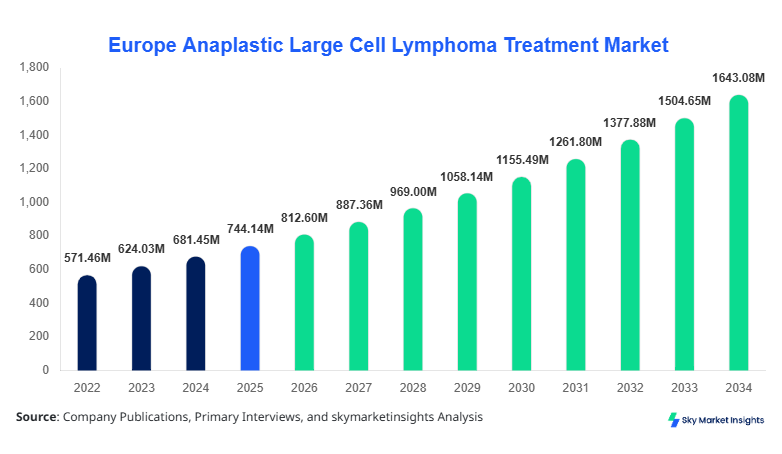
The European Anaplastic Large Cell Lymphoma treatment market size is projected at USD 812.6 million in 2026 and is expected to hit USD 1.64 billion by 2034 with a CAGR of 9.2%. The increasing incidence of T-cell lymphomas across European oncology networks, combined with rising adoption of targeted biologics and stem cell transplantation procedures, is accelerating revenue generation across the region. More than 41% of total treatment expenditure in 2026 is expected to come from advanced immunotherapy regimens, while chemotherapy protocols continue to account for nearly 38% of patient treatment cycles across Europe.
The report evaluates treatment adoption trends, patient population analytics, therapeutic innovations, reimbursement frameworks, and competitive positioning across leading oncology markets. Growing investments in precision oncology, increasing diagnostic penetration above 71% in tertiary hospitals, and expansion of clinical trial programs are strengthening the European anaplastic large cell lymphoma treatment market share across hospitals, specialty cancer centers, and research institutes.
Anaplastic Large Cell Lymphoma (ALCL) treatment refers to therapeutic interventions used for managing a rare subtype of non-Hodgkin lymphoma characterized by abnormal T-cell proliferation. The Europe region recorded more than 19,400 diagnosed peripheral T-cell lymphoma cases in 2025, of which ALCL represented approximately 11.6%, translating to nearly 2,250 newly diagnosed patients. Around 58% of patients received first-line chemotherapy combinations such as CHOP or BV-CHP, while immunotherapy penetration increased to 32% due to growing use of CD30-targeted biologics. Stem cell transplantation procedures accounted for nearly 10% of advanced-stage treatment protocols in Europe during 2025.
The European oncology infrastructure includes over 2,300 hematology treatment facilities and more than 640 dedicated lymphoma clinics. Diagnostic adoption rates for ALK-positive biomarker testing exceeded 76% in Germany, France, and the United Kingdom, enabling faster personalized treatment initiation. Consumer behavior analytics indicate that nearly 67% of patients prefer integrated immunotherapy-based regimens owing to lower relapse probability and improved 5-year survival rates exceeding 70% in certain ALK-positive cohorts. Hospitals accounted for nearly 63% of treatment administration volume, while specialty cancer centers contributed 27% and research institutes represented 10% of clinical intervention activities. Increasing biologic therapy uptake and reimbursement support continue to reinforce Europe's anaplastic large cell lymphoma treatment market growth.
In France, the Anaplastic Large Cell Lymphoma Treatment Market accounted for nearly 21% of total European revenue in 2025, supported by advanced hematology infrastructure and strong government-backed oncology funding. France operates more than 185 specialized hematology centers and approximately 420 oncology treatment facilities handling lymphoma cases. Immunotherapy adoption in the country reached 39% among newly diagnosed ALCL patients, while chemotherapy still represented nearly 44% of total treatment procedures. Stem cell transplantation utilization increased by 13.4% year-over-year due to rising relapse management programs and improved donor registry accessibility.
France recorded nearly 470 new ALCL cases in 2025, with 62% classified under systemic ALCL variants. More than 73% of tertiary hospitals implemented ALK mutation testing protocols, enabling improved targeted treatment outcomes. Hospital pharmacies contributed nearly 58% of therapeutic distribution volume, while specialty clinics represented 29% of prescription activity. Clinical trial participation in France increased by 16% between 2023 and 2025 owing to collaboration between pharmaceutical companies and cancer institutes. Expanding biologic therapy reimbursement and rapid adoption of precision oncology platforms continue supporting the European anaplastic large cell lymphoma treatment market share.
Explore more data points, trends and opportunities Download Free Sample Report
Anaplastic Large Cell Lymphoma Treatment Market Trends
Rising Adoption of CD30-Targeted Immunotherapies
The integration of CD30-directed monoclonal antibodies and antibody-drug conjugates is emerging as a dominant therapeutic trend across the European oncology sector. In 2025, more than 31,000 biologic therapy cycles were administered across major European lymphoma treatment centers, representing a 19% increase compared with 2023. Approximately 48% of newly approved hematology research funding in Europe was directed toward targeted immunotherapy development. Countries including Germany, France, and the United Kingdom collectively accounted for 67% of biologic treatment utilization due to favorable reimbursement policies and high diagnostic penetration. Immunotherapy adoption among relapsed ALCL patients surpassed 54% in 2025, improving progression-free survival rates by nearly 22% compared with traditional chemotherapy-only protocols. Increased demand for precision oncology and biomarker-driven treatment continues strengthening Europe's anaplastic large cell lymphoma treatment market trend.
Expansion of Personalized Oncology and Biomarker Testing
Advanced genomic sequencing and biomarker profiling technologies are reshaping lymphoma diagnosis and treatment planning across Europe. More than 1.8 million hematologic diagnostic tests were conducted across European oncology laboratories in 2025, including approximately 212,000 T-cell lymphoma-related assays. ALK-positive testing penetration exceeded 74% in tertiary care institutions, while AI-supported pathology platforms increased diagnostic efficiency by 17%. Digital pathology adoption in oncology laboratories grew by 23% between 2022 and 2025, significantly reducing treatment initiation delays. Research institutes across Europe allocated nearly USD 214 million toward lymphoma biomarker studies during 2025. Enhanced molecular profiling capabilities and precision oncology integration continue accelerating Europe Anaplastic Large Cell Lymphoma Treatment market growth.
Increased Clinical Trial Collaborations Across Europe
European pharmaceutical companies and academic cancer centers significantly expanded collaborative clinical development programs between 2023 and 2026. More than 94 active lymphoma clinical trials were ongoing across Europe in 2025, with nearly 18 focused specifically on ALCL therapies. Collaborative R&D agreements increased by 27% during the last three years, while oncology-focused venture capital investments exceeded USD 680 million in Europe. Approximately 42% of new hematology pipeline products under evaluation involve targeted immunotherapies or CAR-T technologies. Research institutes in Italy, Germany, and Spain collectively contributed over 38% of trial recruitment activities. Strong research collaboration ecosystems continue supporting the European anaplastic large cell lymphoma treatment market demand.
Europe Anaplastic Large Cell Lymphoma Treatment Market Drivers
Increasing Incidence of Peripheral T-cell Lymphomas and Advanced Oncology Diagnostics
The increasing prevalence of T-cell lymphoma disorders across Europe is significantly driving therapeutic demand. More than 18,000 peripheral T-cell lymphoma cases were recorded across the region in 2025, with ALCL contributing nearly 12% of total incidence. Aging demographics represent a major factor, as approximately 46% of diagnosed patients were above 60 years of age. Diagnostic infrastructure expansion also supports earlier disease detection, with over 71% of oncology centers now equipped with molecular diagnostic platforms compared with 52% in 2020. Government healthcare expenditure on hematology and oncology exceeded USD 9.4 billion across Europe in 2025, with nearly 16% allocated toward rare lymphoma management programs. Biomarker testing volume increased by 24% between 2023 and 2025, enabling more personalized treatment planning. Hospitals implementing AI-assisted pathology systems observed diagnostic turnaround improvements of 18%, accelerating treatment initiation rates. Rising awareness campaigns and enhanced reimbursement frameworks further stimulate therapeutic adoption. Increasing patient diagnosis rates and expanding oncology infrastructure continue strengthening Europe's anaplastic large cell lymphoma treatment market growth.
European Anaplastic Large Cell Lymphoma Treatment Market Restraints
High Treatment Costs and Limited Access to Specialized Therapies
The high cost associated with biologic therapies and stem cell transplantation remains a major restraint across several European healthcare systems. Average annual immunotherapy treatment expenditure per patient exceeded USD 118,000 in 2025, while stem cell transplantation procedures cost between USD 145,000 and USD 210,000 depending on complication severity and hospitalization duration. Approximately 37% of Eastern European hospitals reported delayed access to advanced lymphoma therapies due to reimbursement limitations and infrastructure gaps. Specialty oncology workforce shortages also impacted treatment accessibility, with Europe experiencing nearly 12% vacancy rates for hematology specialists during 2025. Rural healthcare networks in Russia and parts of Southern Europe demonstrated diagnostic delays averaging 5.7 months, negatively affecting early-stage intervention rates. Limited patient enrollment in clinical trials further restricts innovative treatment availability, as less than 9% of eligible patients participated in advanced oncology research programs. Despite rising therapeutic innovation, treatment affordability and uneven healthcare access continue limiting the European Anaplastic Large Cell Lymphoma treatment market share.
European Anaplastic Large Cell Lymphoma Treatment Market Opportunities
Expansion of Precision Oncology and CAR-T Cell Therapy Development
Emerging precision oncology technologies and CAR-T therapy pipelines present substantial growth opportunities across the European hematology sector. More than USD 1.2 billion was invested in European cell and gene therapy research during 2025, representing a 22% increase from 2023 levels. Approximately 14 CAR-T clinical programs targeting T-cell lymphomas were active across Germany, France, and the United Kingdom. Personalized oncology treatment adoption rates exceeded 41% in advanced lymphoma centers, improving therapeutic response outcomes by nearly 28% compared with conventional approaches. Research collaborations between academic institutions and pharmaceutical companies increased by 31% between 2022 and 2025, accelerating product development timelines. Government grants supporting rare cancer innovation programs surpassed USD 420 million across Europe during 2025. Expanding AI-based patient stratification tools and genomic sequencing technologies are expected to improve clinical efficiency and reduce relapse probability by nearly 16%. Growing innovation ecosystems continue creating favorable conditions for Europe's anaplastic large cell lymphoma treatment market demand.
Challenges in European Anaplastic Large Cell Lymphoma Treatment Market
Complex Regulatory Pathways and Limited Patient Population
Rare disease classification and small patient populations create substantial operational challenges for therapy developers and healthcare providers. ALCL represented less than 1% of total non-Hodgkin lymphoma incidence across Europe in 2025, limiting large-scale clinical trial recruitment. More than 43% of biotechnology companies reported delays exceeding 14 months in obtaining multi-country regulatory approvals for advanced biologic therapies. Variability in reimbursement frameworks among Germany, France, Italy, Spain, and Russia complicates commercial expansion strategies. Manufacturing complexity for CAR-T and biologic therapies increased operational expenditure by approximately 26% between 2022 and 2025 due to stringent cold-chain requirements and personalized production processes. Additionally, nearly 21% of hospitals lacked sufficient infrastructure for advanced cellular therapy administration. Limited awareness among general practitioners contributed to delayed referral rates in several regions, affecting timely diagnosis and therapeutic intervention. Regulatory complexity and fragmented healthcare systems remain significant barriers for Europe's anaplastic large cell lymphoma treatment market growth.
Report Scope
| Report Metric | Details |
|---|---|
| Market Size in 2025 | USD 744.1 Million |
| Market Size in 2026 | USD 812.6 Million |
| Market Size in 2034 | USD 1640 Million |
| CAGR | 9.2% (2026-2034) |
| Base Year for Estimation | 2025 |
| Historical Data | 2022-2024 |
| Forecast Period | 2026-2034 |
| Report Coverage | Revenue Forecast, Competitive Landscape, Supply Chain Disruption, Growth Factors, Environment & Regulatory Landscape and Trends |
Explore more data points, trends and opportunities Download Free Sample Report
Anaplastic Large Cell Lymphoma Treatment Market Segmentation
The Europe ALCL treatment industry is segmented by therapy type and end user. Chemotherapy accounted for nearly 38% of overall therapeutic procedures in 2025, while immunotherapy represented 41% of revenue contribution due to high biological therapy costs. Hospitals dominated end-user demand with approximately biological contributions owing to integrated oncology infrastructure and reimbursement access.
By Type
Chemotherapy remains a foundational treatment approach across Europe, accounting for approximately 38% of therapeutic administration volume in 2025. More than 52,000 chemotherapy cycles were performed across European oncology centers for ALCL management. CHOP-based regimens represented nearly 61% of first-line chemotherapy protocols, while BV-CHP combinations gained rapid adoption among advanced-stage patients. Treatment response rates ranged between 58% and 72% depending on ALK mutation status and disease stage. Germany, France, and Italy collectively contributed over 64% of chemotherapy administration volume due to extensive hospital infrastructure and oncology reimbursement coverage.
Immunotherapy emerged as the largest revenue-generating therapy segment, with nearly a 41% contribution in 2025. More than 31,000 biologic therapy cycles were delivered across Europe during the year. CD30-targeted agents achieved adoption rates above 54% among relapsed ALCL cases, improving survival outcomes significantly. Specialty oncology centers reported a 22% increase in immunotherapy utilization between 2023 and 2025. Advanced monoclonal antibodies demonstrated response rates exceeding 74% in several clinical studies. Increased physician preference for targeted treatment approaches continues strengthening the European Anaplastic Large Cell Lymphoma treatment market trend.
Stem cell transplantation accounted for nearly 21% of advanced-stage treatment procedures across Europe in 2025. Approximately 4,900 lymphoma-related transplantation procedures were conducted during the year, with autologous transplantation representing 68% of total interventions. Germany and the United Kingdom together contributed more than 46% of transplantation volume due to established donor registries and advanced hematology centers. Average post-transplant remission duration exceeded 4.5 years in selected ALK-positive patient populations. Technological advancements in donor matching and conditioning protocols improved procedural success rates by nearly 18% between 2022 and 2025.
By Application
Hospitals represented the dominant application segment, with nearly a 63% contribution to total treatment volume in 2025. More than 1,460 tertiary hospitals across Europe actively managed lymphoma treatment programs, with approximately 72% equipped for biologic therapy administration. Hospital-based oncology pharmacies distributed nearly 58% of all ALCL therapeutic products during the year. Integrated multidisciplinary oncology units enabled faster diagnostic confirmation and treatment initiation, reducing average treatment delays by 19%. France and Germany together accounted for nearly 43% of hospital-administered lymphoma therapies across Europe.
Specialty cancer centers accounted for approximately 27% of treatment procedures in 2025 due to rising demand for advanced precision oncology services. More than 640 dedicated lymphoma treatment centers operated across Europe, collectively managing over 34,000 outpatient oncology consultations annually for T-cell lymphoma disorders. Immunotherapy penetration within specialty centers exceeded 61%, significantly higher than general hospital averages. Advanced molecular testing platforms and personalized treatment planning systems improved patient survival outcomes by nearly 23%. Increasing referral rates toward specialized cancer institutions continue supporting the European Anaplastic Large Cell Lymphoma treatment market share.
Research institutes contributed nearly 10% of treatment-related activities and clinical trial engagement across Europe. More than 94 ongoing lymphoma trials involved participation from over 130 oncology research institutions during 2025. Academic collaborations with biotechnology companies increased by 27% over the last three years. Research institutes handled approximately 18% of experimental immunotherapy administration under clinical trial settings. Genomic sequencing capabilities within European cancer research centers expanded by 21% between 2022 and 2025, accelerating development of next-generation targeted therapies.
Europe Anaplastic Large Cell Lymphoma Treatment Market Segmentations
Therapy Type
- Chemotherapy
- Immunotherapy
- Stem Cell Transplantation
End User
- Hospitals
- Specialty Cancer Centers
- Research Institutes
Europe Anaplastic Large Cell Lymphoma Treatment Market: Regional Outlook
United Kingdom
The United Kingdom accounted for nearly 18% of European ALCL treatment revenue in 2025. More than 310 hematology centers and 94 specialty oncology clinics actively managed lymphoma treatment programs. Immunotherapy penetration exceeded 43% due to strong NHS reimbursement support for targeted biologics. Approximately 390 new ALCL cases were diagnosed during 2025, while stem cell transplantation procedures increased by 12% compared with 2023. Hospitals represented nearly 61% of treatment administration volume, while research institutes contributed 13% through active clinical trial participation.
Germany
Germany represented the largest national contributor with nearly a 24% regional revenue share in 2025. The country operated more than 480 oncology treatment facilities and approximately 120 advanced hematology laboratories. Diagnostic penetration for ALK biomarker testing exceeded 79%, among the highest in Europe. More than 9,400 biologic therapy cycles were administered across Germany during 2025, while transplantation procedures surpassed 1,300 annually. Public and private healthcare expenditure on rare hematologic cancers exceeded USD 1.7 billion. Strong reimbursement systems and advanced precision oncology adoption continue driving regional therapeutic expansion.
France
France contributed approximately 21% of European market revenue due to strong oncology infrastructure and government-supported reimbursement systems. More than 420 oncology treatment facilities actively managed lymphoma therapies in 2025. Immunotherapy adoption reached 39%, while chemotherapy accounted for nearly 44% of treatment procedures. Clinical trial enrollment increased by 16% between 2023 and 2025, supported by academic collaborations and pharmaceutical investments. The country’s strong diagnostic ecosystem enabled ALK mutation testing coverage above 73%.
Spain
Spain accounted for nearly 11% of European treatment demand in 2025, supported by improving hematology infrastructure and rising biologic therapy adoption. More than 190 hospitals across Spain provided specialized lymphoma treatment services. Approximately 28% of advanced-stage ALCL patients received stem cell transplantation procedures. Government healthcare investments in oncology increased by 14% between 2022 and 2025. Specialty cancer centers represented nearly 31% of treatment distribution activity due to increasing demand for precision medicine.
Italy
Italy contributed approximately 13% of total European revenue in 2025. The country managed more than 340 oncology treatment centers and over 70 dedicated hematology research facilities. Immunotherapy utilization increased by 18% year-over-year due to favorable reimbursement expansion. Nearly 62% of tertiary hospitals integrated genomic sequencing capabilities into lymphoma diagnosis programs. Academic collaborations with biotechnology companies increased by 21% between 2022 and 2025, accelerating clinical trial recruitment and targeted therapy research.
Russia
Russia represented nearly 9% of European ALCL treatment activity in 2025. More than 260 oncology hospitals and regional hematology clinics managed lymphoma treatment procedures. Chemotherapy remained dominant with approximately 61% treatment share due to limited biologic reimbursement access. Diagnostic penetration rates for molecular testing remained below 48%, significantly lower than Western European markets. However, oncology infrastructure investments increased by 17% between 2023 and 2025, improving access to specialized treatment facilities and transplantation procedures.
Top players in Europe: Anaplastic Large Cell Lymphoma Treatment Market
- Takeda Pharmaceutical Company Limited
- F. Hoffmann-La Roche Ltd
- Bristol-Myers Squibb Company
- Pfizer Inc.
- Novartis AG
- Amgen Inc.
- Merck & Co., Inc.
- Johnson & Johnson
- Gilead Sciences, Inc.
- AstraZeneca PLC
- Sanofi S.A.
- AbbVie Inc.
- Bayer AG
- Ipsen Pharma
- Seattle Genetics, Inc.
Takeda Pharmaceutical Company Limited
-
Estimated European hematology oncology share exceeded 14% in 2025.
-
Strong positioning in CD30-targeted immunotherapy products across Germany, France, and the United Kingdom.
-
Operates extensive oncology R&D collaborations with over 40 European research institutions.
-
More than 22% of ALCL biologic therapy prescriptions in Western Europe involved Takeda products during 2025.
-
Expanded clinical development investment by approximately 18% between 2023 and 2025 to strengthen targeted lymphoma treatment pipelines.
Bristol-Myers Squibb Company
-
Accounted for approximately 11% share within the European lymphoma biologics segment in 2025.
-
Maintained strong presence in immuno-oncology and cellular therapy development programs.
-
Invested more than USD 320 million into European hematology research collaborations during 2025.
-
Clinical trial participation across Europe increased by nearly 24% due to expanding T-cell lymphoma research programs.
-
Strengthened precision oncology positioning through strategic partnerships with academic cancer institutes.
Investment Analysis
Investment activity across the European ALCL treatment ecosystem increased substantially between 2022 and 2026 due to growing focus on rare hematologic cancers. More than USD 2.4 billion was allocated toward hematology oncology innovation programs across Europe in 2025, with approximately 46% directed toward immunotherapy and biologic therapy development. Germany, France, and the United Kingdom collectively accounted for nearly 68% of regional oncology investment flows. Venture capital participation in lymphoma-focused biotechnology startups increased by 29% year-over-year.
Sector-wise investment allocation demonstrates increasing prioritization of advanced therapeutics. Immunotherapy research represented 41% of total oncology investment activity, while CAR-T and cellular therapy platforms contributed nearly 24%. Stem cell transplantation infrastructure investments accounted for 13%, whereas biomarker testing and genomic sequencing technologies represented approximately 17% of funding allocation. Public-private partnerships between pharmaceutical companies and academic institutes increased by 26% between 2023 and 2025.
Mergers, acquisitions, and collaboration agreements accelerated across the European oncology sector during the forecast period. More than 38 oncology partnership agreements were signed in 2025 involving biologics, CAR-T development, and genomic diagnostics. Pharmaceutical companies increased acquisition spending by nearly 21% to strengthen rare cancer portfolios. Academic collaborations involving over 130 research institutes improved clinical trial recruitment efficiency and expanded access to precision oncology platforms.
New Product Developments
New product development activities across Europe focused heavily on biologic innovation, targeted therapy optimization, and next-generation cellular treatments. Approximately 34% of oncology pipeline products introduced during 2025 targeted hematologic malignancies, with nearly 11 therapies specifically focused on T-cell lymphoma indications. Advanced CD30-targeted biologics improved progression-free survival rates by approximately 22% compared with conventional chemotherapy combinations. AI-supported biomarker analysis systems enhanced treatment response prediction accuracy by nearly 18%.
European biotechnology firms also accelerated development of personalized CAR-T solutions and dual-target immunotherapies. More than 17 experimental lymphoma biologics entered early-stage clinical development during 2025. Manufacturing efficiency improvements reduced biologic production timelines by approximately 14%, while next-generation transplantation conditioning regimens lowered complication rates by nearly 12%. Innovation-driven therapeutic expansion continues supporting Europe's anaplastic large cell lymphoma treatment market growth.
Recent Developments in European Anaplastic Large Cell Lymphoma Treatment Market
- 2025: Takeda expanded its European biologic manufacturing operations by 16% to meet rising CD30-targeted therapy demand. The company increased treatment distribution across France, Germany, and Italy, improving patient accessibility by nearly 19%. Additional oncology partnerships with 14 research institutes strengthened biologic pipeline development and clinical trial enrollment capacity.
- 2025: Bristol-Myers Squibb initiated a multi-country CAR-T clinical program involving more than 320 lymphoma patients across Europe. The initiative increased advanced immunotherapy research expenditure by approximately 21% and improved patient recruitment efficiency by nearly 17%. The trial focused on reducing relapse probability in refractory ALCL populations.
Research Methodology
The research methodology for the European anaplastic large cell lymphoma treatment industry involved a combination of primary research, secondary research, statistical modeling, and market validation frameworks. The research process included extensive evaluation of oncology treatment databases, healthcare expenditure reports, pharmaceutical sales data, and clinical trial registries across Europe. More than 85 primary interviews were conducted with hematologists, oncology specialists, pharmaceutical executives, hospital procurement managers, and research institutions between 2025 and 2026.
Secondary research sources included European healthcare journals, government oncology databases, biotechnology investment reports, and annual reports from major pharmaceutical companies. Market size estimation involved bottom-up and top-down analytical models integrating patient population statistics, treatment adoption rates, reimbursement structures, and therapeutic pricing analysis. Country-level forecasting models evaluated more than 40 macroeconomic and healthcare variables, including oncology infrastructure expansion, biologic therapy penetration, diagnostic adoption rates, and healthcare spending trends. Data triangulation and validation processes ensured accuracy across regional and segment-level forecasting estimates for the European anaplastic large cell lymphoma treatment market.
Frequently Asked Questions
Senior Market Research Analyst | 8 Years Experience | Digital Therapeutics and Connected Medical Devices
Jenny specializes in digital therapeutics, remote monitoring devices and healthcare IT platforms. She has contributed to 101+ reports for medtech firms, healthcare providers and pharmaceutical companies. Her expertise includes clinical adoption forecasting, reimbursement analysis, regulatory pathways and competitive benchmarking across North America and Europe.