Europe Amoxicillin Market Size
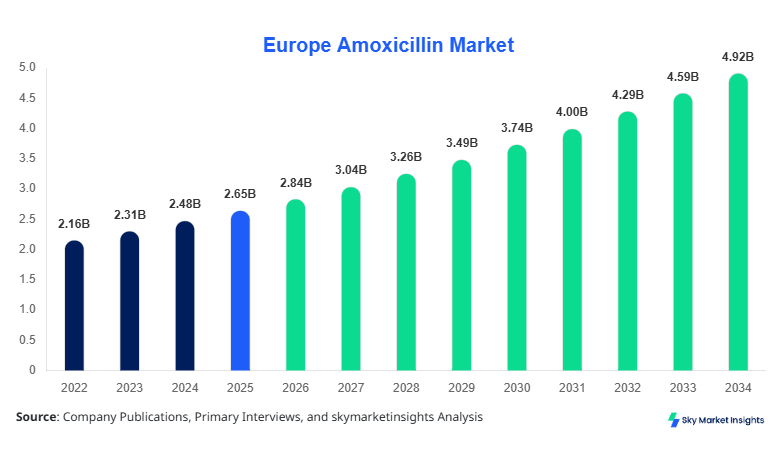
Europe Amoxicillin market size is projected at USD 2.84 billion in 2026 and is expected to hit USD 4.91 billion by 2034 with a CAGR of 7.1%. The market expansion is being supported by increasing bacterial infection prevalence, rising prescription rates for respiratory and urinary tract infections, and strong pharmaceutical manufacturing capacity across Europe. More than 1.3 billion amoxicillin units were consumed across Europe in 2025, while hospital procurement volumes exceeded 420 million treatment packs. Competitive benchmarking, regional prescription analytics, pricing structures, and distribution channel evaluation remain critical for stakeholders operating within the Europe Amoxicillin market.
Amoxicillin is a broad-spectrum beta-lactam antibiotic used extensively for the treatment of bacterial infections including pneumonia, bronchitis, urinary tract infections, sinusitis, skin infections, and ear infections. Europe produced nearly 980 million blister packs of amoxicillin-based formulations in 2025, with Germany, France, and Italy accounting for more than 58% of total regional pharmaceutical output. Adoption and penetration levels remain high due to standardized antibiotic prescription protocols, with healthcare penetration in Western Europe surpassing 87% for primary bacterial infection treatment. Oral formulations contributed approximately 64% of overall prescription volume, while injectable combinations accounted for 18% of hospital demand. Consumer behavior analytics indicate that over 71% of outpatient antibiotic purchases in Europe are driven by respiratory tract infections during winter seasons, while pediatric prescriptions represented 29% of overall amoxicillin consumption in 2025. Hospitals contributed 46% of application demand, retail pharmacies held 38%, and clinics accounted for 16% of regional consumption. Technical efficacy metrics show amoxicillin formulations achieving bacterial inhibition rates above 92% for common Streptococcus infections, supporting continued Europe Amoxicillin market expansion.
Explore more data points, trends and opportunities Download Free Sample Report
Amoxicillin Market Trends
Expansion of Generic Antibiotic Manufacturing
European pharmaceutical manufacturers significantly expanded generic antibiotic production capacity during 2025, increasing amoxicillin output by nearly 14% year-over-year. More than 520 million generic amoxicillin units were manufactured in Germany, France, and Italy collectively, supported by rising healthcare expenditure and procurement optimization initiatives. Automated production lines improved packaging efficiency by 18%, while AI-based inventory forecasting systems reduced supply shortages by 11%. Retail pharmacies experienced prescription growth exceeding 9.4% due to rising outpatient treatment demand. Pediatric oral suspension demand increased by 12% because of growing seasonal respiratory infections among children under 12 years of age. Manufacturers also shifted toward high-stability formulations with shelf-life extensions from 24 months to 36 months. These developments continue supporting Europe Amoxicillin market expansion.
Rising Hospital Procurement and Combination Therapy Adoption
Hospital procurement departments across Europe increased antibiotic procurement budgets by 8.7% during 2025, with amoxicillin-clavulanate combinations representing over 41% of total institutional antibiotic purchasing. More than 270 million inpatient antibiotic doses were administered across European hospitals, particularly in respiratory disease treatment and post-surgical infection management. Combination therapies demonstrated treatment success rates above 93% for resistant bacterial strains, encouraging wider adoption in intensive care units and emergency care settings. Digital antimicrobial stewardship programs were implemented in 68% of tertiary hospitals, improving prescription monitoring and reducing antibiotic misuse by nearly 13%. Western European countries accounted for approximately 72% of high-value hospital procurement contracts, reinforcing Europe Amoxicillin market adoption.
Increased Focus on Pediatric and Oral Suspension Formulations
Pediatric-focused pharmaceutical development accelerated throughout Europe, with oral suspension formulations accounting for nearly 29% of overall amoxicillin prescriptions in 2025. More than 160 million pediatric doses were distributed across pharmacies and clinics, particularly in Germany, the United Kingdom, and France. Flavor-enhanced oral suspensions improved treatment adherence rates by 17%, while sugar-free formulations represented 36% of newly launched pediatric products. Consumer demand for easy-to-administer antibiotics rose significantly, leading to increased production of liquid dosage formats. Pharmaceutical companies allocated approximately 12% of antibiotic R&D budgets toward pediatric antibiotic optimization, supporting Europe Amoxicillin market penetration.
Europe Amoxicillin Drivers
Increasing Prevalence of Respiratory and Bacterial Infections
The rising prevalence of bacterial infections across Europe remains a major factor supporting antibiotic consumption. More than 98 million respiratory infection cases were recorded across Europe during 2025, while urinary tract infections surpassed 36 million reported cases. Pneumonia treatment protocols included amoxicillin-based prescriptions in approximately 62% of first-line therapy recommendations. Hospital admissions related to bacterial infections increased by 7.9% between 2023 and 2025, significantly increasing institutional procurement volumes. Seasonal infection outbreaks during winter periods resulted in outpatient prescription surges exceeding 15% in Germany and France. Public healthcare systems allocated over USD 5.8 billion toward antibiotic procurement and infectious disease management programs in 2025. Retail pharmacies across Europe dispensed nearly 610 million amoxicillin treatment packs during the year. Pediatric infections also contributed significantly, with children under 14 years accounting for 28% of total prescriptions. Enhanced diagnostic capabilities and improved access to healthcare services further accelerated prescription rates, strengthening Europe Amoxicillin market demand.
Europe Amoxicillin Restraints
Stringent Antibiotic Stewardship Regulations and Resistance Concerns
The implementation of strict antimicrobial stewardship regulations across Europe continues to restrict excessive antibiotic usage. More than 21 European countries introduced prescription monitoring systems by 2025, reducing non-essential antibiotic prescriptions by approximately 11%. Regulatory agencies increased surveillance over broad-spectrum antibiotic use, particularly in outpatient treatment settings. Antimicrobial resistance cases involving common bacterial strains increased by 6.4% annually, forcing healthcare providers to adopt more targeted treatment approaches. Nearly 37% of hospitals revised prescribing guidelines to limit unnecessary amoxicillin use in mild infections. Pharmaceutical manufacturers also faced rising compliance expenses, with quality assurance and regulatory documentation costs increasing by 9.2% during 2025. Delays in obtaining approvals for new antibiotic formulations averaged 14–18 months across major European markets. Furthermore, growing physician preference for narrow-spectrum alternatives in certain infections reduced prescription frequency in some regions. These challenges continue limiting Europe Amoxicillin market expansion.
Europe Amoxicillin Opportunities
Expansion of Generic Drug Manufacturing and Digital Healthcare Integration
Europe’s expanding generic pharmaceutical sector presents substantial opportunities for antibiotic manufacturers. Generic antibiotics accounted for nearly 76% of prescription volume during 2025, driven by government reimbursement programs and healthcare cost reduction initiatives. Pharmaceutical production investments exceeded USD 1.7 billion across Germany, Italy, and Spain, supporting new antibiotic manufacturing facilities and upgraded production lines. Telemedicine consultations increased by 22% across Europe, improving prescription accessibility and outpatient antibiotic management. Electronic prescription systems now cover over 81% of healthcare institutions, improving supply chain efficiency and prescription tracking accuracy. Online pharmacy antibiotic sales increased by 16% year-over-year, particularly in urban regions with high digital healthcare adoption. Emerging Eastern European markets also demonstrated strong procurement potential, with antibiotic imports increasing by 13% during 2025. Advanced pharmaceutical packaging technologies reduced contamination risk by 19%, creating further expansion opportunities for Europe Amoxicillin market participants.
Challenges in Europe Amoxicillin
Supply Chain Volatility and Active Pharmaceutical Ingredient Dependency
The Europe antibiotic supply chain remains vulnerable to active pharmaceutical ingredient (API) shortages and international logistics disruptions. Nearly 62% of amoxicillin API imports into Europe originated from Asian manufacturing hubs during 2025, exposing regional pharmaceutical companies to pricing volatility and transportation delays. API procurement costs increased by approximately 14% between 2023 and 2025 due to inflationary pressures and energy price fluctuations. More than 18% of pharmaceutical distributors reported temporary antibiotic shortages during peak winter demand periods. Manufacturing facilities also experienced rising utility and labor expenses, increasing operational costs by 10.7%. Regulatory requirements related to environmental compliance further added approximately USD 240 million in annual production costs across Europe. Smaller manufacturers struggled to maintain stable margins because generic drug pricing competition reduced average selling prices by nearly 6%. These operational and supply-related pressures continue creating barriers for Europe Amoxicillin market sustainability.
Report Scope
| Report Metric | Details |
|---|---|
| Market Size in 2025 | USD 2.65 Billion |
| Market Size in 2026 | USD 2.84 Billion |
| Market Size in 2034 | USD 4.91 Billion |
| CAGR | 7.1% (2026-2034) |
| Base Year for Estimation | 2025 |
| Historical Data | 2022-2024 |
| Forecast Period | 2026-2034 |
| Report Coverage | Revenue Forecast, Competitive Landscape, Supply Chain Disruption, Growth Factors, Environment & Regulatory Landscape and Trends |
Explore more data points, trends and opportunities Download Free Sample Report
Amoxicillin Market Segmentation
The Europe market remains segmented by type and application, with tablets dominating nearly 39% of total revenue contribution, followed by capsules at 33% and oral suspensions at 28%. Hospitals represented the largest application segment with 46% consumption share, while retail pharmacies and clinics collectively accounted for 54% of antibiotic distribution volume.
By Type
Capsules accounted for approximately 33% of European antibiotic sales volume during 2025, supported by high adult outpatient prescription rates. More than 410 million capsule units were manufactured across Germany, Italy, and France collectively. Capsule formulations are widely preferred because of rapid dissolution performance, dosage stability, and ease of storage. Standard capsule strengths ranged from 250 mg to 500 mg, while extended-release formulations contributed nearly 18% of institutional procurement. Hospitals accounted for 42% of capsule demand, whereas retail pharmacies contributed 46%. Manufacturing automation increased capsule production efficiency by 16%, reducing operational wastage and packaging costs. Generic capsule penetration exceeded 72% in Western Europe due to healthcare reimbursement policies.
Tablets represented the largest type segment with nearly 39% market contribution during 2025. Europe produced more than 520 million amoxicillin tablet units annually, particularly in Germany and the United Kingdom. Tablets remain the preferred dosage format for adult bacterial infection treatment because of accurate dosing, lower production costs, and longer shelf life exceeding 36 months. Standard formulations include 250 mg, 500 mg, and 875 mg strengths, while combination tablets containing clavulanic acid represented 31% of hospital procurement contracts. Digital blister packaging technologies improved traceability and compliance monitoring across pharmaceutical supply chains. Tablets maintained prescription penetration above 67% among outpatient adult treatments.
Oral suspensions accounted for approximately 28% of regional antibiotic prescriptions during 2025, driven primarily by pediatric demand. More than 160 million oral suspension bottles were distributed across Europe during the year. Pediatric healthcare providers favored liquid formulations because of easier administration and improved dosage flexibility for children under 12 years of age. Flavor-enhanced products improved treatment adherence rates by 17%, while sugar-free formulations represented 36% of newly launched pediatric products. Oral suspensions also demonstrated strong growth in clinics and emergency care centers during seasonal respiratory infection outbreaks.
By Application
Hospitals represented the largest application segment, contributing approximately 46% of overall European antibiotic consumption during 2025. Institutional procurement exceeded 270 million treatment packs annually, supported by inpatient infection management and surgical prophylaxis programs. Intensive care units accounted for 21% of hospital antibiotic demand, while respiratory care departments contributed 34%. Combination therapies containing clavulanic acid represented nearly 41% of hospital procurement contracts due to higher treatment efficacy for resistant infections. Digital antimicrobial stewardship systems were implemented across 68% of tertiary hospitals, reducing prescription misuse and improving inventory management efficiency. Germany and France together accounted for nearly 49% of total hospital procurement value.
Clinics contributed approximately 16% of Europe’s antibiotic prescription volume during 2025. More than 95 million outpatient antibiotic prescriptions were issued through clinics across the region. General practitioners prescribed amoxicillin-based therapies in nearly 58% of bacterial respiratory infection consultations. Urban clinics demonstrated prescription growth above 8% due to increasing patient volumes and improved healthcare accessibility. Electronic prescription systems were implemented across 74% of private clinics, improving patient management efficiency and reducing medication dispensing delays. Pediatric consultations represented 26% of clinic-based antibiotic demand.
Retail pharmacies accounted for nearly 38% of overall antibiotic distribution during 2025. More than 610 million treatment packs were dispensed through pharmacy chains and independent outlets across Europe. Seasonal respiratory infections contributed nearly 44% of pharmacy sales volume during winter months. Online pharmacy platforms represented approximately 11% of retail antibiotic transactions, particularly in Germany and the United Kingdom. Automated dispensing systems improved inventory management efficiency by 14%, while digital prescription verification reduced dispensing errors by 9%. Retail pharmacies continue playing a major role in Europe’s outpatient infection treatment ecosystem.
Europe Amoxicillin Market Segmentations
Type
- Capsules
- Tablets
- Oral Suspension
Application
- Hospitals
- Clinics
- Retail Pharmacies
Europe Amoxicillin Regional Outlook
United Kingdom
The United Kingdom accounted for approximately 17% of Europe’s antibiotic consumption during 2025, supported by a strong public healthcare infrastructure and high outpatient prescription volumes. More than 180 million antibiotic treatment packs were dispensed annually, with respiratory infections contributing nearly 46% of total prescriptions. Hospitals represented 43% of domestic demand, while retail pharmacies accounted for 39%. Generic antibiotic penetration exceeded 79%, driven by National Health Service reimbursement strategies. Digital prescription systems covered nearly 88% of healthcare facilities, improving treatment monitoring and reducing dispensing delays.
Germany
Germany remained the leading European antibiotic market with approximately 24% regional share in 2025. Domestic pharmaceutical facilities produced over 310 million antibiotic units annually. Hospitals accounted for 49% of national demand, while retail pharmacies represented 34%. Germany also maintained one of the highest levels of automated pharmaceutical production adoption in Europe, with over 78% of facilities using AI-assisted packaging and inventory systems. Pediatric oral suspension demand increased by 13% during seasonal infection outbreaks.
France
France contributed nearly 15% of total European antibiotic consumption during 2025. More than 145 million treatment packs were distributed across hospitals and pharmacies annually. Combination therapies represented approximately 37% of institutional procurement contracts. Public healthcare reimbursement programs supported generic penetration rates above 73%. Respiratory and urinary tract infections accounted for 61% of domestic antibiotic prescriptions. France also expanded antimicrobial stewardship investments by 11% to reduce prescription misuse.
Spain
Spain represented approximately 11% of the regional market during 2025, with annual antibiotic consumption exceeding 120 million treatment packs. Retail pharmacies contributed 41% of domestic sales, while hospitals accounted for 44%. Generic product penetration exceeded 69%, supported by healthcare cost optimization strategies. Spain increased domestic pharmaceutical production investments by 8.4% during 2025, particularly in oral dosage manufacturing technologies.
Italy
Italy accounted for nearly 13% of regional antibiotic demand during 2025. The country manufactured more than 140 million antibiotic units annually, supported by strong pharmaceutical export infrastructure. Hospital procurement contributed 47% of domestic demand, while clinics represented 15%. Combination formulations accounted for nearly 34% of institutional antibiotic purchasing. Italy also increased pharmaceutical R&D allocation by 9% toward pediatric and high-stability antibiotic formulations.
Russia
Russia contributed approximately 10% of European antibiotic consumption during 2025, driven by expanding domestic pharmaceutical manufacturing. More than 110 million antibiotic treatment packs were produced annually, while hospital procurement accounted for 52% of national demand. Government-supported local manufacturing programs increased domestic production capacity by 14% during 2025. Retail pharmacy penetration also expanded significantly in urban regions.
Top players in Europe Amoxicillin
- Pfizer Inc.
- GlaxoSmithKline plc
- Sandoz International GmbH
- Teva Pharmaceutical Industries Ltd.
- Sanofi S.A.
- Aurobindo Pharma Ltd.
- Cipla Ltd.
- Sun Pharmaceutical Industries Ltd.
- Mylan N.V.
- Abbott Laboratories
- Dr. Reddy’s Laboratories
- Novartis AG
- Hikma Pharmaceuticals plc
- Lupin Limited
- Bayer AG
Pfizer Inc.
-
Pfizer Inc. accounted for approximately 12% of Europe’s branded antibiotic revenue during 2025.
-
The company maintained strong positioning in hospital procurement contracts across Germany, France, and the United Kingdom.
-
Pfizer expanded antibiotic manufacturing automation capacity by 15%, improving packaging efficiency and reducing production downtime.
-
The company invested heavily in combination antibiotic formulations and digital supply chain systems, supporting faster delivery cycles and improved inventory management.
GlaxoSmithKline plc
-
GlaxoSmithKline plc represented nearly 9% of Europe’s institutional antibiotic sales during 2025.
-
The company maintained strong penetration in pediatric oral suspension products and outpatient prescription channels.
-
GSK increased R&D allocation by 11% for improved formulation stability and pediatric dosage optimization.
-
The company also strengthened retail pharmacy partnerships across Western Europe, increasing outpatient prescription accessibility.
Investment Analysis
European pharmaceutical investment in antibiotic production exceeded USD 3.2 billion during 2025, with Germany accounting for nearly 29% of total capital allocation. Manufacturing modernization projects represented 41% of total investments, while R&D activities contributed 24%. Hospitals and institutional procurement infrastructure received approximately 18% of sector-wide investment allocation. Private equity participation in generic antibiotic production increased by 13%, particularly in Eastern Europe. Government-backed pharmaceutical expansion programs supported capacity upgrades across Italy, Spain, and France.
Cross-border mergers and collaboration agreements increased significantly during 2025, with more than 34 pharmaceutical partnership agreements signed across Europe. API sourcing collaborations represented approximately 21% of all industry agreements, helping reduce supply chain dependency risks. Joint ventures between European and Asian manufacturers expanded API manufacturing stability and reduced procurement volatility by nearly 9%. Technology collaborations focusing on AI-based pharmaceutical packaging and digital inventory monitoring also accelerated across the region. Strategic investments in automated oral dosage manufacturing improved production efficiency by approximately 17%, strengthening long-term industry competitiveness.
New Product Developments
Pharmaceutical companies introduced several advanced amoxicillin formulations during 2025, with pediatric oral suspensions accounting for approximately 32% of new product launches. Flavor-enhanced liquid formulations improved patient adherence rates by nearly 17%, while high-stability formulations extended shelf life from 24 months to 36 months. Combination therapies containing clavulanic acid demonstrated bacterial resistance management improvements exceeding 14%.
Manufacturers also introduced digitally traceable blister packaging systems across Europe, improving pharmaceutical authentication and inventory monitoring efficiency by approximately 19%. More than 22% of new antibiotic launches incorporated advanced moisture-resistant packaging technologies. R&D spending on oral dosage innovation increased by 12% during 2025, supporting Europe’s pharmaceutical manufacturing competitiveness.
Recent Developments in Europe Amoxicillin
- 2025: Germany expanded domestic antibiotic manufacturing capacity by 14%, adding more than 48 million additional treatment pack production capability annually. The initiative reduced import dependency and improved regional supply chain stability during winter infection peaks.
- 2025: France introduced upgraded antimicrobial stewardship guidelines across public hospitals, reducing non-essential antibiotic prescriptions by approximately 11%. The policy also improved digital prescription monitoring coverage to over 82% of healthcare institutions nationwide.
Research Methodology
The Europe Amoxicillin market report was prepared using a combination of primary research, secondary research, and advanced market estimation methodologies. The research process included detailed analysis of pharmaceutical production databases, healthcare procurement statistics, prescription analytics, regulatory filings, and company financial reports from 2022 to 2025. Primary research involved interviews with pharmaceutical manufacturers, hospital procurement managers, healthcare professionals, distributors, and regulatory authorities across Germany, France, Italy, Spain, and the United Kingdom. Secondary research sources included healthcare journals, antibiotic consumption databases, trade publications, government healthcare portals, and pharmaceutical industry associations.
Market size estimation was conducted using top-down and bottom-up analytical approaches to validate revenue forecasts, production volumes, and prescription trends. Data triangulation techniques were used to evaluate regional consumption patterns, generic penetration rates, and hospital procurement dynamics. Forecast modeling incorporated demographic trends, infection prevalence rates, healthcare expenditure growth, and pharmaceutical manufacturing investments across Europe. The report also evaluated competitive positioning, regulatory developments, technological advancements, and supply chain trends to ensure accurate market forecasting and strategic analysis.
Frequently Asked Questions
Senior Market Research Analyst | 8 Years Experience | Digital Therapeutics and Connected Medical Devices
Jenny specializes in digital therapeutics, remote monitoring devices and healthcare IT platforms. She has contributed to 101+ reports for medtech firms, healthcare providers and pharmaceutical companies. Her expertise includes clinical adoption forecasting, reimbursement analysis, regulatory pathways and competitive benchmarking across North America and Europe.