Europe Ambulatory Infusion Center Market Size
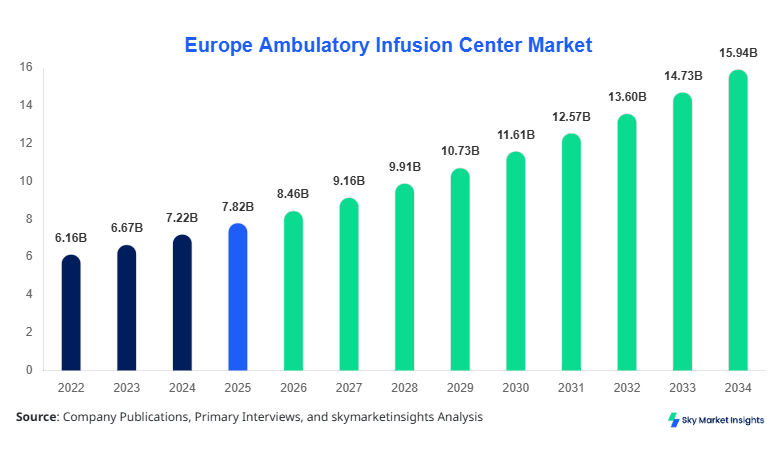
Europe Ambulatory Infusion Center market size is projected at USD 8.46 billion in 2026 and is expected to hit USD 15.92 billion by 2034 with a CAGR of 8.24%. The increasing burden of chronic diseases, expansion of outpatient infusion infrastructure, and rising preference for cost-efficient healthcare delivery are accelerating the development of ambulatory infusion centers across Europe. More than 5,800 ambulatory infusion facilities operated across Europe in 2025, delivering over 148 million infusion procedures annually. The report provides detailed segmentation analysis, technology adoption assessment, reimbursement structure evaluation, and competitive landscape mapping across major European economies including Germany, the United Kingdom, France, Spain, Italy, and Russia.
The ambulatory infusion center industry refers to healthcare facilities specialized in administering intravenous medications, biologics, chemotherapy, immunoglobulin therapies, hydration solutions, and anti-infective treatments in outpatient settings. Europe recorded more than 172 million chronic disease patients in 2025, with oncology and autoimmune disorders accounting for 46% of total infusion demand. Germany contributed nearly 24.8% of Europe’s outpatient infusion procedures, followed by the United Kingdom at 19.2% and France at 15.6%. Adoption and penetration of ambulatory infusion services increased substantially due to shorter hospital stays and rising pressure on inpatient capacities. Nearly 61% of biologic therapies in Western Europe were administered through outpatient infusion centers during 2025 compared with 49% in 2021. Consumer behavior patterns indicate that over 68% of patients preferred ambulatory settings because treatment cycles were 35% cheaper and waiting times were reduced by 42%. Anti-infective infusion applications represented 31% of total procedures, chemotherapy infusion accounted for 39%, and immunoglobulin infusion contributed 18% of procedures. Average infusion chair utilization rates ranged between 71% and 84%, while digital infusion pump penetration exceeded 77% in developed European countries, reinforcing Europe Ambulatory Infusion Center market expansion.
Explore more data points, trends and opportunities Download Free Sample Report
Ambulatory Infusion Center Market Trends
Expansion of Biologic and Specialty Drug Administration
The growing utilization of biologic drugs and specialty therapeutics has become a major transformation trend within European ambulatory infusion facilities. More than 42% of biologic therapies prescribed in Europe during 2025 required intravenous administration, resulting in over 62 million outpatient infusion sessions. Oncology biologics represented nearly 37% of total biologic infusions, while autoimmune disease treatments contributed 29%. Digital infusion technologies improved dosage precision by 31% and reduced medication administration errors by nearly 24%. The United Kingdom and Germany together installed over 18,000 smart infusion pumps between 2023 and 2025. Healthcare providers increasingly shifted infusion procedures from inpatient environments to ambulatory centers because operational expenses were 28% lower and average treatment duration decreased by 19%, strengthening Ambulatory Infusion Center market development.
Rising Integration of Remote Monitoring and Digital Health Platforms
Digital transformation within ambulatory infusion centers accelerated significantly during the last three years. More than 74% of infusion facilities in Western Europe integrated remote patient monitoring platforms by 2025, compared with 48% in 2022. AI-supported infusion scheduling systems reduced patient waiting periods by 27% and improved treatment compliance by 18%. France and Germany collectively invested over USD 540 million in digital outpatient infusion infrastructure modernization between 2023 and 2025. Wearable monitoring devices linked with infusion management systems increased by 33% annually, enabling continuous patient observation and reducing emergency readmissions by nearly 16%. The implementation of electronic medication verification systems also improved infusion workflow productivity by 21%, contributing strongly to Ambulatory Infusion Center market adoption.
Growing Demand for Home-Connected Outpatient Infusion Networks
Healthcare systems across Europe increasingly developed hybrid infusion ecosystems connecting ambulatory centers with homecare services. Over 12.6 million patients utilized integrated outpatient-home infusion programs in 2025, representing a 29% increase compared with 2022. Specialty clinics in Spain and Italy expanded satellite infusion operations by nearly 18% annually to address rising chronic disease volumes. More than 64% of outpatient infusion providers introduced teleconsultation-based follow-up services, reducing hospital revisits by 22%. Patient satisfaction scores exceeded 87% among centers using digital continuity-of-care models. The integration of mobile pharmacy systems and automated medication dispensing units improved infusion delivery efficiency by 26%, reinforcing Ambulatory Infusion Center market momentum.
Europe Ambulatory Infusion Center Drivers
Increasing Chronic Disease Burden and Oncology Cases Across Europe
The growing prevalence of chronic diseases remains a key factor accelerating outpatient infusion treatment demand across Europe. More than 4.2 million new cancer cases were diagnosed in Europe during 2025, while autoimmune diseases affected over 18 million individuals. Chemotherapy-related infusion procedures increased by 14.8% between 2022 and 2025, reaching nearly 58 million annual sessions. Hospitals experienced occupancy rates exceeding 82% in several European nations, encouraging healthcare systems to redirect patients toward ambulatory infusion centers. Public healthcare authorities in Germany, France, and the United Kingdom collectively allocated over USD 3.6 billion toward outpatient oncology infrastructure development during 2024 and 2025. Improved reimbursement models supported outpatient biologic administration, with nearly 71% of eligible therapies approved for ambulatory settings by 2025. Average outpatient infusion costs remained 30% to 45% lower than inpatient treatment costs, significantly influencing payer adoption. Growing elderly populations also increased infusion utilization, as more than 23% of Europe’s population was aged above 65 years in 2025. These healthcare dynamics continue to accelerate Europe Ambulatory Infusion Center market expansion.
Europe Ambulatory Infusion Center Restraints
High Infrastructure Costs and Workforce Shortages
Despite substantial expansion, several operational limitations continue to restrain outpatient infusion center development across Europe. Establishing a mid-sized infusion center with 20 to 30 infusion chairs requires initial investments ranging from USD 3 million to USD 7 million, including infusion equipment, pharmacy integration, compliance systems, and digital infrastructure. Labor shortages remain another critical issue, with Europe facing an estimated deficit of 78,000 oncology and infusion nurses during 2025. Staff turnover rates exceeded 16% in high-volume infusion facilities due to workload intensity and burnout pressures. Regulatory compliance costs also increased by 21% between 2022 and 2025 because of stricter patient monitoring and medication traceability standards. Smaller healthcare providers in Spain, Italy, and Eastern Europe experienced reimbursement delays averaging 70 to 95 days, impacting cash flow stability. Technology integration challenges further restricted operational efficiency, particularly among independent infusion centers where only 52% implemented advanced electronic infusion monitoring systems. These barriers continue to moderate Europe Ambulatory Infusion Center market penetration.
Europe Ambulatory Infusion Center Opportunities
Expansion of Specialty Therapies and Personalized Medicine
The emergence of specialty therapeutics and personalized medicine creates substantial opportunities for outpatient infusion service providers throughout Europe. More than 38% of pipeline biologic drugs under clinical development in Europe during 2025 required intravenous administration. Precision oncology treatments and monoclonal antibody therapies generated nearly USD 19 billion in outpatient infusion expenditures across Europe. Personalized infusion protocols improved treatment response rates by 24% while reducing adverse drug events by 13%. Germany, France, and the United Kingdom collectively conducted over 2,300 clinical trials involving infusion-based biologic therapies during 2025. Pharmaceutical companies increasingly partnered with infusion providers to expand decentralized treatment networks and improve patient accessibility. More than 46% of newly approved autoimmune biologics in Europe included outpatient infusion delivery recommendations. Demand for advanced immunoglobulin therapies also increased by 17% annually due to rising neurological and immune disorder diagnoses. Continuous innovation in infusion pharmacology and targeted therapeutics presents significant growth potential for Europe Ambulatory Infusion Center market participants.
Europe Ambulatory Infusion Center Challenge
Complex Reimbursement Structures and Operational Standardization
One of the most significant challenges facing European outpatient infusion providers involves inconsistent reimbursement frameworks and fragmented operational standards. Reimbursement rates for identical infusion therapies varied by as much as 34% between Germany, France, Italy, and Spain during 2025. More than 41% of independent infusion facilities reported delayed insurance claim settlements impacting operational profitability. Regulatory certification procedures also differed substantially across countries, increasing administrative costs by nearly 19%. Medication storage compliance, pharmacy licensing, and biologic handling requirements created operational complexities for expanding infusion chains. Data interoperability issues persisted among healthcare systems, with only 58% of outpatient centers fully integrated with national electronic health record infrastructures. In addition, fluctuations in specialty drug pricing increased procurement volatility, while supply chain disruptions impacted approximately 12% of infusion medication deliveries during 2024 and 2025. Maintaining treatment consistency across multi-site infusion networks also posed clinical challenges due to staffing disparities and variable technological capabilities, limiting Europe Ambulatory Infusion Center market scalability.
Report Scope
| Report Metric | Details |
|---|---|
| Market Size in 2025 | USD 7.82 Billion |
| Market Size in 2026 | USD 8.46 Billion |
| Market Size in 2034 | USD 15.92 Billion |
| CAGR | 8.24% (2026-2034) |
| Base Year for Estimation | 2025 |
| Historical Data | 2022-2024 |
| Forecast Period | 2026-2034 |
| Report Coverage | Revenue Forecast, Competitive Landscape, Supply Chain Disruption, Growth Factors, Environment & Regulatory Landscape and Trends |
Explore more data points, trends and opportunities Download Free Sample Report
Ambulatory Infusion Center Market Segmentation
The European ambulatory infusion center industry is segmented based on therapy type and end user. Chemotherapy infusion dominated therapy demand with nearly 39% share in 2025 due to rising oncology incidence rates. Hospitals represented the largest end-user category with 46% of outpatient infusion procedures because of integrated reimbursement and pharmacy capabilities. Standalone centers contributed 33% while specialty clinics accounted for 21% of total procedure volumes.
BY TYPE
Anti-infective infusion services represented approximately 31% of total outpatient infusion procedures across Europe during 2025. More than 46 million anti-infective infusion sessions were administered annually, particularly for multidrug-resistant bacterial infections and post-surgical care management. Average treatment cycles ranged between 5 and 21 days, while digital infusion monitoring systems reduced adverse medication events by nearly 18%. Germany and France together accounted for over 44% of Europe’s anti-infective infusion procedures. Continuous infusion pumps with dosage precision exceeding 98% were deployed in nearly 72% of facilities. The increasing prevalence of antimicrobial resistance contributed significantly to outpatient anti-infective therapy adoption, strengthening overall infusion infrastructure development.
Chemotherapy infusion remained the dominant therapy segment with nearly 39% revenue contribution in 2025. More than 58 million chemotherapy infusion procedures were conducted throughout Europe, with breast cancer, lung cancer, and colorectal cancer accounting for over 61% of treatment cycles. Oncology-focused infusion facilities increased by 16% between 2022 and 2025. Smart chemotherapy management systems improved treatment scheduling efficiency by 24% and reduced patient wait times by 29%. Germany, the United Kingdom, and France collectively generated more than 68% of total chemotherapy infusion volumes. Precision oncology infusion protocols and targeted biologics substantially accelerated outpatient oncology treatment migration.
Immunoglobulin infusion accounted for approximately 18% of total outpatient infusion demand during 2025. More than 26 million immunoglobulin infusion procedures were administered for neurological disorders, immune deficiencies, and autoimmune diseases. Specialty neurology infusion centers expanded by 14% annually across Europe due to increasing demand for chronic neurological disease management. Automated infusion pumps with multi-channel delivery systems improved therapy administration efficiency by 21%. The United Kingdom and Germany collectively accounted for 47% of immunoglobulin infusion utilization. Patient adherence rates exceeded 84% among facilities implementing digital patient engagement systems and telemonitoring technologies.
Other specialty infusion therapies, including biologics and hydration treatments, contributed nearly 12% of outpatient infusion procedures across Europe. More than 18 million specialty infusion sessions were conducted annually in 2025. Rheumatology biologics represented 33% of specialty infusions, while gastrointestinal disease therapies accounted for 24%. High-dose biologic infusion capacity increased by 19% between 2022 and 2025. Standalone infusion facilities introduced over 4,200 advanced infusion chairs supporting extended-duration therapies exceeding 6 hours. Increasing utilization of monoclonal antibodies and rare disease therapeutics continues to diversify outpatient infusion treatment portfolios.
BY APPLICATION
Hospitals remained the leading application environment for outpatient infusion services, accounting for approximately 46% of total infusion procedures in Europe during 2025. More than 68 million infusion treatments were delivered through hospital-associated ambulatory centers due to integrated oncology, pharmacy, and diagnostic capabilities. Hospital-based centers maintained infusion chair utilization rates averaging 84%, supported by higher patient throughput and centralized clinical management systems. Germany and France collectively operated more than 1,850 hospital-affiliated outpatient infusion facilities. Adoption of robotic pharmacy preparation systems increased by 22% annually, improving medication accuracy and reducing preparation time by 31%. Advanced patient monitoring infrastructure and emergency care integration further strengthened hospital dominance in infusion administration.
Standalone infusion centers represented nearly 33% of the European outpatient infusion landscape in 2025. Over 49 million infusion procedures were administered within independent infusion networks and specialized outpatient facilities. Operational efficiency remained a major advantage, with treatment cycle turnaround times averaging 18% faster than hospital settings. More than 63% of standalone centers adopted AI-assisted appointment scheduling systems and cloud-based patient record platforms. Spain and Italy recorded the highest growth in independent infusion center establishments, with facility expansion exceeding 15% annually between 2022 and 2025. Lower operational costs and flexible patient scheduling significantly supported standalone center utilization across Europe.
Specialty clinics accounted for around 21% of infusion applications in Europe during 2025. Neurology, rheumatology, gastroenterology, and autoimmune disease clinics administered over 31 million infusion sessions annually. Immunotherapy and monoclonal antibody treatments represented more than 44% of specialty clinic infusion procedures. Advanced infusion chairs equipped with patient monitoring sensors improved comfort scores by 26% and reduced adverse event incidence by 11%. Digital care coordination systems integrated across specialty clinics increased follow-up compliance rates to nearly 88%. The United Kingdom and Germany together represented over 52% of specialty clinic infusion activity due to high biologic therapy adoption.
Academic medical centers and research-associated infusion facilities represented a smaller but strategically important segment within the European outpatient infusion ecosystem. More than 8 million experimental and clinical-trial-related infusion procedures were performed in 2025. Research hospitals across Germany, France, and the United Kingdom conducted over 2,300 infusion-focused biologic clinical trials involving oncology and immunotherapy applications. Academic infusion centers experienced annual procedure growth of 12.4% due to increasing personalized medicine adoption. Integration of genomic diagnostics and precision dosing technologies improved treatment targeting efficiency by 17%, strengthening advanced infusion care capabilities.
Europe Ambulatory Infusion Center Market Segmentations
Therapy Type
- Anti-Infective Infusion
- Chemotherapy Infusion
- Immunoglobulin Infusion
End User
- Hospitals
- Standalone Centers
- Specialty Clinics
Europe Ambulatory Infusion Center Regional Outlook
United Kingdom
The United Kingdom accounted for approximately 19.2% of the European outpatient infusion industry during 2025. More than 980 ambulatory infusion facilities operated across England, Scotland, Wales, and Northern Ireland, administering nearly 27 million infusion procedures annually. Oncology infusion represented 43% of total treatments, while autoimmune disease therapies accounted for 21%. National Health Service modernization initiatives allocated over USD 620 million toward outpatient treatment infrastructure expansion between 2023 and 2025. Smart infusion device adoption exceeded 76%, while electronic treatment scheduling penetration reached 83%. The country also reported over 4,200 specialized infusion nurses and pharmacists supporting outpatient care delivery.
Germany
Germany remained the dominant regional contributor with 24.8% share of Europe’s outpatient infusion ecosystem in 2025. More than 34 million infusion procedures were administered annually across 1,320 facilities. Oncology infusion services contributed 41% of total procedures, anti-infective therapies accounted for 28%, and neurological biologics represented 15%. Government-supported digital healthcare initiatives increased electronic patient management adoption to 81%. Germany also maintained one of the highest infusion chair densities in Europe at approximately 18.4 chairs per 100,000 population. Pharmaceutical collaborations and specialty biologic therapy demand continued accelerating outpatient infusion infrastructure investments.
France
France represented nearly 15.6% of Europe’s ambulatory infusion services during 2025, supported by more than 780 infusion facilities and over 21 million annual infusion procedures. Hospital-associated outpatient centers contributed approximately 58% of national infusion volumes due to integrated oncology treatment networks. Immunotherapy utilization increased by 19% annually between 2022 and 2025. France also expanded digital infusion monitoring implementation to 73% of facilities. More than 62% of biologic therapies for autoimmune conditions were delivered through outpatient infusion settings, reflecting increasing decentralization of hospital care delivery systems.
Spain
Spain accounted for approximately 10.8% of the regional outpatient infusion industry during 2025. More than 14 million infusion procedures were administered annually through 540 facilities concentrated in Madrid, Barcelona, Valencia, and Seville. Standalone infusion centers represented 39% of the country’s infusion infrastructure, reflecting strong private healthcare investment activity. Oncology therapies contributed 36% of procedures, while anti-infective infusion accounted for 29%. Spain also recorded annual outpatient infusion center expansion exceeding 15% between 2022 and 2025. Increasing elderly populations and chronic disease incidence continued supporting infusion service utilization growth.
Italy
Italy contributed nearly 9.7% of Europe’s ambulatory infusion landscape during 2025. More than 12 million infusion procedures were conducted across 510 outpatient facilities. Rheumatology and immunoglobulin infusion therapies accounted for 32% of total procedures due to rising autoimmune disease prevalence. Hospital-affiliated infusion centers represented 61% of national capacity, while private standalone centers expanded by 13% annually. Italy introduced over 3,400 smart infusion pumps during 2024 and 2025 to improve treatment precision and patient monitoring efficiency. Government healthcare reforms promoting outpatient treatment adoption further accelerated infusion infrastructure modernization.
Russia
Russia represented approximately 8.9% of the European outpatient infusion ecosystem during 2025. More than 11 million infusion procedures were conducted annually across 430 infusion facilities concentrated in Moscow, Saint Petersburg, and regional healthcare clusters. Oncology infusion therapies contributed 38% of procedures, while infectious disease-related infusions accounted for 26%. Government investments exceeding USD 410 million supported infusion oncology infrastructure expansion between 2023 and 2025. Smart infusion monitoring penetration remained comparatively lower at 49%, although technology adoption increased steadily across private healthcare providers. Growing chronic disease burdens and increasing oncology incidence continued supporting outpatient infusion treatment demand.
Top players in Europe Ambulatory Infusion Center
- Option Care Health
- Fresenius Kabi
- B. Braun Melsungen AG
- Nipro Corporation
- ICU Medical
- Baxter International
- CarepathRx
- Soleo Health
- Walgreens Infusion Services
- AIS Healthcare
- Cencora
- Pentec Health
- KabaFusion
- Linde Healthcare
- Medicover Healthcare
Fresenius Kabi
-
Fresenius Kabi maintained one of the strongest positions in Europe with an estimated 11.6% regional outpatient infusion service share during 2025.
-
The company operated extensive infusion therapy infrastructure across Germany, France, Spain, and Italy with more than 620 outpatient infusion partnerships.
-
Fresenius Kabi expanded biologic infusion support capabilities by 18% between 2023 and 2025.
-
Its smart infusion pump portfolio achieved adoption across more than 72% of partnered infusion centers.
-
The company invested heavily in oncology infusion therapy programs and automated medication preparation systems to strengthen operational efficiency and treatment accuracy.
Baxter International
-
Baxter International accounted for approximately 9.4% of the European infusion systems and outpatient therapy ecosystem during 2025.
-
The company supported over 480 ambulatory infusion facilities across Europe through infusion devices, digital monitoring systems, and biologic administration solutions.
-
Baxter expanded connected infusion technologies by 21% annually and increased remote monitoring integration within outpatient centers.
-
Oncology and immunoglobulin infusion therapies represented over 58% of Baxter-supported outpatient procedures.
-
Strategic collaborations with hospital networks and specialty clinics significantly strengthened its competitive positioning within Europe’s outpatient infusion landscape.
Investment Analysis
Investment activity within Europe’s outpatient infusion ecosystem accelerated significantly due to increasing oncology treatment demand and healthcare decentralization initiatives. More than USD 8.4 billion was invested in ambulatory infusion infrastructure between 2023 and 2025. Germany attracted approximately 28% of total regional investments, followed by the United Kingdom at 22% and France at 17%. Hospital-affiliated infusion modernization projects represented 46% of total investments, while standalone center development accounted for 31%. Digital infusion technologies and remote monitoring systems collectively attracted over USD 1.9 billion in funding. Private equity participation in outpatient infusion networks increased by 24% annually due to strong reimbursement stability and recurring therapy demand.
Pharmaceutical manufacturers and infusion providers increasingly entered strategic collaborations to expand decentralized biologic treatment capabilities. More than 95 M&A agreements and partnership transactions were recorded across Europe between 2023 and 2025 involving specialty biologic infusion networks, oncology treatment centers, and digital infusion technology suppliers. Cross-border acquisitions represented nearly 38% of total deals. Germany and the United Kingdom together accounted for over 44% of infusion-related strategic investments. Healthcare operators focused heavily on capacity expansion, advanced infusion pharmacy integration, and AI-supported patient management systems. Investors also prioritized infusion centers capable of handling high-complexity biologics and personalized medicine therapies.
Private healthcare groups increased investment allocation toward specialty neurology and immunology infusion centers due to rising demand for immunoglobulin and monoclonal antibody therapies. More than 26% of total outpatient infusion investments during 2025 targeted neurological disease management infrastructure. Digital treatment coordination systems and automated pharmacy technologies received approximately 19% of sector-wide capital allocation. Venture funding for connected infusion monitoring technologies increased by 31% annually between 2022 and 2025, indicating strong long-term commercialization potential.
New Product Developments
Manufacturers and healthcare providers introduced multiple infusion-related innovations across Europe during 2025. More than 34% of newly installed infusion systems featured AI-supported dosage optimization capabilities and real-time remote monitoring integration. Smart infusion pumps improved dosage precision by approximately 28% while reducing infusion administration errors by nearly 22%. Portable infusion chair systems with biometric monitoring capabilities increased patient comfort scores by 24%. Pharmaceutical companies also launched over 18 new biologic therapies optimized specifically for outpatient infusion delivery during 2024 and 2025.
Digital patient engagement platforms emerged as another major innovation area across outpatient infusion facilities. More than 57% of newly developed infusion software systems incorporated predictive scheduling algorithms and automated adverse event detection. Integration of cloud-connected infusion management solutions improved workflow productivity by 19% while reducing documentation errors by 17%. Specialty clinics increasingly adopted automated pharmacy preparation systems capable of reducing biologic medication wastage by nearly 14%, supporting operational efficiency improvements throughout Europe.
Recent Developments in Europe Ambulatory Infusion Center
- 2025: Fresenius Kabi expanded its outpatient infusion infrastructure across Germany and France by adding more than 120 advanced infusion chairs, increasing regional patient handling capacity by approximately 14%. The expansion supported oncology and autoimmune disease infusion services while integrating digital patient monitoring systems across newly established facilities. The company also introduced AI-supported treatment scheduling technologies that reduced patient wait times by nearly 23%.
- 2025: Baxter International launched upgraded smart infusion pumps across over 300 European outpatient infusion facilities. The new systems improved infusion dosage precision by 29% and reduced medication administration errors by 18%. Oncology infusion centers in the United Kingdom and Germany represented more than 46% of the deployment installations. Integration with cloud-connected patient monitoring systems further enhanced operational workflow efficiency.
Research Methodology
The research methodology for the Europe ambulatory infusion center industry involved extensive primary and secondary research procedures focused on healthcare infrastructure"
Frequently Asked Questions
Senior Market Research Analyst | 8 Years Experience | Digital Therapeutics and Connected Medical Devices
Jenny specializes in digital therapeutics, remote monitoring devices and healthcare IT platforms. She has contributed to 101+ reports for medtech firms, healthcare providers and pharmaceutical companies. Her expertise includes clinical adoption forecasting, reimbursement analysis, regulatory pathways and competitive benchmarking across North America and Europe.