Europe Allergy Treatment Market Size
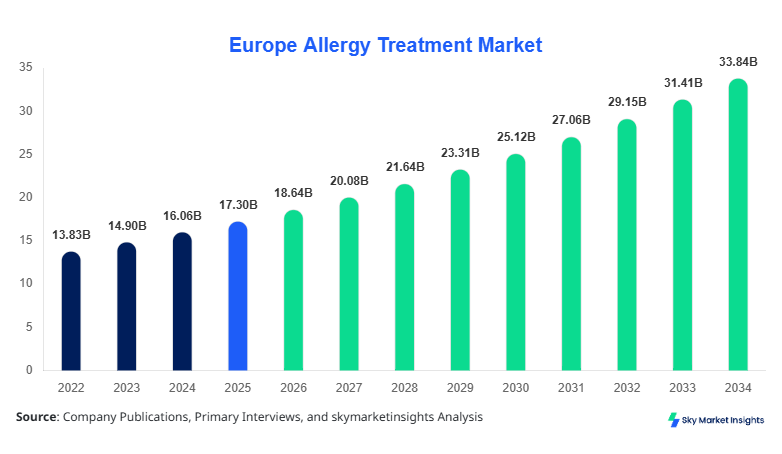
Europe Allergy Treatment market size is projected at USD 18.64 billion in 2026 and is expected to hit USD 33.87 billion by 2034 with a CAGR of 7.74%. The increasing prevalence of allergic rhinitis, asthma, eczema, and food allergies across Europe is significantly contributing to industry expansion. More than 165 million people in Europe suffer from chronic allergic conditions, while over 25% of the regional population experiences respiratory allergies annually. Growing pharmaceutical investments, increasing biologics penetration, and rising demand for personalized immunotherapy solutions are accelerating revenue generation across hospitals, specialty clinics, and retail pharmacies. Market participants are emphasizing data-driven treatment development, regional distribution expansion, and competitive pipeline analysis to strengthen long-term positioning in the Europe Allergy Treatment Market.
The allergy treatment industry comprises pharmaceuticals, biologics, immunotherapy products, diagnostic solutions, and supportive healthcare services used to manage allergic reactions caused by food, environmental agents, chemicals, and seasonal triggers. Europe recorded more than 72 million respiratory allergy cases in 2025, while skin allergy diagnoses surpassed 31 million cases across major economies including Germany, France, and the United Kingdom. Antihistamines accounted for nearly 41% of prescription volumes, whereas immunotherapy represented approximately 27% of total treatment adoption across specialty clinics. Consumer penetration of over-the-counter allergy medications exceeded 58% in urban European regions due to increasing self-medication trends and digital pharmacy expansion. Food allergy-related hospital admissions increased by 11.3% between 2022 and 2025, while biologic therapy adoption rose by 18.5% annually. Approximately 44% of treatments were utilized for respiratory allergies, followed by skin allergies at 32% and food allergies at 24%. The average immunotherapy treatment cycle ranged from 3 to 5 years with efficacy improvement rates exceeding 68% in long-term patients. Increasing awareness programs, advanced diagnostic penetration, and rising healthcare expenditure continue supporting the Europe Allergy Treatment Market.
Explore more data points, trends and opportunities Download Free Sample Report
Europe Allergy Treatment Market trends
Rising Adoption of Biologic Therapies and Precision Medicine
The growing integration of biologic therapies is one of the most influential developments transforming the allergy treatment ecosystem across Europe. In 2025, biologic therapy sales exceeded USD 4.2 billion across the region, supported by increasing adoption in severe asthma, chronic urticaria, and atopic dermatitis treatment applications. More than 2.8 million patients received monoclonal antibody-based therapies during the year, reflecting an annual increase of 19.4%. Healthcare providers are increasingly implementing personalized immunotherapy plans based on genomic and biomarker analysis, improving treatment response rates by nearly 31%. Germany, the United Kingdom, and France collectively represented over 67% of biologic treatment demand due to advanced healthcare infrastructure and reimbursement availability. Pharmaceutical manufacturers increased biologic R&D expenditure by 22.1% in 2025, focusing on long-acting formulations and reduced side-effect profiles. Advanced injectable delivery systems also improved patient adherence rates to nearly 74%. Increasing precision medicine integration and biologic innovation continue strengthening the Europe Allergy Treatment Market.
Expansion of Digital Allergy Management Platforms
Digital healthcare integration is rapidly influencing patient monitoring, diagnosis, and treatment accessibility across the regional allergy care ecosystem. In 2025, over 48 million European patients utilized telehealth or mobile-based allergy consultation services, representing 34% growth from 2023. Smart inhaler usage increased by 27.6%, while AI-powered diagnostic platforms achieved diagnostic accuracy rates exceeding 88%. Mobile medication adherence applications reduced missed treatment schedules by approximately 23% among chronic allergy patients. Online pharmacy channels generated more than USD 3.6 billion in allergy medication sales during 2025, particularly in the United Kingdom, Germany, and Spain. Healthcare providers increasingly adopted cloud-based patient monitoring systems capable of tracking allergen exposure frequency, respiratory performance metrics, and treatment efficacy in real time. More than 41% of urban allergy patients preferred online consultations for seasonal allergies and prescription renewals. Increasing digital integration, telemedicine penetration, and AI-assisted diagnostics continue accelerating the Europe Allergy Treatment Market.
Europe Allergy Treatment Market Drivers
Increasing Prevalence of Respiratory and Food Allergies Across Europe
The rising burden of allergic diseases across Europe remains a major factor supporting industry expansion. More than 150 million Europeans are projected to suffer from chronic allergic conditions by 2030, while respiratory allergies already affect nearly 30% of children and 20% of adults across the region. Seasonal pollen allergies increased by 14.8% between 2022 and 2025 due to changing climate conditions and air pollution exposure. Food allergy prevalence among children reached approximately 8%, leading to substantial increases in emergency treatment demand and epinephrine prescription volumes. Hospitals across Europe reported more than 1.3 million severe allergy-related emergency admissions in 2025 alone. Respiratory treatment products contributed 44% of total prescription demand, while antihistamines represented nearly 39% of medication volumes distributed through pharmacies. Government healthcare programs increased funding for allergy screening initiatives by 17.5% in 2025, especially in the United Kingdom and Germany. Rising urbanization, environmental pollutants, and increased awareness regarding early diagnosis are collectively contributing to expanding patient pools and higher treatment adoption. The growing chronic disease burden continues driving the Europe Allergy Treatment Market.
Europe Allergy Treatment Market Restraints
High Cost of Advanced Biologic and Immunotherapy Treatments
Despite strong demand expansion, the high cost associated with advanced allergy therapies remains a critical industry restraint. Biologic treatment costs range between USD 12,000 and USD 35,000 annually per patient across several European healthcare systems, limiting accessibility among low-income populations. Immunotherapy procedures require long treatment durations of 3–5 years, resulting in lower patient adherence rates of approximately 61% after the second treatment year. More than 38% of healthcare providers across Eastern Europe reported limited reimbursement availability for biologics and advanced injectable therapies. Small clinics and independent healthcare facilities often face infrastructure limitations for administering precision-based immunotherapy programs. Additionally, approximately 26% of allergy patients still depend on traditional over-the-counter antihistamines due to affordability concerns. Pharmaceutical manufacturing expenses for monoclonal antibodies increased by nearly 16.2% in 2025 because of higher biologic raw material costs and regulatory compliance expenditures. Delayed diagnosis in rural regions further limits timely therapy adoption. These cost-related barriers continue restricting broader expansion opportunities within the Europe Allergy Treatment Market.
Europe Allergy Treatment Market Opportunities
Growing Investment in Personalized and Preventive Allergy Care
Preventive healthcare expansion and personalized treatment development are creating substantial opportunities across the regional allergy care industry. European healthcare systems allocated more than USD 2.7 billion toward allergy prevention programs, diagnostic advancements, and immunotherapy expansion during 2025. Personalized treatment adoption increased by 24.3%, particularly in respiratory and pediatric allergy management. Advanced biomarker testing and AI-supported diagnosis reduced allergy misdiagnosis rates by approximately 19%. The pediatric allergy segment represented nearly 34% of total immunotherapy enrollment due to increasing parental awareness and school-based screening initiatives. Pharmaceutical companies entered over 70 collaborative agreements with biotechnology firms between 2023 and 2025 to accelerate allergen-specific biologic development. In addition, digital wearable devices capable of monitoring respiratory performance and environmental allergen exposure recorded adoption growth exceeding 28%. Increasing healthcare investments, preventive medicine programs, and precision diagnostic innovations are expected to generate long-term opportunities for the Europe Allergy Treatment Market.
Challenges in Europe Allergy Treatment Market
Regulatory Complexity and Limited Specialist Availability
The allergy treatment industry faces operational challenges due to stringent regulatory frameworks and a shortage of specialized healthcare professionals. Europe currently has fewer than 8,500 certified allergists serving a patient population exceeding 165 million individuals with chronic allergic conditions. Waiting periods for specialist consultations in certain European countries exceed 4–6 months, delaying treatment initiation and increasing disease progression risks. Regulatory approval timelines for biologic therapies average 18–24 months, impacting commercialization efficiency and increasing development costs by nearly 13%. Cross-border reimbursement differences further complicate pharmaceutical distribution strategies and market penetration for manufacturers. Approximately 32% of rural healthcare facilities lack advanced allergy diagnostic equipment, limiting early-stage intervention. In addition, patient non-adherence rates for long-term immunotherapy programs remain above 35%, reducing clinical effectiveness and increasing treatment discontinuation risks. These infrastructure, workforce, and regulatory limitations continue creating operational complexities within the Europe Allergy Treatment Market.
Report Scope
| Report Metric | Details |
|---|---|
| Market Size in 2025 | USD 7.84 Billion |
| Market Size in 2026 | USD 18.64 Billion |
| Market Size in 2034 | USD 33.87 Billion |
| CAGR | 7.74% (2026-2034) |
| Base Year for Estimation | 2025 |
| Historical Data | 2022-2024 |
| Forecast Period | 2026-2034 |
| Report Coverage | Revenue Forecast, Competitive Landscape, Supply Chain Disruption, Growth Factors, Environment & Regulatory Landscape and Trends |
Explore more data points, trends and opportunities Download Free Sample Report
Europe Allergy Treatment Market Segmentation
The market is segmented by treatment type and allergy type, with respiratory allergy applications dominating nearly 44% of overall demand in 2025. Antihistamines accounted for approximately 41% of treatment consumption, while immunotherapy represented the fastest-expanding category with adoption growth exceeding 18% annually. Hospitals contributed 42% of total treatment distribution volumes, followed by retail pharmacies at 38% and online channels at 20%.
By Type
Antihistamines represented the largest treatment category with approximately 41% share of total prescription and over-the-counter medication demand in 2025. More than 4.6 billion antihistamine units were distributed across Europe, primarily for allergic rhinitis, seasonal allergies, and skin irritation management. Second-generation antihistamines accounted for nearly 72% of prescription volumes because of improved safety profiles and reduced drowsiness effects. Germany, France, and the United Kingdom collectively contributed over 61% of antihistamine consumption due to higher allergy diagnosis rates and stronger retail pharmacy penetration. Oral tablet formulations represented 68% of total antihistamine sales, followed by nasal sprays at 19% and topical formulations at 13%. Increased self-medication trends and online pharmacy accessibility further supported volume growth across urban populations.
Immunotherapy emerged as the fastest-growing treatment category due to increasing preference for long-term allergy management solutions. The segment represented approximately 27% of total market revenue in 2025, supported by rising biologic integration and physician recommendations. More than 3.2 million patients across Europe underwent allergen-specific immunotherapy programs during the year. Sublingual immunotherapy accounted for 54% of treatment adoption because of convenience and improved patient compliance rates exceeding 71%. Injectable immunotherapy remained significant for severe respiratory allergies and asthma management. Clinical studies indicated symptom reduction rates above 68% after 36 months of therapy. Increasing reimbursement support and growing awareness regarding disease-modifying treatment approaches continue supporting segment expansion.
Corticosteroids accounted for nearly 22% of total treatment demand, particularly for severe inflammatory allergy conditions. More than 1.8 billion corticosteroid doses were administered across hospitals and specialty clinics during 2025. Nasal corticosteroids represented 46% of segment demand owing to increasing respiratory allergy prevalence. Topical corticosteroids also experienced substantial adoption in eczema and dermatitis treatment applications. Clinical effectiveness rates exceeded 74% in moderate-to-severe inflammatory allergy cases. However, concerns regarding long-term side effects slightly restricted broader utilization across pediatric populations. Pharmaceutical manufacturers increasingly focused on low-dose and targeted-delivery formulations to improve safety and adherence rates.
By Application
Food Allergy applications represented approximately 24% of total allergy treatment demand across Europe during 2025. Pediatric patients accounted for nearly 61% of diagnosed food allergy cases, with peanut, dairy, shellfish, and gluten allergies being the most prevalent triggers. More than 12 million Europeans required emergency or preventive food allergy management solutions during the year. Epinephrine auto-injector prescriptions increased by 16.7%, while oral immunotherapy adoption grew by 22%. Specialty hospitals and pediatric clinics remained the primary treatment centers, accounting for 58% of food allergy-related therapeutic procedures. Increasing consumer awareness regarding allergen labeling and food safety regulations further strengthened demand for preventive therapies and diagnostic testing.
Respiratory Allergy applications dominated the industry with nearly 44% share of total treatment consumption in 2025. More than 72 million respiratory allergy patients required regular antihistamines, corticosteroids, or immunotherapy products across Europe. Seasonal allergic rhinitis accounted for 58% of respiratory allergy diagnoses, followed by allergic asthma at 27%. Smart inhaler utilization increased by 27.6% year-over-year, improving treatment adherence and respiratory monitoring efficiency. Germany and the United Kingdom jointly represented over 49% of respiratory allergy treatment volumes due to high urban pollution exposure and advanced healthcare access. Increasing climate-related pollen exposure continues supporting demand for respiratory-focused treatment solutions.
Skin Allergy applications accounted for approximately 32% of total industry demand, supported by rising eczema, urticaria, and contact dermatitis prevalence. More than 31 million Europeans experienced chronic skin allergies in 2025, while topical corticosteroid prescriptions exceeded 950 million units. Biologic therapies for atopic dermatitis increased by 18.4% during the year because of stronger efficacy in severe inflammatory cases. Dermatology clinics represented 43% of treatment administration volumes, while retail pharmacy sales accounted for 37%. Technological advancements in targeted topical formulations and biologic injectables significantly improved symptom management outcomes. Rising cosmetic allergies and environmental sensitivity issues continue supporting segment expansion.
Europe Allergy Treatment Market Segmentations
Treatment Type
- Antihistamines
- Immunotherapy
- Corticosteroids
Allergy Type
- Food Allergy
- Respiratory Allergy
- Skin Allergy
Europe Allergy Treatment Market Regional Outlook
United Kingdom
The United Kingdom maintained the largest regional share at approximately 28.4% in 2025 owing to advanced healthcare infrastructure and widespread allergy awareness programs. More than 14 million individuals required allergy-related treatment annually, while biologic therapy penetration exceeded 22% among severe asthma patients. Respiratory allergies accounted for 46% of national treatment demand, followed by skin allergies at 29%. NHS-supported allergy programs increased diagnostic accessibility across pediatric populations, resulting in 13.8% higher early-stage detection rates between 2023 and 2025. Online pharmacy sales represented nearly 24% of national allergy medication distribution volumes. Increased precision medicine integration and biologic adoption continue supporting market expansion.
Germany
Germany accounted for nearly 22% of regional revenue due to strong pharmaceutical manufacturing capabilities and high immunotherapy utilization. The country recorded more than 19 million allergy patients during 2025, while specialty allergy clinics exceeded 2,100 nationwide. Antihistamines represented approximately 39% of treatment demand, whereas immunotherapy contributed 31% of healthcare spending in the allergy segment. Government-funded healthcare reimbursement programs supported broader access to advanced biologics and diagnostic solutions. Germany also represented nearly 34% of Europe’s allergy-focused clinical trial activity. Increasing air pollution and pollen-related respiratory conditions continue accelerating treatment demand.
France
France represented approximately 16% of Europe allergy treatment revenue during 2025. More than 11 million individuals required seasonal allergy management, while food allergy diagnoses among children increased by 12.1% between 2022 and 2025. Retail pharmacies accounted for nearly 41% of medication distribution volumes due to widespread OTC antihistamine consumption. The country expanded biologic therapy reimbursement coverage by approximately 18% in 2025, supporting greater adoption among severe asthma patients. Digital consultation platforms experienced user growth exceeding 26% annually. Increasing investment in preventive allergy programs and pediatric diagnostics continues supporting industry development.
Spain
Spain contributed approximately 11% of regional demand due to increasing respiratory allergy prevalence linked to climate conditions and urban pollution. More than 7.4 million patients sought seasonal allergy treatment in 2025, while immunotherapy adoption increased by 17.2%. Antihistamines represented 44% of prescription volumes, followed by corticosteroids at 24%. Telemedicine-based allergy consultations expanded by nearly 29%, particularly in urban healthcare systems. Government healthcare initiatives increased funding for allergy awareness and diagnostic expansion programs by 14.3% during 2025. Rising pollen exposure and stronger healthcare accessibility continue supporting market expansion.
Italy
Italy accounted for nearly 10% of regional allergy treatment revenue, supported by rising eczema and respiratory allergy prevalence. More than 6.9 million individuals received allergy-related prescriptions in 2025. Hospital pharmacies represented approximately 45% of treatment distribution channels, while biologic therapy adoption increased by 15.8% year-over-year. Pediatric food allergy diagnoses increased by nearly 9.6% between 2022 and 2025. Pharmaceutical companies operating in Italy expanded allergy-focused R&D expenditure by 12.4% in 2025 to strengthen regional treatment innovation. Increasing urbanization and environmental allergen exposure continue driving treatment demand.
Russia
Russia represented approximately 8% of Europe regional demand owing to increasing urban respiratory disease prevalence and improving pharmaceutical accessibility. More than 9 million individuals required allergy management therapies during 2025. Antihistamines contributed nearly 47% of total prescription volumes due to affordability and widespread retail availability. Government healthcare modernization programs improved allergy diagnostic penetration by 11.7% between 2023 and 2025. However, biologic therapy adoption remained comparatively lower at around 9% because of reimbursement limitations and infrastructure challenges. Increasing healthcare investment and rising awareness are gradually improving industry performance.
Top players in Europe Allergy Treatment Market
- Sanofi
- GlaxoSmithKline plc
- Novartis AG
- ALK-Abelló A/S
- Stallergenes Greer
- Merck KGaA
- AstraZeneca plc
- Bayer AG
- Johnson & Johnson
- Pfizer Inc.
- Teva Pharmaceutical Industries Ltd.
- Allergy Therapeutics plc
- HAL Allergy Group
- AbbVie Inc.
- Hikma Pharmaceuticals plc
Sanofi
- Sanofi accounted for approximately 12.8% of Europe regional allergy therapy revenue during 2025 through its extensive biologics and respiratory care portfolio.
- The company maintained strong positioning in severe asthma and eczema management through monoclonal antibody therapies distributed across more than 30 European countries.
- Sanofi invested over USD 620 million in immunology and allergy-focused R&D activities during 2025.
- The company expanded collaboration agreements with biotechnology firms to strengthen personalized allergy treatment pipelines and improve long-term commercial penetration.
GlaxoSmithKline plc
- GlaxoSmithKline plc represented nearly 10.4% of total regional market share in 2025 owing to its advanced respiratory therapy portfolio and inhalation technologies.
- The company distributed more than 210 million respiratory allergy treatment units across Europe during the year.
- GSK strengthened digital respiratory monitoring integration through AI-enabled inhaler partnerships and patient adherence platforms.
- The company increased biologic manufacturing capacity by approximately 14% to support rising severe asthma treatment demand across European healthcare systems.
Investment Analysis
The Europe allergy treatment sector attracted more than USD 5.8 billion in healthcare and pharmaceutical investment during 2025. Approximately 38% of total investments were allocated toward biologic therapy development, while immunotherapy technologies accounted for nearly 26%. Digital healthcare platforms represented 14% of overall investment allocation because of rising telemedicine adoption and AI-based allergy diagnostics. The United Kingdom and Germany collectively attracted over 52% of regional investments owing to advanced research ecosystems and strong reimbursement frameworks. Venture capital participation in allergy-focused biotechnology firms increased by 21.4% compared with 2024.
Mergers, acquisitions, and collaborative agreements significantly influenced industry competitiveness between 2023 and 2025. More than 70 strategic partnerships were announced during the period to accelerate biologic development, digital diagnostics integration, and personalized treatment innovation. Pharmaceutical firms increasingly collaborated with AI technology providers to improve allergen prediction algorithms and patient monitoring systems. Cross-border licensing agreements expanded by nearly 18% as manufacturers sought broader commercialization access throughout Europe. Biologic manufacturing infrastructure investments exceeded USD 1.4 billion in 2025, especially in Germany and the United Kingdom. Increasing institutional funding and strategic collaboration activity continue creating favorable long-term opportunities across the regional allergy treatment ecosystem.
New Product Developments
Pharmaceutical companies significantly accelerated allergy-focused product launches and formulation improvements during 2025. More than 26% of newly introduced allergy therapies incorporated biologic or precision-targeted mechanisms aimed at improving efficacy and reducing side effects. Advanced antihistamine formulations demonstrated symptom relief improvement rates exceeding 32% compared with conventional products. Smart inhaler systems integrated with AI-based monitoring platforms improved medication adherence by approximately 24%.
Several biotechnology companies introduced next-generation sublingual immunotherapy products capable of reducing treatment duration by nearly 18%. Digital allergy diagnostic platforms also expanded significantly, achieving diagnostic accuracy levels above 88%. Pediatric-friendly oral immunotherapy formulations experienced increased commercialization, particularly for peanut and dairy allergies. Pharmaceutical R&D spending related to allergy innovations increased by approximately 22% in 2025, supporting continued product diversification and clinical development activity.
Recent Developments in Europe Allergy Treatment Market
- 2025: Sanofi expanded biologic production capacity by 16% across Europe to meet increasing severe asthma and eczema treatment demand. The expansion supported distribution growth in the United Kingdom, Germany, and France while improving supply chain efficiency for monoclonal antibody therapies. The company also strengthened digital patient monitoring integration across respiratory care platforms.
- 2025: GlaxoSmithKline plc launched a next-generation smart inhaler platform that improved patient adherence rates by approximately 23%. The system incorporated AI-enabled respiratory tracking technologies and cloud-based physician connectivity to improve treatment outcomes among chronic respiratory allergy patients across Europe.
Research Methodology
The Europe allergy treatment industry assessment was developed through a combination of primary and secondary research methodologies designed to ensure high statistical accuracy and market reliability. The research process involved detailed evaluation of pharmaceutical production data, healthcare expenditure trends, prescription analysis, biologic adoption statistics, and regional allergy prevalence metrics across the United Kingdom, Germany, France, Spain, Italy, and Russia. Primary research included interviews with pharmaceutical executives, allergists, healthcare providers, distributors, and hospital procurement managers to validate market performance indicators and treatment adoption trends. Secondary research sources included healthcare journals, regulatory publications, clinical trial databases, annual reports, government healthcare statistics, and pharmaceutical association reports. Market size estimation was conducted using bottom-up and top-down analytical frameworks supported by revenue benchmarking, treatment volume analysis, and penetration modeling. Forecast analysis incorporated macroeconomic indicators, healthcare investment trends, demographic data, technology adoption rates, and regulatory developments influencing long-term industry performance across Europe.
Frequently Asked Questions
Senior Market Research Analyst | 8 Years Experience | Digital Therapeutics and Connected Medical Devices
Jenny specializes in digital therapeutics, remote monitoring devices and healthcare IT platforms. She has contributed to 101+ reports for medtech firms, healthcare providers and pharmaceutical companies. Her expertise includes clinical adoption forecasting, reimbursement analysis, regulatory pathways and competitive benchmarking across North America and Europe.