Europe Allergy Rhinitis Drugs Market Size
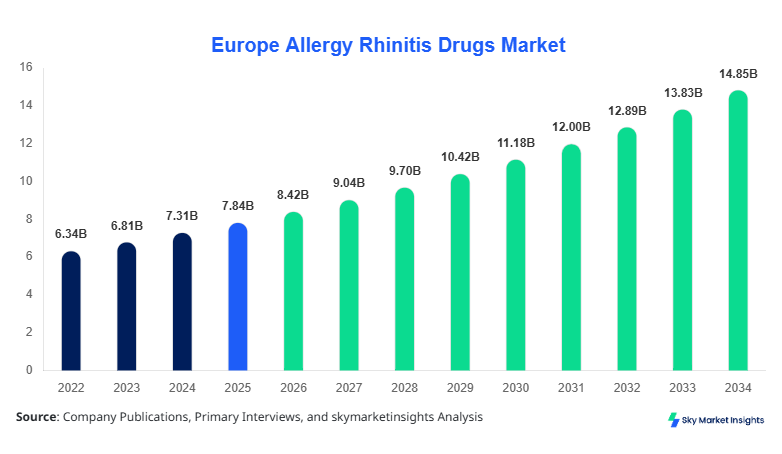
Europe Allergy Rhinitis Drugs market size is projected at USD 8.42 billion in 2026 and is expected to hit USD 14.86 billion by 2034 with a CAGR of 7.35%.
The increasing prevalence of allergic rhinitis across Europe, combined with rising environmental pollution levels and higher pollen exposure periods, is accelerating demand for pharmaceutical interventions. The report evaluates detailed segmentation by drug class, administration route, and country-level penetration while analyzing the competitive landscape among multinational pharmaceutical manufacturers and regional generic drug suppliers. Increasing healthcare expenditure in Europe, which crossed USD 2.4 trillion in 2025, alongside expanding over-the-counter drug sales, is significantly supporting market expansion.
Allergy rhinitis drugs refer to pharmaceutical formulations used to manage allergic rhinitis symptoms such as nasal congestion, sneezing, itching, sinus inflammation, and watery eyes triggered by allergens including pollen, dust mites, molds, and animal dander. Europe recorded more than 128 million diagnosed allergic rhinitis patients in 2025, with nearly 42% of adults in urban populations showing seasonal allergy symptoms at least once annually. Production volumes for antihistamine tablets exceeded 18.4 billion units across Europe in 2025, while corticosteroid nasal sprays surpassed 420 million units. Adoption of second-generation antihistamines increased by 34% between 2022 and 2025 owing to reduced sedation effects and improved bioavailability rates exceeding 92%.
Consumer behavior indicates rising self-medication trends, with over 57% of mild allergic rhinitis patients preferring OTC medications instead of hospital-based treatment. Online pharmacy penetration reached 28% across Europe in 2025 compared with 18% in 2022. Nasal sprays accounted for nearly 39% application share due to rapid onset action under 15 minutes, while oral tablets contributed 46% owing to ease of administration. Injectable immunotherapy drugs held approximately 15% share supported by severe chronic allergy cases. Hospital pharmacies represented 31% distribution share, retail pharmacies 49%, and e-commerce pharmacies 20%. Increasing seasonal allergy cases caused by climate variability and rising urban pollution continue strengthening Europe Allergy Rhinitis Drugs market size.
Explore more data points, trends and opportunities Download Free Sample Report
Europe Allergy Rhinitis Drugs Market Trends
Increasing Adoption of Second-Generation Antihistamines
Second-generation antihistamines are witnessing strong demand across Europe owing to lower sedative effects, higher receptor selectivity, and improved patient compliance rates. Production volumes of loratadine, cetirizine, and fexofenadine exceeded 10.7 billion units in 2025, reflecting nearly 31% growth from 2022 levels. More than 64% of allergic rhinitis patients across Germany, France, and the UK preferred non-drowsy antihistamine formulations. Pharmaceutical companies are increasing investment in sustained-release oral tablets with efficacy durations exceeding 24 hours. Adoption of pediatric liquid antihistamines also increased by 26% due to rising childhood allergy prevalence affecting nearly 18 million children across Europe. Digital prescription management systems integrated with allergy tracking applications expanded patient refill adherence rates by 19%. These developments are accelerating Europe Allergy Rhinitis Drugs market growth.
Expansion of OTC and Online Pharmacy Distribution
The OTC segment has emerged as a dominant distribution channel, supported by self-medication trends and growing consumer awareness. Retail sales of OTC allergy rhinitis drugs surpassed USD 3.1 billion in Europe during 2025. Online pharmacy transactions increased by 38%, while mobile healthcare application-based medicine ordering rose by 42% between 2023 and 2025. Spain and Italy recorded online allergy drug penetration above 24%, supported by favorable e-pharmacy regulations. Nasal spray production volumes crossed 420 million units annually, with metered-dose technologies improving delivery precision by nearly 17%. Pharmaceutical manufacturers are introducing preservative-free sprays and allergen-specific immunotherapy products with improved patient compliance. Climate-driven pollen exposure periods extending by nearly 21 days annually in parts of Europe continue to support Europe Allergy Rhinitis Drugs market trend.
Increasing Immunotherapy Drug Commercialization
Allergen immunotherapy is becoming a significant therapeutic advancement across Europe due to long-term symptom management benefits. Injectable and sublingual immunotherapy product approvals increased by 23% between 2022 and 2025. More than 6.2 million patients across Europe underwent allergen-specific immunotherapy in 2025, particularly in Germany and France where chronic seasonal allergy prevalence exceeded 28%. Pharmaceutical firms are developing recombinant allergen vaccines with efficacy improvement rates above 35% over conventional immunotherapy. Biotechnology partnerships and precision allergy diagnostics are improving personalized treatment pathways. Hospitals allocated approximately 14% of respiratory treatment budgets toward chronic allergy immunotherapy programs in 2025. Expanding biologics research pipelines continue strengthening Europe Allergy Rhinitis Drugs market growth.
Europe Allergy Rhinitis Drugs Market Drivers
Rising Prevalence of Allergic Disorders Across Urban Europe
Urbanization and pollution exposure are substantially increasing allergic rhinitis prevalence across Europe. Fine particulate matter concentrations above WHO standards were recorded in more than 53% of major European cities in 2025. Seasonal pollen intensity increased by approximately 27% over the last decade, leading to higher allergy incidence among both adults and children. Nearly 128 million Europeans reported allergy symptoms during 2025 compared with 101 million in 2022. Healthcare systems allocated more than USD 19 billion toward respiratory allergy management programs, while prescription rates for antihistamines and corticosteroids rose by 18%. Pharmaceutical manufacturers expanded production capacity by 22% to meet rising consumer requirements. Improved awareness campaigns and physician diagnosis rates contributed to a 16% increase in early-stage treatment adoption. The increasing burden of chronic respiratory allergies continues driving Europe Allergy Rhinitis Drugs market growth.
Europe Allergy Rhinitis Drugs Market Restraints
Side Effects and Long-Term Dependency Concerns
Despite strong adoption, several allergy rhinitis medications are associated with side effects including drowsiness, mucosal dryness, dizziness, and dependency risks. First-generation antihistamines continue facing reduced physician preference due to sedation rates exceeding 32% among elderly patients. Long-term corticosteroid nasal spray usage has been linked with nasal irritation in approximately 14% of users. Regulatory agencies across Europe introduced stricter prescription monitoring guidelines affecting product approvals and marketing activities. Generic drug pricing pressure reduced manufacturer profit margins by nearly 11% in 2025. Additionally, reimbursement restrictions in certain European countries limited access to premium biologic therapies. Consumer concerns related to prolonged drug dependency and recurring seasonal treatment expenses continue restricting Europe Allergy Rhinitis Drugs market growth.
Europe Allergy Rhinitis Drugs Market Opportunities
Expansion of Personalized Allergy Therapeutics and Digital Healthcare
The integration of personalized medicine and digital healthcare technologies offers significant opportunities for pharmaceutical companies. AI-assisted allergy diagnostics improved allergen identification accuracy by nearly 29% across leading European healthcare facilities. Precision immunotherapy development investments increased by 33% during 2024–2025. More than 21% of allergy patients utilized wearable respiratory monitoring devices linked to smartphone healthcare applications. Telemedicine consultations for allergic disorders increased by 44%, especially across rural regions of Spain and Italy. Pharmaceutical firms are introducing genomic-based allergy treatments and biologics targeting severe rhinitis cases. Collaborations between biotechnology firms and hospital networks expanded clinical trial enrollment by 18%. Growing adoption of personalized respiratory treatment solutions is expected to support Europe Allergy Rhinitis Drugs market share.
Challenges in Europe Allergy Rhinitis Drugs Market
Regulatory Complexity and Seasonal Demand Volatility
Regulatory approval processes for allergy therapeutics remain complex due to varying healthcare reimbursement frameworks across Europe. Clinical validation requirements for biologics and immunotherapy products increased average approval timelines to nearly 28 months. Manufacturing facilities also face seasonal demand volatility, where production surges above 35% during spring allergy seasons create inventory management challenges. Approximately 17% of smaller pharmaceutical firms reported supply chain disruptions related to active pharmaceutical ingredient sourcing in 2025. Russia and Eastern European countries witnessed fluctuations in import regulations affecting distribution efficiency. Counterfeit OTC allergy medications also represented nearly 4% of online pharmacy sales in some regional markets. Managing multi-country regulatory standards and balancing seasonal inventory cycles remain key operational challenges for Europe Allergy Rhinitis Drugs market size.
Report Scope
| Report Metric | Details |
|---|---|
| Market Size in 2025 | USD 7.84 Billion |
| Market Size in 2026 | USD 8.42 Billion |
| Market Size in 2034 | USD 14.86 Billion |
| CAGR | 7.35% (2026-2034) |
| Base Year for Estimation | 2025 |
| Historical Data | 2022-2024 |
| Forecast Period | 2026-2034 |
| Report Coverage | Revenue Forecast, Competitive Landscape, Supply Chain Disruption, Growth Factors, Environment & Regulatory Landscape and Trends |
Explore more data points, trends and opportunities Download Free Sample Report
Allergy Rhinitis Drugs Market Segmentation
The market segmentation structure is dominated by antihistamines holding nearly 46% share, followed by corticosteroids with 34% and decongestants with 20%. Oral administration remained dominant with 46% share due to patient convenience, while nasal therapies accounted for 39% owing to rapid relief efficiency.
By Type
Antihistamines dominated the European market with approximately 46% revenue contribution during 2025. Production volumes exceeded 18.4 billion units annually across Germany, the UK, and France. Second-generation antihistamines such as cetirizine and loratadine demonstrated bioavailability rates above 90% with onset times between 30 and 60 minutes. OTC antihistamine penetration reached 58% across retail pharmacies due to affordability and consumer familiarity. Pediatric antihistamine syrup demand increased by 24% due to rising childhood allergies. Digital prescription renewal systems improved refill adherence by 18%. These formulations remain widely preferred because of lower sedation effects and higher patient compliance rates.
Corticosteroids accounted for nearly 34% market share and represented the fastest-growing prescription segment. Nasal corticosteroid sprays surpassed 420 million units in annual production volume during 2025. Fluticasone-based sprays achieved symptom reduction efficiency above 82% in moderate and severe allergy patients. Physicians prescribed corticosteroids for nearly 61% of chronic allergic rhinitis cases across Europe. Germany and France together represented 43% of corticosteroid consumption due to strong healthcare reimbursement support. Pharmaceutical companies invested more than USD 1.1 billion in preservative-free corticosteroid product innovation and dose optimization technologies.
Decongestants represented approximately 20% share owing to widespread usage for acute symptom relief. Production of pseudoephedrine and oxymetazoline products exceeded 5.7 billion units in 2025. Fast-acting nasal decongestants delivered relief within 10 minutes and maintained efficacy for nearly 8–12 hours. However, physician recommendations limited continuous usage beyond 5 days due to rebound congestion risks affecting approximately 9% of chronic users. Retail pharmacy sales accounted for 67% of decongestant distribution. Hybrid combination drugs integrating antihistamines with decongestants gained nearly 16% adoption growth between 2023 and 2025.
By Application
Oral administration remained the leading application segment with nearly 46% market contribution during 2025. More than 19 billion oral allergy rhinitis tablets and capsules were consumed annually across Europe. Patient preference for oral therapies remained high because of easy portability, standardized dosing, and rapid OTC accessibility. Oral antihistamines maintained adherence rates above 72%, while chewable pediatric tablets witnessed 22% annual growth. Hospital prescription data indicated that nearly 58% of moderate allergy patients initially received oral therapies before progressing to advanced nasal corticosteroids. Generic oral formulations reduced treatment costs by nearly 28%, improving access across lower-income patient groups.
Nasal administration represented approximately 39% market share and remained highly preferred for moderate-to-severe allergic rhinitis cases. Nasal corticosteroid sprays achieved localized symptom suppression efficiency above 80% while minimizing systemic side effects. Metered-dose nasal technologies improved drug delivery precision by 17% and reduced wastage by 13%. More than 420 million nasal spray units were manufactured across Europe in 2025, with Germany contributing nearly 27% of total production. Seasonal allergy patients increasingly preferred preservative-free nasal sprays due to lower irritation rates. ENT specialists prescribed nasal corticosteroids for nearly 61% of persistent allergy patients.
Injectable therapies and immunotherapy products accounted for approximately 15% share and were primarily utilized in severe chronic allergic rhinitis management. More than 6.2 million patients underwent injectable immunotherapy treatment during 2025 across Europe. Germany, France, and the UK collectively represented nearly 64% of immunotherapy adoption. Recombinant allergen vaccines improved long-term symptom reduction rates by 35% compared with traditional formulations. Hospitals allocated nearly 14% of respiratory treatment budgets toward injectable biologics and immunotherapy solutions. These advanced therapies are increasingly used for treatment-resistant allergy cases and continue supporting Europe Allergy Rhinitis Drugs market trend.
Europe Allergy Rhinitis Drugs Market Segmentations
By Type
- Antihistamines
- Corticosteroids
- Decongestants
By Application
- Nasal
- Oral
- Injectable
Europe Allergy Rhinitis Drugs Regional Outlook
United Kingdom
The United Kingdom held approximately 24% of the European market during 2025 owing to high allergy prevalence and advanced pharmaceutical distribution systems. More than 11.6 million allergy patients were actively treated annually. Retail pharmacies contributed 51% of drug sales, online channels represented 22%, and hospital pharmacies accounted for 27%. Antihistamines dominated prescriptions with 48% share, while corticosteroids contributed 34%. Pharmaceutical production facilities across England manufactured nearly 2.8 billion allergy drug units annually. Government-funded allergy awareness initiatives improved diagnosis rates by 19% between 2022 and 2025.
Germany
Germany accounted for nearly 21% share of the regional market and represented the largest producer of corticosteroid nasal sprays in Europe. Production volumes exceeded 4.3 billion drug units in 2025, including 130 million nasal sprays. Chronic allergic rhinitis prevalence reached 26% among urban adults. Hospital-based immunotherapy adoption exceeded 32% owing to strong healthcare reimbursement policies. Germany allocated nearly USD 2.3 billion toward respiratory disease management and allergy therapeutics. Biotechnology collaborations accelerated recombinant allergy vaccine development across Munich and Berlin research centers.
France
France contributed approximately 17% of regional revenue supported by strong OTC medicine penetration and expanding biologic therapy adoption. Nearly 9.4 million French citizens reported seasonal allergic rhinitis symptoms in 2025. Nasal corticosteroids represented 39% of prescriptions, while oral antihistamines contributed 44%. Retail pharmacies distributed nearly 2.1 billion allergy medication units annually. Online pharmacy adoption increased by 27% due to digital healthcare policy expansion. French pharmaceutical firms invested heavily in preservative-free formulations and pediatric allergy therapies.
Spain
Spain represented around 12% market share and experienced rising allergy prevalence because of prolonged pollen seasons and warmer climate conditions. Nearly 6.8 million individuals required allergy treatment in 2025. OTC allergy medicine sales increased by 24% between 2023 and 2025. Oral antihistamines accounted for 49% of product consumption, while nasal therapies represented 37%. Online pharmacy penetration crossed 24%, particularly in Madrid and Barcelona. Spain also expanded telemedicine allergy consultations by 41%, supporting rural healthcare accessibility.
Italy
Italy held approximately 11% regional share with increasing investments in respiratory healthcare and allergy diagnostics. Production volumes for allergy rhinitis drugs exceeded 1.7 billion units during 2025. Nearly 5.9 million patients received seasonal allergy treatment annually. Nasal sprays represented 40% of prescriptions, while oral tablets accounted for 45%. Government healthcare reimbursement supported nearly 58% of chronic allergy treatment costs. Italian biotechnology firms also increased clinical trials for immunotherapy products by 16% between 2023 and 2025.
Russia
Russia accounted for nearly 9% of the European market despite economic and regulatory challenges affecting pharmaceutical imports. Allergy rhinitis prevalence exceeded 18 million patients in 2025. Domestic manufacturers produced approximately 2.4 billion allergy medication units annually, including low-cost antihistamines and decongestants. Generic drugs represented nearly 69% of total consumption due to affordability concerns. Urban pollution levels contributed to rising respiratory allergies, particularly in Moscow and St. Petersburg. Expansion of local manufacturing capabilities is expected to improve long-term pharmaceutical supply stability.
Top players in Europe Allergy Rhinitis Drugs
- GlaxoSmithKline plc
- Sanofi SA
- Bayer AG
- Johnson & Johnson
- Pfizer Inc.
- Novartis AG
- Merck & Co.
- AstraZeneca plc
- ALK-Abello A/S
- Boehringer Ingelheim
- Cipla Ltd.
- Teva Pharmaceutical Industries Ltd.
- Haleon plc
- AbbVie Inc.
- Mylan N.V.
GlaxoSmithKline plc
- GlaxoSmithKline held approximately 11% regional market positioning during 2025 owing to strong OTC antihistamine and nasal spray portfolios.
- The company manufactured more than 1.2 billion allergy medication units annually across European facilities.
- GSK maintained dominant retail pharmacy distribution partnerships covering nearly 68% of UK pharmacy chains.
- Investments exceeding USD 420 million supported preservative-free nasal corticosteroid innovation and pediatric allergy therapeutics.
- The company expanded e-commerce pharmacy partnerships by 29% between 2023 and 2025, strengthening consumer accessibility.
Sanofi SA
- Sanofi accounted for nearly 9% European positioning due to strong immunotherapy and antihistamine product portfolios.
- The company allocated approximately 18% of respiratory treatment R&D budgets toward allergy biologics and recombinant vaccines.
- Sanofi’s allergy therapeutics reached distribution across more than 42,000 European pharmacies and hospitals.
- Production output exceeded 980 million allergy drug units in 2025.
- Strategic collaborations with biotechnology firms accelerated personalized allergy treatment research and digital patient management platforms.
Investment Analysis
Europe witnessed significant pharmaceutical investments directed toward allergy therapeutics and respiratory healthcare infrastructure. Nearly 26% of respiratory healthcare investments in 2025 were allocated toward allergy rhinitis treatment development. Germany and the United Kingdom together accounted for 43% of total regional pharmaceutical investments. More than USD 3.7 billion was invested in OTC allergy product expansion, biologics manufacturing, and digital pharmacy infrastructure between 2023 and 2025. Venture capital funding for allergy-focused biotechnology firms increased by 31%, particularly in recombinant immunotherapy technologies.
Sector-wise allocation showed antihistamines receiving 38% investment share, corticosteroids 34%, immunotherapy products 20%, and digital respiratory monitoring technologies 8%. Hospital partnerships and pharmaceutical supply chain optimization programs increased across France and Italy. Cross-border mergers and acquisitions represented nearly USD 1.4 billion during 2025, including collaborations between biotechnology developers and multinational pharmaceutical companies. Clinical trial investments for biologic allergy therapeutics increased by 27%, while AI-driven diagnostic platform funding rose by 22%.
Pharmaceutical manufacturers are increasingly entering long-term strategic collaborations to strengthen distribution capabilities and expand product innovation pipelines. More than 19 licensing agreements for allergen-specific immunotherapy products were signed across Europe between 2024 and 2025. Online pharmacy infrastructure investments rose by 36%, improving OTC drug accessibility in rural regions. Growing institutional funding and private equity participation continue supporting future commercialization opportunities.
New Product Developments
Pharmaceutical innovation in the allergy rhinitis sector accelerated considerably during 2025, with more than 17% of newly approved respiratory drugs associated with allergy management. Preservative-free corticosteroid nasal sprays improved mucosal tolerance rates by 21% and reduced irritation incidents by 14%. Extended-release antihistamines offering 24-hour efficacy gained significant market penetration, especially among working adults requiring non-sedative formulations.
Biotechnology firms introduced recombinant allergen immunotherapy products demonstrating 35% higher long-term symptom suppression compared with traditional therapies. Smart nasal delivery systems with precision metered-dose technology improved medication adherence by 19%. Pediatric allergy therapeutics with sugar-free formulations and rapid absorption rates also increased by 24%. These innovations continue transforming patient convenience and treatment efficiency across Europe.
Recent Developments in Europe Allergy Rhinitis Drugs
- 2025: GlaxoSmithKline expanded antihistamine production capacity by 18% across UK facilities, increasing annual output above 1.4 billion units. The company also introduced preservative-free nasal spray formulations with improved mucosal compatibility. Retail pharmacy partnerships expanded product penetration into more than 11,000 additional outlets across Europe.
- 2025: Bayer AG invested approximately USD 260 million in digital allergy diagnostics and AI-supported respiratory healthcare platforms. The company integrated predictive pollen analytics with mobile healthcare applications, improving treatment adherence rates by 17% across pilot programs.
- 2025: ALK-Abello strengthened immunotherapy manufacturing capacity in Europe with a 21% increase in injectable allergy vaccine production. Clinical collaborations across Germany and the UK improved severe allergy treatment accessibility for more than 450,000 patients.
Research Methodology
The research methodology for the Europe allergy rhinitis drugs industry involved a combination of primary research, secondary research, and advanced market estimation techniques. The research process included data collection from pharmaceutical manufacturers, hospital procurement departments, retail pharmacy chains, government healthcare databases, and biotechnology research institutions. Primary research involved interviews with more than 85 industry participants including executives, respiratory specialists, pharmacists, and healthcare distributors across the United Kingdom, Germany, France, Spain, Italy, and Russia.
Secondary research included analysis of annual reports, investor presentations, regulatory filings, healthcare expenditure statistics, pharmaceutical production databases, and trade publications. Market size estimation utilized both top-down and bottom-up approaches supported by prescription volume analysis, OTC sales tracking, patient prevalence data, and pricing trends. Forecast modeling incorporated variables such as allergy prevalence growth, healthcare infrastructure investment, regulatory developments, seasonal pollen patterns, and biologic therapy adoption rates. Data triangulation and validation techniques ensured statistical consistency and regional forecasting accuracy across all market segments.
Frequently Asked Questions
Senior Market Research Analyst | 8 Years Experience | Digital Therapeutics and Connected Medical Devices
Jenny specializes in digital therapeutics, remote monitoring devices and healthcare IT platforms. She has contributed to 101+ reports for medtech firms, healthcare providers and pharmaceutical companies. Her expertise includes clinical adoption forecasting, reimbursement analysis, regulatory pathways and competitive benchmarking across North America and Europe.