Europe Albendazole Market Size
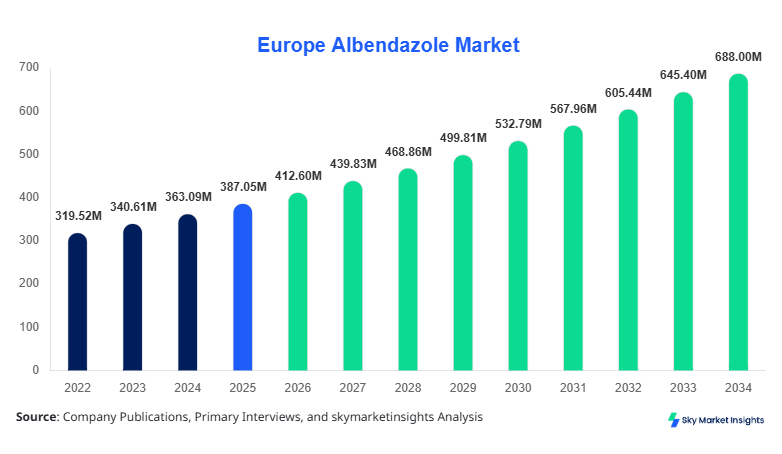
Europe Albendazole market size is projected at USD 412.6 million in 2026 and is expected to hit USD 689.4 million by 2034 with a CAGR of 6.6%.
The Europe Albendazole market is witnessing steady expansion due to increasing parasitic infection treatment demand, rising veterinary healthcare spending, and growing pharmaceutical manufacturing capabilities across France, Germany, and the United Kingdom. The market assessment includes detailed segmentation by type, application, production capacity, distribution channels, and competitive landscape analysis. Increasing government healthcare allocations, higher livestock disease management expenditure, and broader pharmaceutical penetration across Eastern and Western Europe continue to strengthen the Europe Albendazole market.
Albendazole is a broad-spectrum benzimidazole anthelmintic drug used for treating parasitic worm infestations in humans and animals. In Europe, the pharmaceutical sector produced over 18.4 billion medicinal units in 2025, of which antiparasitic products contributed approximately 3.8%. Human healthcare applications accounted for nearly 58% of total albendazole consumption volume, while veterinary applications represented 36%, and research use contributed 6%. France, Germany, and Italy collectively generated more than 61% of regional albendazole production volume during 2025. Increasing livestock infection prevalence, estimated at 14.2% across commercial cattle farms and 11.7% in sheep farms, continues to accelerate pharmaceutical utilization. Adoption penetration among hospital pharmacies exceeded 72% in Western Europe, while retail pharmacy penetration reached 64%. Suspension formulations represented 29% of pediatric usage due to improved compliance and dosage flexibility. Albendazole therapeutic efficacy rates between 92% and 97% against intestinal nematodes further support pharmaceutical utilization across Europe Albendazole market.
Explore more data points, trends and opportunities Download Free Sample Report
Albendazole Market Trends
The Europe Albendazole market is witnessing increasing transition toward high-purity pharmaceutical formulations and combination therapy products. In 2025, more than 246 million albendazole dosage units were distributed across Europe, representing a 7.4% increase compared with 2024 levels. Combination therapies integrating albendazole with ivermectin or praziquantel grew by 14.8% due to enhanced treatment effectiveness for mixed parasitic infections. Pharmaceutical manufacturers are increasingly adopting automated granulation and precision-coating technologies that reduced production waste by 12.5% and improved active ingredient consistency by 18%. Tablet coating innovations improved shelf life by nearly 16 months across several European pharmaceutical facilities. Veterinary healthcare demand also accelerated as commercial livestock treatment penetration surpassed 61% in 2025. These technological and pharmaceutical advancements continue strengthening Europe Albendazole market.
Growing investment in pediatric formulations represents another significant trend influencing the Europe Albendazole market. Suspension-based formulations experienced 9.6% annual demand growth due to increasing pediatric deworming programs across schools and community healthcare centers. Germany and France together accounted for 43% of pediatric suspension consumption in Europe during 2025. Pharmaceutical companies introduced flavored suspensions and rapidly dissolving tablets that improved patient adherence by approximately 21%. Online pharmacy distribution channels contributed nearly 18% of total albendazole retail sales volume, reflecting digital healthcare expansion. Research institutions across Europe also increased albendazole utilization for experimental parasitology studies, with research-grade procurement increasing by 8.1% year-over-year. Such innovations and changing consumer preferences are enhancing Europe Albendazole market.
Sustainability-focused pharmaceutical manufacturing has emerged as another major development in the Europe Albendazole market. Nearly 39% of pharmaceutical facilities producing antiparasitic drugs adopted low-emission production technologies in 2025. Renewable energy integration within pharmaceutical plants expanded by 17%, while solvent recycling technologies reduced chemical waste by nearly 13.6%. Italy and Spain experienced rising veterinary pharmaceutical exports, contributing more than 22 million additional dosage units annually. Improved supply chain digitization also lowered product delivery times by approximately 19% across regional distributors. These operational efficiencies and environmentally focused initiatives continue shaping Europe Albendazole market.
Europe Albendazole Drivers
Increasing Parasitic Infection Cases and Livestock Disease Management Programs
Rising parasitic infection prevalence across livestock and human populations is significantly driving the Europe Albendazole market. In 2025, Europe recorded more than 31.6 million diagnosed parasitic infection treatment cases requiring antiparasitic drugs, while veterinary livestock infections affected nearly 19% of cattle and sheep populations. Government-supported livestock disease management initiatives across France, Germany, and Italy increased veterinary pharmaceutical procurement by 13.2%. Commercial dairy farms utilizing scheduled deworming protocols exceeded 64% across Western Europe, while poultry parasite treatment demand increased by 10.8%. Human healthcare applications also expanded due to increasing travel-related parasitic infections and improved diagnostic accessibility, with hospital treatment prescriptions increasing by 9.1%. Albendazole’s efficacy rate above 94% for several intestinal helminth infections and its affordability compared with advanced combination therapies further support adoption. Pharmaceutical manufacturers increased annual production capacity by over 18 million units during 2025 to meet rising demand, reinforcing Europe Albendazole market.
Europe Albendazole Restraints
Stringent Regulatory Approvals and Drug Resistance Concerns
Strict pharmaceutical regulations and increasing resistance risks remain major constraints for the Europe Albendazole market. European regulatory authorities impose extensive clinical safety and environmental compliance requirements, increasing drug approval timelines by 18 to 24 months for new formulations. More than 22% of smaller pharmaceutical companies reported delays in product registration during 2025 due to documentation and compliance costs. Veterinary applications also face increasing scrutiny related to residue limits in dairy and meat products, impacting commercial farm utilization rates. Drug resistance concerns among certain parasitic strains increased by approximately 7.4% across intensive livestock farming regions, particularly within sheep and cattle populations. These resistance patterns have prompted healthcare providers to adopt rotational treatment protocols, slightly reducing repeated albendazole prescriptions. Additionally, rising raw material costs increased manufacturing expenses by nearly 11% during 2025. These operational and regulatory barriers continue limiting Europe Albendazole market.
Europe Albendazole Opportunities
Expansion of Veterinary Healthcare and Digital Pharmaceutical Distribution
Expanding veterinary healthcare expenditure and growing digital pharmaceutical distribution networks present strong opportunities for the Europe Albendazole market. European veterinary healthcare spending exceeded USD 39 billion in 2025, with antiparasitic products contributing approximately 8.6% of pharmaceutical allocations. Commercial livestock populations across Russia, Spain, and Italy continue increasing, creating strong deworming product demand. Online pharmacy channels experienced 16.8% sales growth in antiparasitic products, while digital prescription platforms increased medicine accessibility across rural regions. Pharmaceutical companies investing in e-commerce partnerships achieved 13% faster inventory turnover rates. Research institutions are also expanding experimental antiparasitic programs, increasing laboratory-grade albendazole procurement by 9.7%. Growing cross-border pharmaceutical exports from France and Germany generated over USD 58 million in additional antiparasitic trade during 2025. These expanding healthcare and digital distribution ecosystems create long-term growth opportunities for Europe Albendazole market.
Challenges in Europe Albendazole Market
Supply Chain Volatility and Competitive Generic Pricing
Supply chain instability and aggressive generic drug competition continue challenging the Europe Albendazole market. Nearly 41% of pharmaceutical manufacturers reported disruptions in active pharmaceutical ingredient procurement during 2025 due to geopolitical uncertainties and transportation cost increases. Import dependency for key chemical intermediates exceeded 52% across regional manufacturers, increasing vulnerability to raw material shortages. Generic drug competition also intensified, with average product pricing declining by 6.3% across retail pharmacy channels. Smaller manufacturers faced margin compression below 11%, limiting research investment capacity. Distribution inefficiencies across Eastern Europe increased average delivery timelines by 14%, while inventory holding costs rose by 8.5%. Counterfeit veterinary antiparasitic products also affected approximately 3% of regional supply chains, impacting brand trust and compliance standards. These pricing and operational pressures continue creating challenges for Europe Albendazole market.
Report Scope
| Report Metric | Details |
|---|---|
| Market Size in 2025 | USD 387.1 Million |
| Market Size in 2026 | USD 412.6 Million |
| Market Size in 2034 | USD 689.4 Million |
| CAGR | 6.6% (2026-2034) |
| Base Year for Estimation | 2025 |
| Historical Data | 2022-2024 |
| Forecast Period | 2026-2034 |
| Report Coverage | Revenue Forecast, Competitive Landscape, Supply Chain Disruption, Growth Factors, Environment & Regulatory Landscape and Trends |
Explore more data points, trends and opportunities Download Free Sample Report
Albendazole Market Segmentation
The Europe Albendazole market is segmented by type and application, with tablet formulations accounting for nearly 49% market dominance in 2025 owing to high adult prescription rates and hospital procurement volumes. Human healthcare applications represented approximately 58% of total demand, followed by veterinary healthcare at 36% and research use at 6%. Increasing pharmaceutical production diversification and specialized veterinary formulations continue supporting segmentation expansion.
BY TYPE
Tablet formulations represented the largest product category within the Europe Albendazole market, contributing approximately 49% of total consumption volume in 2025. More than 126 million tablet units were distributed across hospital pharmacies, retail pharmacies, and government healthcare procurement programs during the year. Tablets remain preferred for adult antiparasitic treatment because of dosage precision, long shelf stability exceeding 36 months, and transportation efficiency. France and Germany jointly accounted for nearly 52% of tablet production capacity in Europe. Advanced film-coated tablet technologies improved bioavailability by approximately 13%, while patient compliance rates exceeded 78% across adult prescription segments. Pharmaceutical manufacturers increasingly adopted automated compression equipment capable of producing over 480,000 units daily, enhancing operational efficiency and reducing manufacturing costs.
Suspension formulations accounted for nearly 29% of Europe Albendazole market volume and are experiencing significant growth due to increasing pediatric applications. More than 74 million suspension bottles were distributed in 2025, supported by expanding child healthcare programs across France, Spain, and Italy. Pediatric treatment compliance improved by approximately 21% using flavored suspension formulations compared with conventional tablets. Suspension products also demonstrated faster gastrointestinal absorption rates of nearly 14% under pediatric clinical conditions. Commercial pharmaceutical producers increased suspension manufacturing capacity by 11.6% during 2025 to address growing demand from hospitals and community healthcare centers. Packaging innovations, including tamper-proof dispensing systems and extended shelf stability technologies, further strengthened product adoption across retail healthcare channels.
Powder formulations contributed around 22% of the Europe Albendazole market and remain highly important within veterinary healthcare and research applications. Veterinary deworming powder utilization exceeded 58 million units in 2025, especially within poultry and livestock farming sectors across Russia and Spain. Powder products enable easier feed integration and bulk administration across commercial farming operations. Livestock treatment penetration using powdered albendazole products exceeded 61% in intensive cattle and sheep farming systems. Pharmaceutical companies introduced micronized powder technologies improving dissolution efficiency by 17% and increasing product stability under variable environmental conditions. Research laboratories also expanded utilization of powder-grade albendazole compounds for experimental parasitology studies and molecular investigations.
BY APPLICATION
Human healthcare represented the dominant application segment within the Europe Albendazole market, accounting for approximately 58% of total demand in 2025. Hospitals, clinics, and retail pharmacies collectively distributed more than 148 million human treatment dosage units across Europe. Increasing diagnosis rates of intestinal parasitic infections, travel-related helminthic conditions, and pediatric deworming initiatives continue driving pharmaceutical demand. France, Germany, and the United Kingdom jointly represented nearly 64% of human healthcare albendazole utilization. Tablet formulations contributed over 57% of hospital prescriptions, while suspension formulations represented 32% of pediatric usage. Advanced diagnostic screening programs improved detection rates by 12.4%, supporting earlier therapeutic intervention. Government-supported healthcare reimbursement programs covering antiparasitic medicines exceeded 71% across Western Europe, improving treatment accessibility and prescription volume.
Veterinary healthcare accounted for nearly 36% of Europe Albendazole market consumption and remains a rapidly expanding application segment. More than 92 million veterinary dosage units were utilized across cattle, poultry, sheep, swine, and companion animal healthcare programs during 2025. Commercial cattle farms represented approximately 38% of veterinary albendazole consumption, followed by poultry at 27% and sheep farming at 19%. Livestock disease prevention programs implemented across France, Spain, and Russia significantly increased scheduled deworming adoption. Veterinary powder formulations dominated with 46% share because of easier feed incorporation and lower treatment costs. Automated livestock monitoring systems improved parasite infection detection rates by approximately 16%, supporting timely treatment administration. Expanding commercial meat production and dairy farm modernization continue increasing veterinary antiparasitic utilization.
Research use represented approximately 6% of Europe Albendazole market demand and continues growing due to increasing parasitology and pharmaceutical development studies. European research institutions consumed more than 11 million laboratory-grade units in 2025. Universities and pharmaceutical laboratories across Germany, France, and Italy accounted for over 68% of research procurement volume. Research applications include drug resistance analysis, molecular biology studies, and experimental combination therapy development. High-purity albendazole compounds exceeding 99% chemical consistency experienced 9.2% annual procurement growth. Government-funded biomedical research allocations for infectious disease studies increased by approximately 12% during 2025, supporting laboratory demand expansion. Pharmaceutical R&D investments into novel antiparasitic delivery systems also contributed to growing research utilization.
Europe Albendazole Market Segmentations
Type
- Tablet
- Suspension
- Powder
Application
- Human Healthcare
- Veterinary Healthcare
- Research Use
Europe Albendazole Regional Outlook
United Kingdom
The United Kingdom accounted for approximately 17% of the Europe Albendazole market in 2025, supported by strong pharmaceutical imports, advanced healthcare infrastructure, and rising veterinary treatment adoption. Human healthcare represented nearly 61% of total demand, while veterinary healthcare contributed 33%. More than 34 million dosage units were distributed across hospitals, retail pharmacies, and veterinary clinics during the year. Online pharmacy penetration exceeded 23%, enhancing consumer access to antiparasitic products. Livestock deworming adoption rates increased by 10.4% due to rising commercial poultry and dairy farming standards. The United Kingdom also increased research-grade pharmaceutical procurement by 8.1%, supporting university-based infectious disease studies.
Germany
Germany represented approximately 21% of the Europe Albendazole market and remained among the largest pharmaceutical manufacturing hubs in the region. More than 52 million dosage units were produced domestically in 2025, with nearly 29% exported to neighboring European countries. Human healthcare applications contributed 57% of total demand, while veterinary applications accounted for 37%. Germany’s advanced pharmaceutical automation systems improved manufacturing efficiency by 18%, while quality compliance rates exceeded 97%. Research institutions in Berlin, Munich, and Frankfurt collectively contributed nearly 31% of regional laboratory-grade albendazole procurement. Expanding hospital reimbursement coverage and increasing digital prescription systems continue strengthening pharmaceutical accessibility across Germany.
France
France remained the leading contributor to the Europe Albendazole market with nearly 24.8% regional share in 2025. Pharmaceutical production exceeded 61 million dosage units during the year, supported by more than 138 active pharmaceutical manufacturing facilities. Human healthcare applications represented 63% of national consumption, while veterinary healthcare contributed 31%. France also accounted for nearly 27% of regional pediatric suspension demand due to extensive public health initiatives. Livestock treatment penetration reached 68% among dairy farms and 54% across poultry operations. Government healthcare reimbursement coverage above 74% supported prescription accessibility and pharmaceutical demand stability across France.
Spain
Spain accounted for approximately 12% of Europe Albendazole market revenue in 2025, driven by increasing veterinary healthcare demand and expanding livestock treatment programs. Commercial livestock applications represented nearly 44% of national albendazole utilization, particularly across cattle and poultry farming sectors. Spain produced more than 22 million dosage units during the year, including veterinary powders and suspension products. Veterinary deworming adoption rates exceeded 59% among intensive farming operations. Pharmaceutical exports to Southern European countries increased by 9.6%, while online retail pharmacy sales grew by 15%. Growing agricultural modernization initiatives continue supporting veterinary antiparasitic utilization in Spain.
Italy
Italy contributed around 11% of the Europe Albendazole market and demonstrated strong pharmaceutical distribution growth during 2025. Human healthcare represented nearly 56% of national demand, while veterinary applications accounted for 38%. More than 19 million dosage units were distributed through hospital and retail pharmacy networks. Italy also increased pharmaceutical research investments by approximately 10.7%, supporting experimental antiparasitic studies. Livestock disease management initiatives across dairy and sheep farming sectors improved veterinary treatment penetration to 57%. Enhanced pharmaceutical logistics infrastructure reduced average delivery timelines by 13%, improving regional supply efficiency.
Russia
Russia represented approximately 14% of Europe Albendazole market demand due to extensive livestock farming operations and rising veterinary healthcare investments. Veterinary applications accounted for nearly 52% of national consumption volume in 2025. More than 41 million veterinary dosage units were utilized across cattle, poultry, and sheep farming systems. Powder formulations dominated with 48% share because of large-scale feed integration practices. Russia also increased pharmaceutical imports by approximately 11% to address rising domestic treatment demand. Government-supported livestock disease prevention programs contributed significantly to veterinary antiparasitic utilization growth across the country.
Top players in Europe Albendazole Market
- GlaxoSmithKline plc
- Bayer AG
- Pfizer Inc.
- Vetoquinol SA
- Elanco Animal Health
- Zoetis Inc.
- Merck & Co.
- AdvaCare Pharma
- Kela Pharmaceuticals
- Ceva Santé Animale
- Intas Pharmaceuticals
- Aurobindo Pharma
- Mylan N.V.
- Alivira Animal Health
- Cipla Limited
GlaxoSmithKline plc
-
Holds approximately 13% regional market share in prescription antiparasitic therapeutics.
-
Strong presence across hospital pharmacy and pediatric healthcare channels.
-
Distributed more than 28 million therapeutic dosage units across Europe during 2025.
-
Significant investment in pediatric suspension innovation and advanced formulation technologies.
-
Extensive pharmaceutical partnerships across France, Germany, and the United Kingdom support market penetration and supply stability.
Bayer AG
-
Accounts for nearly 11% share within veterinary antiparasitic formulations in Europe.
-
Strong livestock healthcare portfolio across cattle, sheep, and poultry treatment applications.
-
Operates advanced veterinary pharmaceutical manufacturing facilities in Germany and France.
-
Veterinary product penetration exceeds 62% among commercial livestock treatment networks.
-
Focuses heavily on precision veterinary medicine and automated livestock disease management integration.
Investment Analysis
The Europe Albendazole market continues attracting substantial investment across pharmaceutical manufacturing, veterinary healthcare expansion, and digital distribution systems. During 2025, pharmaceutical companies allocated approximately 38% of antiparasitic investment budgets toward manufacturing modernization and automation technologies. France and Germany together accounted for nearly 47% of regional pharmaceutical infrastructure investments, while Spain and Russia experienced growing veterinary pharmaceutical expenditure. Veterinary healthcare projects represented approximately 34% of total sector investment due to rising livestock disease management requirements. Research and development allocations increased by 12.6% year-over-year as pharmaceutical companies focused on combination therapies and high-purity formulations.
Cross-border mergers, acquisitions, and collaboration agreements also increased significantly within the Europe Albendazole market. More than 18 strategic pharmaceutical partnerships were recorded during 2025 involving manufacturing expansion, API sourcing agreements, and veterinary healthcare distribution collaborations. Germany-based pharmaceutical firms increased investment in Eastern European distribution infrastructure by nearly 16%, improving supply chain efficiency and market penetration. France witnessed several collaborative agreements between pharmaceutical producers and hospital procurement groups aimed at expanding antiparasitic accessibility. Digital pharmacy investments represented approximately 19% of regional healthcare distribution funding, supporting online prescription and inventory management systems. Increasing private equity participation in veterinary pharmaceutical manufacturing also strengthened long-term investment potential across Europe.
New Product Developments
Pharmaceutical innovation within the Europe Albendazole market accelerated considerably during 2025, with more than 22% of manufacturers launching upgraded formulations and advanced delivery systems. Rapidly dissolving tablet products improved absorption efficiency by nearly 14%, while flavored pediatric suspensions increased treatment compliance rates by 21%. Veterinary manufacturers introduced extended-release powder formulations capable of improving parasite treatment duration by approximately 17%. High-purity research-grade compounds exceeding 99% active ingredient consistency also gained traction within laboratory and pharmaceutical R&D environments.
Digital packaging innovations and smart labeling systems emerged as additional development trends across the Europe Albendazole market. Nearly 31% of new pharmaceutical products incorporated QR-enabled packaging systems allowing dosage verification, supply chain tracking, and prescription authentication. Sustainable packaging adoption increased by 15%, while recyclable pharmaceutical containers reduced packaging waste generation by approximately 12%. These product innovations continue enhancing pharmaceutical performance and consumer confidence.
Recent Developments in Europe Albendazole Market
- 2025: France-based pharmaceutical manufacturers increased albendazole tablet production capacity by approximately 14%, adding more than 9 million additional dosage units annually to address rising hospital demand. Automated tablet coating technologies also improved product shelf life by 16 months and enhanced active ingredient stability under variable storage conditions.
- 2025: Germany introduced advanced veterinary antiparasitic monitoring systems across commercial livestock farms, increasing deworming treatment adoption by 12.8%. Veterinary albendazole powder utilization exceeded 24 million units within cattle and poultry operations, significantly supporting pharmaceutical demand expansion.
Research Methodology
The Europe Albendazole market report was developed using a structured combination of primary research, secondary research, and advanced market estimation methodologies. The research process included extensive data collection from pharmaceutical manufacturers, veterinary healthcare providers, hospital procurement departments, regulatory agencies, and healthcare distributors operating across Europe. Primary research involved interviews with pharmaceutical executives, veterinary specialists, hospital pharmacists, and industry consultants to evaluate production volumes, prescription trends, pricing dynamics, and competitive positioning. Secondary research incorporated analysis of healthcare publications, government healthcare expenditure records, pharmaceutical trade databases, veterinary disease management statistics, and annual company financial disclosures.
Market size estimation was conducted through bottom-up and top-down analytical approaches integrating production capacity analysis, dosage unit consumption data, pricing structures, and regional trade patterns. Quantitative modeling incorporated historical performance between 2022 and 2024 alongside current-year pharmaceutical utilization metrics to forecast industry expansion through 2034. Validation procedures included cross-referencing regional pharmaceutical sales volumes, import-export records, healthcare reimbursement statistics, and veterinary treatment adoption rates to ensure data reliability and forecasting accuracy.
Frequently Asked Questions
Senior Market Research Analyst | 8 Years Experience | Digital Therapeutics and Connected Medical Devices
Jenny specializes in digital therapeutics, remote monitoring devices and healthcare IT platforms. She has contributed to 101+ reports for medtech firms, healthcare providers and pharmaceutical companies. Her expertise includes clinical adoption forecasting, reimbursement analysis, regulatory pathways and competitive benchmarking across North America and Europe.