Europe Aesthetic Medicine Market Size
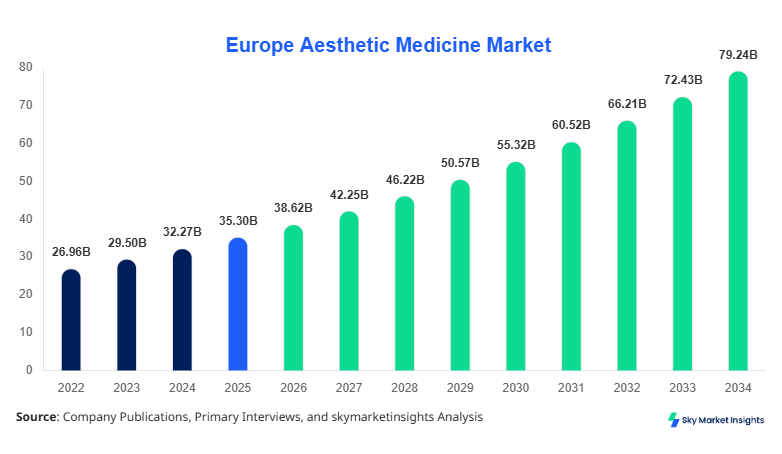
Europe Aesthetic Medicine market size is projected at USD 38.62 billion in 2026 and is expected to hit USD 79.14 billion by 2034 with a CAGR of 9.4%. The market expansion is being supported by increasing adoption of minimally invasive cosmetic procedures, rising aging demographics across Europe, and rapid technological integration in skin rejuvenation systems and injectables. More than 18.5 million aesthetic procedures were performed across Europe in 2025, while over 42% of cosmetic clinics upgraded to AI-assisted diagnostic imaging systems. The competitive landscape remains highly fragmented with multinational pharmaceutical companies, laser device manufacturers, and specialty clinic operators accounting for nearly 64% of total revenue generation. Data-driven segmentation across procedure type, technology platform, and end-user vertical continues to reshape investment and expansion strategies within the Europe Aesthetic Medicine market.
The aesthetic medicine industry comprises medical technologies, procedures, and pharmaceutical products designed to improve cosmetic appearance through surgical and non-surgical interventions. Europe accounted for nearly 28.4% of the global procedure volume in 2025, with more than 7.2 million dermal filler procedures and 6.8 million botulinum toxin treatments recorded across the region. The United Kingdom, Germany, and France collectively contributed over 61% of regional procedure demand due to advanced healthcare infrastructure and higher disposable income levels. Adoption rates of laser-assisted skin resurfacing increased by 17.3% between 2023 and 2025, while radiofrequency-based body contouring procedures exceeded 2.4 million annual sessions. Consumer behavior indicates that approximately 54% of patients aged between 28 and 45 preferred minimally invasive procedures due to lower downtime and treatment costs averaging USD 420–USD 2,500 per session. Non-invasive procedures represented 47% of total applications, minimally invasive procedures accounted for 38%, and surgical interventions contributed 15% of procedure volume. Increasing awareness regarding anti-aging therapies, rising medical tourism, and digital consultation penetration above 46% continue to accelerate the Europe Aesthetic Medicine market.
Explore more data points, trends and opportunities Download Free Sample Report
Aesthetic Medicine Market Trends
Rising Adoption of AI-Integrated and Personalized Cosmetic Technologies
The European cosmetic industry is witnessing rapid adoption of AI-enabled aesthetic systems capable of skin analysis, facial symmetry mapping, and personalized treatment recommendations. More than 32,000 AI-assisted diagnostic devices were installed across clinics in Europe by the end of 2025, representing an annual increase of 19.6%. Germany and the United Kingdom collectively accounted for over 48% of these installations. Personalized injectables and regenerative therapies using platelet-rich plasma expanded by 24% between 2024 and 2025 due to improved patient satisfaction rates exceeding 82%. Additionally, wearable skin monitoring technologies experienced demand growth of 16.2%, particularly among consumers aged 25–40. Laser systems with integrated cooling mechanisms reduced treatment downtime by nearly 31%, increasing procedure acceptance across urban demographics. Rising demand for personalized anti-aging solutions and technology-driven treatment outcomes continues to reshape the Europe Aesthetic Medicine market.
Expansion of Medical Spas and Preventive Cosmetic Treatments
Medical spas emerged as one of the fastest-growing service categories in Europe, with more than 14,600 operational facilities recorded in 2025 compared to 11,200 facilities in 2022. Spain, Italy, and France together contributed 52% of medical spa expansion due to increasing wellness tourism and preventive skincare adoption. Preventive cosmetic procedures among consumers aged 24–34 increased by 22%, particularly for collagen stimulation therapies and preventive botulinum toxin injections. Revenue generated through wellness-oriented cosmetic packages surpassed USD 8.7 billion in 2025, while monthly subscription-based treatment programs grew by 18.5%. Furthermore, sustainable and vegan injectable formulations experienced a 13% rise in demand across premium urban clinics. Increasing preference for wellness-oriented cosmetic enhancement and early anti-aging intervention is strengthening the Europe Aesthetic Medicine market.
Europe Aesthetic Medicine Drivers
Increasing Aging Population and Rising Disposable Income Levels
The rapid rise in Europe’s aging population is significantly driving cosmetic procedure adoption across both surgical and non-surgical categories. More than 21% of Europe’s total population was above 65 years of age in 2025, creating strong demand for anti-aging treatments such as dermal fillers, skin tightening, and facial rejuvenation therapies. Consumer expenditure on cosmetic healthcare increased by 14.2% between 2022 and 2025, while premium skincare treatment subscriptions exceeded 9.5 million across the region. Germany, France, and Italy collectively accounted for nearly 58% of anti-aging treatment demand due to higher life expectancy and increased disposable household income averaging USD 38,000 annually in urban centers. Additionally, over 63% of consumers preferred minimally invasive procedures because of reduced recovery time and lower treatment costs. Increasing awareness through digital marketing campaigns and social media influencers further boosted treatment consultations by 27% in 2025 alone. Rising aging demographics and consumer willingness to invest in appearance enhancement continue to accelerate the Europe Aesthetic Medicine market.
Europe Aesthetic Medicine Restraints
High Treatment Costs and Regulatory Compliance Burdens
Despite strong adoption trends, elevated treatment expenses and strict medical regulations continue to limit industry expansion in several European countries. Advanced laser systems and robotic-assisted aesthetic devices require installation investments ranging from USD 120,000 to USD 650,000 per unit, creating operational barriers for small clinics. Surgical cosmetic procedures such as rhinoplasty and facelifts cost between USD 4,000 and USD 14,000 across major European cities, restricting affordability for middle-income consumers. Furthermore, nearly 34% of smaller clinics reported delays in acquiring regulatory approvals for new injectable products and energy-based devices. Compliance with European Union Medical Device Regulation standards increased operational costs by approximately 11% between 2023 and 2025. Russia and Southern European countries also experienced shortages of qualified aesthetic practitioners, with vacancy rates exceeding 16% in specialized cosmetic facilities. These financial and regulatory challenges continue to restrict the Europe Aesthetic Medicine market.
Europe Aesthetic Medicine Opportunities
Growth of Regenerative Aesthetic Therapies and Medical Tourism
Regenerative aesthetic medicine and medical tourism present substantial expansion opportunities across the European cosmetic sector. Platelet-rich plasma therapies, stem cell-based treatments, and collagen biostimulators collectively generated more than USD 5.2 billion in Europe during 2025. Adoption of regenerative procedures increased by 26% annually due to consumer preference for natural and long-lasting treatment outcomes. Spain, Turkey-linked transit hubs, and Italy attracted over 1.8 million medical tourists seeking affordable cosmetic treatments with costs nearly 35% lower than Northern Europe. Cross-border treatment packages including accommodation and post-procedure care increased by 18.7% during 2025. Additionally, partnerships between luxury hospitality providers and medical spa operators expanded premium wellness tourism capacity by 22%. Technological innovation in biocompatible fillers and regenerative injectables is expected to create lucrative revenue streams for manufacturers and clinics. Expanding medical tourism and regenerative cosmetic innovation continue to create opportunities in the Europe Aesthetic Medicine market.
Challenges in Europe Aesthetic Medicine
Shortage of Skilled Professionals and Risk of Counterfeit Products
The industry continues to face operational challenges associated with workforce shortages and counterfeit cosmetic products. Europe reported a deficit of approximately 18,000 certified aesthetic practitioners in 2025, particularly in advanced laser treatment and reconstructive cosmetic surgery specialties. Training costs for specialized practitioners exceeded USD 28,000 annually, limiting workforce expansion across smaller economies. Counterfeit dermal fillers and unauthorized injectable products represented nearly 9% of market circulation in Eastern Europe, creating patient safety concerns and regulatory scrutiny. Adverse reaction rates associated with counterfeit products increased by 14% between 2023 and 2025. Moreover, social media-driven misinformation regarding cosmetic outcomes led to a 12% rise in consumer complaints and treatment dissatisfaction claims. Clinics are increasingly investing in blockchain-based product authentication systems and digital patient monitoring tools to reduce safety risks. Workforce limitations and counterfeit product penetration remain significant barriers for the Europe Aesthetic Medicine market.
Report Scope
| Report Metric | Details |
|---|---|
| Market Size in 2025 | USD 35.30 Billion |
| Market Size in 2026 | USD 38.62 Billion |
| Market Size in 2034 | USD 79.14 Billion |
| CAGR | 9.4% (2026-2034) |
| Base Year for Estimation | 2025 |
| Historical Data | 2022-2024 |
| Forecast Period | 2026-2034 |
| Report Coverage | Revenue Forecast, Competitive Landscape, Supply Chain Disruption, Growth Factors, Environment & Regulatory Landscape and Trends |
Explore more data points, trends and opportunities Download Free Sample Report
Aesthetic Medicine Market Segmentation
The market is segmented based on procedure type and end-user applications. Non-invasive procedures dominated with nearly 47% share in 2025 due to lower procedural risks and treatment affordability. Specialty clinics contributed approximately 44% of total end-user demand owing to faster service accessibility and technological specialization.
BY TYPE
Non-invasive procedures represented the largest segment with nearly 47% revenue contribution in 2025. More than 8.7 million non-invasive procedures were performed across Europe, including laser hair removal, chemical peels, ultrasound skin tightening, and radiofrequency contouring treatments. Laser-based skin rejuvenation systems operated at pulse frequencies exceeding 15 Hz, improving procedural precision and reducing downtime by 28%. Demand remained particularly strong among consumers aged 25–40 due to affordability and minimal recovery periods. Germany and France together contributed 41% of total non-invasive procedure volume. Advanced cooling-enabled laser devices improved patient comfort by approximately 33%, increasing repeat treatment adoption rates above 52%.
Minimally invasive procedures accounted for approximately 38% of total industry revenue during 2025. Dermal fillers, botulinum toxin injections, thread lifts, and platelet-rich plasma therapies represented the primary treatment categories within this segment. More than 13 million injectable procedures were conducted across Europe in 2025, while hyaluronic acid fillers contributed nearly 56% of injectable demand. Average treatment duration ranged between 15 and 45 minutes, significantly improving patient convenience. Clinics adopting AI-guided injection mapping systems reported procedural accuracy improvements of 18%. The United Kingdom and Italy collectively generated nearly 44% of minimally invasive procedure revenue.
Surgical procedures contributed around 15% of market revenue but generated higher average treatment costs compared to non-surgical interventions. Breast augmentation, liposuction, rhinoplasty, and facelifts remained the most common procedures. Europe recorded over 1.9 million surgical aesthetic procedures in 2025, with average treatment costs ranging between USD 3,500 and USD 16,000. Surgical robotic assistance systems improved precision levels by nearly 24% and reduced procedural complications by 11%. Spain and Germany emerged as major centers for surgical cosmetic tourism due to internationally accredited healthcare facilities and lower procedural costs.
BY APPLICATION
Hospitals accounted for nearly 31% of total aesthetic medicine procedures in Europe due to their ability to conduct advanced reconstructive and surgical interventions. More than 2,400 hospitals across the region integrated dedicated aesthetic departments by 2025. Surgical procedures represented approximately 62% of hospital-based cosmetic treatments, while advanced reconstructive surgeries and post-trauma cosmetic corrections increased by 17% between 2023 and 2025. Hospitals invested over USD 3.8 billion in robotic-assisted cosmetic systems and imaging technologies during 2025. Germany and France collectively contributed 49% of hospital-based procedure volume.
Specialty clinics dominated the end-user landscape with approximately 44% market contribution in 2025. More than 26,000 specialized cosmetic clinics operated across Europe, focusing heavily on injectable therapies, laser treatments, and minimally invasive procedures. These facilities handled over 11 million cosmetic consultations annually, with treatment conversion rates exceeding 61%. AI-enabled facial mapping and digital consultation platforms improved patient retention by nearly 19%. The United Kingdom represented the largest specialty clinic market due to high urban population density and premium cosmetic service demand.
Medical spas emerged as the fastest-growing application segment and represented nearly 25% of total treatment volume. Europe hosted over 14,600 medical spas in 2025, offering wellness-based cosmetic procedures including anti-aging facials, body contouring, collagen stimulation, and skin hydration therapies. Subscription-based wellness packages increased by 18%, while integrated spa and cosmetic therapy services generated revenues exceeding USD 8 billion. Spain and Italy collectively accounted for more than 46% of wellness tourism-driven medical spa demand. Increasing integration of luxury hospitality and preventive cosmetic wellness programs continues to expand this segment.
Europe Aesthetic Medicine Market Segmentations
Procedure Type
- Non-invasive Procedures
- Minimally Invasive Procedures
- Surgical Procedures
End User
- Hospitals
- Specialty Clinics
- Medical Spas
Europe Aesthetic Medicine Regional Outlook
United Kingdom
The United Kingdom maintained the leading position in the regional market with approximately 24.7% share in 2025. More than 3.1 million aesthetic procedures were performed annually, including 1.2 million injectable treatments and 780,000 laser procedures. London, Manchester, and Birmingham collectively contributed over 57% of national cosmetic demand. Non-invasive procedures accounted for 49% of total treatments, while minimally invasive procedures represented 36%. The country reported over 5,200 registered cosmetic clinics and 1,350 dermatology-focused centers. Technology adoption rates remained among the highest in Europe, with AI-enabled treatment planning systems implemented across 58% of clinics.
Germany
Germany represented nearly 21% of regional revenue due to advanced healthcare infrastructure and strong anti-aging treatment demand. More than 2.8 million cosmetic procedures were conducted in 2025, including 950,000 dermal filler sessions and 640,000 laser-assisted treatments. The country accounted for approximately 29% of Europe’s robotic-assisted surgical cosmetic procedures. Hospitals and specialty clinics invested over USD 1.6 billion in advanced imaging and regenerative treatment systems between 2023 and 2025. Berlin, Munich, and Hamburg collectively generated more than 51% of national cosmetic service revenue.
France
France accounted for approximately 17% of Europe’s aesthetic medicine revenue in 2025. The country performed over 2.3 million procedures annually, supported by more than 3,900 cosmetic clinics and dermatology facilities. Injectable treatments represented nearly 42% of national procedure volume, while luxury anti-aging skincare therapies experienced demand growth of 15.4%. Paris alone contributed over 38% of cosmetic treatment revenue due to premium wellness tourism and luxury beauty integration. France also emerged as a major center for regenerative aesthetic research and collagen biostimulator innovation.
Spain
Spain contributed nearly 13% of the regional market and emerged as a major medical tourism destination. More than 1.9 million cosmetic procedures were recorded in 2025, with approximately 28% involving international patients. Medical spas and wellness-oriented cosmetic centers represented 36% of national treatment revenue. Barcelona and Madrid together accounted for nearly 61% of procedural volume. Lower treatment costs averaging 25% below Northern Europe significantly increased cross-border cosmetic tourism demand.
Italy
Italy held around 12% of regional revenue and demonstrated strong growth in regenerative cosmetic therapies and wellness-integrated medical spas. More than 1.7 million procedures were conducted in 2025, including 620,000 injectable treatments and 290,000 body contouring procedures. Milan and Rome collectively contributed 54% of cosmetic service demand. Anti-aging treatments among consumers above 45 years increased by 19% between 2023 and 2025. Italy also recorded high adoption of collagen stimulation and stem cell-based therapies.
Russia
Russia represented approximately 8% of the European industry despite ongoing economic and regulatory fluctuations. The country performed more than 1.1 million aesthetic procedures in 2025, primarily concentrated in Moscow and Saint Petersburg. Injectable procedures accounted for nearly 46% of national demand, while laser-based skin resurfacing treatments increased by 13% annually. Domestic manufacturing of aesthetic injectables expanded by 18%, reducing import dependency and improving accessibility across regional clinics.
Top players in Europe Aesthetic Medicine
- Allergan Aesthetics
- Galderma
- Merz Pharma
- Candela Corporation
- Cutera Inc.
- Lumenis Ltd.
- Cynosure LLC
- Alma Lasers
- Revance Therapeutics
- Sinclair Pharma
- Fotona
- Bausch Health Companies
- Johnson & Johnson MedTech
- Venus Concept
- InMode Ltd.
Allergan Aesthetics
-
Allergan Aesthetics accounted for approximately 16% of regional injectable treatment revenue in 2025.
-
The company maintained strong leadership through its botulinum toxin and dermal filler portfolio distributed across more than 9,000 European clinics.
-
Investment in AI-based patient assessment platforms increased operational efficiency by 21%.
-
The company expanded physician training programs by 18% during 2025 and strengthened partnerships with premium specialty clinic chains across the United Kingdom, Germany, and France.
Galderma
-
Galderma represented nearly 13% of Europe’s aesthetic injectable and skincare revenue.
-
The company supplied products to over 7,500 specialty clinics and dermatology centers across Europe.
-
Hyaluronic acid filler volumes increased by 14% in 2025, while regenerative skincare product demand rose by 17%.
-
Galderma focused heavily on regenerative cosmetic innovation and digital consultation integration, strengthening its premium brand positioning in advanced anti-aging therapies.
Investment Analysis
Investment activity across Europe’s aesthetic medicine industry increased substantially between 2023 and 2025, with total capital inflows exceeding USD 12.6 billion. Specialty clinics attracted approximately 38% of total investments due to rapid expansion of minimally invasive cosmetic procedures and recurring treatment demand. Medical spas accounted for 24% of industry investment allocation, particularly in Spain and Italy where wellness tourism expanded significantly. Venture capital investments in AI-enabled diagnostic systems and regenerative injectables increased by 29% during 2025. Germany and the United Kingdom collectively attracted over 46% of technology-oriented investment projects.
Mergers, acquisitions, and strategic collaborations remained highly active across the industry landscape. More than 48 acquisition agreements involving cosmetic clinic chains, injectable manufacturers, and laser technology firms were recorded in 2025. Pharmaceutical companies increased collaboration with biotechnology firms specializing in stem cell therapies and collagen biostimulation products. Cross-border investment partnerships between luxury hospitality brands and medical spa operators expanded by 19%, supporting wellness tourism infrastructure development. Additionally, over 31% of corporate investment budgets were directed toward research and development activities focused on sustainable cosmetic formulations and robotic-assisted treatment systems. Rising institutional funding and private equity participation continue to create strong expansion opportunities across Europe’s cosmetic healthcare ecosystem.
New Product Developments
Manufacturers across Europe introduced more than 420 new aesthetic medicine products and device upgrades during 2025. Approximately 37% of newly launched products focused on regenerative injectables, biocompatible fillers, and AI-enabled imaging systems. Laser devices with enhanced pulse modulation capabilities improved treatment precision by 24% while reducing skin irritation rates by 17%. Companies also introduced sustainable filler formulations utilizing biodegradable compounds and vegan-compatible ingredients to meet evolving consumer preferences.
Advanced robotic-assisted cosmetic treatment platforms demonstrated operational efficiency improvements exceeding 21% and reduced procedural error margins by 14%. More than 28% of product development investments were directed toward minimally invasive body contouring technologies and collagen stimulation therapies. Clinics adopting next-generation AI consultation software reported patient conversion improvements of 16%. Innovation in regenerative medicine and smart aesthetic devices continues to strengthen long-term industry competitiveness.
Recent Developments in Europe Aesthetic Medicine
- 2025: Allergan Aesthetics expanded its injectable manufacturing capacity in Ireland by 18%, increasing annual supply capabilities for botulinum toxin products distributed across Europe. The expansion supported growing demand from more than 9,000 specialty clinics and improved regional distribution efficiency by 14%.
- 2025: Galderma launched an advanced regenerative dermal filler platform with enhanced collagen stimulation capabilities that improved treatment longevity by approximately 22%. The product rollout initially targeted the United Kingdom, Germany, and France, which together accounted for over 57% of injectable demand.
Research Methodology
The research methodology for the Europe aesthetic medicine industry involved a combination of primary and secondary research processes designed to ensure accurate market forecasting and competitive analysis. Primary research included interviews with cosmetic surgeons, dermatologists, medical spa operators, pharmaceutical manufacturers, distributors, and technology providers across the United Kingdom, Germany, France, Spain, Italy, and Russia. More than 120 industry participants contributed insights regarding procedure volumes, technology adoption, pricing structures, and consumer preferences. Secondary research incorporated company annual reports, regulatory publications, healthcare databases, medical journals, cosmetic surgery associations, trade publications, and government healthcare statistics. Market size estimation was conducted using both top-down and bottom-up analytical frameworks integrating procedure volume analysis, pricing trends, product penetration rates, and technology adoption metrics. Forecast modeling incorporated macroeconomic indicators, demographic trends, healthcare expenditure, investment patterns, and technological innovation pipelines to ensure comprehensive evaluation of the regional industry landscape.
Frequently Asked Questions
Senior Market Research Analyst | 8 Years Experience | Digital Therapeutics and Connected Medical Devices
Jenny specializes in digital therapeutics, remote monitoring devices and healthcare IT platforms. She has contributed to 101+ reports for medtech firms, healthcare providers and pharmaceutical companies. Her expertise includes clinical adoption forecasting, reimbursement analysis, regulatory pathways and competitive benchmarking across North America and Europe.