Top 9 Companies in E-Waste Management Market
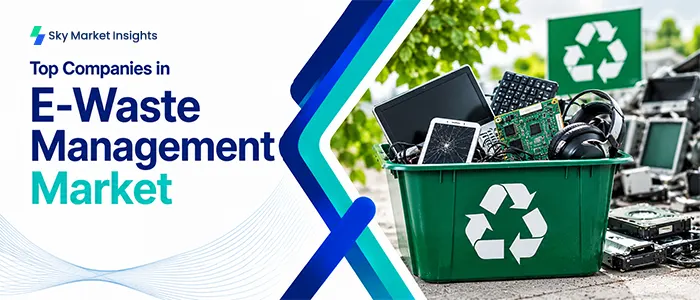
The e-waste management market covers the collection, transportation, sorting, refurbishment, dismantling, recycling, recovery, treatment, and responsible disposal of discarded electrical and electronic equipment. It serves manufacturers, retailers, businesses, households, governments, and recycling organizations managing end-of-life computers, smartphones, televisions, appliances, networking equipment, batteries, and other electronic products. Global electronic waste generation reached approximately 62 million metric tons in 2022, highlighting the scale of the material-recovery challenge. Only about 22% of this volume was formally documented as collected and recycled, leaving substantial quantities outside organized recycling systems. E-waste contains valuable materials such as copper, aluminum, gold, silver, palladium, and rare materials, but it can also contain hazardous substances requiring controlled treatment. For procurement professionals, supplier selection increasingly depends on recycling efficiency, regulatory compliance, downstream traceability, data destruction, recovery rates, and processing capacity.
Market Overview
The e-waste management market includes collection services, IT asset disposition, refurbishment, material recovery, precious-metal recovery, battery recycling, hazardous-material treatment, and final disposal. The electronics recycling value chain begins with collection and transportation before moving into sorting, dismantling, shredding, mechanical separation, hydrometallurgical or pyrometallurgical recovery, and secondary-material sales.
Consumer electronics, information-technology equipment, telecommunications equipment, electrical appliances, and industrial electronics contribute significantly to overall e-waste volumes. Large commercial and institutional customers increasingly use specialized IT asset disposition providers because retired equipment can contain both recoverable materials and sensitive corporate information.
Asia-Pacific represents the largest regional e-waste generation center, supported by large electronics manufacturing bases, high population density, and rapid equipment replacement. Europe maintains strong organized collection and recycling infrastructure, while North America represents an important market for commercial electronics recycling and IT asset disposition.
Service pricing varies according to equipment type, transportation distance, processing complexity, data-destruction requirements, and recovered-material value. Basic electronics collection and recycling can range from approximately USD 0.20–1.00 per lb, while specialized IT asset disposition programs can cost substantially more because of logistics, testing, refurbishment, secure data destruction, and reporting requirements.
Top 9 Leading Companies in E-Waste Management Market
1. Waste Management Inc.

Waste Management, Inc. (WM) is a major North American environmental-services company with capabilities spanning collection, recycling, waste processing, and resource recovery. Its electronics-related services support businesses and consumers seeking responsible handling of computers, televisions, appliances, and other electronic equipment. The company's broader recycling infrastructure provides access to transportation, sorting, processing, and material-recovery capabilities. WM's strategy focuses on integrating recycling and waste-management services into comprehensive environmental programs for commercial and institutional customers. For procurement teams, its value proposition includes established logistics infrastructure, regulatory support, and scalable service programs. The company operates a large North American network and manages millions of tons of materials annually across its waste and recycling operations. Its scale allows organizations to consolidate multiple waste-management requirements under one provider.
2. Electronic Recyclers International, Inc.
Electronic Recyclers International (ERI) is a specialist electronics recycling and IT asset disposition company. It provides secure data destruction, electronics recycling, refurbishment, asset recovery, and remarketing services for businesses, manufacturers, government organizations, and consumers. ERI processes a wide range of electronic equipment, including computers, servers, networking equipment, mobile devices, televisions, and peripherals. The company operates multiple processing facilities across the United States and has developed capabilities for handling large volumes of electronic equipment. Its strategy emphasizes secure data destruction, downstream accountability, material recovery, and environmental compliance. ERI is particularly relevant to procurement teams managing corporate IT refresh programs because it combines asset disposition with recycling. The company also focuses on recovering valuable materials from obsolete electronics, helping customers reduce disposal costs while improving sustainability reporting.
3. Enviro-Hub Holdings Ltd.
Enviro-Hub Holdings is a Singapore-based environmental-services group involved in electronics recycling, precious-metal recovery, waste management, and related sustainability activities. Its e-waste capabilities include collection, dismantling, processing, and recovery of valuable materials from discarded electronic products. The company's geographic positioning gives it relevance across Southeast Asian electronics and recycling supply chains. Enviro-Hub's strategy emphasizes resource recovery and the conversion of electronic waste into reusable materials rather than simple disposal. The company can process materials containing metals such as copper and precious metals, creating additional economic value from obsolete equipment. For procurement professionals, its regional capabilities are relevant to electronics manufacturers, distributors, and organizations seeking structured recycling programs in Asia. Its business model links environmental services with commodity recovery and circular-economy opportunities.
4. Veolia Environment SA

Veolia is a global environmental-services company operating across water, waste management, and energy. Its waste-management business includes hazardous waste treatment, industrial waste services, resource recovery, recycling, and specialized treatment solutions relevant to electronics waste. Veolia's broad international footprint provides access to collection, treatment, recycling, and recovery infrastructure across multiple markets. The company targets industrial manufacturers, commercial organizations, governments, and other large waste generators. Its e-waste strategy focuses on recovering materials, reducing environmental risks, and integrating waste management into broader circular-economy programs. Veolia's large global operating network gives procurement teams an advantage when they require multinational service coverage. The company also provides specialized treatment capabilities for complex waste streams, making it suitable for organizations managing electronics containing hazardous substances or valuable recoverable materials.
5. Tetronics (International) Limited

Tetronics is a specialist plasma-technology company focused on advanced waste treatment and resource recovery. Its plasma technology can treat complex and hazardous waste streams while recovering valuable materials. The company has developed systems for applications involving electronic waste, metals, and other difficult-to-process materials. Its technology uses high-temperature plasma processes to break down complex materials and support recovery of valuable components. Tetronics positions itself as a technology provider rather than a conventional collection company, making it particularly relevant to large-scale treatment and resource-recovery projects. Its strategy centers on advanced processing technology, lower environmental impact, and improved recovery from difficult waste streams. Procurement teams evaluating sophisticated e-waste facilities may consider Tetronics where conventional mechanical recycling does not provide adequate recovery or treatment performance.
6. UMICORE SA

Umicore is a major materials-technology and recycling company with extensive expertise in precious-metal and battery-material recovery. Its recycling operations process complex secondary raw materials, including electronic waste, to recover valuable metals such as gold, silver, platinum-group metals, copper, and other strategic materials. Umicore's competitive advantage lies in its metallurgical expertise and ability to extract high-value materials from complex waste streams. Its strategy focuses on circular material flows, resource efficiency, and closed-loop recovery. The company serves electronics manufacturers, industrial businesses, battery companies, and other organizations requiring advanced metal recovery. For procurement professionals, Umicore offers a high-value recycling route where the economic return comes from recovered metals rather than basic waste disposal. Its technology is particularly relevant for high-grade electronic scrap and complex material streams.
7. TES-AMM

TES-AMM is a global provider of IT asset disposition, electronics recycling, data destruction, and resource recovery services. The company serves technology manufacturers, data centers, corporations, governments, and other organizations managing end-of-life electronic equipment. Its portfolio includes secure collection, data destruction, reuse, refurbishment, recycling, and recovery of valuable materials. TES operates across multiple regions, providing international companies with standardized asset-disposition programs. Its strategy combines the highest-value option—reuse or refurbishment—with downstream recycling and material recovery when equipment cannot be redeployed. This approach supports circular-economy objectives while potentially improving asset recovery value. Procurement teams particularly benefit from integrated reporting, chain-of-custody controls, data-security processes, and sustainability documentation. TES-AMM is therefore well positioned for enterprises with large IT refresh cycles and multinational asset-disposition requirements.
8. Boliden Group

Boliden is a European metals company with strong capabilities in mining, smelting, refining, and recycling. Its recycling operations process secondary materials containing copper, zinc, lead, precious metals, and other valuable resources. Electronic scrap can serve as an important secondary raw material because of its concentration of recoverable metals. Boliden's competitive advantage comes from advanced metallurgical processing and established metals infrastructure rather than traditional collection services. Its strategy emphasizes resource recovery, efficient metal extraction, and circular use of materials. The company is relevant to e-waste procurement programs where the objective is high-value metal recovery from complex electronic scrap. For electronics manufacturers and recyclers, partnerships with advanced smelters and refiners such as Boliden can provide downstream processing capacity and help maximize the value recovered from collected e-waste.
9. Cleanaway

Cleanaway is a major Australian waste-management and resource-recovery company providing collection, recycling, treatment, and disposal services across commercial, industrial, government, and consumer markets. Its service portfolio includes resource recovery, hazardous waste management, industrial services, and recycling solutions that can support electronics waste programs. Cleanaway's geographic strength in Australia gives it an important position in regional e-waste collection and processing networks. The company emphasizes diversion from landfill, material recovery, regulatory compliance, and sustainable waste-management practices. Its strategy combines collection infrastructure with recycling and resource-recovery capabilities. For procurement teams, Cleanaway can provide integrated waste-management contracts covering multiple waste streams, reducing the complexity of managing electronics waste separately. Its established fleet and operational infrastructure also support scalable collection programs for businesses and institutions.
Competitive Landscape Insights
The e-waste management competitive landscape includes integrated waste-management companies, specialist electronics recyclers, IT asset disposition providers, metallurgical processors, and advanced treatment-technology companies. An indicative competitive structure could allocate approximately 35% to large integrated waste-management providers, 30% to specialist electronics recyclers and ITAD companies, 20% to metal-recovery specialists, and 15% to regional providers.
Pricing depends heavily on equipment composition and service requirements. Basic collection and processing can fall around USD 0.20–1.00 per lb, while secure IT asset disposition can command higher rates because of data destruction, asset tracking, refurbishment, logistics, and reporting.
The supply chain involves collection centers, logistics operators, sorting facilities, dismantlers, shredders, material separators, precious-metal refiners, plastics processors, refurbishers, and downstream manufacturers. Data security has become particularly important for corporate electronics, while material recovery remains the primary economic driver for high-value e-waste streams.
The top 9 companies in e-waste management market compete across collection, recycling, IT asset disposition, refurbishment, hazardous-waste treatment, and high-value material recovery. Waste Management, Veolia, and Cleanaway provide broad environmental-services infrastructure, while ERI and TES-AMM specialize in electronics recycling and IT asset disposition. Umicore and Boliden add advanced metallurgical recovery capabilities, while Tetronics provides specialized plasma-processing technology. Enviro-Hub strengthens Southeast Asian resource-recovery capabilities. For procurement professionals, supplier selection should prioritize processing capacity, chain-of-custody controls, data destruction, downstream transparency, material recovery rates, regulatory compliance, geographic coverage, and total service cost.
Author : Diana Liska
Senior Market Research Analyst | 9 Years Experience | Industrial Automation, Robotics, and Digital Twins
Diana Liska is a market research analyst with 7–9 years of experience specializing in manufacturing and industrial markets. Contributed to 70+ research reports for global clients. Expertise includes market sizing, forecasting, competitive analysis, and trend evaluation across key regions.
